
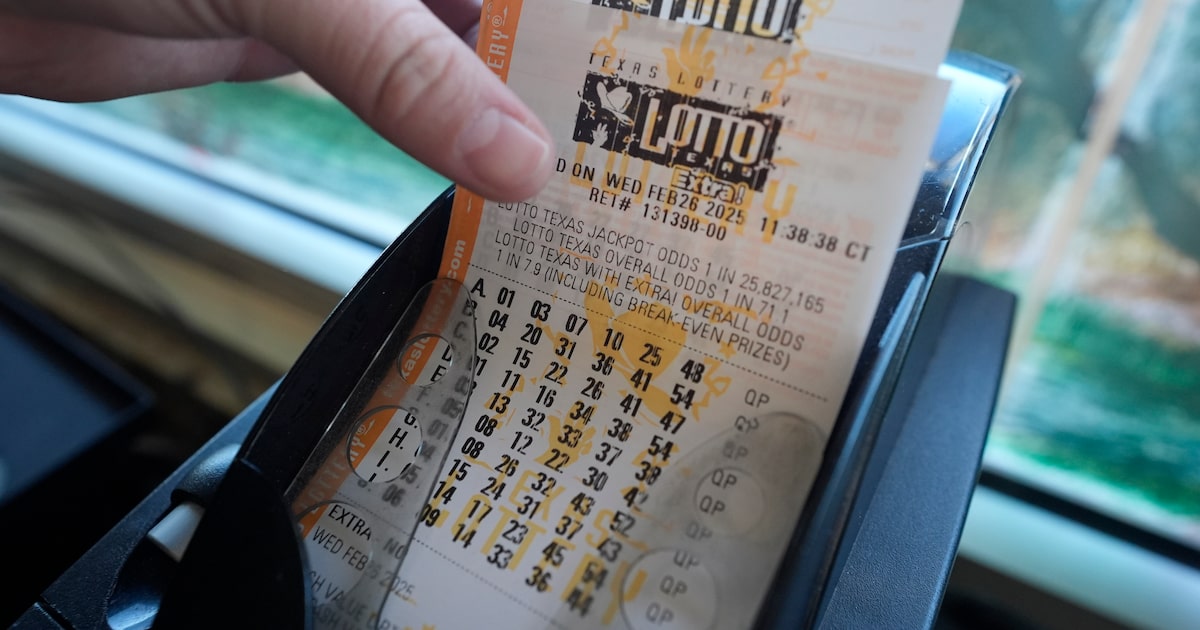
One of the most successful gambling titans on the planet has, for the first time, confirmed his participation in the 2023 Texas Lottery payout for a $95 million draw.
Zeljko Ranogajec, also known as “The Joker,” told the Sydney Morning Herald in Australia, that he personally funded part of the $25 million worth of $1 tickets bought over a 3-day period.
Here are 10 things about the Joker and his cronies that shed more light on what Lt. Gov. Daniel Patrick called “the biggest theft from the people of Texas in the history of Texas.”
1. The story describes the Joker as “a reclusive high-roller from Tasmania.” His syndicate places about $10 billion in bets each year. Other members say they see themselves as mathematicians who study the odds and opportunities.
Watchdog Alert
2. Thirty years before, Ranogajec had tested the setup by ordering his partners to buy as many tickets as possible. “It was a huge logistical exercise for Ranogajec,” one of his partners told the newspaper.
3. For the Texas operation in 2023, Ranogajec said that he had no role in the logistics. But the massive purchase was an “endeavor [that] involved significant risk.” He acknowledged what some had suspected: “I was involved in the funding of the Texas Lottery play.” He declined to reveal his winnings.
4. Buying all those tickets so quickly, he said, was not illegal. “We simply played within the framework they provided. … The Texas Lottery Commission facilitated the play by providing terminals, paper and ink. It would not have been possible to operate at this scale without full cooperation.”
5. For this to work, the syndicate needed to buy as many tickets as possible in three days before the drawing. That’s 100 tickets bought per second for 72 hours. The lottery commission wheeled in several dozen ticket terminals for use by the syndicate. How to did it work? The buyers took QR codes, hooked them up to the terminals and printed all the tickets. Nobody slept, one participant recalled.
6. The Joker was not present in Texas. But his people gathered in a Texas hotel room for the drawing. They shared the room with around 150 boxes of tickets. When the numbers were called – 3, 15, 18, 29, 30, 52 – they tried to find the right box with the winning ticket. When they found it everyone cheered. “We’ve physically got it,” one participant said. “We pass it around the room. Everyone is having a look at it and touching it and kissing it.” The winning prize was $95 million. But after turning down the 30-year payout the winnings dropped to $57 million before taxes.
7. Here’s the rub. Lottery tickets, under state law, must be sold to buyers in person who pay cash at a store that sells lottery tickets. That didn’t happen here. The Texas Rangers are investigating, but Texas Department of Public Safety spokesperson Sheridan Nolen told me, “This remains an active and ongoing investigation, and no additional information is currently available.” No one has been charged with any crimes. The Joker has apparently not been visited by Texas investigators.
8 I had asked Ranogajec’s lawyer if I could interview the Joker but never heard back. The lawyer, Glenn Gelband of New Jersey, told me the partners hired him to help with the winnings through a newly-formed partnership with the ironic name of ROOK TX. To “rook” means to defraud or swindle. The lawyer told me that didn’t happen here. He said, “All applicable laws, rules and regulations were followed.”
9. The Joker is so successful that he lives in what some call the world’s most expensive block. His home overlooks Hyde Park in London. Apartments sell for $100 million.
10. Gary Grief, the lottery commission’s ex-executive director, would seemingly be the one under investigation for helping to run the operation. Grief has not commented. The commission has been disbanded, and the lottery is now overseen by the Texas Department of Licensing and Regulation.
Dawn Nettles, who publishes the Lotto Report about lottery happenings and has cried foul over lottery irregularities, said attention should turn away from the gamblers, and focus on state officials who presided over this mess.
“I blame the state for all of this – and for Gary Grief – for not standing behind Gary’s mistakes. Gary is the one who paid ROOK TX and the Joker,” Nettles said.
“He knew not to. He knew it was rigged. And the state owes it to the people of Texas to stand behind any errors that they make. The state needs to get the money back from ROOK TX, from the Joker, whoever it is.”