
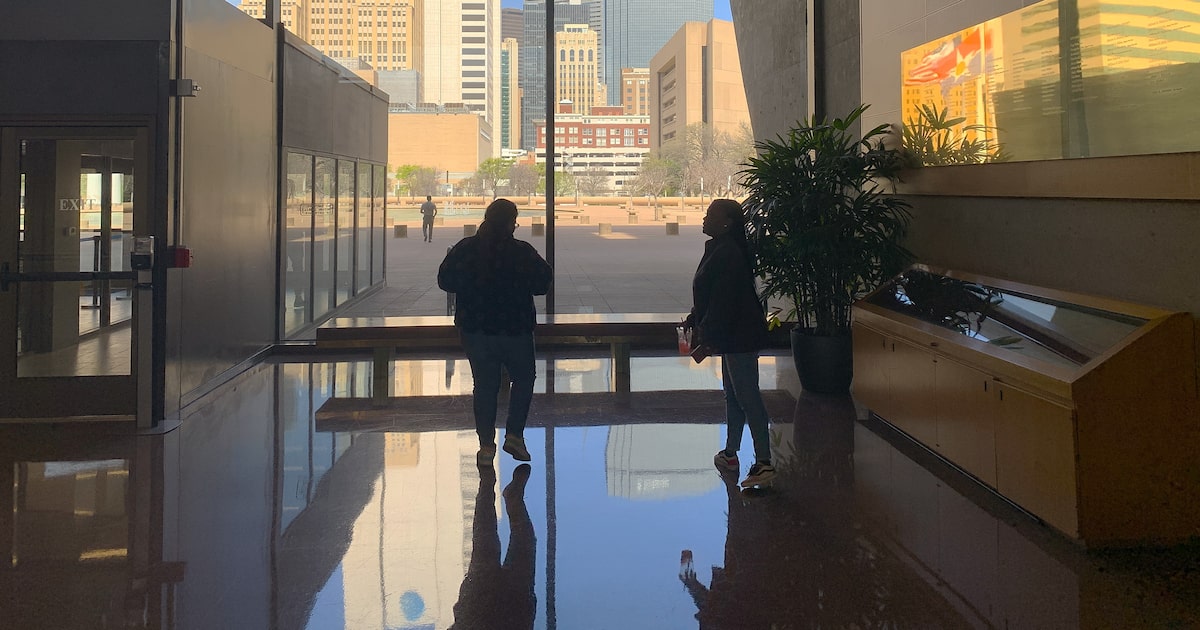

A piece of Dallas City Hall is for sale at a gallery on New York City’s Lexington Avenue. It’s a bench, to be precise, nearly identical to the wood-and-brass pews that have been in the City Hall lobby since I.M. Pei’s building opened in the spring of 1978. The seller, who says the 9.2-foot-long bench “has been authenticated through records and documents obtained from the Dallas City Hall Archive,” is advertising the bench as a Pei creation, meant to reflect “the bold horizontal lines of the building’s heavy brutalist façade.”
I know it’s still available because the gallery’s operations manager with whom I spoke this week about the “Dallas City Hall Lobby Bench” emailed me that it’s still in stock. Nice guy. “I can place it on hold for you if you’d like.”
Look, I’d like that very, very much because my hobby is hoarding old pieces of Dallas no one wants. It’s just that $75,000 is a little steep. That’s a tank of gas, man.
I can’t say $28,500 is in my price range, either. But if I’d just seen it three weeks ago and not Tuesday morning, when a friend first texted me about it, I could have snagged a much longer City Hall bench at that low, low price. It looks just like those lobby benches, except much, much nicer – like, freshly refinished and repolished.
The ones still in the lobby look bad. But we’ve already determined the city doesn’t take care of City Hall.
Opinion
Alas. Barry Gream, a co-owner at 20cdesign on Riverfront Boulevard, told me Wednesday the long bench is en route to an architect in Europe. Sorry to be the bearer of la mauvaise nouvelle.
Gream, turns out, used to have both benches in his Design District storefront, until Bernard Goldberg Fine Arts in Manhattan bought the shorter one for a show about architect-designed furniture, because a bench from Pei’s City Hall really tied the show together. Gream would only say he sold it for “a significant amount.”
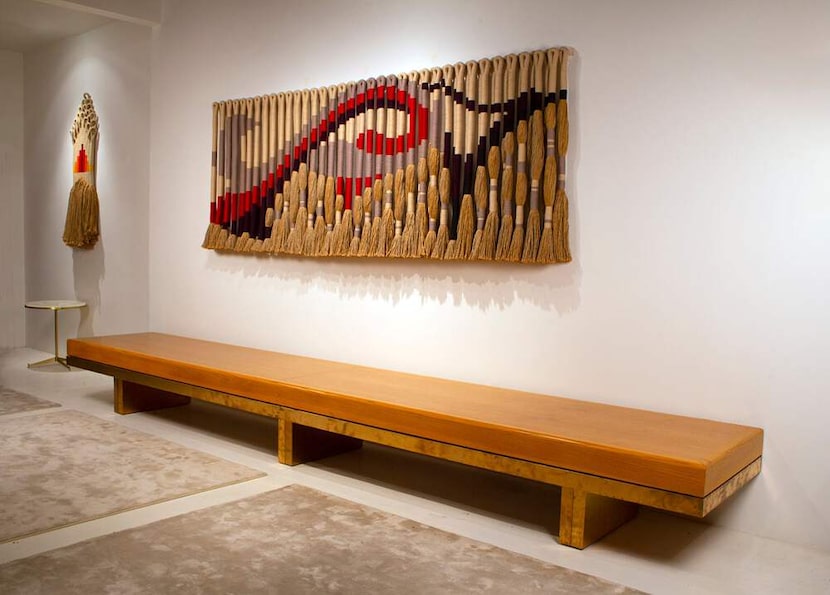
One of the refurbished City Hall benches, which 20cDesign on Riverfront Boulevard discovered in the City Store and recently sold and shipped to a European architect
Courtesy 20cDesign
When I started getting texts this week about these benches going for big money, I thought maybe I was on to something: It’s moving day at City Hall, and everything must go! Which, turns out, isn’t the story. Not yet.
But after spending way too long figuring out how two City Hall benches made it to Manhattan and France – and discovering along the way who likely made the benches – I did figure out one thing. Either officials in charge of disposing of the city’s so-called surplus leftovers don’t know what they have, or they just don’t care.
The answer’s likely a little of both. But whatever the case, our beloved cash-strapped city — which is looking to shutter libraries citywide and just reported that sales tax receipts are already $5 million below budget four months into the fiscal year — quietly sold at least two valuable works from City Hall for pennies on the dollar. That’s being generous.
Gream said Wednesday that 20cdesign acquired both benches about three or four years ago at the City Store on Shady Trail off Walnut Hill Lane. That’s where the city garage-sells its surplus junk, like beat-up bikes, aging computers and assorted goodies confiscated by the cops.
“We knew exactly what they were,” Gream said. “We’ve been to City Hall before, and they have those benches in the lobby. We weren’t sure how they ended up there, but somebody had to buy them.”
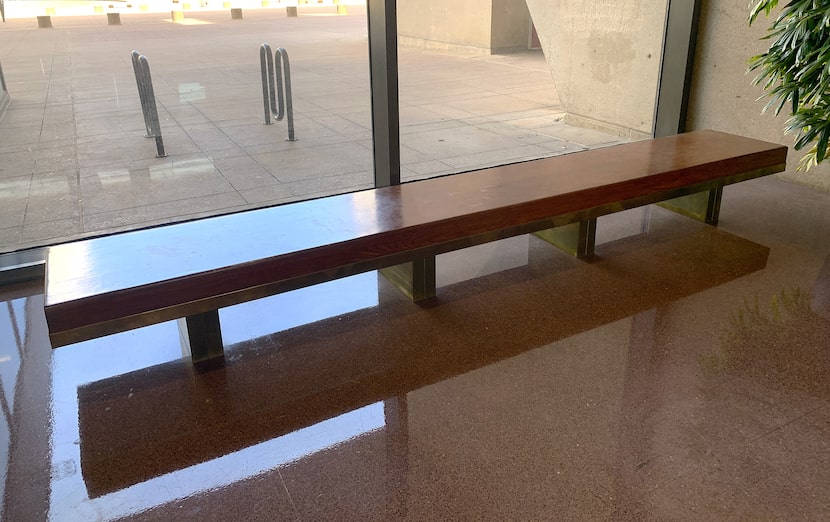
These City Hall benches are worth tens of thousands of dollars. The city didn’t sell them for that much. Not even close.
Robert Wilonsky
Gream said they took the benches to their refinisher, who stripped the oak top and restored the bronze bottom, which was intended to compliment the brass railings and finishes throughout City Hall.
I asked Gream what he paid for the benches. He really didn’t want to say.
I asked if it was fair to say he acquired them for a fraction of a fraction of a fraction of what he sold them for?
After a beat: “If you only knew. Let’s put it this way: I think the City Store just wanted them out of their way.”
When I asked the city about it, I didn’t get many specifics.
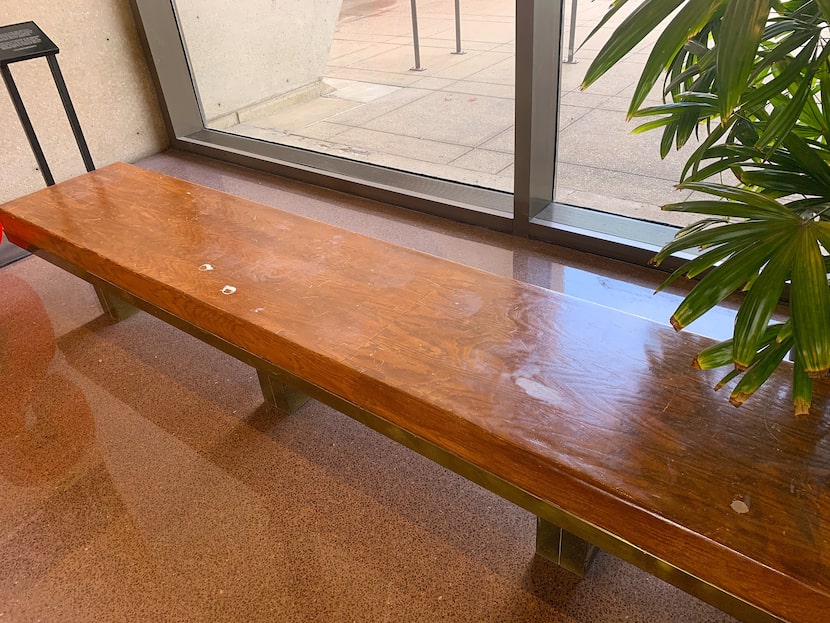
It was probably best to look at the City Hall lobby benches from afar.
Robert Wilonsky
Via a city spokesperson, John Johnson, director of facilities and real estate management, confirmed what former city employees told me: Those benches likely came from Dallas Vital Statistics, which used to be on the ground floor of City Hall until it moved across the street to the J. Erik Jonsson Central Library in October 2016.
“Any benches moved as part of that relocation would have occurred prior to the current FRM executive team,” Johnson said, “and would have been handled in accordance with the City’s surplus procedures in place at that time.”
Which, it would appear, meant sending them to the City Store along with all the other discarded office furniture and supplies. The city does have a contract with Lone Star Auctioneers, through which it sold sculptor Alexander Phimister Proctor’s statue of Robert E. Lee for $1.4 million in the summer of 2019. But it appears the city didn’t consider that option.
The city likely considered them bulk trash, which is how the ones in the lobby are starting to look.
It’s safe to say they didn’t know who designed them. I didn’t until Wednesday, when I reached out to Pei Cobb Freed & Partners to see if they had an inventory of Pei’s furniture designed for City Hall.
Emma Cobb, a historian and senior editor at the firm, said she’s seen City Hall benches for sale before. But they weren’t designed by Pei. Instead, she said, they “were likely designed by the local associate architect for the project, Harper & Kemp,” or, possibly, another Dallas architect. Pei would have only approved them for construction and installation.
Their connection to Terrell Harper and Harris Kemp only makes them more valuable to locals: Both were former associates of legendary architect George Dahl, and their work together spans from the Dallas Country Club to the State Fair Livestock Coliseum to the Jewish Community Center. Kemp’s house on Maple Springs Boulevard is even an official Dallas landmark, unlike the building on which they worked with Pei.
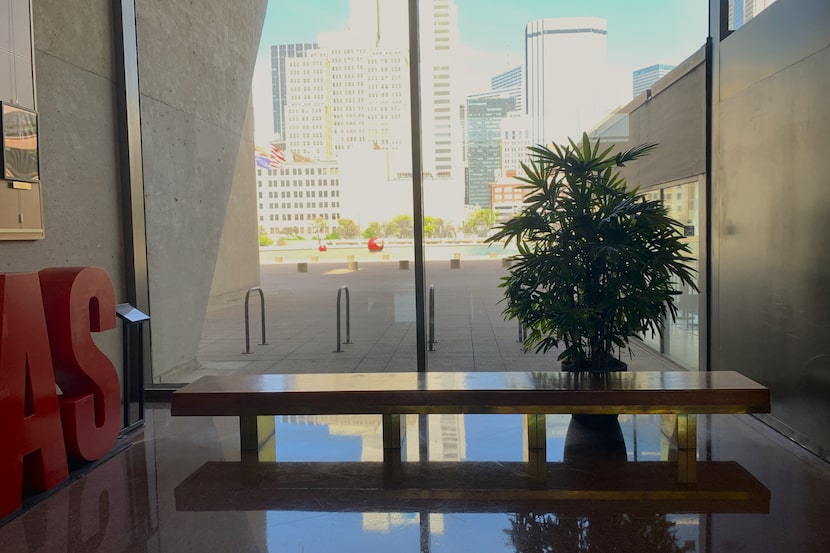
If those benches look at all familiar, it’s because they’re the last things you see when you exit Dallas City Hall.
Robert Wilonsky
Zaida Basora, executive director at AIA Dallas, knows those benches well. In 1999, she was a senior architect at City Hall and led the restoration of the building’s interior, which included restoring the numerous benches scattered throughout City Hall. She also spent time as assistant director of building services, which handled all the building’s furniture, and was even once in charge of the City Store when it was under the city’s purchasing department.
Far as she knew, those benches should have been in storage – in the same warehouse where, she said, the city keeps Frank Lloyd Wright-designed desks and other furniture made for the Kalita Humphreys Theater.
“They could have asked the archivist if they needed to keep those benches, but the city doesn’t have enough history to deal with those things appropriately,” Basora said this week. “The city doesn’t value what they have in these buildings designed by these renowned architects. There should be a policy that preserves the contents of the buildings, but they go in and take everything inside and sell it, because the people who own it don’t realize what they have.”
Seems like they might want to learn sooner than later. Before everything must go.