
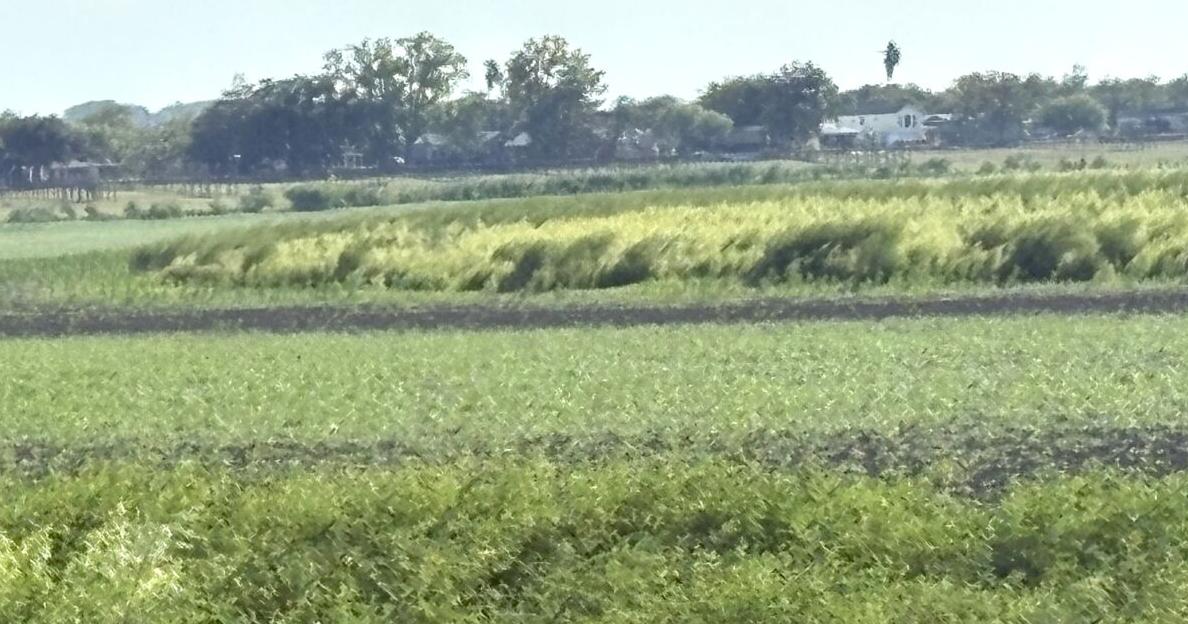
As the region moves into the warmer months and lake levels continue to drop, the water crisis remains at the forefront for the county and surrounding communities. Lake levels at Choke Canyon Reservoir, Lake Corpus Christi are at historic lows, and Lake Texana is showing a serious decline. Adding to the dismal outlook, meteorologists predict no significant rainfall over the next three months.
While George West and Tilden obtain their drinking water from wells, the City of Three Rivers once relied on Choke Canyon Reservoir but can no longer obtain water directly from the lake. Other communities, including Beeville, Mathis, San Patricio, and Port Aransas, depend on water supplied by the City of Corpus Christi.
According to Water Data for Texas, Choke Canyon Reservoir dropped to 8% capacity on March 19, compared to 9.4% at the beginning of the year and 15.3% at this time last year. Over the past year, the lake has fallen more than seven feet and now holds 53,119 acre-feet of water, compared to 101,637 acre-feet a year ago. Predictions indicate the reservoir could be empty in less than a year.
Lake Corpus Christi has also continued to decline, with current capacity at 9.3%, down from 21.4% a year ago. Storage is now less than half of last year’s level – 23,824 acre-feet compared to 54,774 acre-feet. The lake is at its lowest point in more than six decades.
The combined capacity of both lakes was 8.7% on March 13, according to the City of Corpus Christi. With so little water remaining in the two lakes, Corpus Christi has turned to Lake Texana to supply 76% of its water needs. Just over six months ago, Texana was at 90% of capacity, but the lake now stands at 53.1%, declining at a rate of nearly 6% each month.
Corpus Christi can receive up to 70 million gallons per day from Lake Texana. The Lavaca Navidad River Authority (LNRA), which manages the lake, requires a 10% reduction in pumping when capacity falls below 50%. However, Governor Greg Abbott recently adjusted that threshold to 40% in response to the growing crisis. According to a Corpus Christi Water Supply Update, Lake Texana is projected to fall below 50% by April 16 and below 40% by June 16.
Originally, city officials anticipated declaring a Level 1 Emergency, defined as a supply within 180 days of not meeting demand, in November 2026. At that time, Choke Canyon Reservoir was expected to be empty within a year and Lake Corpus Christi by May 2027. However, some officials believe those timelines may need to be moved up by as much as six months.
A Level 1 Emergency would require a 25% reduction in water use, though details on how those reductions would be implemented remain unclear.
Plans for Three Rivers
As Choke Canyon Reservoir continued to decline, the City of Three Rivers began preparing more than two years ago. In presentations to the city council, City Administrator Thomas Salazar outlined contingency plans to ensure the city’s water supply remains stable.
The city moved into Stage 4 water restrictions in Fall 2024, and as lake levels continued to drop, it became apparent that obtaining water from the reservoir would soon be unlikely. The city then prepared its pumping systems.
By January 2025, Three Rivers transitioned fully to pumping water from the Frio River near the city’s water treatment plant. With three pumps available, Salazar said, “We can pump up to three million gallons a day, but we only need about 1.2 million.”
The Frio River feeds into Choke Canyon, with water released at the base of the dam continuing downstream to Three Rivers. The Texas Commission on Environmental Quality (TCEQ) regulates these releases, requiring a flow of 33 cubic feet per second. “They have to release that, so we haven’t seen a change,” Salazar said.
The city is also preparing the Woodward Well, though it has not yet been needed. “We’ve been exercising it to make sure it is capable of running, and we are having water samples tested to ensure it meets standards,” Salazar said.
The Woodward Well draws from the Carrizo Aquifer but presents challenges, as the water is extremely hot and must be cooled before use. The well produces about one million gallons per day.
In addition, the city has four other wells near Campbellton that draw from the Carrizo Aquifer, though they have not been used recently.
Looking ahead, the city plans to drill another well near the Woodward site and is preparing a grant application to the Texas Water Development Board to help fund the project.
For long-term planning, Three Rivers is considering an agreement with the Nueces River Authority to access water from the Harbor Island Desalination Project. The proposal is scheduled for consideration by the city council on April 13 and would allow the city to connect to a pipeline expected to run along Interstate 37.
If approved, Salazar said the city plans to reserve 1.5 million gallons per day from the project. Although water is not expected to be available until 2029, he said it represents a long-term solution.
Recently, a delegation from Corpus Christi, including City Manager Peter Zanoni, met with Salazar, the first meeting of its kind. The goal, Salazar said, was to ensure regional coordination and information sharing. Zanoni also offered assistance with engineering, hydrology, and data services.
During a March 16 city council meeting, an executive session addressed a potential interlocal agreement for infrastructure cost sharing with area cities. Following the session, Salazar reported that the council authorized him to enter into an interlocal agreement with Corpus Christi.
Corpus Christi plans
With the City of Corpus Christi needing an average of 91 million gallons of water per day, leaders continue to scramble to find additional water sources. After cancelling a major desalination project plan, the city is once again moving forward with a more limited desalination plan.
The Evangeline Groundwater Project in San Patricio County has faced opposition, delaying progress. If approved, it is not expected to provide water until at least November.
Additional plans include developing Nueces River groundwater wells. The earliest the new supply from western wells is expected to be May, with an estimated 19 million gallons per day from the western groundwater projects. A brackish groundwater reverse osmosis treatment project is also in the works with water anticipated in February 2027.
While City Manager Peter Zanoni said in a news conference, “This is no time to panic,” a former director of the city’s water department offered a starkly different view. In a Climate News interview, James Dodson said residents would be “crazy not to be panicking,” adding, “It’s the very worst scenario that I’ve ever seen. It’s going to be an economic disaster.”
The City of Three Rivers is positioned more favorably than many surrounding communities, with multiple water sources in place to address both immediate needs and long-term challenges.