
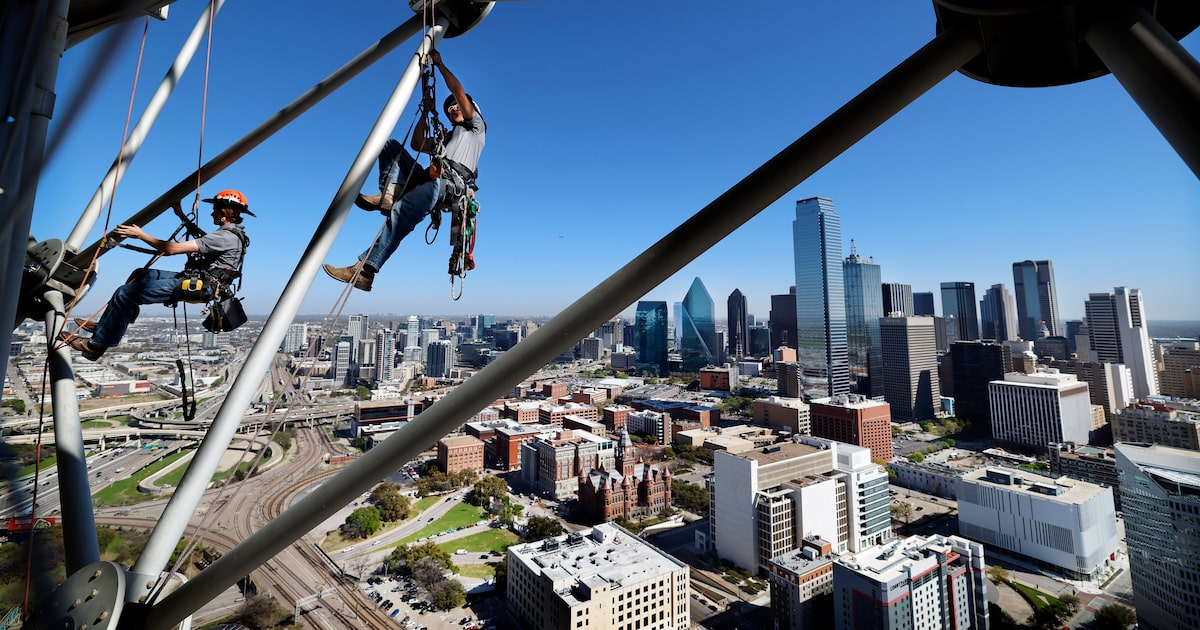
High above downtown Dallas, workers in harnesses moved carefully along the steel framework of Reunion Tower this week, swapping out aging light fixtures one by one as traffic moved below.
The work marks the first major upgrade to the tower’s lighting system since 2012, replacing fixtures that have helped define the Dallas skyline for more than a decade.
Reunion Tower, completed in 1978 and often referred to as “The Ball,” has been illuminated since it opened, with its current lighting system installed more than a decade ago. Its lights have long been used to mark holidays, sporting events and civic moments.
The upgrade dramatically increases the number of lights on the tower, from 259 pixels, or individual light points, to 8,547, allowing for more detailed displays.
Breaking News
Crews installed new custom LED fixtures across the tower’s geodesic dome, replacing a system that had exceeded its expected lifespan and become increasingly difficult to maintain.
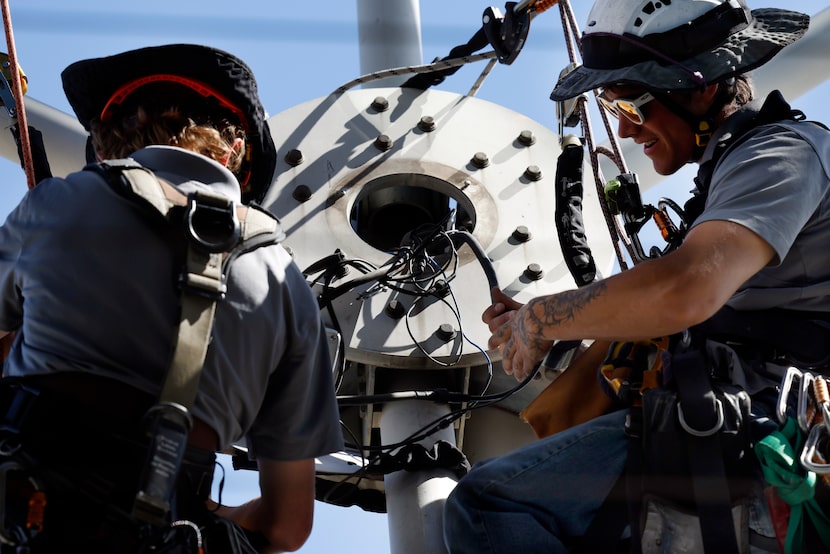
Rope access technicians Ian Porter (left) and Kain McLaughlin of Highpoint Access make tweaks to new LED lighting installed on Reunion Tower, March 19, 2026. The installation of lights will expand the detail of objects by going from 8 inches to 24 inches, utilizing a 60 watt center RGBW LED and 32 additional 1 watt RGBW LEDs around it. The old one was a single 50 watt RGB Pixel. In essence the ball will be brighter and have more bulbs creating better color and white light.
Tom Fox / Staff Photographer
“The fixtures that we had produced many memorable shows over the years, but they were coming to end of life,” said Shawn Miller, vice president of operations for Reunion Tower. “We wanted to take the opportunity to go completely custom and add some fun to the shows that we haven’t been able to do before.”
In 2012 an LED system replaced an earlier incandescent lighting setup and relied on a single RGB pixel-per-light unit. The new fixtures significantly expand that capability.
Each unit now includes a 60-watt center RGBW LED, meaning red, green, blue and white light, and 32 additional 1-watt RGBW LEDs.
“We can do any of the previous light shows that we did before,” said Scott Ingham, president of Ingham Designs, who has worked on lighting projects across Dallas. “And then we can create new, more dynamic shows going forward because of the additional pixels.”
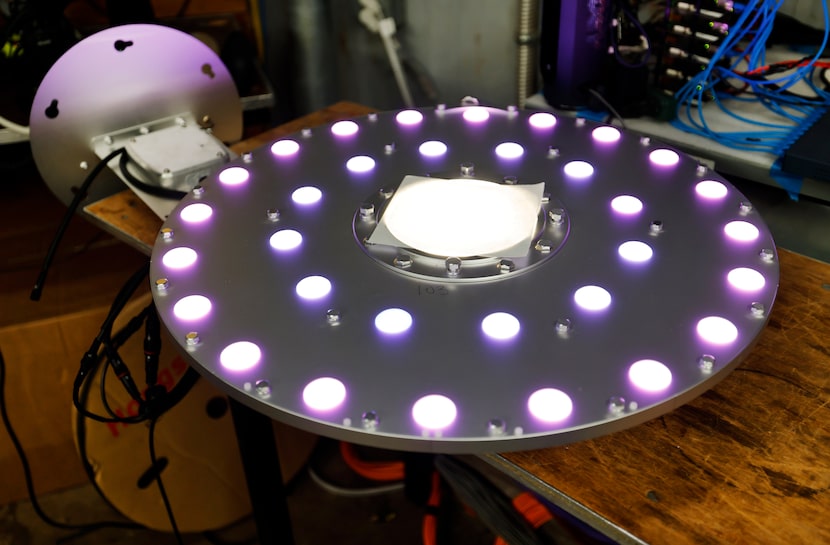
The installation of lights on Reunion Tower, done March 19, will expand the detail of objects from a single 50 watt RGB Pixel to a 60 watt center RGBW LED and 32 additional 1 watt RGBW LEDs (pictured here).
Tom Fox / Staff Photographer
Ingham said the Reunion Tower upgrade is the highest-profile project he has worked on.
The scale of the upgrade is substantial. Each fixture has grown from 8 inches to 24 inches in diameter, while the weight has dropped from 21 pounds to about 10 pounds, reducing the total load on the structure by roughly 2,850 pounds, or 1.4 tons.
Installation also required about 9 miles of new data wiring, enough to stretch from downtown Dallas to Love Field.
Much of the redesign focused on longterm performance. The new fixtures can communicate real-time data, allowing crews to monitor temperature, power levels and system health remotely.
“This is lighter,” Ingham said. “It has Bluetooth so we can talk to it now. We can see what temperature all these lights are at in real time.”
The system also divides the tower into sections, making it easier to locate and service individual fixtures.
“Now a problem will stay with one individual light,” Ingham said. “We can ask it how it’s doing, what its temperature is, what its power is, and get that information quickly.”
Engineers also addressed challenges tied to the tower’s height, about 560 feet above ground, where wind, rain and temperature swings can affect performance.
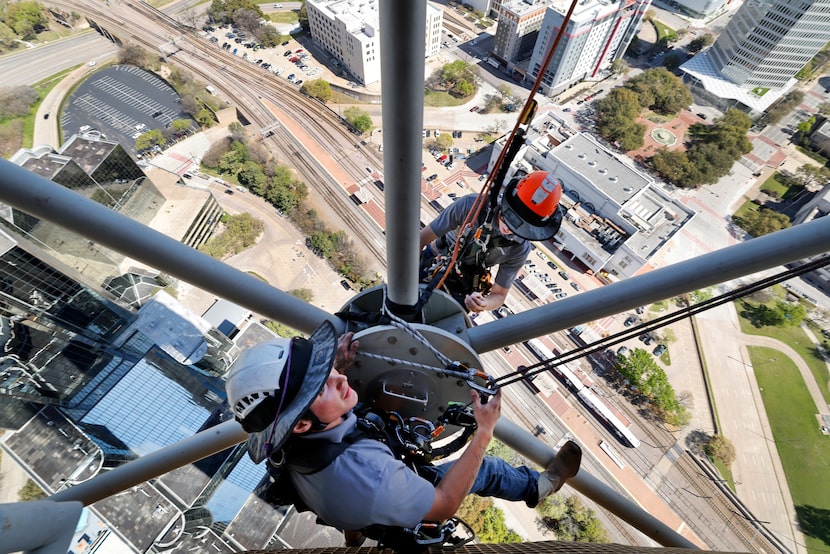
High above the railroad tracks at Union Station, rope access technicians Ian Porter (top) and Kain McLaughlin of Highpoint Access make tweaks to new LED lighting installed on Reunion Tower, March 19, 2026. The installation of lights will expand the detail of objects by going from 8 inches to 24 inches, utilizing a 60 watt center RGBW LED and 32 additional 1 watt RGBW LEDs around it. The old one was a single 50 watt RGB Pixel. In essence the ball will be brighter and have more bulbs creating better color and white light.
Tom Fox / Staff Photographer
“We know there’s going to be water,” Ingham said. “What do we want the water to do? Where is it OK for it to get in as long as it can get out?”
While much of the upgrade happened behind the scenes, officials say the visual changes will be most noticeable up close.
From a distance, the tower will retain its familiar appearance. But at closer range, the added light points and expanded color range will allow for more detailed effects.
“It’s really going to incentivize people to come up and visit and see the tower closer up,” Ingham said.
With installation complete, crews are now focused on programming new light shows, with changes expected to become more noticeable in the coming weeks.
“We know it can do a lot more,” Ingham said. “We’re going to have fun learning more and more effects, what works, what doesn’t.”
For Miller, the upgrade is also about maintaining a symbol that has become part of Dallas’ identity.
“You don’t turn on the news without seeing the tower in the back,” he said. “You don’t watch a football game without seeing the tower going into every commercial.”
“The skyline doesn’t exist without the tower,” Miller added. “There’s definitely a sense of pride when you’re flying in on the plane and you see the light show.”