
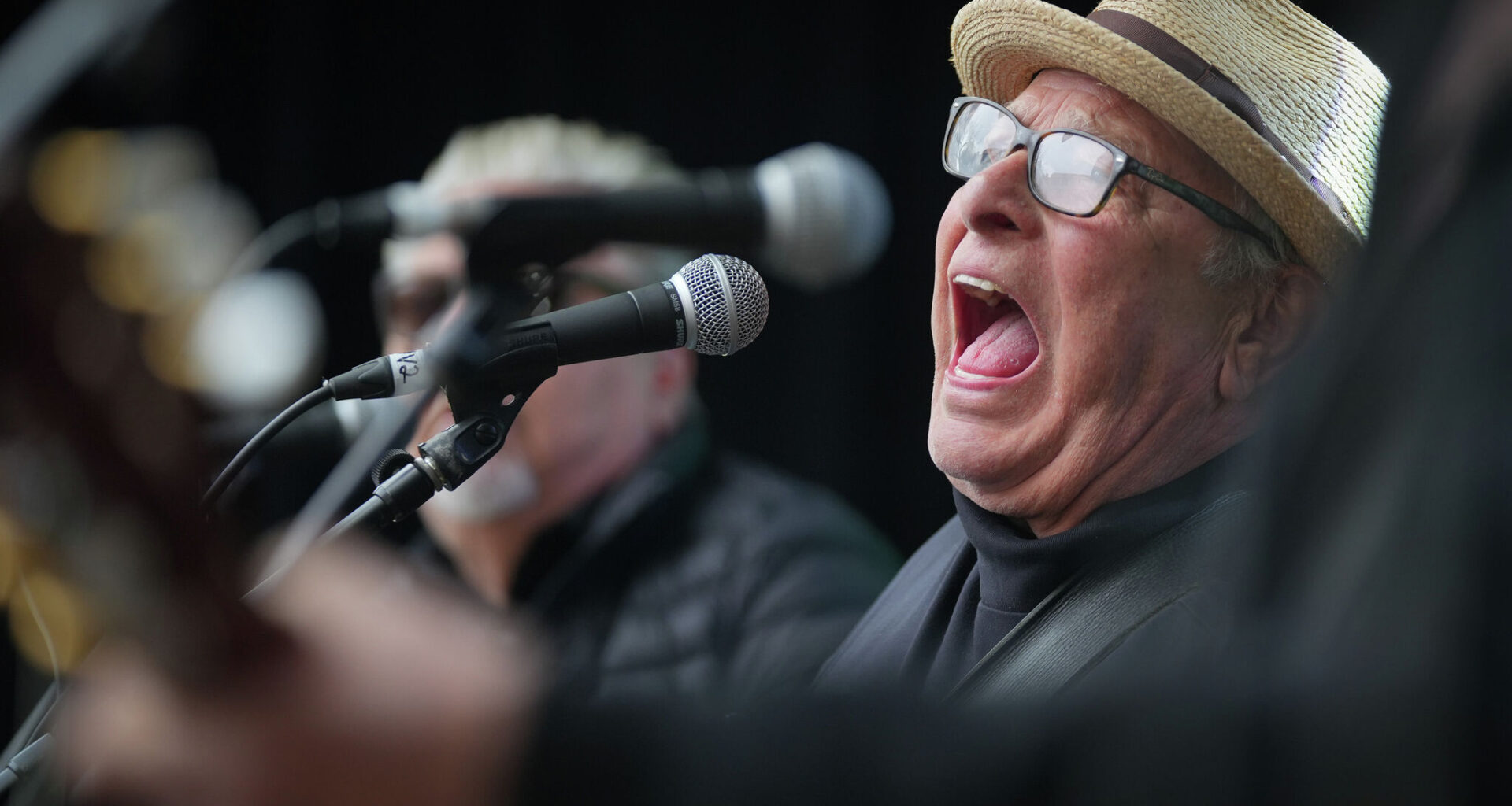
Steve Berlin of the East Los Angeles band Los Lobos performs at the Radio Day Stage at the Downright Austin Hotel during the South by Southwest Conference and Festivals on Saturday, March 14, 2026, in Austin. The band is at SXSW in connection with the documentary “Los Lobos: Native Sons,” about its decades-long career.
Jay Janner/Austin American-Statesman
The South by Southwest Conference and Festival debuted a condensed format built around clubhouses dedicated to each programming track this year.

The Statesman braved the wind and 30-degree temperature swings for seven straight days. Here are our major takeaways.
Article continues below this ad
Conrad Lozano of the East Los Angeles band Los Lobos performs at the Radio Day Stage at the Downright Austin Hotel during the South by Southwest Conference and Festivals on Monday, March 16, 2026, in Austin. The band is at SXSW in connection with the documentary “Los Lobos: Native Sons,” about its decades-long career.
Jay Janner/Austin American-Statesman
How did this year’s clubhouse structure work?
Mars Salazar: At the music clubhouse at Downright Austin, the courtyard wasn’t as buzzy as anticipated, and attendance at the Radio Day Stage felt transitory. Most of the Downright crowd was upstairs on the third floor for panels, but overall the hotel seemed like a fine interim central hub for music. Energy was lackluster, but it did what it needed to do.
Ana Gutierrez: Even as attendees lamented the loss of the Austin Convention Center, the decentralized clubhouse model proved to be one of the festival’s more effective recalibrations. These smaller hubs scattered across downtown fostered a level of intimacy among attendees. The Innovation Clubhouse poured coffee from Mercado Sin Nombre, while the Film Clubhouse partnered with Fleet Coffee. The clubhouses were outfitted with merch stands, bars, restrooms, DJs, livestreams of panels, Royal Blue vending machines and vibrating hammocks. Their downtown placement made them practical waypoints to pause and escape the churn of the festival without fully stepping outside it.
Article continues below this ad
Lainey Wilson performs at Stubb’s as she promotes her new Netflix movie, “Lainey Wilson: Keepin’ Country Cool” during South by Southwest in Austin, Tuesday, March 17, 2026.
Mikala Compton/Austin American-Statesman
What about the schedule that ended on Wednesday? Did people leave after the weekend?
M.S: Many people left on Sunday, and by Tuesday crowds had thinned significantly, most noticeably at Lainey Wilson’s sparsely attended show.
A.G.: A condensed schedule gave this year’s festival a more frantic pace. Attendees had to choose between long film lines and everything else. In some cases, the compression worked in the festival’s favor, nudging people to leave overcrowded screenings and redirect their attention to other corners of the event.
Article continues below this ad
The crowd noticeably shifted by Monday. Out-of-town attendees who filled the early days largely cleared out, leaving a more local audience in their wake. Lines for films eased and the number of brand activations thinned, but celebrities were still circulating — Leslie Mann and Maude Apatow grabbed Terry Black’s on Wednesday.
Actress Demi Moore arrives for the world premiere of “I Love Boosters” at the Paramount Theatre during the South by Southwest Conference and Festivals in Austin on Thursday, March 12, 2026.
Jay Janner/Austin American-Statesman
Where was the buzz this year? Was the festival crowded?
M.S.: In past years, you could barely walk around the Red River Cultural District because the streets and clubs were overrun with people. This year, the district was a ghost town during the days. Evenings were a lot more popping on the weekend as non-badge holders filled out crowds. Rolling Stone and Billboard’s showcases, as well as the sold-out Sips & Sounds festival, were crowded. All three were separately ticketed events. — M.S.
Article continues below this ad
A.G.: The biggest crowds clustered around marquee film premieres. The line wrapped the block and spilled onto Brazos and Eighth streets for opening night film “I Love Boosters” at the Paramount Theatre, with a packed house and the usual seat-saving sprawl. Reports from the “Forbidden Fruits” premiere suggested even cast members felt the squeeze, as star Lola Tung had to hunt for a free seat.
Who is SXSW for these days? Could ordinary people go to events?
Fans watch The Lumineers perform at Waterloo Park during the South by Southwest Conference and Festivals on Monday, March 16, 2026, in Austin.
Jay Janner/Austin American-Statesman
M.S.: SXSW Director of Music Dev Sherlock told the American-Statesman the fest is for “hardcore music fans” and first and foremost a music industry event. The lack of interest among the general Austin public felt palpable this year.
Article continues below this ad
While fans packed free concerts from the Lumineers and Orville Peck, Los Lobos — one of the biggest Chicano bands of the last 50 years — played a free show at the Downright Austin that was smaller than expected, considering the broad interest from Austin’s Hispanic community. Same for Lainey Wilson’s badges-only showcase that failed to fill Stubb’s BBQ. The Austin community seemed disengaged this year, shifting the vibe toward something more corporate and clinical than organic and fan-forward, which made it more organized but a lot less fun. Some bartenders and venue workers told the American-Statesman they mourned the “carefree craziness” SXSW once had.
A.G.: SXSW is a sprawling, uneven ecosystem. A badge still unlocks the most reliable path to high-demand screenings and panels, but it’s not the only way in.
Free events are plentiful, if you are willing to wait in long lines or pay à la carte. The crowd reflects that mix: industry professionals, from brand marketers to crew members and filmmakers, move alongside volunteers and badge-less attendees working the margins. That fluidity extends to the fan experience. Red carpets outside venues like the Paramount Theatre remain accessible (from a distance). In practice, access at SXSW comes down to time, flexibility and information. The people who get the most out of it — badge or not — are the ones willing to follow a tip, wait something out or pivot quickly when plans fall through.