
Lauren Kavanaugh’s harrowing tale of abuse and neglect emerged after years hidden in a closet, underscoring systemic failures that left her traumatized, experts say.
HUTCHINS, Texas — Investigators say Lauren Kavanaugh spent years locked inside a closet in a Hutchins mobile home, isolated from the rest of the household and deprived of food, care and human contact.
According to medical experts and testimony in the case, the 8-year-old survived in part by mentally detaching from her surroundings — a coping mechanism often seen in victims of prolonged trauma.
Lauren was rescued on June 11, 2001, when police entered the small trailer and found what officers initially believed was a much younger child sitting at a kitchen table.
She weighed just 25.6 pounds, about the size of an average 2-year-old. Her ribs protruded. Her hair was thin and brittle. Her body showed signs of prolonged starvation, neglect and abuse. Doctors later testified she had no body fat, significant muscle wasting, and developmental delays caused by years of deprivation during critical stages of growth.
Her biological mother, Barbara Atkinson, and stepfather, Kenneth Atkinson, were later convicted of felony injury to a child and sentenced to life in prison.
But Lauren’s story began long before that night in Hutchins.
As an infant, Lauren had been adopted by Sabrina and Bill Kavanaugh, who raised her during the first months of her life and later fought to keep custody. Court records show a judge ultimately returned Lauren to her biological mother, despite concerns raised by the adoptive parents about injuries and possible abuse.
That decision would define everything that followed.
Over the next several years, Lauren’s life became increasingly hidden.
Family members, neighbors and acquaintances would later describe signs that something was wrong — unexplained injuries, poor hygiene and troubling behavior. There were reports made to Child Protective Services. At least two investigations were opened. But each time, the family moved.
Records show investigators were unable to locate them, and the cases were closed.
“It’s horrible to know that it could have been prevented years ago,” one neighbor said at the time.
By the time authorities found Lauren, prosecutors said she had been confined for years — first in smaller spaces, then eventually locked inside a closet in the master bedroom.
Testimony revealed she was separated from the rest of the family, who ate regular meals while she was deprived of food. Witnesses said when she was able to get out, she would eat whatever she could find — including pet food.
Inside the home, investigators found cabinets stocked with food and evidence that others in the household were being fed.
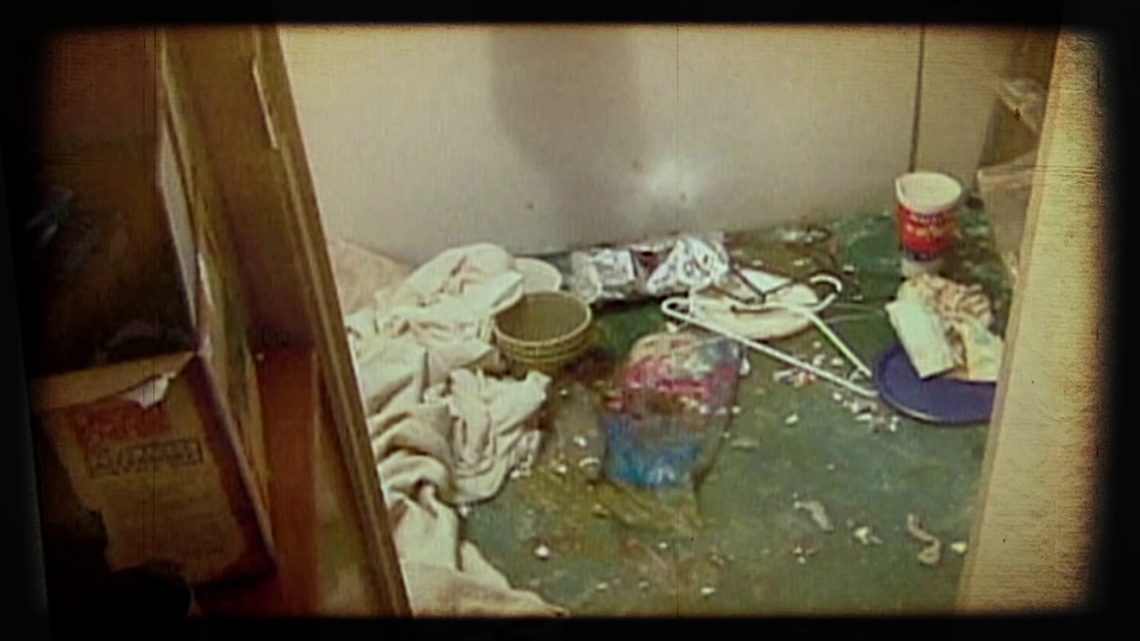
The closet itself became a central piece of evidence. Photographs and testimony described a small, enclosed space where Lauren slept, ate, and went to the bathroom. The carpet was saturated with urine and feces.
There were marks on the door, suggesting attempts to get out.
When she arrived at Children’s Medical Center Dallas, doctors immediately recognized the severity of her condition. She was severely malnourished and could not sit or stand without assistance.
Because of prolonged starvation, her body could not safely process food. Doctors had to reintroduce nutrition slowly to avoid life-threatening complications.
At one point, she went into shock.
Medical experts testified that her growth had effectively stopped years earlier. At 8 years old, her height and weight matched those of a toddler. Beyond the physical damage, doctors said the psychological impact was profound.
During the years she was confined — roughly from age 2 to 8 — Lauren missed critical developmental milestones. She had not learned basic skills most children acquire naturally, including how to trust, communicate and form attachments.
Experts told jurors she would likely need therapy for the rest of her life.
Prosecutors described the abuse as prolonged, deliberate and escalating. They argued Lauren had been isolated, starved, and neglected over a period of years, while others in the home lived normally.
Defense attorneys did not dispute the severity of the abuse but pointed to Barbara Atkinson’s own troubled childhood, arguing it contributed to her actions.
Jurors rejected that explanation.
Both Barbara and Kenneth Atkinson were sentenced to life in prison. They will be eligible for parole in 2031.
After her rescue, Lauren was reunited with the Kavanaughs.
Her recovery was long and difficult. She had to relearn how to eat without fear of food being taken away. She struggled with basic routines, emotional regulation and trust. Her childhood — defined by isolation — left lasting challenges that required years of therapy and medical care.
The case drew national attention, not only because of the severity of the abuse, but because of the failures that allowed it to happen.
Lauren had once been in a stable home.
There were warning signs.
There were investigations.
Still, she disappeared — and remained hidden — for years. Today, the case is remembered as one of the most disturbing examples of child abuse in Texas history. It also remains a case that raises difficult questions about oversight, accountability and the limits of systems designed to protect vulnerable children.
For Lauren, the abuse ended in 2001. But the impact, experts say, is lifelong.