Don’t Miss a Moment.
Join 30,000 locals who stay current on San Antonio news, culture, and events. Get our free newsletters in your inbox three times a week.
Don’t Miss a Moment.
Join 30,000 locals who stay current on San Antonio news, culture, and events. Get our free newsletters in your inbox three times a week.
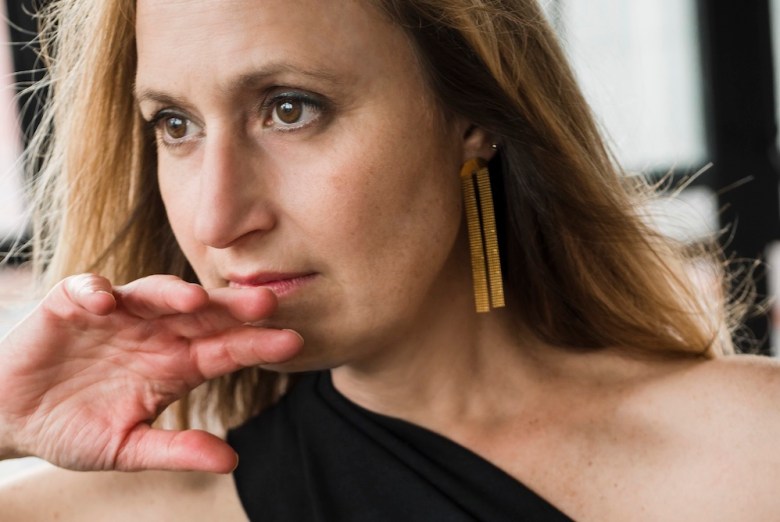 Heather Raffo, who was born in the Midwest to an Iraqi immigrant father, gained global recognition for her play 9 Parts of Desire, which examines the lives of a diverse group of Iraqi women. Credit: Courtesy Photo / Carver Community Cultural Center
Acclaimed playwright Heather Raffo will stage a community-driven production this month at the Carver Community Cultural Center that examines the reasons humans move and the costs they pay as they do.
Tomorrow Will Be Sunday is part of a larger “Migration Cycle” of plays Raffo is developing across multiple cities. Roughly a third of the 90-minute play is built from material Raffo wrote after a series of listening visits to San Antonio.
The performances, scheduled for Thursday through Saturday, March 26-28, will include live music and song along with a cast of local and international artists. Raffo hopes the work sparks dialogue about relocation, survival and belonging.
Raffo, who was born in the Midwest to an Iraqi immigrant father, gained global recognition for her play 9 Parts of Desire, which examines the lives of a diverse group of Iraqi women. She also wrote the libretto to Fallujah, an opera about soldiers’ experiences in the Iraq war.
We caught up with the New York-based playwright by phone to discuss Tomorrow Will Be Sunday, what she learned about the Alamo City and common themes she’s experienced presenting new iterations of the play in other cities.
You’re doing a play where a third or more is related directly back to San Antonio, which sounds like a major undertaking. How do you make that work?
There’s lots of different ways to mount something that’s iterative like this, but I think that the San Antonio experiment feels really particularly beautiful to me because the Carver has given me such a warm welcome and introduced me to so many really interesting people and artists. And I’m very proud that the artistic team is almost entirely from San Antonio. It’s really like San Antonio’s picking up my work and interpreting it for themselves.
Could you talk about common themes you’re seeing as you travel between cities? Also, what things have you learned about San Antonio that feel different from what you encountered elsewhere?
Something that’s common and that won’t surprise you at all is that affordability is just on everybody’s mind all the time. And the feeling that so many people can’t get out of having to just look after themselves or their family — because that’s hard enough — let alone being able to look across town, across the nation, across the world. What it takes to get through the day is a lot. …
What is particularly interesting to me about San Antonio was this mix of being the largest military city in the U.S., a city in close proximity to the border, a city that, in ’22 or ’23, had the largest incoming migration of any city in the U.S. And I don’t mean cross-border migration, I mean across the nation, like people were moving to San Antonio. And then it’s also a Latin-majority city.
So, all those things add up to being a particular way that people look at how they belong. If I say the play is about why we move and what it costs to survive, the underbelly of that is how do we find belonging? Because that’s really what’s driving so much of this.
Honestly, what surprised me the most about San Antonio, and I mean every Uber driver I was talking to, people I met at a cafe, just on-the-fly conversations — not deep conversations with historians — was how people held history here. … Because in so many places in the U.S., we might know the history of our city, we might know things, but we’re not talking about hundreds of years of history. And here, because of the [Spanish Missions], probably because of the Alamo, definitely because of where the border was — and that it’s been Mexico and it’s now the USA — people talk in hundreds of years of history. You say, “Tell me about San Antonio,” and then suddenly you’re in a 500-year story.
And so many times people mentioned the river, and the river is tens of thousands of years old, and indigenous populations lived here. So, I couldn’t quite believe that that was coming up in conversation so often. And so it made me feel like the way people hold place here is with the knowledge of just how long San Antonio has been here.
And that really resonated with me as an Iraqi American, because Iraqis do the same thing. I would tease my uncle, because I’d ask him — this was 2006 in the height of the civil strife — and I’m like, “How are you doing?” And he’d be like, “Oh, this and this because of the invasion and this and this because of Saddam and this and this because of the British.” And then you’d get back to Nebuchadnezzar in a five-minute conversation that started with, “How are you today?”

KEEP SA CURRENT!
Since 1986, the SA Current has served as the free, independent voice of San Antonio, and we want to keep it that way.
Becoming an SA Current Supporter for as little as $5 a month allows us to continue offering readers access to our coverage of local news, food, nightlife, events, and culture with no paywalls.
Getting back to affordability, this is one of the poorest big cities in the United States and has been for quite some time. Did that element become apparent as you did your research?
Huge. The scene that I wrote for San Antonio is about housing. It’s about a woman renting a room to be able to afford to keep her house, and the amount of people that need a room and who she takes in. … She’s renting the room to a boy who’s having to navigate, let’s say, the tensions that our nation that any community might be going through, but it’s in the house now. It’s not outside the house. It’s come in, because we have to live together.
So, yeah, affordability, particularly the housing crisis was top of mind. Also, as you know, the Carver Center’s on the East Side, and I heard so many stories about historic homes either being torn down for townhouses or houses being flipped. It’s a story that’s happening across America of just how deeply cities are changing, and who can even afford to live there or purchase a home. I heard a ton of stories here about what happened in Austin and how people don’t want that to happen here.
$30, 8 p.m. Thursday-Saturday, March 26-28, Carver Community Cultural Center, Little Carver Theatre, 226 N. Hackberry St., (210) 207-7211, thecarver.org.
Sign Up for SA Current newsletters.
Follow us: Apple News | Google News | NewsBreak | Reddit | Instagram | Facebook | Twitter | Or sign up for our RSS Feed
Related Stories
The city manager said the city received permits to pump more groundwater and will avoid water reductions from a shrinking reservoir for now, pushing a potential water crisis to July.
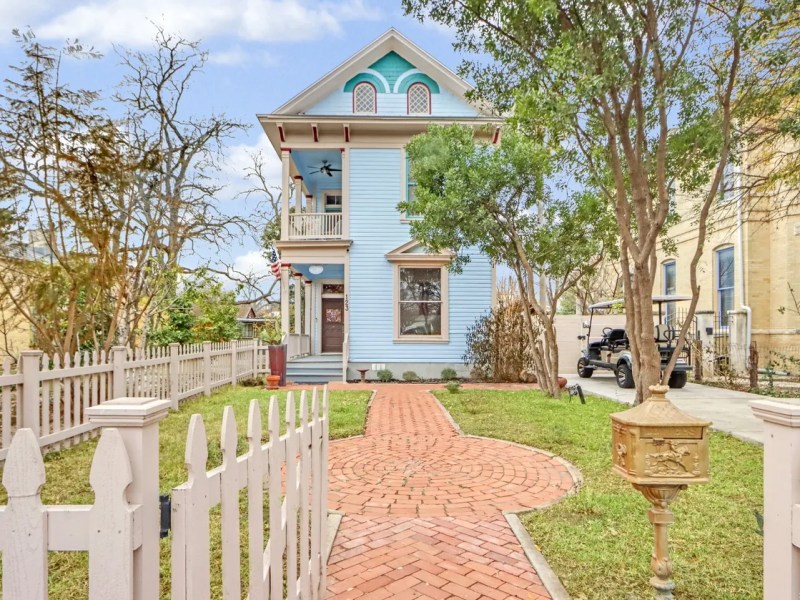
The residence once belonged to Hugo Griesenbeck, a relative of Kaiser Wilhelm I, King of Prussia.