
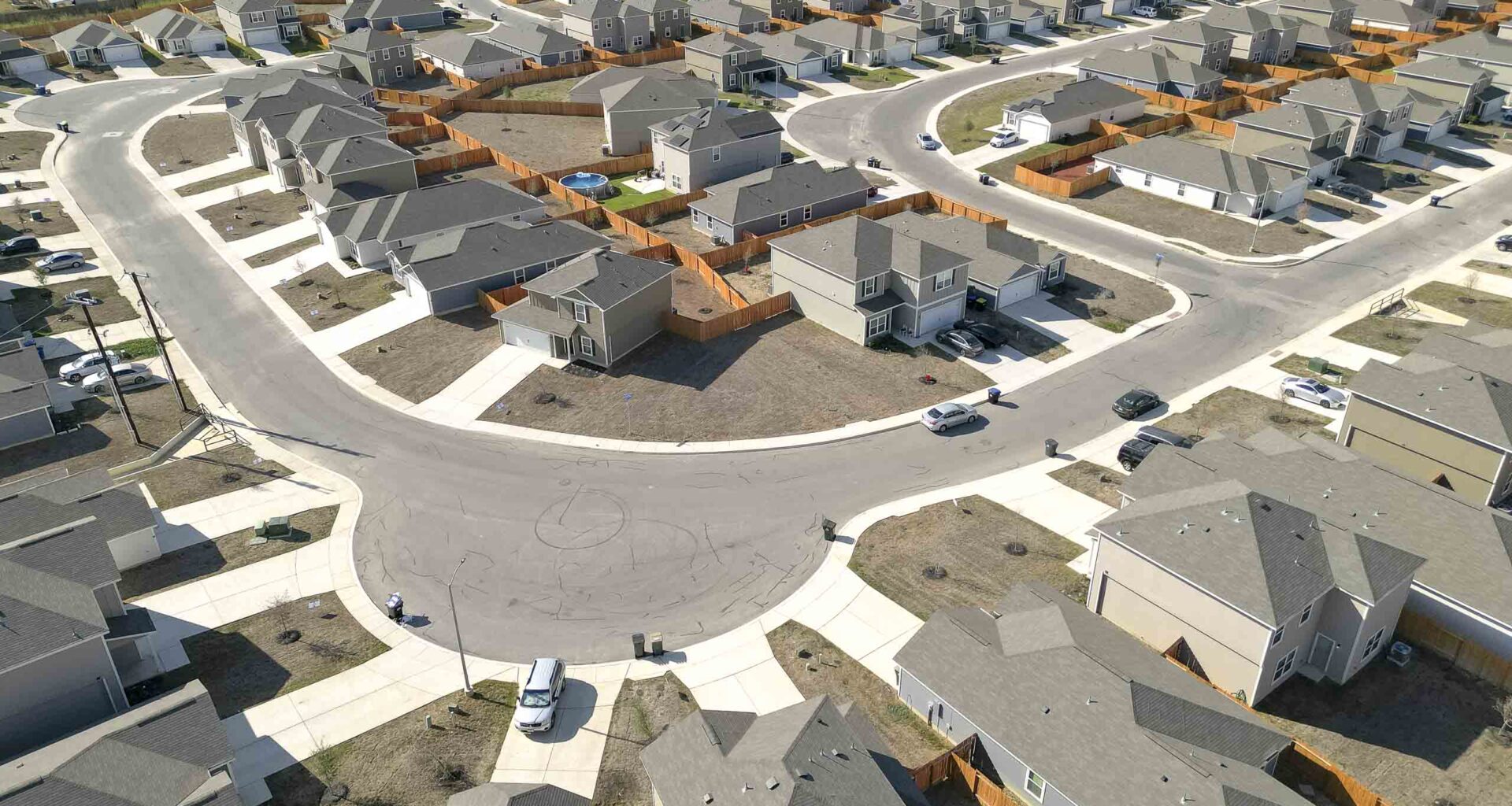
San Antonio’s housing market spent the last half of 2025 balanced between buyer- and seller-friendly. There was plenty of supply, but prices weren’t dropping.
Local experts say that’s because some parts of the housing market are performing better than others. Certain neighborhoods or high-value homes have strong demand, while lower-income homebuyers might be hesitant about taking on mortgages and putting up money for down payments.
That also means a small push to one segment of the housing market could disrupt the delicate balance.
San Antonio homes are spending a longer time on the market. The San Antonio Board of Realtors reported that houses spent an average of 102 days on the market, 20% more than the same time last year.
But sellers haven’t been inclined to drop prices — SABOR’s reports show that San Antonio’s median home prices have actually increased slightly over the last 12 months.
The story is likely the same as it was last year — sellers don’t need to raise prices. Many would-be home sellers have cheaper, pandemic-era mortgages from when the Federal Reserve lowered interest rates to stimulate the economy.
“We’re still in a time where we’re rebalancing from COVID-19,” said SABOR Chair Ed Zapata.
Sellers don’t need to rush to sell homes, and so they don’t need to lower prices when demand is flagging or running out of steam.
While demand is lagging, it’s not down everywhere. Some segments of the housing market are doing better than others. Total sales are down compared to February 2025, Zapata said, but resales of old homes, for example, are trending up.
Zapata has seen neighborhoods where demand is high and boosting prices and others where those prices are actually dropping.
Danny Khalil, director of market analysis at CoStar Group, which owns Homes.com, Apartments.com and Loopnet.com, has noticed the same trends.
“It does vary greatly from neighborhood to neighborhood,” he said.
Prices have grown in San Antonio’s north and northwest, Khalil said. But on the opposite side of town, on the east and southeast parts of San Antonio, prices have dropped by more than 20%.
Khalil and Zapata both see certain segments of homebuyers keeping demand high enough to support the current market standstill.
Zapata noted that people are still moving to San Antonio and many of those new residents want homes.
The home market may also be diverging based on incomes. Both Khalil and Zapata noted that the market for more expensive homes is healthy.
“More homes sold at a higher price point,” Zapata said. “That’s why the median [home price] is going up.”
Cheaper homes, on the other hand, are getting even cheaper. Demand for those is lower, Khalil said. Houses that are priced under $300,000 are seeing drops in demand.
That could be because lower-income homebuyers don’t have the flexibility or capital to buy homes, Khalil added. They might be struggling to get loans from banks or be waiting for interest prices to drop.
“The most price-sensitive homebuyers are more likely to be affected by interest rates,” he said.
Khalil said wealthier homebuyers have more equity available and don’t need to be as sensitive to interest rates and loan costs. In other words: it’s an active market, if you have enough money.
That leaves San Antonio’s home market in the middle. If interest rates fall and low-income buyers get more confident, Zapata said, demand could resurge and prices could climb upwards. At the same time, if economic uncertainty prevails and the stock market slows down, equity for upper middle income households could decline and demand could fall even further, Khalil noted.
“It’s confidence in what’s going on nationally, what’s going on with the economic outlook,” Zapata said.