
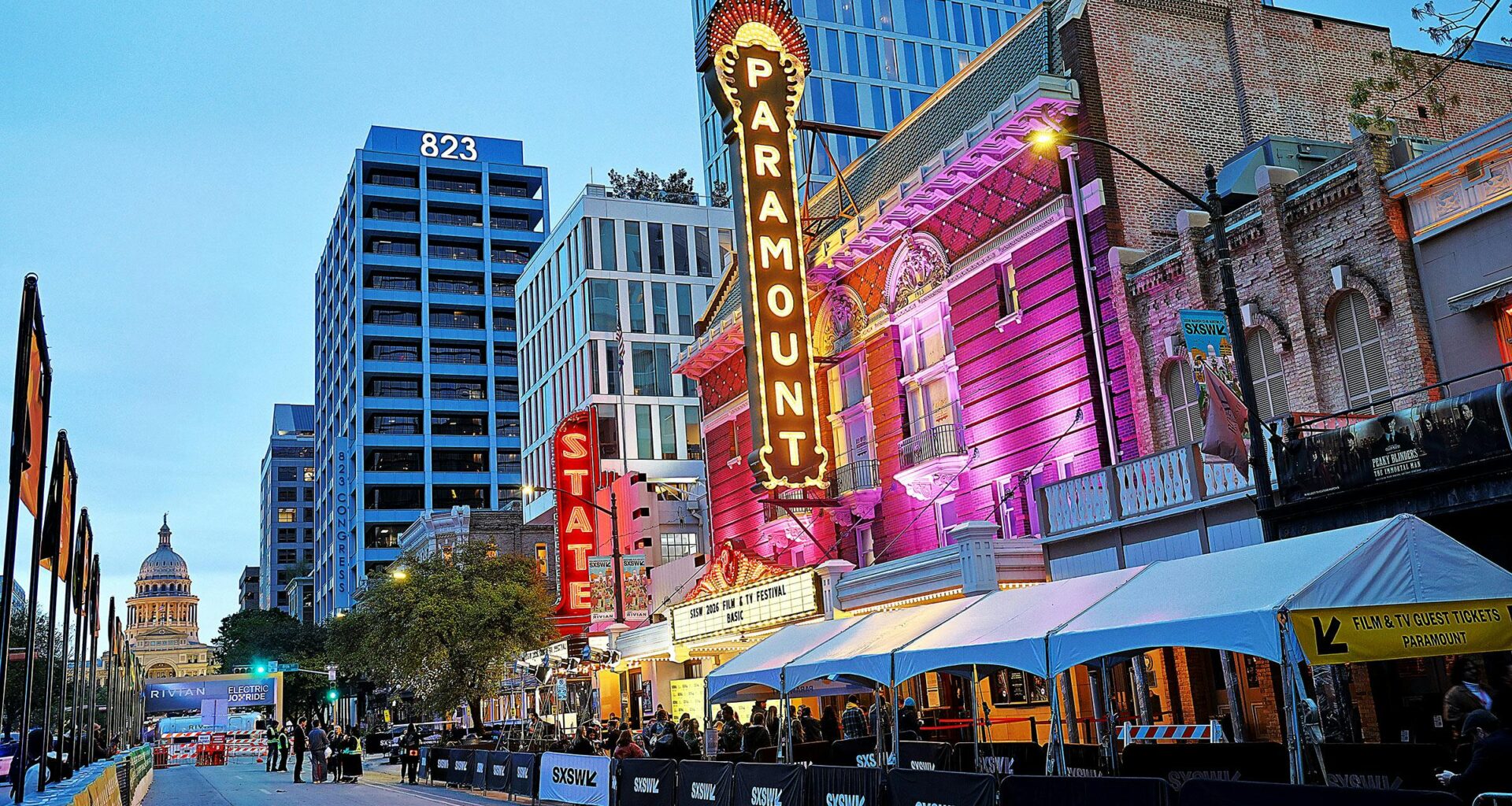
At the 2026 edition of South by Southwest, we saw a festival that’s been in the midst of reinvention since the pandemic undergo its most substantial overhaul yet. Out were a number of longtime leaders, the Austin Convention Center (the event’s home base for more than thirty years), and two entire days of programming. All of this followed a year during which rumors about the signature Austin event’s future swirled: After introducing London and Sydney editions, might the Texas festival relocate? (Leadership insists it will not.) Can SXSW maintain a balance between the artists it relies on for the film and music festivals and a tech industry increasingly built around defense and military investment? And what’s going on with the music festival, anyway?
The event ended Wednesday, and now we have some insight into where things are headed. Texas Monthly’s Dan Solomon and Andy Langer, both veteran reporters on the SXSW beat, discussed what happened this year and what might come next.
Andy Langer: Going into this SXSW, I wasn’t shy about guessing aloud that it might be the last. Thursday through Saturday felt lively enough that I thought I might end up eating serious crow, but by Sunday the drop-off was stark, and the new format—the “clubhouse” zones, fewer music venues, seven compressed days—started to feel less like a reinvention than a reshuffling of the same pool of badge holders into tighter spaces. So, I’m curious: What evidence did you see that SXSW’s reinvention actually worked, rather than simply making a smaller festival look busy?
Dan Solomon: I guess it depends what you mean by “worked.” This year was never going to look like the prepandemic festival—and there’s a wide gulf between the raucous spring-break version of SXSW that we used to see and “this being the year the bottom falls out badly enough that the California-based ownership cancels its Austin festival.” Maybe a smaller festival that looks busy is working.
If that’s the case, I think the first four days were a success. The innovation-track sessions at the hotel spaces were more full than I remember them being in years past; the music venues, whether huge spaces like Stubb’s and ACL Live (booked with superstars) or small venues like the Continental Club (booked with locals), were lively. If the tragedy of an artist coming all the way to Austin to play a set to six bored people looking at their phones occurred again this year, I was fortunate enough not to see it. The film festival, typically the brightest part of the event in the Penske era [Penske Media bought a stake in SXSW in 2021 and secured a controlling interest in 2023], still packed its venues for a lot of screenings. Even the clubhouse thing—basically SXSW-branded brand activations with free pinball and the promise of people watching in lieu of actual programming—attracted enough visitors and were generally neat to check out. I like pinball!
One of the problems of the postpandemic SXSW festivals has been that the things just felt diminished, compared with the peak era of the 2010s. That drop-off has been stark. This year, I had an actual tough call over which show to attend at the music festival—did I want to see BigXThaPlug and his crew of Dallas artists at ACL Live or catch Alanis Morissette and Ella Langley at Stubb’s?—which was the sort of decision I haven’t had to make since 2019. This year we had a vibrant, busy-seeming festival with big stars in town performing, speaking, or red-carpeting all weekend. In that sense, yes, it worked. But—and this is a big but—even if you agree with all of that, I want to know what you thought of the experience after the weekend, when, on Sunday and with three full days of programming still to go, the Austin airport appeared to have set a new record for departures.
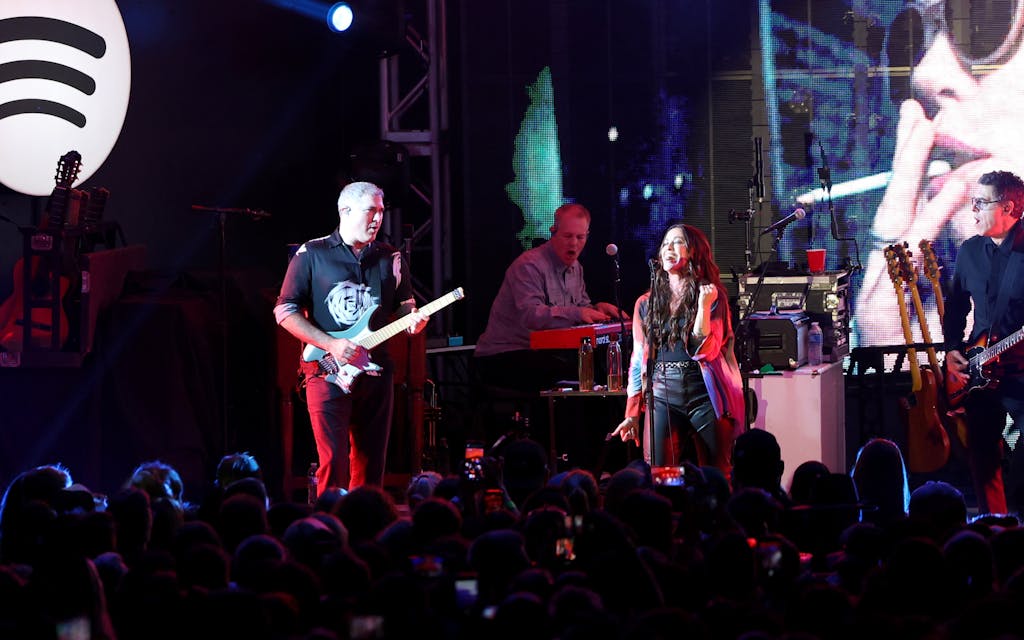 Alanis Morissette performing at Stubb’s on March 14, 2026.Anna Webber/Getty
AL: I think a lot of what you’re describing was true for the first few days, and I’ll admit that’s what made me wonder if I’d been too pessimistic. But I kept thinking back to Disney World’s practice of intentionally overestimating ride wait times: If the sign says ninety minutes and you’re on the ride in sixty, you feel like you’ve beaten the system. People judge the experience they think they’re having.
Did some version of that happen at SXSW this year? Without the convention center dispersing people across enormous hallways and ballrooms, and with far fewer music venues overall, you’re naturally concentrating the same (or even smaller) pool of badge holders into smaller spaces. Suddenly, the festival seems—in person, and in photos and videos—packed.
None of that means the early-week energy wasn’t real. But it does raise the question of how much of what we saw Thursday through Saturday was genuine momentum versus what you might call crowd-density optics. And that’s why Sunday felt revealing. Once the weekend crowd started leaving—something the airport numbers seemed to confirm—the illusion got harder to maintain. The challenge for SXSW’s new format may be sustaining its energy across the full seven-day run. If most people arrive early and head home by Sunday, you’re essentially splitting the festival into two halves, one crowded and one noticeably thinner.
DS: That was my observation too. I attended SXSW London in 2025 and SXSW Sydney the year before that, and both of them operated in a similar way to this year’s Austin event—but with the critical difference being that those festivals started on a Monday and ran through the weekend, while the Austin team opted to go Thursday through Wednesday. That strategy makes sense given the natural rhythm of the festival in years past—kicking off with a big four-day weekend of film and tech and then having a second wave of music, with an entirely different audience for that part. This worked in the prepandemic years, but again, it’s faltered since then. I don’t know that it’s easy to switch the schedule, but I do feel bad for the folks whose performances, talks, or screenings happened after Sunday, because the vibe shift was significant.
That said, I swung by the Ty Dolla Sign set at Stubb’s on Monday, which was the biggest event happening that night, and while the venue wasn’t at capacity, it was pretty close to full. And the film screenings, which have always fallen off by day five of the festival, were still drawing big crowds late in the event.
AL: Right—the screenings still packed theaters and brought celebrities to town, and that makes sense when you think about where SXSW still fits in the film business. Studios need premiere opportunities in the window between Sundance and Cannes, and SXSW sits squarely in that calendar. Plus, for film talent, the studios foot the bill, and Austin still has a cache of its own for celebrity types. On the other side of things, SXSW’s tech offerings feel different now. SXSW Interactive used to feel like the center of the internet for a few days—today, even with AI dominating the conversation, the most important discussions seem to be happening at conferences focused specifically on that world. SXSW’s innovation track had interesting panels, but it didn’t feel like the place where the next big tech shift revealed itself, as it once did.
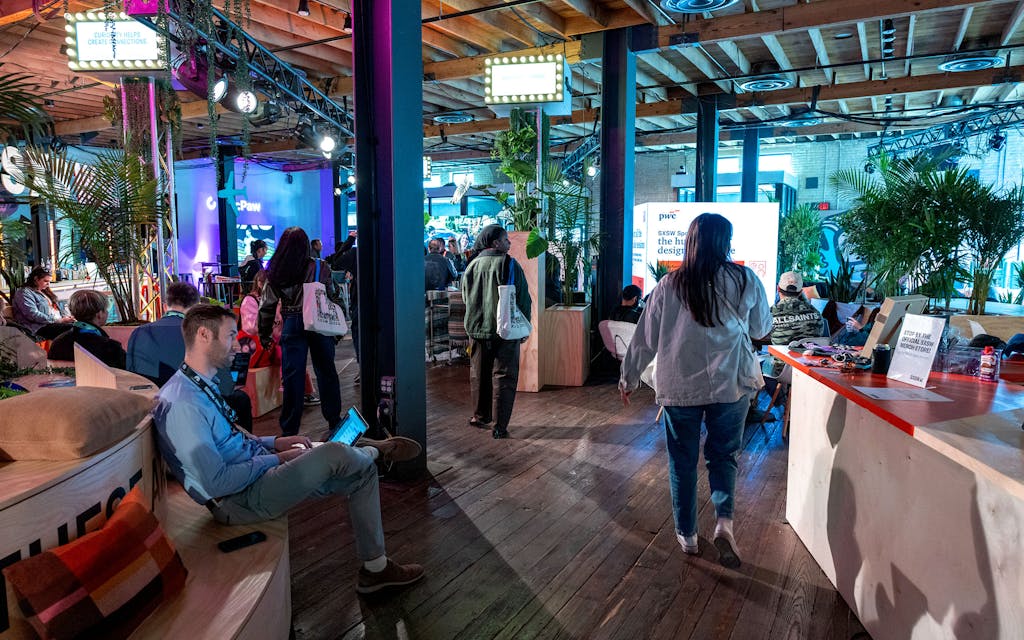 Inside the Innovation Clubhouse.Travis P. Ball/SXSW/Getty
DS: I think the issue with SXSW’s tech scene has less to do with SXSW than with changes in the tech world at large. There were a lot of AI panels this year, sure, but they were less “let’s talk about the future of the internet” than “let’s foster discussion about how hopeless people seem to feel right now.” So many panels had names like “Will Your Job Still Exist in Five Years?,” “Is Search Totally F**ked?,” and “The Last Human at the FDA: AI on a Skeleton Crew.” These topics are not fun! The tech community that flocked to SXSW at the start of the century was ambitious and optimistic; since then, we’ve seen the NFT bubble burst, Silicon Valley Bank implode (which happened during SXSW!), and AI become both the most hyped and least loved tech product of our lifetimes. So I wonder how much SXSW Innovation can thrive in a world that’s moving toward technopessimism, where there are no unicorns left for investors to hunt and the vibes are bad at the ground level.
AL: What’s odd is that the part of tech that actually is booming—military innovation—is exactly the part SXSW badge holders seem least comfortable embracing. The protests we’ve seen over the last couple years suggest it’s still a pretty controversial lane for the festival. Meanwhile, the most-discussed SXSW moment this year might have been a random badge holder interrupting a panel to propose to Keke Palmer—a pretty good reminder that this event still creates viral moments and can turn a serious conversation into something weirdly human. But thinking about the old SXSW spirit brings us to the bigger question, about what SXSW is trying to become.
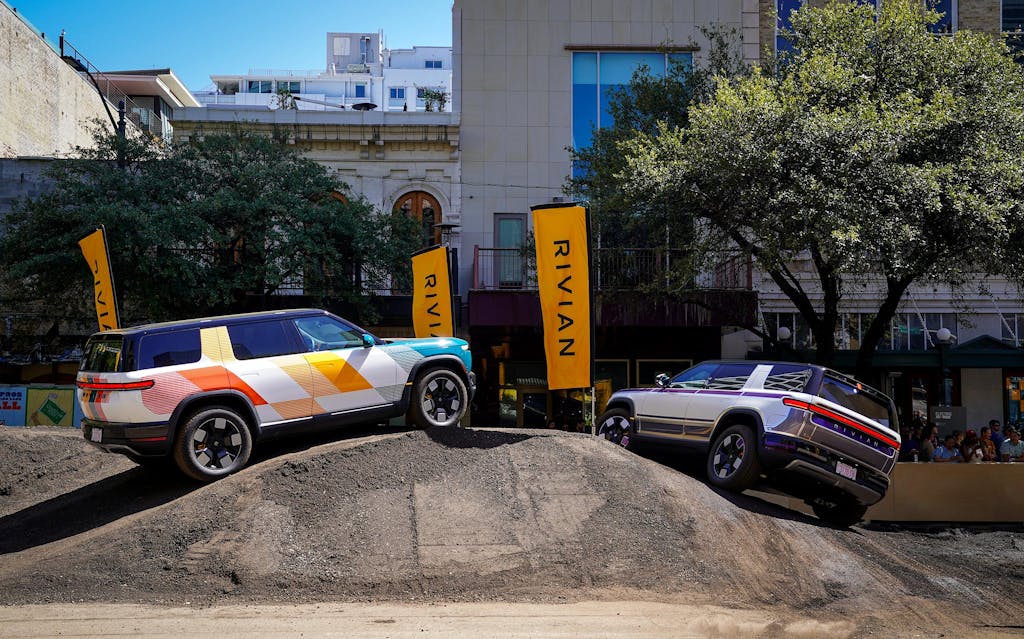
A Rivian activation allowed participants to sit shotgun on joyrides over mounds of dirt.Julia Beverly/Getty
DS: There’s simply no possibility that we get back to the SXSW of the 2010s with a floundering tech industry, a dying music industry, and a film industry that’s clinging on to a sheer-sided cliff by its fingernails. I’ve talked to a lot of people who are or have recently been involved with the festival, and the answer to your question changes depending on who’s giving it. But I do know what path is actually available to them: a smaller but stable event that has the potential to grow, in the event that the industries at the heart of SXSW go back into expansion mode.
For a ten-ish-year stretch, it seemed like SXSW drove the culture. But the real driver of culture was the low interest rates that gave us those booming tech, music, and film industries. If all of those industries are tightening their belts, then there’s no chance that SXSW is going to look like it did when money was free. The folks in charge should be less focused on returning to the glory days and more intent on keeping their festival sustainable, relevant, and ready to expand if another boom comes around.
A last question: Do you think SXSW is in a position to do that?
AL: I think it is, but the deciding factor may be less about the programming and more about the ownership. Does Penske have the patience to sustain a smaller SXSW while figuring out the next version of the festival? Or does the event eventually become something that gets spun off, sold to an investment group, or even acquired by a consortium of Austin-based interests that decide the festival is too important to the city’s economy to lose? Another possibility that’s getting whispered about: If the economics get tough enough, SXSW—despite mattering enormously to Austin culturally and financially—could eventually move to a city like Las Vegas, where tax incentives and infrastructure make large festivals easier to run.
I’ll end with this. For years people complained about the bloated brand-carnival days of yore—the giant pop-ups, the corporate activations, the Doritos vending machine stage. But this year I heard more than a few people say they actually missed them. Those activations (buoyed by enormous marketing budgets) were proof that SXSW was the place to be. Attendees are longing for that energy, and they’re not getting it.
To answer your question: Yes, SXSW can survive, perhaps as something smaller and more film-and-TV-anchored. It seems more poised to live on than I thought it would be last year. But—I think it’s crossed a line, permanently, from what it was, and it can never be that again.
Read Next