
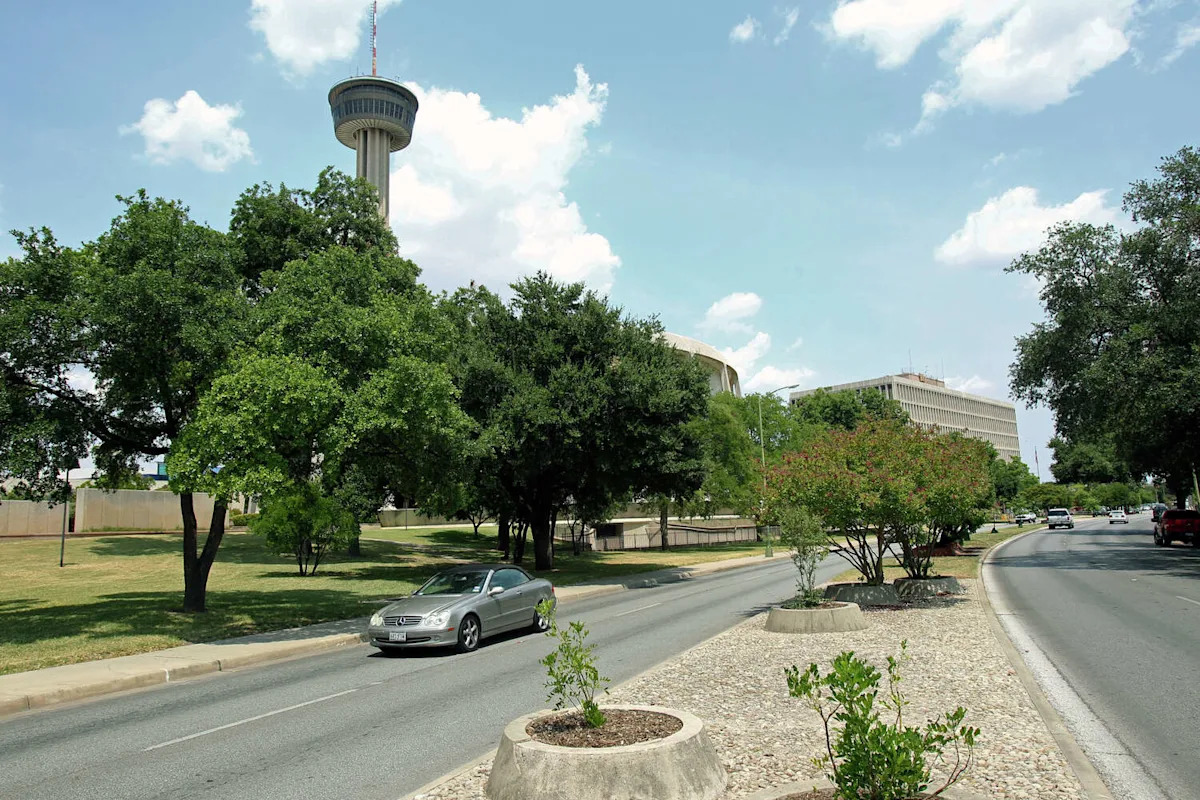
The history of Durango Boulevard dates to the late 1880s, when it was part of the 36-square-mile area that made up the original San Antonio city limits.
Durango was among several street names from that era still in existence when the move to rename it began over a century later.
It’s been nearly 15 years since signage bearing the Durango Boulevard name was removed and replaced with César E. Chávez Boulevard signs. The move was intended to honor the late civil rights and labor leader, whose work supporters said had a lasting and wide-reaching impact. Opponents wanted history protected, insisting there were other ways to honor Chavez.
Supporters first initiated renaming a city street after Chavez years before it became official – amid controversy, court proceedings and a divided City Council.
ALSO READ: San Antonio scraps Cesar Chavez Day plans. Here’s what it’s doing instead.
Now, the street name could change again, as Chavez and his legacy come under renewed scrutiny in the wake of a New York Times investigation detailing allegations that he groomed girls and sexually abused women. Some City Council members are calling for the city to rename the street bearing his name, and they’ve asked for public meetings to be scheduled so that residents can have input on a new street name.
With a new name for the downtown street all but certain, San Antonio Explained looks back at the long, contentious road that led to the 2011 renaming of Durango Boulevard.
Why name a street after Chavez?
The idea to rename one of San Antonio’s streets after Chavez started in the 1990s, a few years after the labor leader’s death in 1993 and in the wake of other tributes to him across the Southwest.
A push to rename Commerce Street after Chavez was debated in 1999. The group pushing for the Commerce name change was opposed to Mayor Howard Peak’s idea to rename Durango, according to newspaper archives. Renaming Durango would mean replacing a Spanish name with another, opponents said.
Durango’s proximity to freeways meant an additional expense to replace interstate signs. The city backed off the Durango idea and offered an alternative – designate, without renaming, portions of Commerce in honor of Chavez. A few small signs that read “Cesar Chavez Memorial Way” were installed along the 14-mile thoroughfare, but the street name remained Commerce.
ALSO READ: San Antonio reels as Cesar Chavez legacy crumbles following sex abuse report
The idea to rename Commerce after Chavez came up again a few times over the years, with proponents arguing the compromise of 1999 wasn’t enough to honor the Latino leader’s contributions, archives show. During various discussions, other downtown streets and parks were considered for renaming. Opponents often cited the expense and hassle to business owners faced with adjusting to the name change.
On March 31, 2011, City Councilman Philip Cortez filed paperwork to begin the process of changing Durango Boulevard to César E. Chávez Boulevard. He said a San Antonio street named after the labor leader was “overdue” and that the move to rename Durango had support, according to news reports.
Had Durango already been renamed?
In late 2002, City Council unanimously approved renaming a portion of Durango Boulevard after U.S. District Judge Hipolito Frank “Hippo” Garcia. City Councilman Bobby Perez was the one who proposed changing the street name to honor the late judge, a San Antonio native and the first Mexican American to serve as a United States district court judge for the Western District of Texas.
Council soon reversed its decision, bowing to pressure from those opposed to the name change, archives show. A 2003 ordinance designated a section of the 5.4-mile long Durango as “Judge H.F. Garcia Memorial Boulevard.” It was an honorary title, and not an official renaming of Durango.
ALSO READ: Alamo Colleges will be open March 31 after canceling Cesar Chavez holiday
Why did people oppose renaming Durango?
Preservationists wanted to keep the Durango name because of its historic ties to San Antonio’s original city limits. Others felt the estimated $99,000 expense of changing street and highway signs to accommodate a new name was unnecessary.
Many opponents said they didn’t have an issue with honoring Chavez. They felt it could be done in a less expensive and intrusive way, such as erecting a statue downtown or naming a city park after him.
How did the Durango renaming happen?
On April 19, 2011, City Council voted 7-4 to rename Durango. The vote followed more than three hours of public input and council discussion.
The decision was split along ethnic lines, with all the Latino council members voting in favor of the name change.
Critics said the move felt rushed, and some questioned if proper steps had been followed. The San Antonio Conservation Society sought a restraining order to stop the name change, claiming City Council violated the procedure for renaming streets established by city ordinance.
The parties reached a settlement, allowing the city to rename Durango. The conservation society was able to get the city to agree that any future renaming of streets in the city’s original 36-square-mile area would require a review by the Historic and Design Review Commission (HDRC).
The Durango Boulevard street signs were removed and replaced with César E. Chávez Boulevard signs on Aug. 9, 2011. Google Maps had already adopted the new street name months earlier, even though at the time the city was prohibited by a court from making the change.
This article originally published at San Antonio Explained: Why Durango Boulevard was named after Cesar Chavez.