
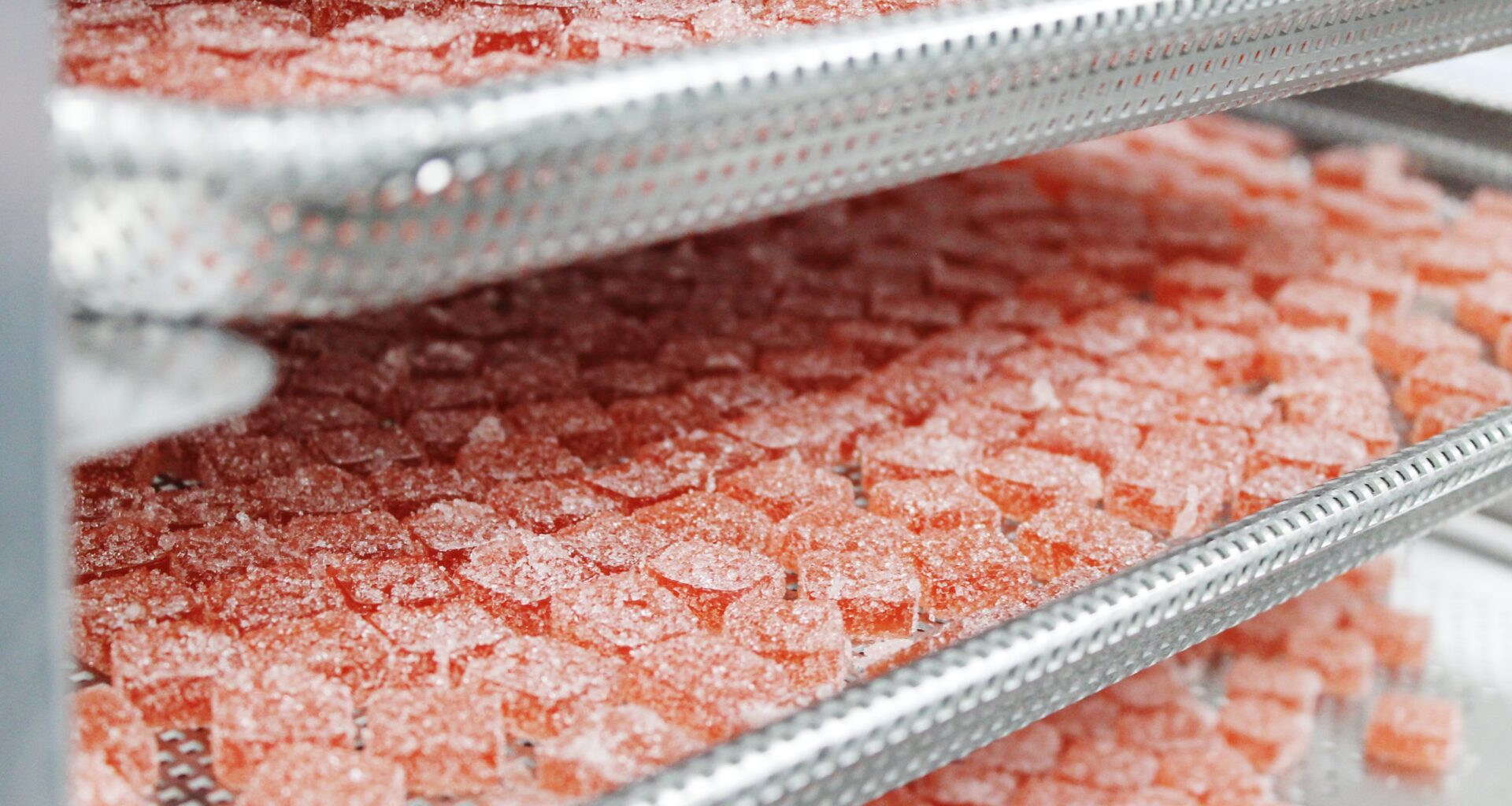
Fort Worth wants clarity on regulating medical cannabis dispensaries and satellite locations after a dispensary applied for a permit to operate off Camp Bowie.
State lawmakers last year expanded the state’s Compassionate Use program that allows authorized businesses to sell physician-prescribed products made with marijuana for numerous ailments.
Texas Original was one of three dispensaries permitted to operate statewide before the Legislature’s new law required the licensure of 12 more by early 2026. The company plans to open its second Fort Worth store at 2812 Horne St. in a modest storefront once occupied by a 7-Eleven and adjacent to the recently opened Danny’s Greek Cafe.
The Bastrop-based company can operate the store in the commercial district under the city’s current ordinance that treats satellites as pharmacies.
But Texas Original’s application, filed late last year, raised concern among nearby businesses and prompted city officials to review its land-use ordinances to manage any future medical cannabis applications.
“My question is, is there anything we can do?” City Council member Alan Blaylock said during a briefing by staff members March 10. “I’m not specifying anything. I just want to know what options are available, if any at all.”
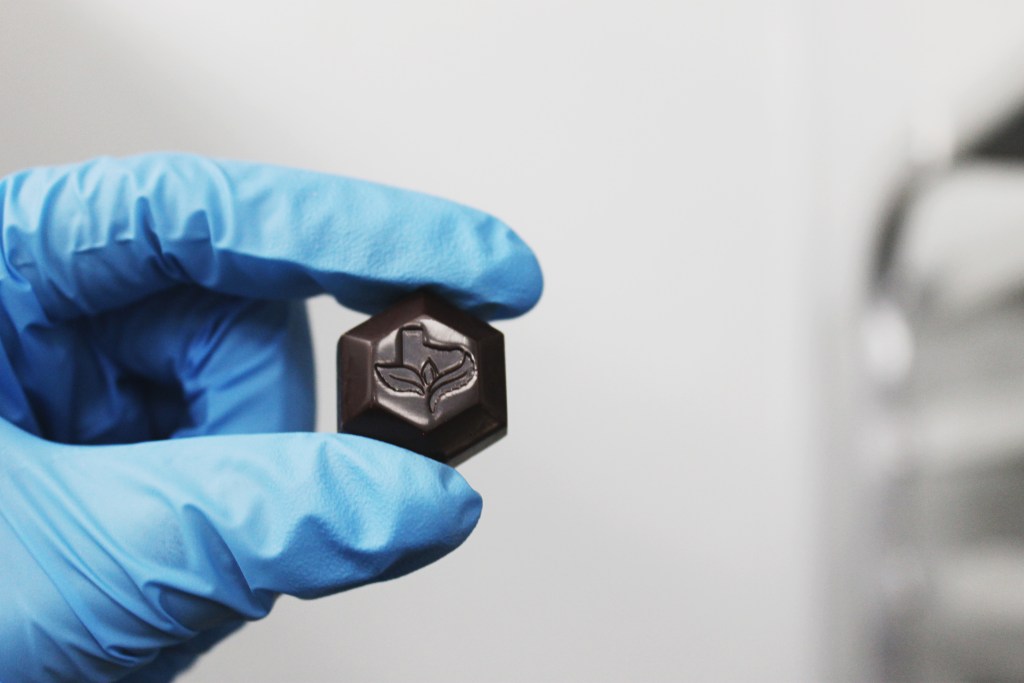 Chocolates, made with low-THC marijuana, are another product that Texas Original produces and sells in Texas. (Courtesy | Texas Original)
Texas law bars local governments from any action that “prohibits the cultivation, production, storage, dispensing, or possession of low-THC (medically prescribed) cannabis” products. It mandates that satellites be at least 1,000 feet from a school or daycare. But less clear — and what city staffers are reviewing — is whether local governments can use zoning and other tools to regulate location.
“Is there any way to put some guidelines around it, boundaries around it?” Blaylock asked during the briefing, noting the state law does not cap the number of satellites that can open in an area. Businesses around the Horne Street location have raised questions about what satellites can sell.
The Texas Compassionate Use Act allows the dispensaries and their satellites to sell medically prescribed, non-smokeable products made of low-THC cannabis. Tetrahydrocannabinol, or THC, is the psychoactive ingredient that produces a high.
THC-infused products include gummies, tinctures, beverages, candies and topicals. Texas allows physicians registered in the program to prescribe these products for more than 100 ailments, including intractable epilepsy, PTSD, Crohn’s disease, cancer, chronic pain, multiple sclerosis and a terminal illness.
Texas Original’s chief executive Nico Richardson declined a request for an interview through a spokesperson.
“We’re expanding access to medical cannabis with plans for a new full-time location in Fort Worth, and we look forward to sharing more details soon,” Richardson said in an emailed statement. He added, “As fellow Texans, we remain committed to improving access to high-quality medicine across the state.” He did not provide responses to emailed questions.
Texas Original’s application to operate on Horne Street drew questions from board members at Camp Bowie District Inc., formed 25 years ago to help revitalize the strip.
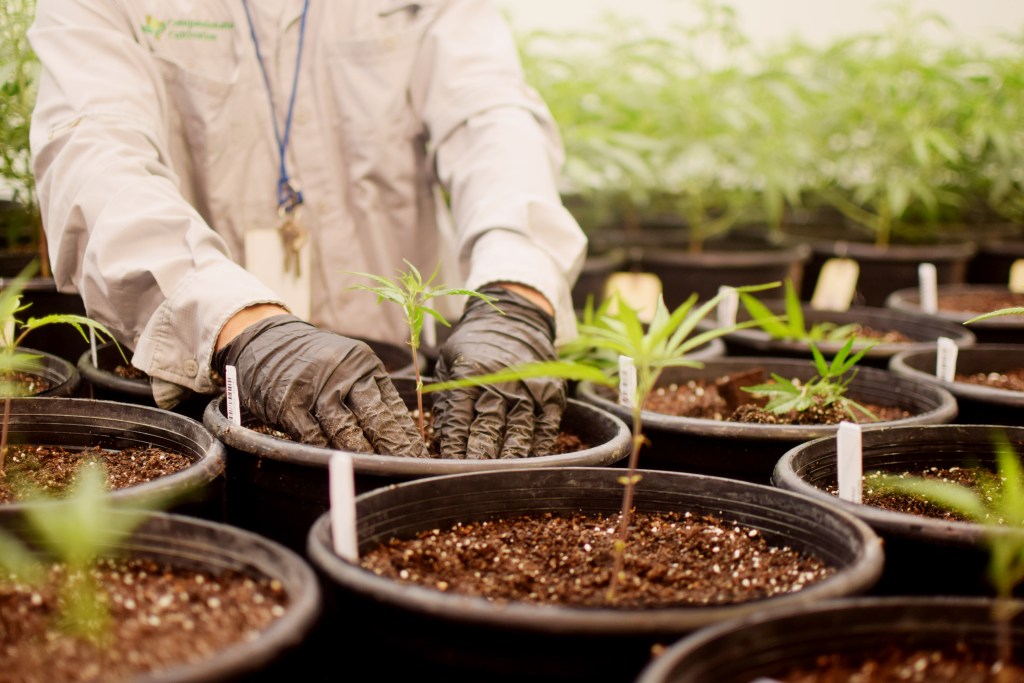 Texas, under new state law, is licensing a total of 15 dispensaries authorized to cultivate and produce medical marijuana and use it to make and sell low-THC products such as chocolates for sale in the state through satellite locations. (Courtesy | Texas Original)
Lydia Guajardo Rickard, the nonprofit’s executive director, said the biggest question was about what the store could sell.
“We did not question the pharmacy side of the business,” Rickard said. But “the board did not want another CBD store, or for it to turn into a vape store.”
State law permits dispensaries’ satellites to sell medically prescribed medical cannabis products, acting as “patient pickup” locations.
The new law — passed 10 years after the Legislature first authorized the limited licensure to sell prescribed treatments for intractable epilepsy — doesn’t cap the number of consumer pickup locations, called “satellites,” that dispensaries can open.
But the new law requires each dispensary, including the three existing ones, to build one satellite in each of 11 “public health districts” statewide before opening another one in a district where it already has one. Tarrant County is in the state’s 19-county third district.
The three existing dispensaries’ satellites are primarily in Texas’ large metro areas. Locations that existed or were authorized prior to passage of last year’s bill are grandfathered in under previous law.
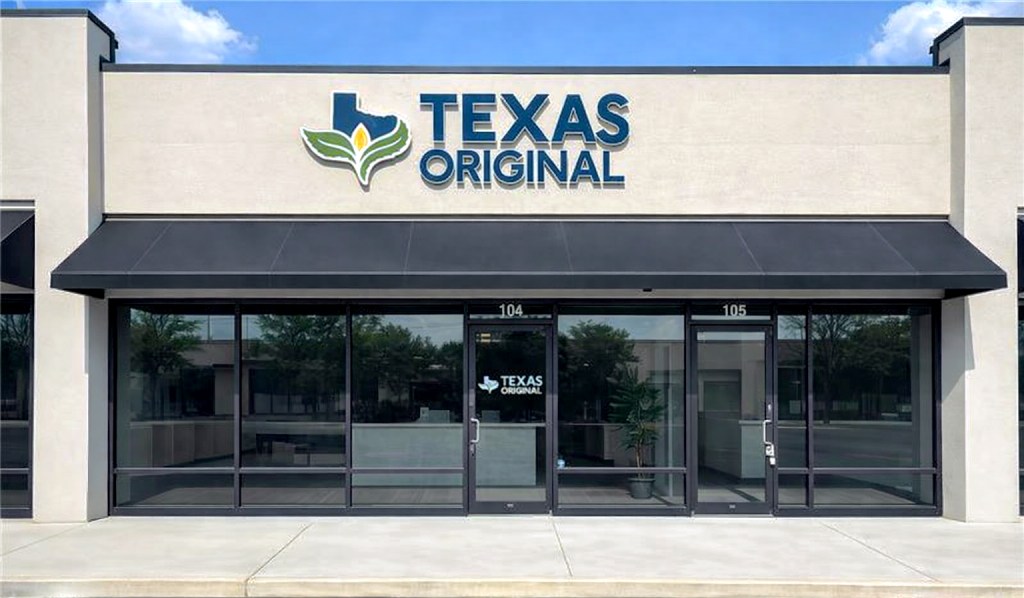 Photograph of a Texas Original satellite location. (Courtesy photo | Texas Original)
Rickard said the Fort Worth staff told Camp Bowie District that, after legal review, the Texas Original satellite qualifies as a ‘pharmacy’ and pharmacies can locate in commercial districts.
Similar to the way the Texas Alcoholic Beverage Commission regulates sellers of alcoholic beverages, anybody with a complaint about a dispensary or satellite can file one with the Texas Department of Public Safety, Rickard noted.
Officials with the DPS, which administers the Compassionate Use program, did not respond to requests from the Report for interviews or to emailed questions.
The agency conditionally approved nine of the 12 new dispensaries and is expected to approve the final three by April 1, the deadline required by the new state statute.
Rickard said Texas Original didn’t reach out to Camp Bowie District prior to making its application.
“It would have been helpful if the applicant had made any effort to meet with us as a group to help us understand the business and its operations,” Rickard said. “But that did not happen. We welcome opportunities to meet with business operators to help them be successful and to share vision and planning with newcomers.”
She said she has heard a “handful of concerns” from the business community.
“There is an unknown here,” she said. “We don’t fully understand the business model and the operations and security measures taken.”
Stephanie Scott-Sims, the city’s planning manager, said in an interview the staff expects to complete its review in May and then update the City Council’s Infrastructure and Growth Committee, which heard the March 10 presentation.
After May, any proposed changes may need to be directed through the Fort Worth Zoning Commission before moving on to the full council, she said.
The staff’s preliminary recommendation, made March 10, is to continue to treat satellite locations as pharmacies, allowed in commercial districts such as the one on Horne Street.
The staff, however, recommends the City Council split off the cultivation, production, packaging and distribution parts of the low-TCH businesses into a classification allowed in industrial districts — zoned I, J and K. Such facilities tend to be much larger than the smaller satellite pickup locations. Texas Original, for one, operates a cultivation and production facility in central Texas.
City Council member Michael Crain, whose west side district includes the Horne Street area, said the city must find a balance between access to prescribed products and neighborhoods’ concerns.
“If there’s a legitimate use, I want people to get whatever medical attention they need,” he said. “But I also think we need to balance that out with neighborhood needs. It’s just common sense.”
Scott Nishimura is senior editor for local government accountability and a Fort Worth City Hall reporter at the Fort Worth Report. Reach him at scott.nishimura@fortworthreport.org.News decisions are made independently of our board members and financial supporters. Read more about our editorial independence policy here.
Cannabis accessibility timeline
Texans’ access to medicinal marijuana changed significantly since the Legislature passed its first bill more than 10 years ago.
June 2015: Gov. Greg Abbott signs bill establishing up to three dispensaries statewide for sale of products to treat intractable epilepsy.
June 2019: Texas expands list of qualifying medical conditions to more than 100 and drops requirement for two consulting physicians to one.
June 2021: Legislature adds PTSD and cancer to list.
June 2025: Abbott signs a bill increasing the number of authorized dispensaries statewide to 15 from three. It requires dispensaries to open one satellite location in each of 11 public health districts statewide before opening a second in a district where they already have a location.
Source: Texas Original
Prescription Pickup
Texas has three licensed dispensaries for medically-prescribed products made of low-THC cannabis: Texas Original, Goodblend and Fluent Cannabis.
Texas Original
Texas Original has 18 pickup locations statewide, with five in North Texas, two in Austin, two in the San Antonio-New Braunfels area, and five in Houston. The company has one store in Fort Worth, another in Hurst, and plans one at 2812 Horne St. in west Fort Worth.
Tarrant County pickup locations:
760 Airport Freeway, Suite 300, Hurst
2529 Weisenberger St., Fort Worth
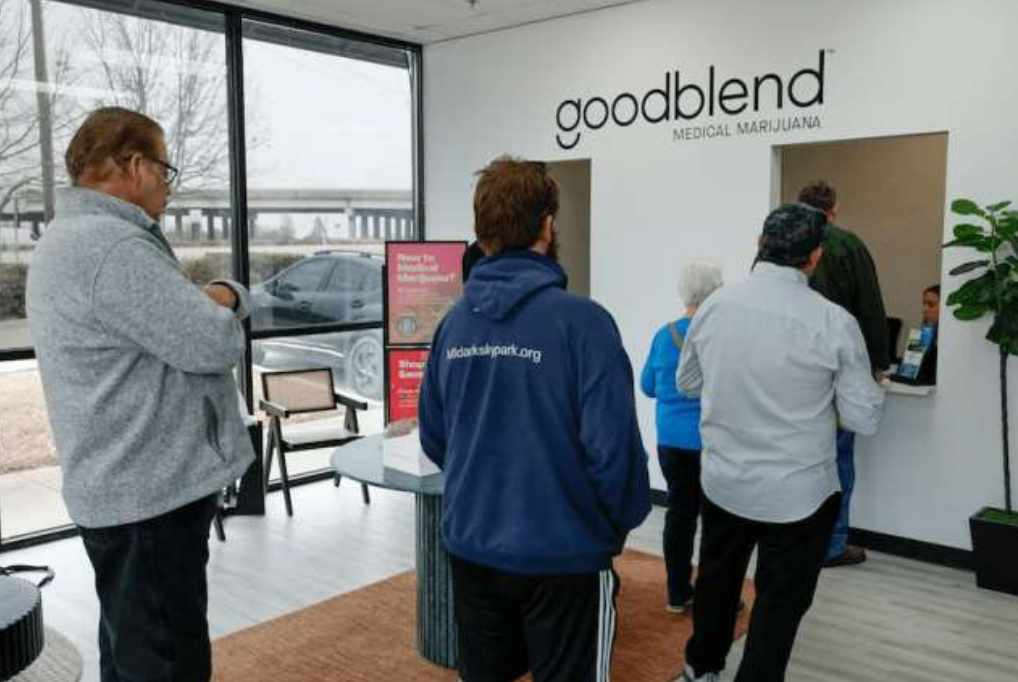 Customers line up to buy low-THC medical marijuana products at a Goodblend satellite pickup location. (Courtesy | City of Fort Worth)
Goodblend
Goodblend has three satellite locations in North Texas, including ones in Fort Worth and Colleyville; two in Houston; two in Austin, and one in San Antonio.
Tarrant County pickup locations:
1307 8th Ave., Fort Worth
6213 Colleyville Blvd., Suite 100, Colleyville
Fluent Cannabis
Fluent Cannabis has two pickup locations — one in Houston and another in Schulenberg — and none elsewhere in the state.
Sources: Texas Original, Goodblend and Fluent Cannabis
This <a target=”_blank” href=”https://fortworthreport.org/2026/03/22/another-medical-marijuana-pharmacy-in-fort-worth-city-seeks-clarity-on-land-use-rules/”>article</a> first appeared on <a target=”_blank” href=”https://fortworthreport.org”>Fort Worth Report</a> and is republished here under a <a target=”_blank” href=”https://creativecommons.org/licenses/by-nd/4.0/”>Creative Commons Attribution-NoDerivatives 4.0 International License</a>.<img src=”https://i0.wp.com/fortworthreport.org/wp-content/uploads/2021/04/cropped-favicon.png?resize=150%2C150&quality=80&ssl=1″ style=”width:1em;height:1em;margin-left:10px;”>
<img id=”republication-tracker-tool-source” src=”https://fortworthreport.org/?republication-pixel=true&post=454095&ga4=2820184429″ style=”width:1px;height:1px;”><script> PARSELY = { autotrack: false, onload: function() { PARSELY.beacon.trackPageView({ url: “https://fortworthreport.org/2026/03/22/another-medical-marijuana-pharmacy-in-fort-worth-city-seeks-clarity-on-land-use-rules/”, urlref: window.location.href }); } } </script> <script id=”parsely-cfg” src=”//cdn.parsely.com/keys/fortworthreport.org/p.js”></script>