
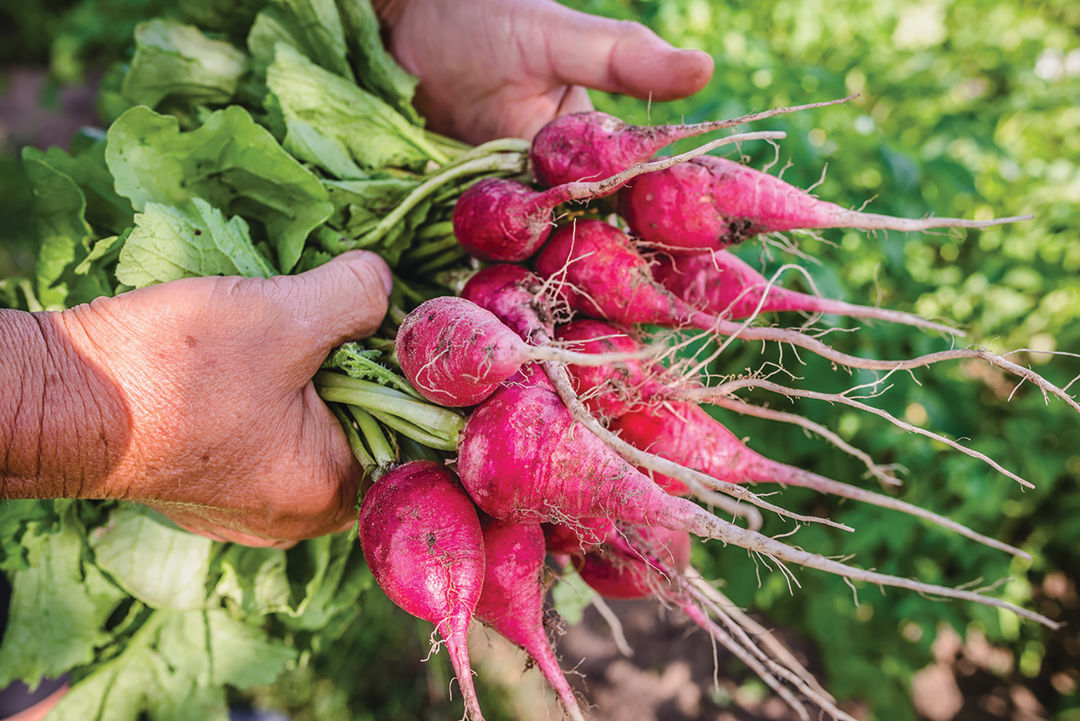
Love radishes? You’re going to want to start planting those in November.
As sure as trees leaf out and wildflowers color roadsides, gardeners emerge this time of year giddy to get growing. Houston’s semitropical climate enables us to garden year-round, with two distinct planting seasons. Because more than 10 ecoregions converge here, the region has far more plant varieties than most of us have space to grow.
For any type of garden you want, heed some old wisdom to get your greenest thumb on: Choose plants suited to our climate. Give them the soil, water, light, and drainage they prefer, and plant them at the right time. We asked local experts to share the varieties they rely on most—plants that are dependable, productive, and well-adapted to Houston conditions—so you can spend less time guessing and more time growing.
Happy gardening.
Houston’s Planting Seasons
Spring (generally March through May) and fall (typically mid-October through December) are the best planting times for almost everything. The region’s long, hot, humid summer and brief winter are mostly spent maintaining plants or letting them rest. With extreme weather events increasingly common, gardeners everywhere must be flexible. A weather app (we recommend Space City Weather) can be a key planning tool.
CULINARY GARDENS
Best for raised beds, containers, and anyone who wants edible rewards.
Carol Burton, Urban Harvest’s director of permaculture, recommends planting starts rather than seeds, though a few exceptions apply. Choosing quick-to-harvest varieties is best, so they mature before it’s too hot in spring or too cold in winter.
Vegetables need at least six hours of full sun a day and consistent watering to thrive. Plant them in raised beds containing at least 8 inches of compost-enriched soil. Pull plants after they stop producing, and refresh the soil between cycles.
Spring
TOMATOES: Plant starts in February (early March at the latest; protect during freezes). Good cherry types: Sun Gold, Sweetvine 100, Peace. Medium slicers: Early Girl, Better Bush, Arkansas Traveler, Brandywine, Black Krim.
PEPPERS: Plant starts in March. Small-fruited varieties produce best. Try Gypsy.
CUCUMBERS: Plant Mediterranean slicers from seed in late March. In April and May, add Suyo Long seed every two weeks.
BASILS: Plant seed in April. Genovese (tastes best in early summer), African blue, or Thai.
MELONS: Plant seed in April. Mini types, such as Sugar Baby, do best here.
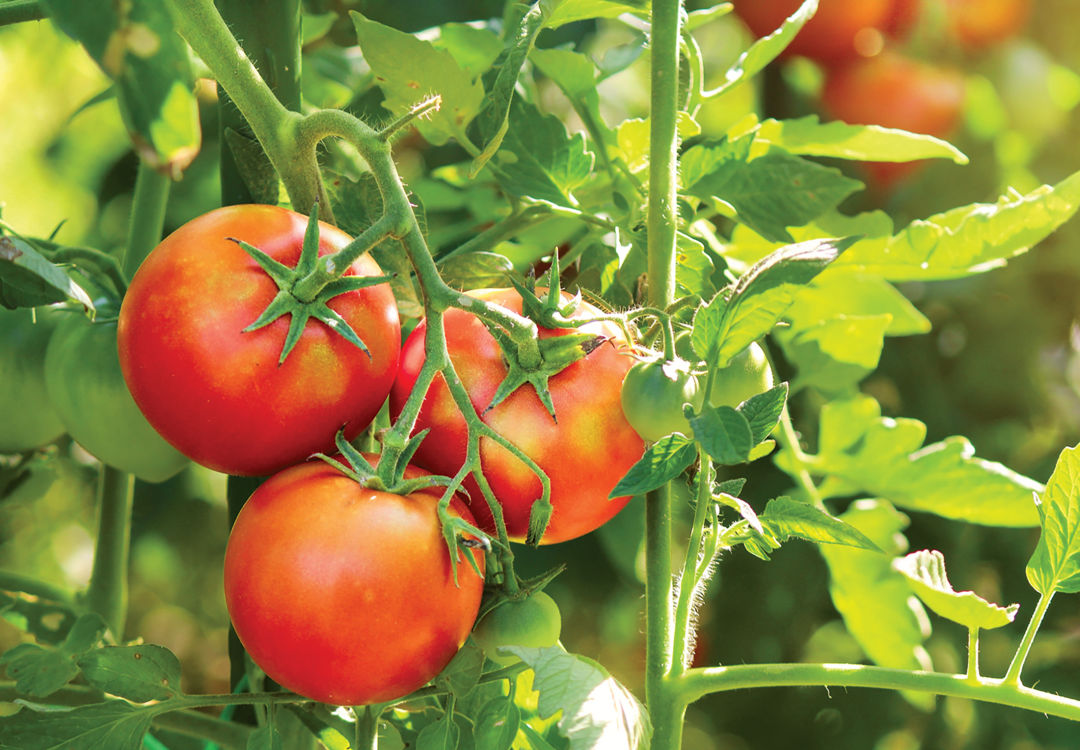
Many tomato varieties thrive in Houston gardens, and you’ll have the best luck planting them in spring and summer.
Summer
TOMATOES: Plant more starts in July. Protect from harsh sun.
SWEET POTATOES: Plant through August from slips (the rooted vine).
SOUTHERN PEAS: Plant seed through July. Try Zipper Cream Chowder.
Fall
ARUGULA: Plant from seed late September–November. Try Sylvetta.
HERBS: Plant cilantro, dill, parsley, and fennel seed late October–November.
LETTUCES: Plant from seed or transplants in October and November. Try Romaine and Bibb. Harvest only outer leaves to keep plants going through spring.
KALE: Plant mid-October–November.
CARROTS: Plant Nantes types from seed October–January.
ONIONS: Plant multiplying sets (small, dormant bulbs from the previous season) in November.
RADISHES: Plant seed in November.
Winter
FIG TREES: Add a Brown Turkey tree to your yard and look forward to two summer crops.
LOQUAT: Install this small evergreen tree, with fragrant white flowers that lead to small gold fruit.
ARKANSAS BERRY TYPE BLACKBERRIES: Transplant when thorny canes are dormant.
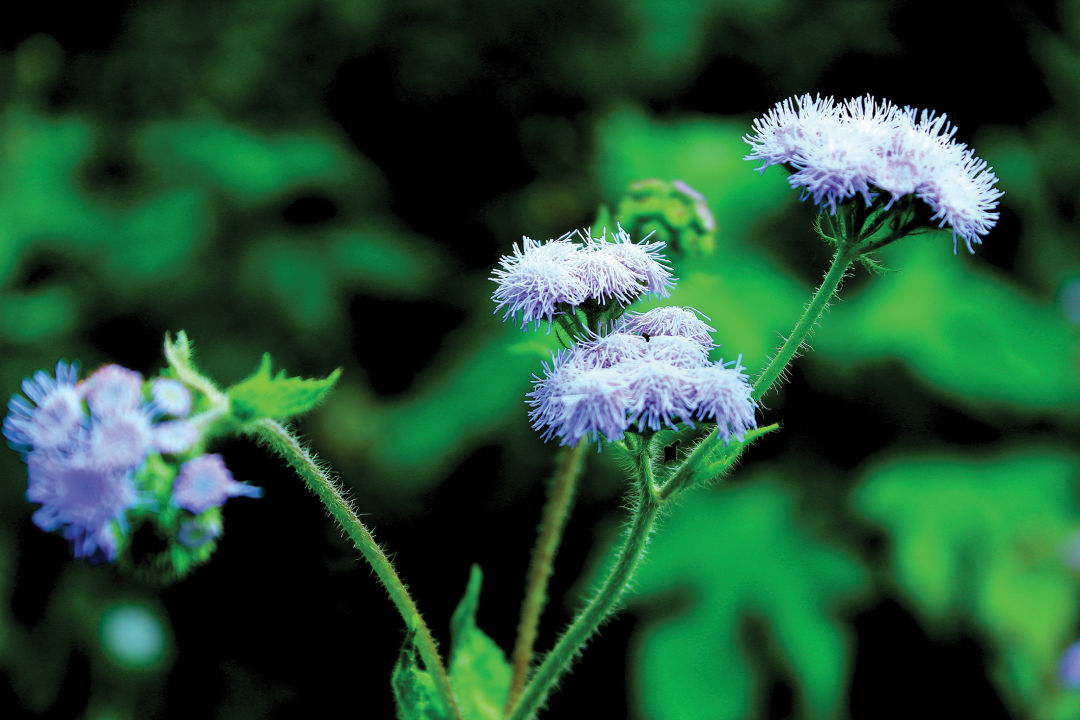
These ethereal blue mistflowers may attract butterflies to your backyard.
HABITAT GARDENS
For gardeners interested in natives, pollinators, and low-maintenance landscapes.
Habitat gardens prioritize native plants that provide food, shelter, and nesting sites for many types of critters. Once established, they are also generally less expensive and easier to maintain than ornamental gardens. Fall and spring are active seasons for habitat gardeners, while summer and winter can be “more about just sitting back and enjoying things,” says Doreen Gallevo, president of Houston’s Native Plant Society of Texas chapter. “You don’t have to water much in the summer or protect these plants from freezes,” she adds. “Your plants are well-adapted to the seasons, and you’re going with the flow of nature.”
Many native plants have deep roots that absorb stormwater, reducing street flooding. Chemical fertilizers and pesticides are no-nos; most “pests” are food for other creatures.
As with culinary gardens, transplants are often recommended, as they give more control and faster results than seeds. Learn the Latin botanical names: Numerous native plants share common names, but grow differently. Many natives, especially annuals, can be planted in early spring, but fall planting gives roots more time to grow before summer heat sets in.
Warm-Season Bloomers
FIREWHEEL (Gaillardia pulchella): A reseeding annual; yellow/red/orange flowers. The related lanceleaf blanketflower (G. aestivalis) is a super-drought-hardy perennial.
SCARLET SAGE (Salvia coccinea): Tolerates sun or shade, wet or dry. Hummingbirds love the tubular red blooms. Coral, white, and pink cultivars available.
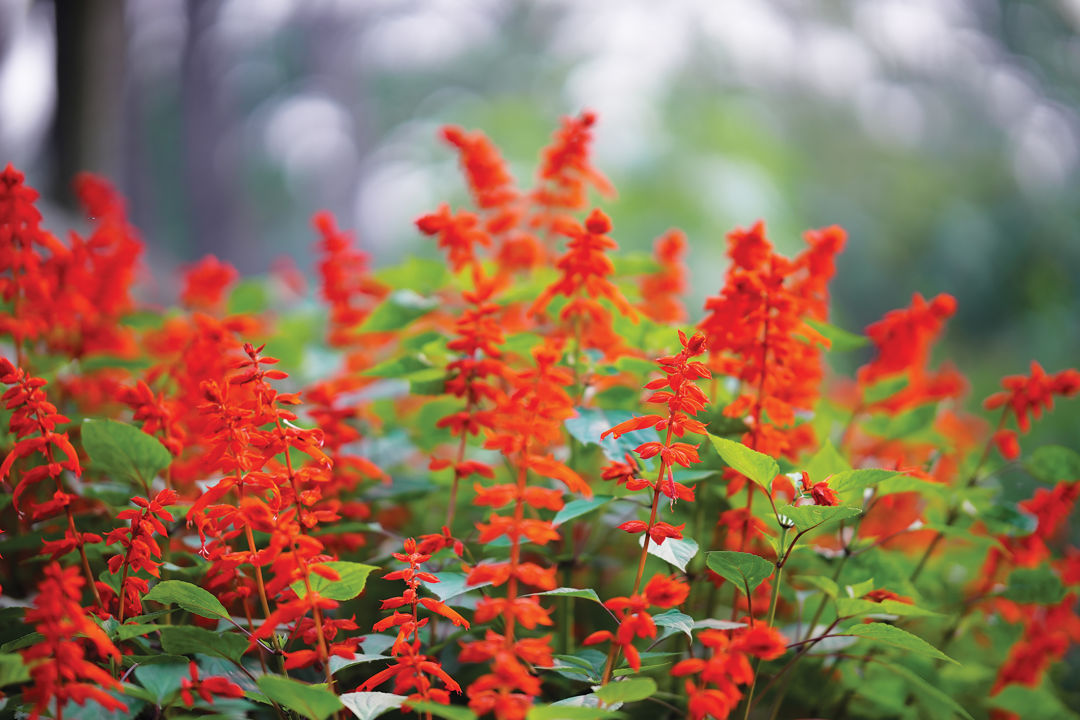
Hearty scarlet sages do well in Houston’s erratic weather while also providing tasty meals for hummingbirds.
BLACK-EYED SUSAN (Rudbeckia hirta): Sun or part shade. Large yellow flowers attract bees and butterflies with nectar. A larval host for several butterfly species. Birds eat the seed.
HEARTLEAF SKULLCAP (Scutellaria ovata): Perennial. Prefers shade. Member of the mint family with heart-shaped leaves. Native bees like the snapdragon-like spikes of violet flowers.
TURK’S CAP (Malvaviscus arboreus var. drummondii): Tall perennial. Tolerates most conditions; thrives in part shade, moist soil. Turban-shaped red flowers feed hummingbirds.
Cool-Season Bloomers
BLUE MISTFLOWERS: Multiple varieties with different leaf shapes and growth habits. All have small, lacy, lilac/blue flowers on umbels (umbrella-shaped clusters). Starts blooming in the early fall. Nectar activates the mating pheromones of monarch butterflies. Wild ageratum (Conoclinium coelestinum) is a medium deciduous shrub. Crucita (Chromolaena odorata) is larger; Gregg’s mistflower (Conoclinium greggii) is a fast-spreading groundcover.
FALL ASTERS: Small, mounding plants fill with little daisy-like flowers of purple, lavender, or white. Bees love them. Texas native aromatic aster (Symphyotrichum oblongifolium) is a showstopper. S. patens is native to Harris County. Salt marsh aster (including S. subulatum) may already grow in your lawn. Move it to a bed to grow it taller.
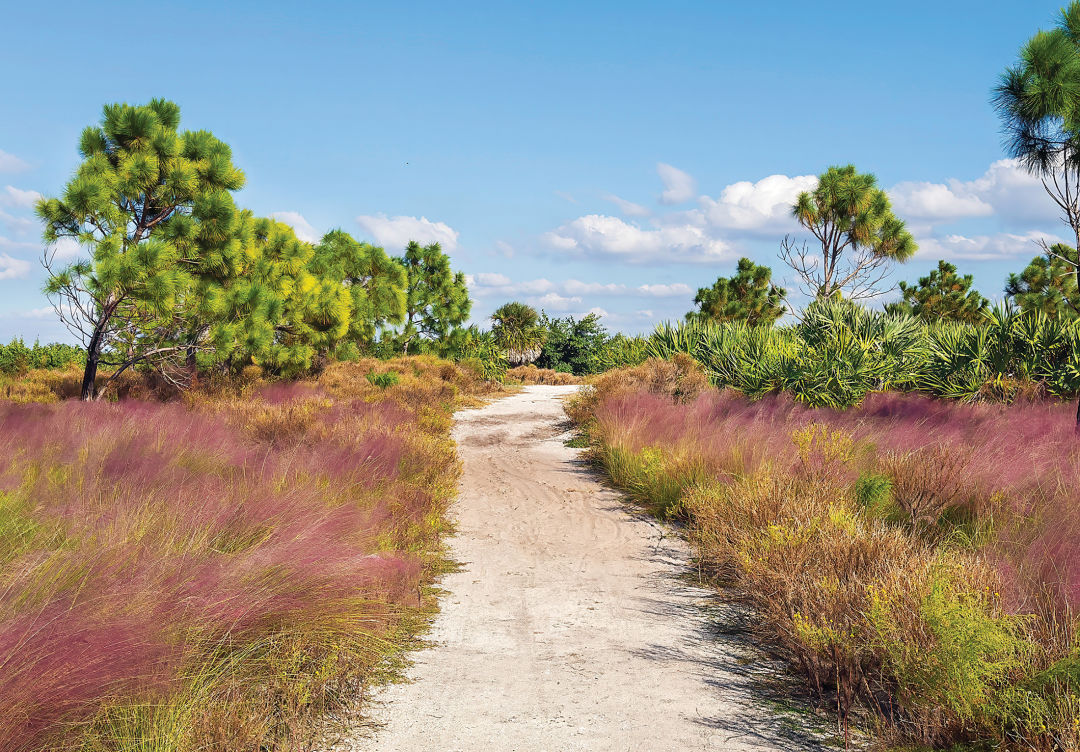
Native grasses like gulf muhly help prevent soil erosion while also looking dramatic and gorgeous.
GULF MUHLY (Muhlenbergia capillaris): Beautiful native ornamental grass; wispy, purple-pink seedheads glow in rising and setting sunlight.
INLAND SEA OATS (Chasmanthium latifolium): Beautiful native grass for part shade. Pretty seedheads mature from green to tan. Spreads quickly.
CHEROKEE SEDGE (Carex cherokeensis): Deep green, grasslike clumping perennial for shade; alternative to monkey grass.
FROSTWEED (Verbesina virginica): Tall perennial for dappled shade. Many pollinators visit the clusters of small white flowers. During freezes, stems sprout “ice sculptures,” thus the name.
AMERICAN BEAUTYBERRY (Callicarpa americana): Tall perennial for sun or part-sun. Native bees like the small flowers; birds eat the showy purple berry clusters.
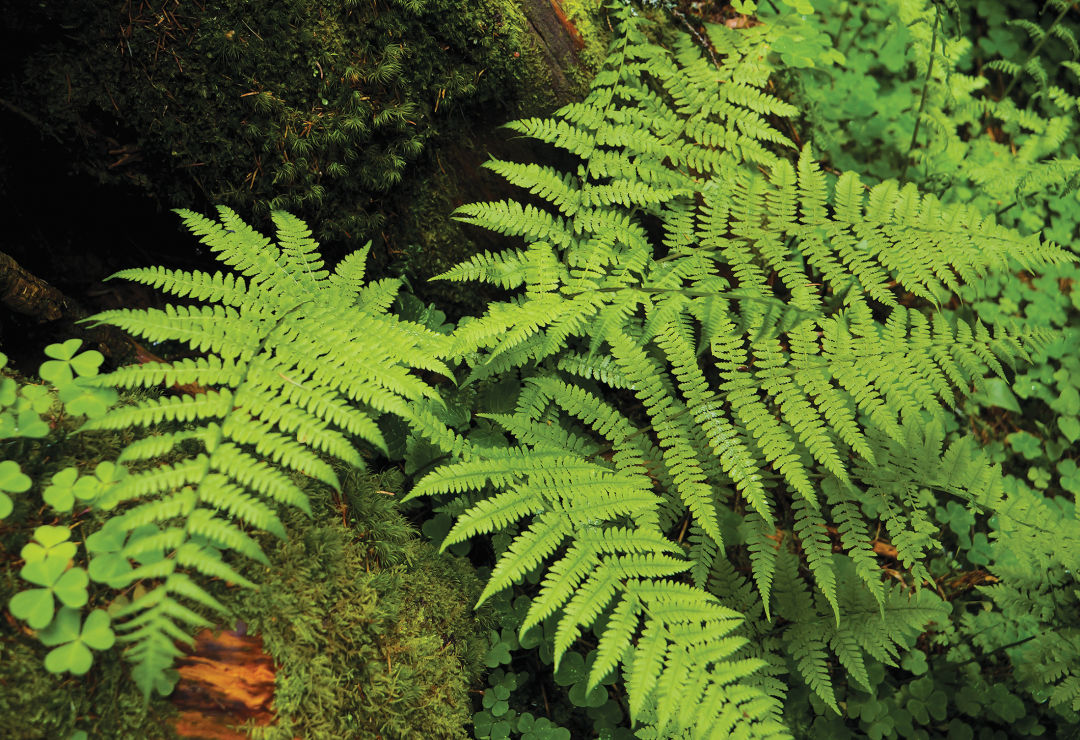
Ferns make for excellent ground cover in ornamental gardens.
ORNAMENTAL GARDENS
For color, structure, and year-round visual interest.
Ornamental gardens can take many forms, shaped by a yard’s microclimates—a woodland glade, a flower show, a tropical paradise, or a little of it all. Include evergreens for year-round structure.
Most nonnative ornamental plants benefit from consistent watering, feeding, pruning, and thinning—especially annuals, plants that live for just one growing season. “Color annuals require a little more water and food than a native display,” says Adriana Carrico, garden sales manager at Wabash Feed & Garden.
Houston has two annual bedding color seasons: cool and warm. To get the most for your money, plant ahead. For example, in March, bypass spring flowers and think forward to summer heat. Many perennials are strongest when planted in the fall, as their complex roots develop before summer. Transplant trees in winter, when they’re dormant.
“Plant zero in the summer,” says Bart Brechter, curator of Bayou Bend Collection and Gardens. When daytime temperatures exceed 85˚F, the associated nighttime temps are too high, he explains. “Most plants can handle the daytime, but they want to be able to reestablish themselves at night. When it’s 82 at night, that’s just way too high.”
Brechter also recommends planting a few caladiums for the summer, and he’s planting more than a few this year. Plans are underway for the inaugural caladium festival at Bayou Bend, which will feature more than 20,000 classic bulbs.
Spring
CALADIUMS: Beautifully veined foliage, annual for sun or shade. Multiple varieties available: pinks, reds, greens, and whites. Showy all summer.
VINCA: Heat-loving mounds of five-petaled, pastel-colored annual flowers. Full sun or part shade. Blooms through fall.
ANGELONIA: Loves sun and heat; tolerates wet or dry soil. White, pink, or lavender bloom spikes deadhead themselves. Annual; may bloom through fall.
DRAGON WING BEGONIA: Heat-tolerant mounds of red or pink blooms for shade beds or containers. Nice glossy foliage. Annual.
COLEUS: Beautiful foliage color combos; varieties for various light conditions. Annual.
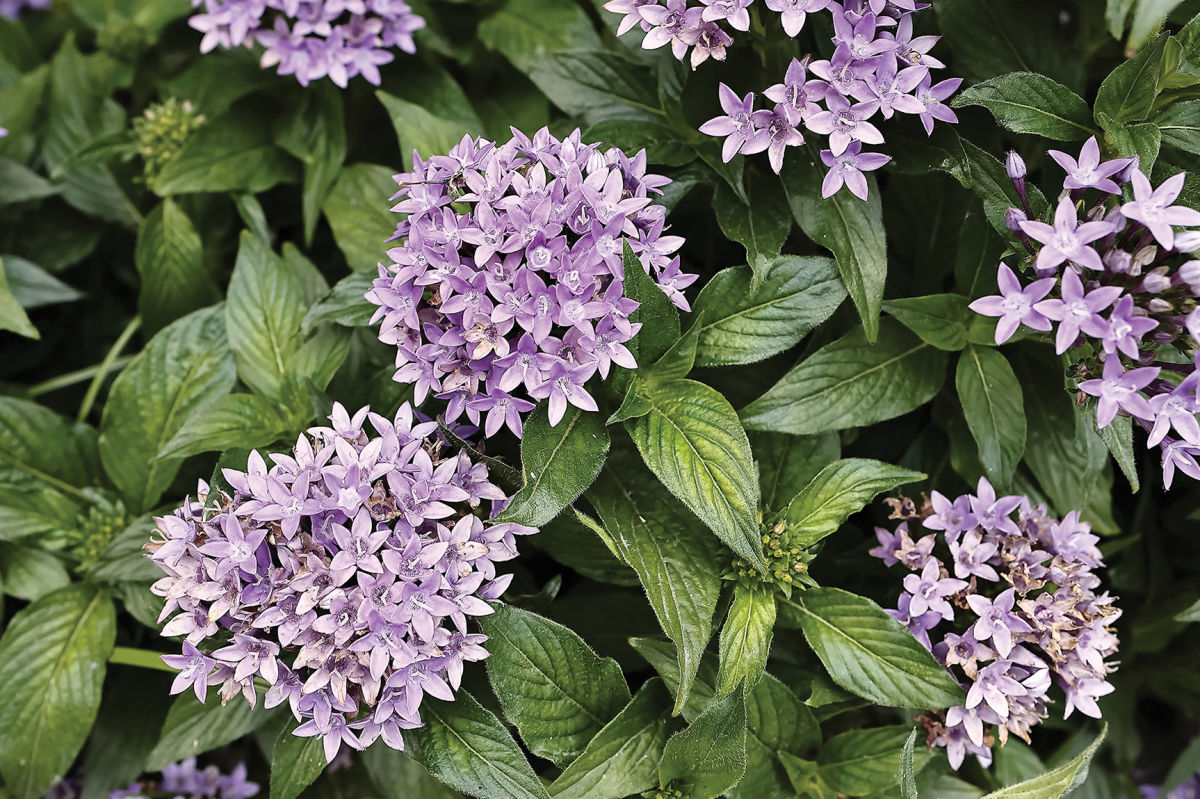
PENTAS: Clusters of small, star-shaped flowers in red, pink, lilac, white, or magenta. Butterfly and hummingbird magnet. Annual.
SALVIAS: Huge genus of woody perennials. Various sizes and colors. Flower spikes are hummingbird, butterfly, and bee magnets. Natives include autumn sage (Salvia greggii) and mealy blue sage (S. farinacea). Larger plants include the cultivar Indigo Spires (a deep blue) and silver-gray leafed Mexican bush sage (S. leucantha).
LANTANA: Drought-tolerant, fast-growing perennial for full sun. Cultivars include mounding shrubs and trailing groundcovers. The red/orange/yellow Texas lantana (Lantana urticoides) is native.
FERNS: Good perennial groundcovers for shade include the evergreen holly fern and woodfern (Thelypteris kunthii).
HARDY GINGERS: Many varieties thrive here, from deep-shade-loving peacock gingers (summer groundcovers with lavender flowers and variegated foliage) to white butterfly ginger (a five-foot-tall tropical with fragrant blossoms in late summer). Perennial; dormant in winter.
SANDY LEAF FIG IVY: A robust, evergreen perennial groundcover that won’t climb; sun or shade.
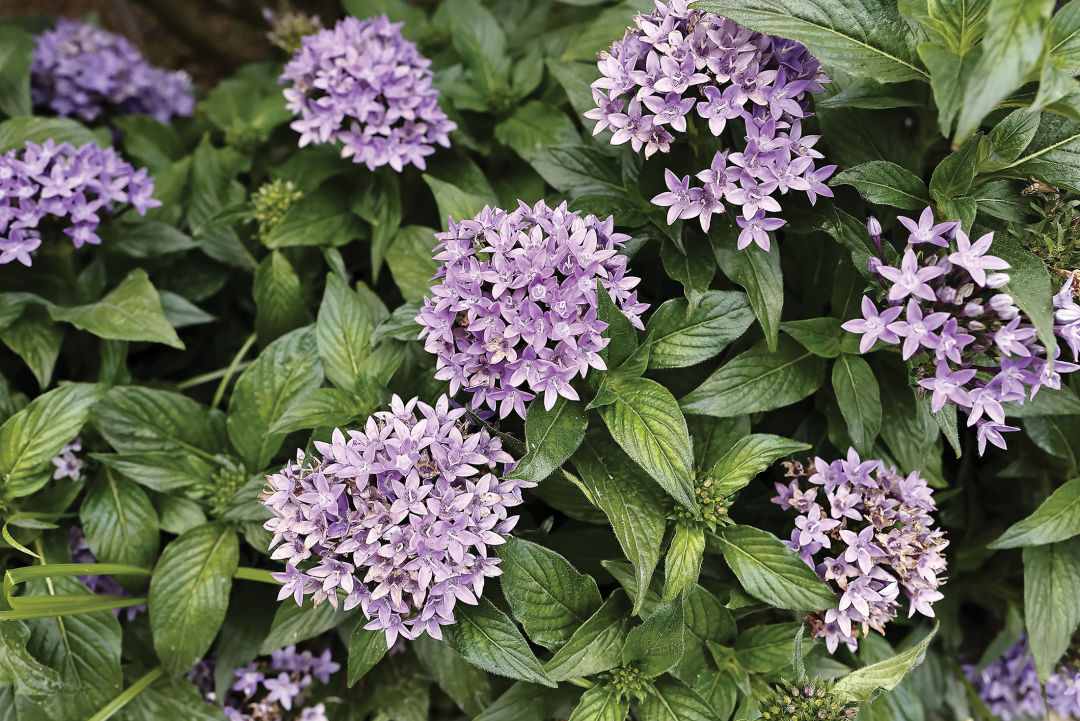
Penta is a gorgeous ornamental flower that doubles as a beloved pollinator for hummingbirds and butterflies.
Fall
VIOLAS: Charming little flowers with face-like patterns for cool weather. Many varieties, mostly purples, oranges, and yellows. Fertilize when planting; feed monthly. Annual. Sun.
CALENDULAS: Frilly yellow or orange flowers. Cool weather pollinator magnet. Annual. Sun to part shade.
DIANTHUS: Long-blooming, five-petaled flowers with frilly edges. Many varieties, including some with taller stems; red, white, pink, salmon, lavender. Annual. Some tolerate heat. Morning sun.
DUSTY MILLER: Fuzzy silver-gray foliage. Various leaf patterns. Annual. Morning sun.
SNAPDRAGONS: Lush spikes of red, yellow, or pink flowers through the cool season. Try the dwarf Snaptinis or tall Sonatas. Annual. Protect from hard freezes. Full sun.
ROSES: Many hardy, heat and humidity-tolerant varieties, including shrubs and climbers. Try the shrubs Belinda’s Dream (light pink), Double Knock Out (red), Alister Stella Gray (yellow), Plum Perfect (plum), Popcorn Drift (white and yellow), and the small climbers Sunrise Sunset (peachy-pink) and Highwire Flyer (fuchsia).
PLUMBAGO: Old-fashioned cascading perennial with sky blue or white flowers from spring until frost. Drought-tolerant. Sun to part shade.
AMARYLLIS: Large family of lily-like perennial plants grown from bulbs. Shiny, sword-like leaves. Dramatic white, red, or bicolor flowers in late winter or early spring.
DWARF YAUPON: Evergreen native perennial; can be pruned to shape. Good alternative to boxwood. Sun or shade.
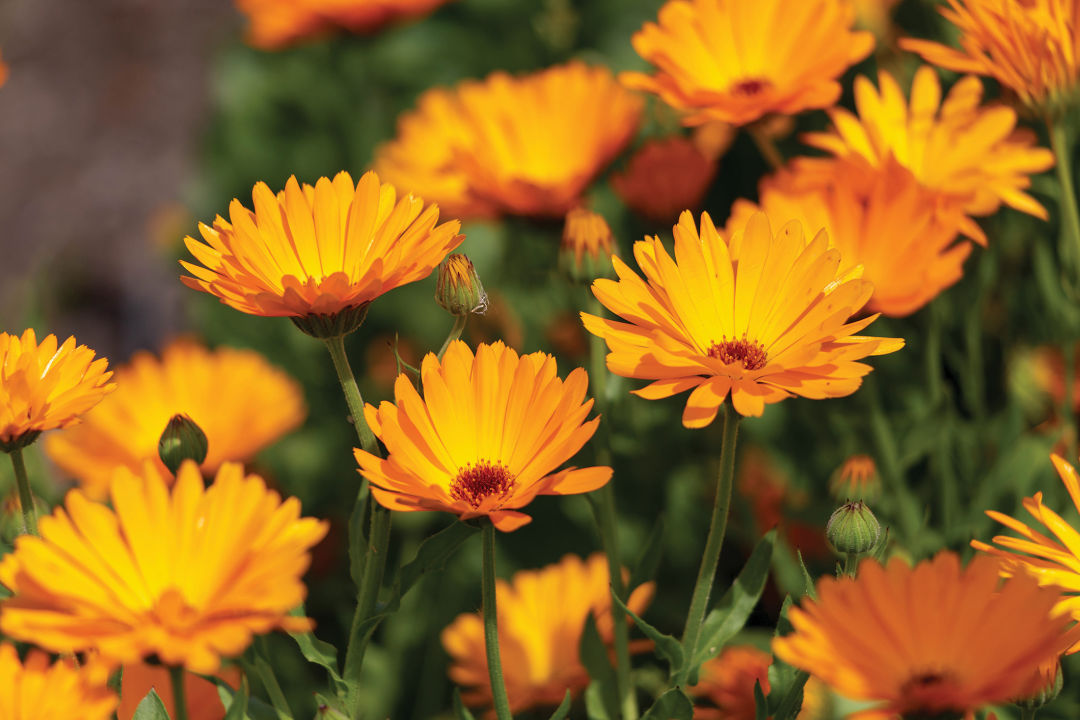
Calendulas add some welcome color to the fading greens of fall.
Winter
Recommendations from Barry Ward, executive director, Trees for Houston.
EASTERN REDBUD (Cercis canadensis): Demure native tree (to 25 feet); lilac-pink flowers cover the bare branches in spring. Yellow fall color. Deciduous. Light shade.
MEXICAN PLUM (Prunus mexicana): Small native tree (to 35 feet). Distinctive bark; fragrant white flowers in early spring; deep red fruit July–October (good for jelly or birds). Deciduous. Sun.
CHINESE FRINGE TREE (Chionanthus retusus): Small, showy multistemmed tree (to 20 feet) with fringelike white panicles in spring. Deciduous. Full sun to part shade.
BURR OAK (Quercus macrocarpa): Majestic native shade tree (to 75 feet) with gnarled branches and giant acorns in basketlike cups. Deciduous. Sun.
CEDAR ELM (Ulmus crassifolia): Drought-tolerant native shade tree (to 50 feet) with yellow fall color. Larval host for butterflies including the question mark and mourning cloak. Moderately fast grower. Deciduous. Sun.
SYCAMORE (Platanus occidentalis): Large native tree (to 100 feet); distinctive cream-and-greenish peeling bark. Deciduous. Sun.
YAUPON HOLLY (Ilex vomitoria): Pride of Houston cultivar (to 18 feet) has upright form. Can be shaped into a tree. Red berries in winter attract birds. Evergreen. Drought-tolerant. Sun or part shade.
RETAMA (Parkinsonia aculeata): Fast-growing, small Central Texas native tree (to 15 feet). Yellow flowers in spring attract pollinators. Ribbony leaves, thorny branches. Deciduous. Drought-tolerant. Sun.
TEXAS PERSIMMON (Diospyros texana): Small native tree (to 15 feet). Small, fragrant white flowers in spring; sweet fruit July–September. Larval host to gray hairstreak and Henry’s elfin butterflies. Deciduous. Drought-tolerant. Sun.
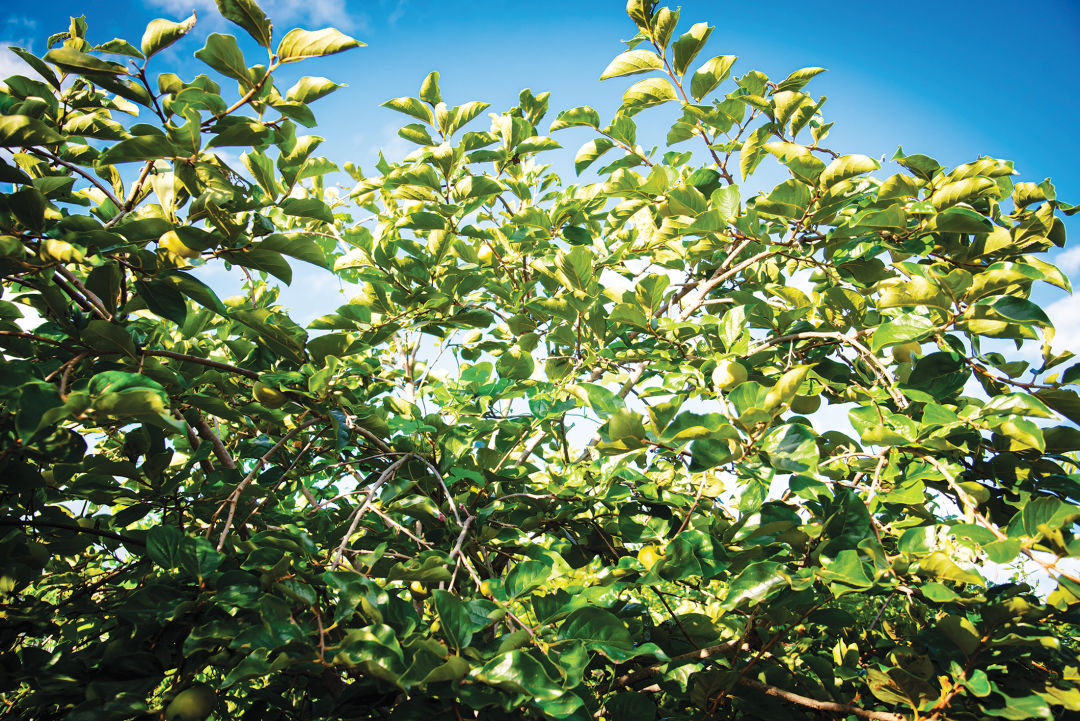
Even when water is scarce, a Texas persimmon tree can grow tasty, jewel-like fruit.
Pro Tip
Start small. Integrate natives into ornamental gardens or define habitat beds well with edging. Use grasses and sedges as a matrix, and limit your flower palette to sizable clumps of the same species so that pollinators may more easily find them.