
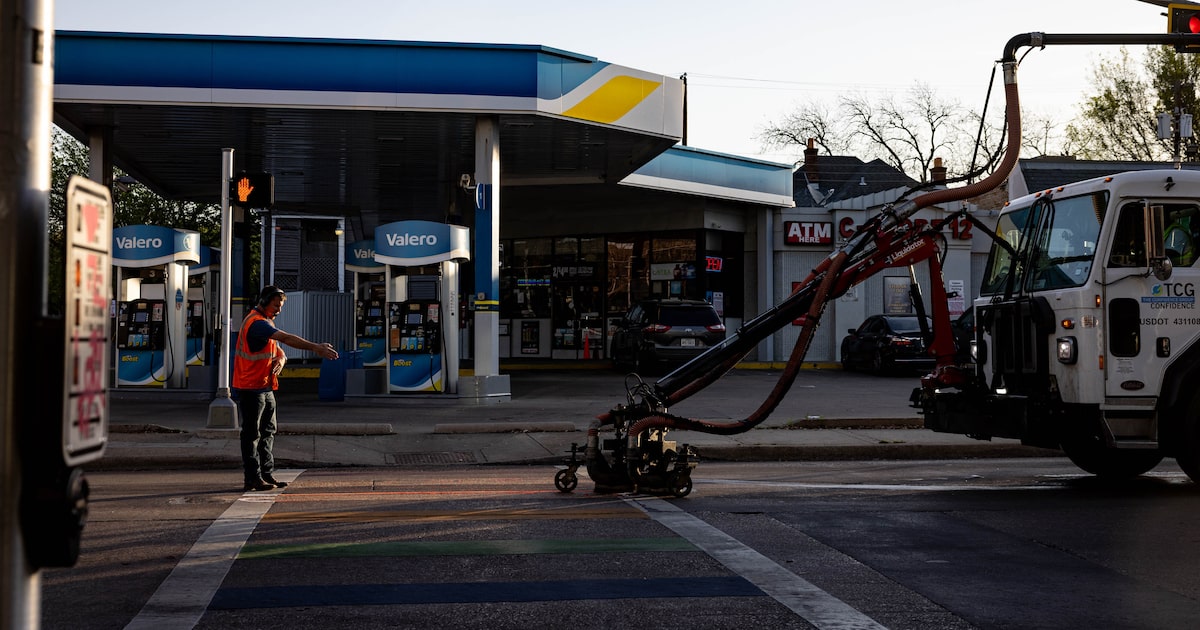
Residents and workers in the Oak Lawn neighborhood say the removal of rainbow crosswalks has left them feeling surprised, unsafe and, for some, targeted.
Dallas officials began stripping the crosswalk of its colors on Monday to comply with a state directive to remove “political ideologies” from public roadways.
City officials plan to remove 30 crosswalks by April 28, according to a joint memo by Assistant City Managers Dev Rastogi and Liz Cedillo-Pereira.
These include rainbow-painted markings in Oak Lawn, a historically LGBTQ community, and intersections with “All Black Lives Matter” in South Dallas.
Breaking News
The dispute began in October when Gov. Greg Abbott ordered Texas cities to remove decorative crosswalks, specifically targeting rainbow designs — a mark of LGBTQ pride — calling them distracting, nontraffic messaging.
“Texans expect their taxpayer dollars to be used wisely, not advance political agendas on Texas roadways,” Abbott said in an October statement.
City Manager Kimberly Bizor Tolbert asked for an exemption, arguing there was no evidence the artistic crosswalks compromised safety. The state denied the request in January and the city then had 90 days to comply.
San Antonio removed its North Main Avenue rainbow crosswalks in January, according to the city’s local TV news station KSAT 12. Austin removed rainbow-colored crosswalks in February in its Crestview neighborhood and on Manor Road, according to the city’s local NPR station KUT Radio.
Related
The crosswalks in the Oak Lawn neighborhood, which had long been seen by many as symbols of LGBTQ pride and visibility, were removed early in the morning.
Residents gathered to see how a truck carrying high-pressure water equipment stripped the crosswalk of its colors, one at a time.
Nico Eshay, 34, who moved to the neighborhood about six months ago, said the removal caught many off guard. He said they knew it was coming, but not that it would occur Monday.
“It’s not only the Pride crosswalk they’re removing,” Eshay said. “They’re removing one of the things people take pride in.”
Eshay described the crosswalks as more than painted pavement, calling them a point of pride for the community.
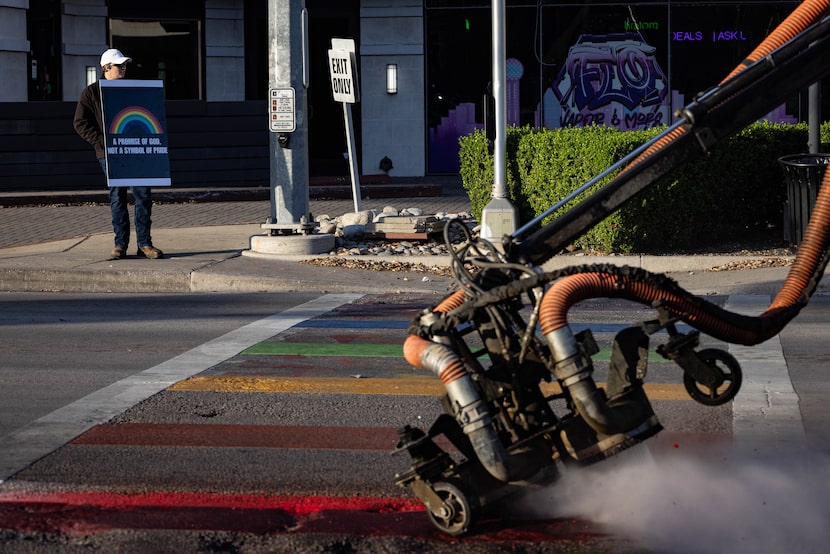
A man holds a sign with a rainbow that says “A promise of God, not a symbol of PRIDE” as a road crew works to scrub rainbow colored crosswalk bars off intersections along Cedar Springs Road on Monday, March 23, 2026, in Dallas. The man, who said he lived in the Oak Lawn area, came out to “celebrate the small victories,” he said.
Angela Piazza / Staff Photographer
Tony Vedda, president of the North Texas LGBTQ Chamber of Commerce, said he got a text from a colleague at about 8 a.m. that crews had already begun removing two crosswalks near Cedar Springs Road and Knight Street.
Vedda expressed deep disappointment Monday at seeing the crosswalks removed, especially after his organization fundraised and paid for the 10 crosswalks to be installed in Oak Lawn in 2020.
“I was watching and it just felt like six years and a lot of money and effort just down the drain,” Vedda told The Dallas Morning News. “It was harder to watch than I thought it would be.”
Vedda said the original installation of the rainbow crosswalks cost $128,250, funded by community contributions through the chamber foundation. It cost about $45,000 to reinstall them last June after they began to fade.
The North Texas LGBTQ Chamber of Commerce Foundation in a statement said the removal of the rainbow crosswalks in Dallas is part of a wider trend in Texas, where public displays of support for the LGBTQ community are increasingly being targeted by political and regulatory actions.
The foundation said it believes showing support for inclusion is not a political act, but a core community value that strengthens local identity and economic success. They said such expressions are appropriate and necessary in public spaces.
“At the end of the day, it’s colors on pavement,” Vedda said. “And while it’s obviously symbolic for the community and symbolic that they’re being erased, this community is incredibly resilient and we always find a way to come back and to make things better for ourselves and for the next generation.”
Justin Longoria, a 53-year-old cashier at Out of the Closet Thrift Store, said he witnessed crews removing the crosswalks as he arrived for work.
“This thing is a waste of time,” Longoria said. “I think it’s attempting to demoralize. It’s punching down.”
Longoria said he believes the change sends a negative message to the broader community.
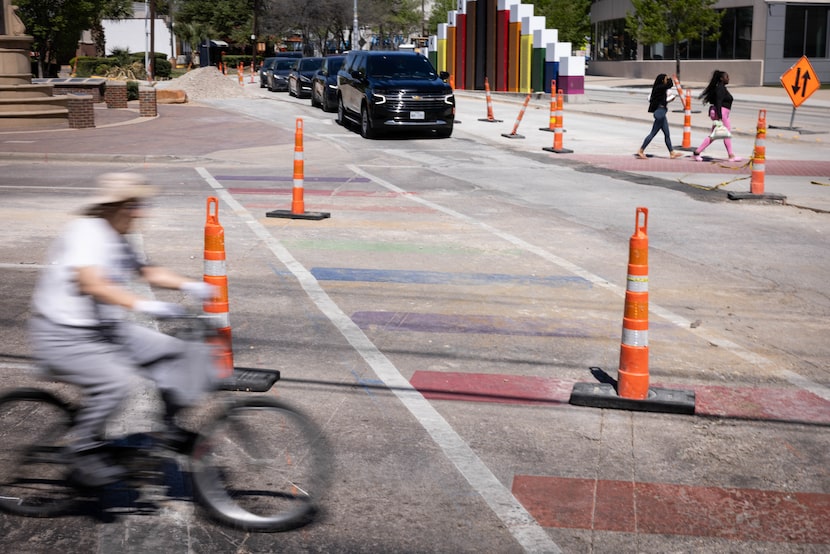
A cyclist rides past construction and a rainbow crosswalk at the intersection of Cedar Springs Road and Oak Lawn Avenue on Sunday, March 22, 2026, in Dallas.
Angela Piazza / Staff Photographer
“It’s all negative, entirely negative,” he said. “But people will persevere. It’s just a setback.”
For others, the impact feels more personal. Skye Hunter, 26, who spends time in the neighborhood, said the removal is unsettling.
“To me, it’s kind of scary,” Hunter said. “To know that people are that passionate about not having pride or not being proud of who you are.”
Related

Hunter said the action raises broader concerns about safety and acceptance, particularly for transgender people.
“It’s very scary being like that in public,” she said. “It feels like we’re regressing.”
Despite the frustration and concern, some residents said they hope the moment will galvanize the community.
“I’m hopeful that it might be the key that we needed to start fighting back more,” Hunter said.
For now, community members say the removal has left both a physical and emotional gap, one that extends beyond the intersection itself.
Staff writer Everton Bailey contributed to this report.