
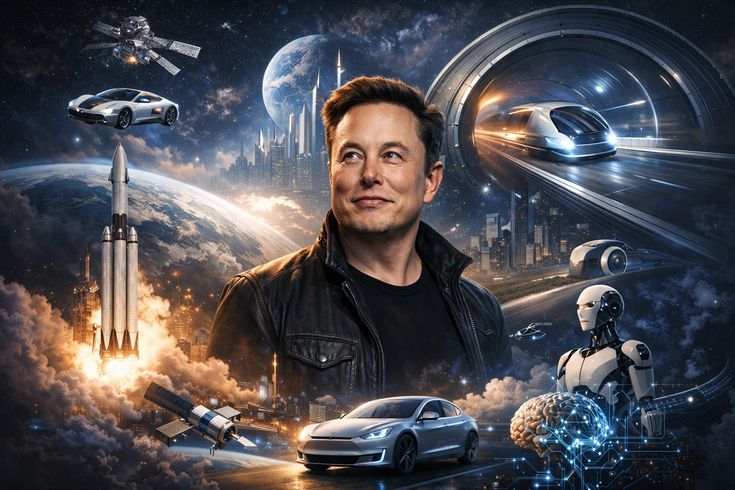
Austin, Texas — March 23, 2026 — Tech billionaire Elon Musk has formally announced a sweeping semiconductor manufacturing initiative that aims to dramatically reshape the global chip industry and secure supply for his companies’ skyrocketing demand for AI and robotics‑grade processors.
Dubbed “Terafab,” the project will see Tesla, SpaceX, and Musk’s AI firm xAI collaborate on building large‑scale chip fabrication facilities — with the first operations centered in Austin, Texas — that could collectively produce computing power on an unprecedented scale.
📈 What Terafab Aims to Do
Massive production capacity: Musk says Terafab will generate more than one terawatt of AI compute per year, a level vastly above current U.S. chip manufacturing output.
It is designed to be vertically integrated — covering chip design, fabrication, packaging, memory, and testing — all under one umbrella facility, something Musk claims doesn’t exist anywhere else globally.
🏭 Austin at the Heart of the New Chip Era
At a high‑profile event in Austin’s Seaholm power plant, Musk revealed that prototype chip fab operations will begin near Tesla’s Gigafactory Texas site, with full‑scale build‑out to follow.
This facility marks a strategic pivot for Musk’s technology ecosystem, aiming to reduce reliance on third‑party suppliers like TSMC, Samsung, and Micron — which he says cannot meet the projected demand for AI and robotics chips.
🤖 Chips for Cars, Robots & Space
According to Musk and company spokespeople:
One chip line will be optimized for Tesla vehicles and Optimus humanoid robots.
Another will power space‑based AI data centers and satellite systems operated by SpaceX and xAI.
Musk claims this dual‑focus approach could eventually “outstrip” global semiconductor output — highlighting the strategic need for domestic production capacity.
💰 Scale of the Investment
The Terafab project has been described by some reports as a $25 billion investment, making it one of the most capital‑intensive private semiconductor initiatives in U.S. history.
Financial markets reacted positively: Tesla shares climbed more than 3 % immediately after Musk’s announcement, reflecting investor enthusiasm about vertical integration and future AI revenue streams.
🛠️ Challenges and Industry Context
While Musk painted an optimistic picture, analysts warn that establishing cutting‑edge fabs — especially at leading nodes like 2 nm technology — is technically and financially demanding, often requiring years and billions in additional capital before mass production begins.
📌 Why It Matters
Terafab is more than just another factory — it’s a strategic bet on eliminating supply‑chain constraints for Musk’s largest ventures and positioning the U.S. as a leader in next‑generation AI chip manufacturing.
Officials, industry watchers, and regional business leaders are now closely watching how the project develops — from construction timelines to potential economic impacts on the Austin area and beyond.