
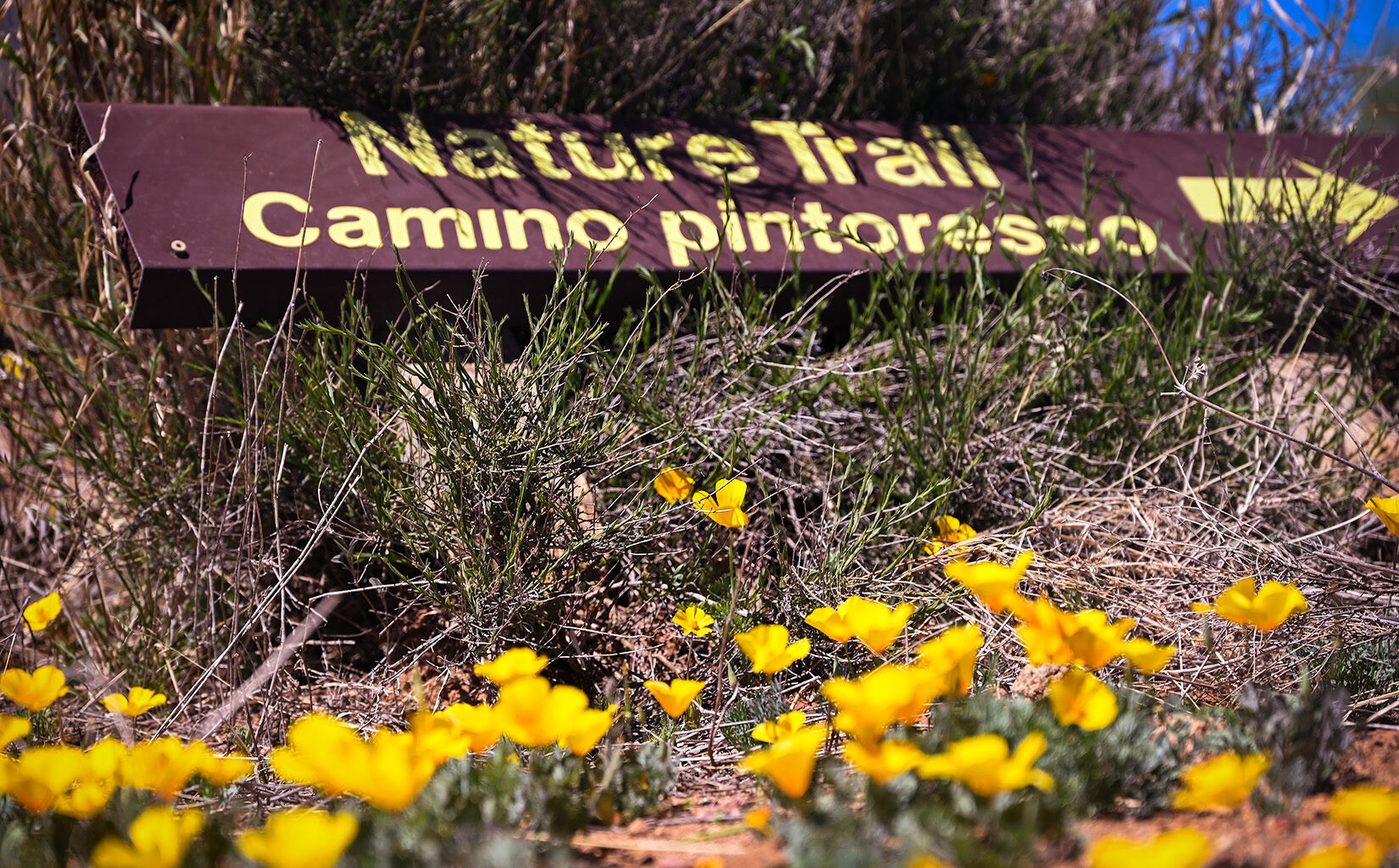
To celebrate the bloom of the Mexican golden poppies, El Paso’s Museum of Archeology hosted its annual ‘Poppies fest,’ from March 13 to March 15. This event celebrated the bloom of the flowers in the Northeast El Paso area and brought the community together to enjoy both nature and culture.
In collaboration with the Mexican American Cultural Center (MACC), the El Paso Museum of Art (EPMA), the El Paso Museum of History (EPMH) and sponsored by GECU. Local businesses and artists will also bring their work to this golden festival. Sebastian Ribas-Normand, director of the El Paso Museum of Archelogy, finds that the best part about organizing the festival is seeing the community build something together.
“The most rewarding thing I would say is the answer of vendors, community partners, volunteers and everybody that wants to pitch in and put their little grain of sand to the pile to make it better for the public. I think we’ve established some great partnerships this year,” Ribas-Normand said.
This edition of the festival will be the first time the event happens for a full weekend. However, activities started in the first week of March, or ‘The Poppies Month.’ The museum hosted activities such painting classes by professional artist Maria Natividad, drop-in activities for kids to enjoy and hikes to explore and learn about the museum grounds.
“We wanted to do that, so we have the chance to offer more possibilities to the community of El Paso and the region, but also at the same time to make it a little bit more manageable for us.” Ribas-Normand said.
Since its beginning, in 2007 the festival has aimed to take care of El Paso’s wildlife. Originally, it was meant to encourage the city to protect Castner Range, these efforts gave fruits in 2023 when it was named a national monument.
“Throughout the years, it has kept that base, but it has changed to be more a festival for the whole community, for the family and more focused on the yellow Mexican golden puppies that we have here growing during the season here in March and April,” Ribas-Normand said. “That’s kind of how it has stuck to the public. We want to shift a little bit more towards educating about preservation and conservation of the land.”
As of right now, the museum lands are the only area of Castner Range that is open to the public. For this reason, Ribas-Normand encouraged attendees to enjoy the opportunity to be at the national monument, while keeping a respectful attitude towards the plants.
“We kind of want to use these to pull and to draw attention towards, not only preserving the poppies, which are very fragile flowers, but to preserve the Chihuahuan desert in general,” Ribas-Normand said. “We have 17 acres that we want people to understand that needs to be taken care of, that they are very fragile. We have sponsors that are sponsoring yard signs with instructions of not going off, not picking up poppies and not picking up plants.”
Poppies are a cultural landmark of their own, with traditions that linger in their scent and colorful petals. For years they have been conserved and appreciated by El Pasoans, which is why the Museum of Archeology emphasizes the importance of remembering that picking one can be damaging to the whole plant.
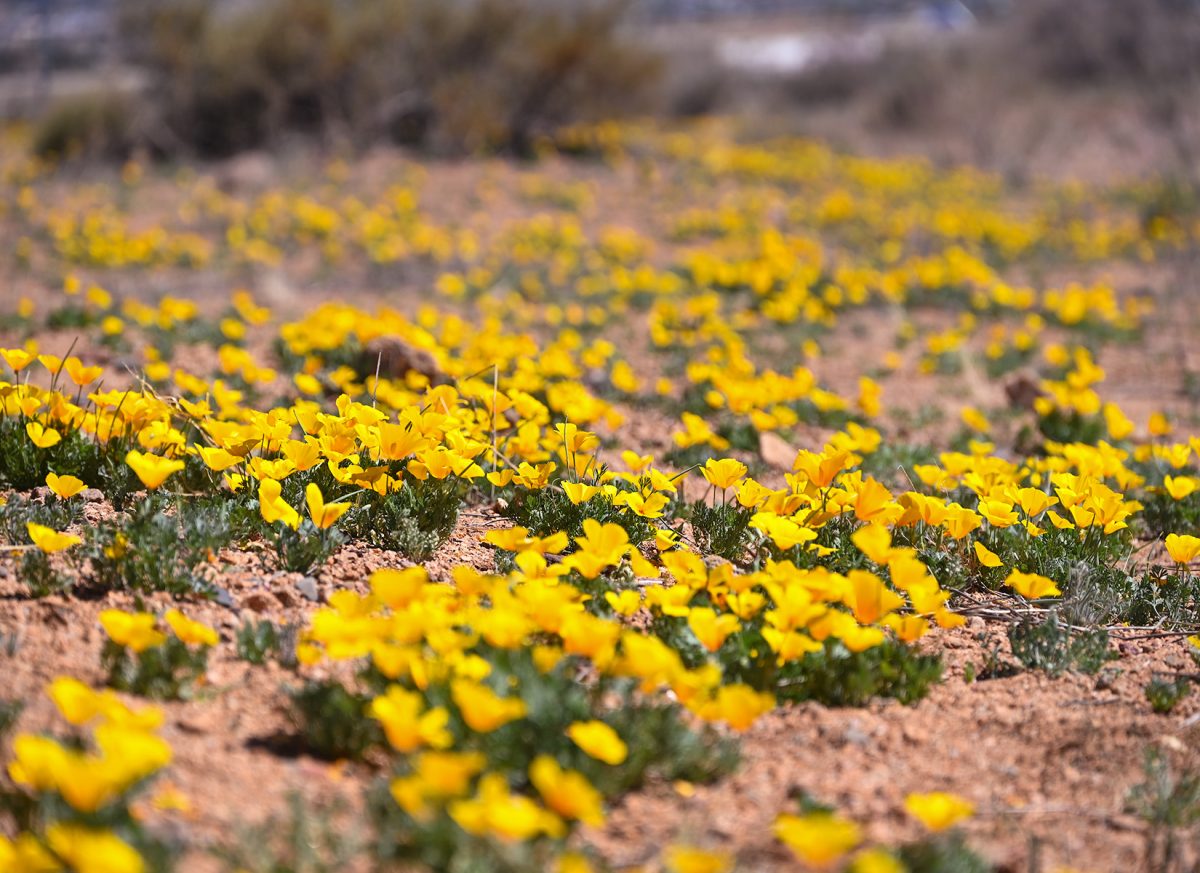
Mexican golden poppies blanket the desert hills at Castner Range, creating a vibrant spring landscape in Northeast El Paso.
“You have references of brides that wanted to spread poppies for their weddings, or people that have lost dear ones and that have spread seeds for them to remember them that way,” Ribas-Normand said. “It’s interesting to see how the community is wanting to enhance the field of poppies, and I think those seedings that have been happening throughout the years, are what has been contributing, to the super-blooms that we get every five to 10 years, when we have the whole side of the mountainside that it’s completely yellow.”
That mix of community, culture and nature is the essence featured throughout the 2026 edition of the festival.
“Our focus is one to the community, with the market, performances, dances, and including a factor of Native American communities, participating,” Ribas-Normand said. “We will have a Native American market inside the Museum, and then we will have two performances by Native American communities.”
Thanks to the continues collaboration of community partners, and a two-year sponsorship from GECU, the El Paso community can expect more to come from the ‘Poppies Fest.’ A place where El Pasoans can experience the bloom, celebrate local traditions and support the El Paso Museum of Archaeology.
Vivien Noe C is a Staff Reporter at The Prospector and can be reached at [email protected]
