
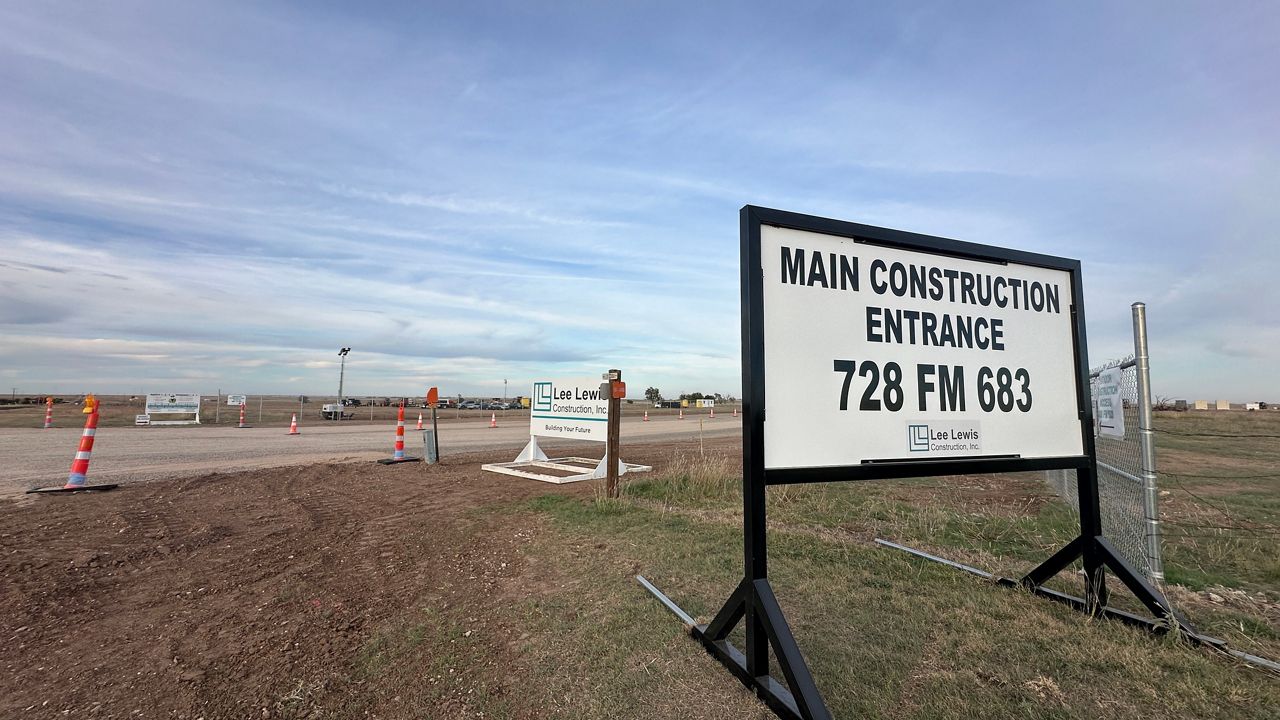
TEXAS — The Texas Commission on Environmental Quality (TCEQ) just gave the largest data center campus in the world the green light to move forward just outside of Amarillo. The nearly 6,000-acre campus has received pushback from the community, and the commission’s decision was met with disappointment from those against the project.
The people of Amarillo have several reservations about Fermi America’s data center campus, called Project Matador, which include concerns about the air and water in that region. However, at the end of February, the TCEQ gave its final approval on America’s second-largest clean air permit.
Many Amarillo residents have opposed the project from the start.
“It adds a whole other level of anxieties that I didn’t have a couple of years ago,” said Kendra Seawright, a longtime resident of Amarillo. “That wasn’t even on my radar.”
She has concerns about the campus emitting pollutants into the air.
“Are we that first group, that first generation of people that gets harmed so bad that they do studies of how our bodies responded to that?” Asked Seawright. “So now the next generation gets to be the ones that find out, ‘Well, hey, we should be holding someone accountable for this.’”
In response to the TCEQ approving the air permitting for the campus, Cathy Landtroop, Fermi America’s chief communications officer and director of strategic initiatives, said in part, “Securing the second largest Clean Air Permit in the country is yet one more significant milestone for our 11 GW private grid campus.”
“There are significant concerns with air quality when you have Fermi, who is asking the TCEQ for an authorization to emit 23.5 million tons of greenhouse gas emissions per year,” said Kathryn Guerra, the director of Public Citizen’s TCEQ Watchdog Campaign. “Those are significant concerns that the community brought to the TCEQ, and that they ultimately dismissed.”
Guerra says the agency’s role should be to evaluate a proposed permit’s environmental and health effects before granting authorization.
“They will issue a permit, sort of, no matter what the cost to the environment or to the community, and that’s really frustrating for folks,” Guerra said.
She says the agency has a long way to go to restore what she calls a loss of public trust.
“I believe that TCEQ leadership has some serious work to do to make this an effective state agency, one that regulates the environment in a way that is protective of people’s health,” Guerra said.
With more than 300 public comments submitted to the TCEQ on Fermi’s air permit application, Seawright had hoped the agency would listen to her community.
“It was incredibly disheartening, infuriating,” Seawright said. “It felt like somehow running into a brick wall.”
With this most recent decision, the Matador Project will continue to advance into its final stages.