
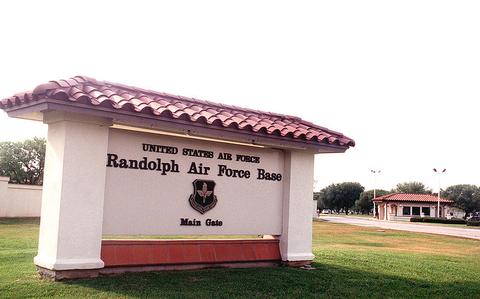
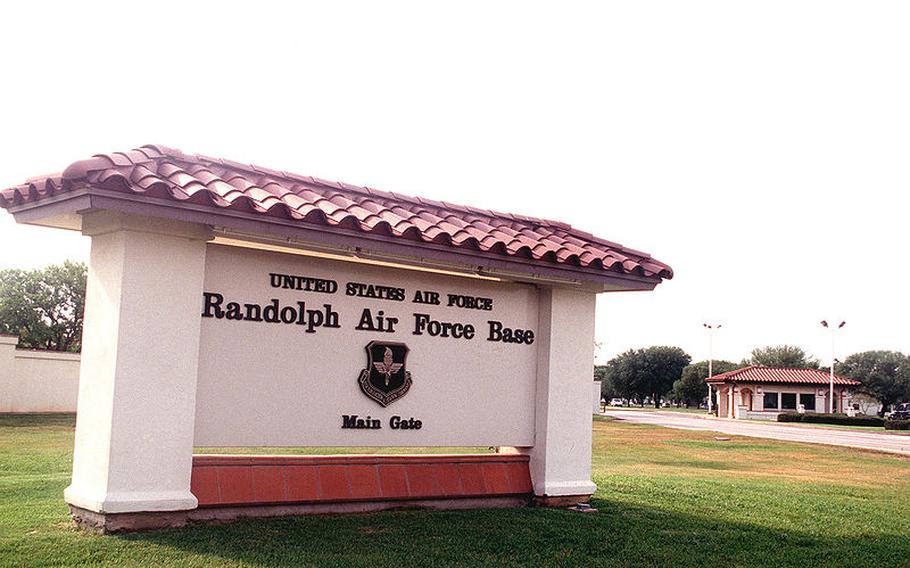
Three military families have filed a federal lawsuit against the private landlord at Randolph Air Force Base, part of Joint Base San Antonio in Texas. (Joint Base San Antonio)
Three military families have filed a federal lawsuit against the private landlord at a Texas Air Force base, accusing the company of leasing them homes plagued with mold growth, sewage problems, lead paint and other ongoing conditions that caused their health to suffer.
The three families lived in homes rented between 2017 and 2025 through Hunt Military Communities at Randolph Air Force Base, part of Joint Base San Antonio.
The lawsuit, filed March 13 in the Western District of Texas San Antonio Division, stated the families — retired Master Sgt. Michael and Angela Kellar; retired Staff Sgt. Leroy and Shelvella Holmes; and Senior Master Sgt. Matthew and Heidi Eller — sued because of “false promises, atrocious living conditions, personal injuries and property damage caused by their profound neglect, malfeasance and greed.”
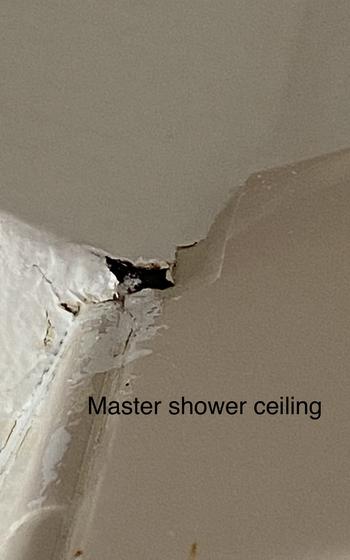
The Kellar family leased a home at Randolph Air Force Base in June 2018. They experienced “pervasive and serious problems related to mold growth, sewage issues, water damage, asbestos, lead paint and structural deficiencies.” (Kellar family)
The Kellars and their son leased a home at Randolph in June 2018 after Michael Kellar retired and without being allowed in before signing a lease. During their three years living there, they experienced “pervasive and serious problems related to mold growth, sewage issues, water damage, asbestos, lead paint and structural deficiencies.”
Despite multiple requests, Hunt did not clean the air ducts, which were filthy, according to the lawsuit. The company also failed to fix an electrical issue which left the Kellars with an energy bill that skyrocketed.
The Holmeses, a multigenerational family of four, moved into Randolph housing in November 2017 and experienced pervasive problems, including structural issues, deteriorating window seals, and unstable stairs and railings.
“Sewage and toilet problems required the family to manually flush toilets using bottles of water, and slow drainage throughout the home’s sinks and tub forced the family to purchase drain cleaning products out of pocket,” according to the lawsuit.
A crawlspace under the home was not covered, which allowed for raccoons and possums to get underneath the house. Roaches and spiders frequented the inside.
The Ellers and their four children spent five years in a home on Randolph, beginning in August 2020, and saw the problems progressively develop. By August 2023 there was visible mold growth around an AC vent. Issues continued, and they were displaced in July 2025 and moved out in September, abandoning personal property in the house because of contamination, according to the lawsuit.
Each family described an array of health symptoms that began or worsened while they were in the housing. Those symptoms often improved when they were out of the house for extended periods of time.
Carolyn Baker, a spokeswoman for Hunt Military Communities, said she could not comment on specific details of the litigation.
“Randolph Family Housing, LLC is committed to providing high-quality housing to military members and their families in support of their critical missions. We have rigorous processes in place and provide ongoing training to ensure our staff responds quickly and effectively to any issues that arise,” she said in a statement.
The three families join eight others awaiting trial after filing lawsuits in 2019 against Hunt for similar conditions. At that time, several military housing companies were sued for poor housing conditions at various installations. Some have been settled outside of court, and others continue to wind through the legal system more than six years later.
Only one family related to Randolph housing, Shane and Becky Vinales, has seen their lawsuit through to a jury trial. They were awarded more than $91,000 in 2023, although the trial did not include some allegations because the Fifth Circuit Court of Appeals ruled that company only has to maintain state standards that were set at the time the property was deeded to the United States. Randolph first became an Army airfield in 1930, according to the base. It transferred to the Air Force in 1948.
“Off base, this conduct violates Texas law. On base, it’s nearly untouchable,” said Jim Moriarty, an attorney for the families. “Families are living in conditions that would trigger immediate enforcement anywhere else, and inadequate mechanisms exist to hold these companies accountable.”
Congress could pass a law to solve this, he said. It has not.
However, Congress did begin in 2019 to tackle the concerns of military families. It passed a series of military family housing reforms intended to improve oversight, accountability and existing conditions. Despite this, Moriarty said his legal teams have continued to receive calls describing the same problems.
“The work gets done, the reports get written, and the problems keep coming back,” he said.
Jury trials are scheduled this summer for three families who first filed suit in 2019, according to online court documents.