
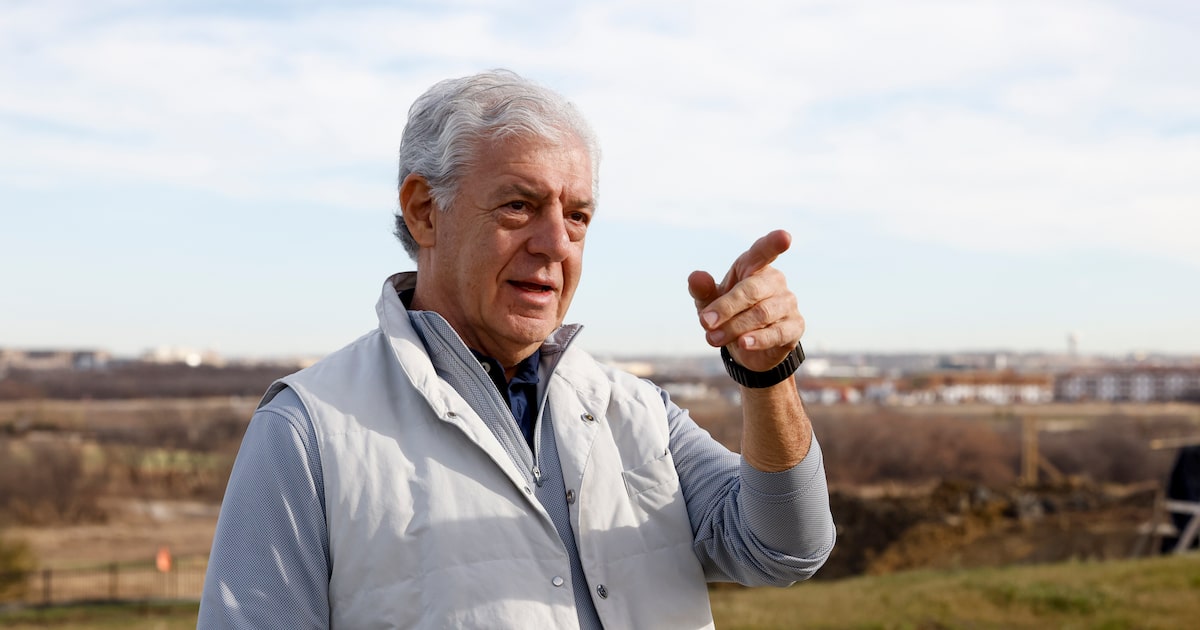
Developer Fehmi Karahan’s lands were once in Legacy.
But Plano’s in his rearview mirror now.
He hopes his lasting legacy is Fields — the sprawling $10 billion mixed-use development in Frisco that encompasses multimillion-dollar homes, the under-construction Universal Kids resort and the PGA of America headquarters.
This was not always the plan for Karahan, the Turkish-born developer who spent his early years in Dallas as a waiter and bartender before becoming the brains behind some of the region’s most successful real estate projects.
Karahan credits friendships, loved ones and a dogged fearlessness that charted his unlikely course.
“I don’t start anything with the fear of losing,” he said. “I trust my intuition and gut feelings. Then once I do, I commit and make it happen.”
Business Briefing
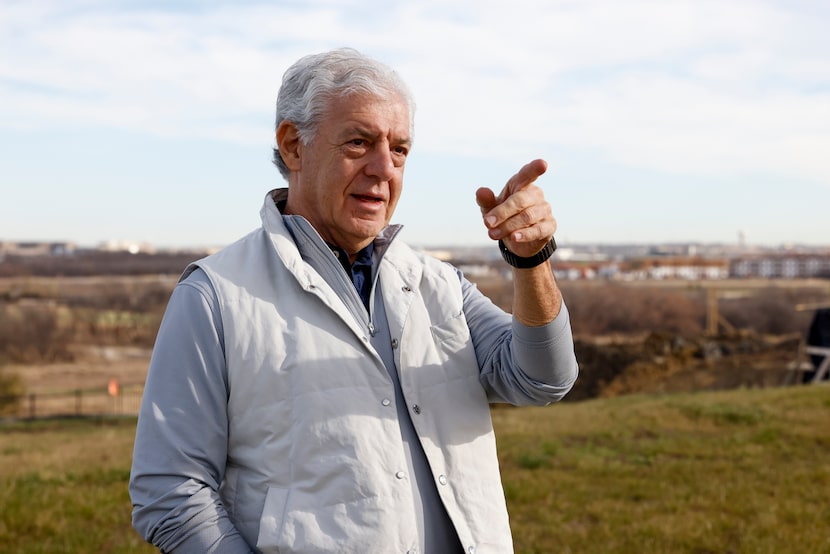
Real estate developer Fehmi Karahan spent his early years in Dallas as a waiter and bartender before becoming the brains behind some of the region’s most successful real estate projects.
Elías Valverde II / Staff Photographer
Cowboy movies
Karahan, 69, was born in Istanbul. By his own account, he grew up with modest means.
His mother was a homemaker. His father was a failed entrepreneur who closed his textiles store when he was a young boy. The elder Karahan would work as a midlevel manager for several firms before eventually becoming the import manager at Ercan Holding.
America wasn’t always the plan for young Fehmi. But he got lucky. His father’s employer gave him a scholarship, allowing him to earn an MBA in America.
His first taste of the U.S. came in New York, and he came to Dallas to visit a cousin during Christmas in 1978.
Despite the horrid ice storm, Karahan found something that drew him in. As a young boy, he was fascinated with Westerns. He grew up watching John Wayne cowboy movies. To him, the West was America, and he found friendliness and warmth in Dallas.
He left New York, trading Columbia University for the University of North Texas. He moved here full-time in March 1979 as the towers that defined the city’s skyline began to rise.
Karahan’s first job in D-FW was working the breakfast shift and tending bar at the Dunfey’s Royal Coach near Love Field. He got his start in real estate thanks to his love of soccer.
On Sundays, he’d head to open fields near LBJ and Valley View Lane to play the beautiful game.
“The doctors, engineers, Germans, Swiss, Italians, Mexicans, Turks, whatever,” he said. “They’ll get different age groups together and make up teams and play soccer.”
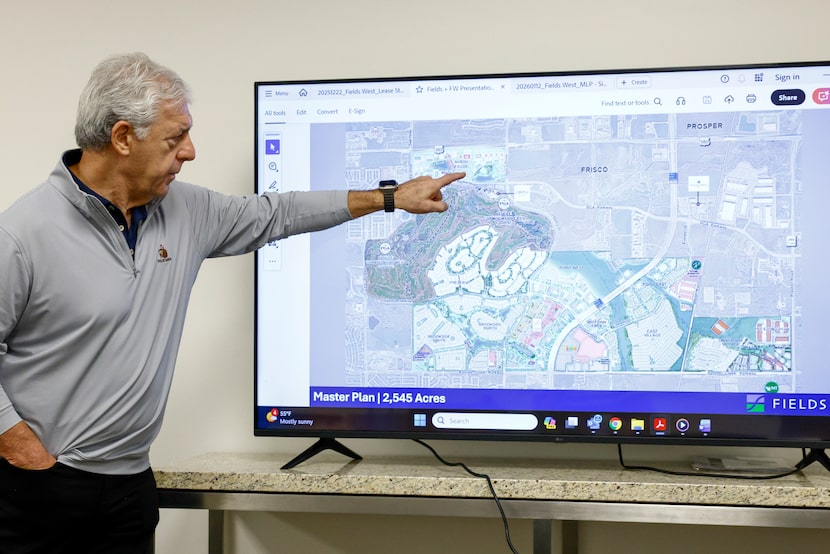
Real estate developer Fehmi Karahan points out key areas of the Fields development master plan.
Elías Valverde II / Staff Photographer
It was here that Karahan met Oktay “Oak” Senvar, a fellow Turk who owned a small firm. Senvar was looking for someone he could trust who had good financial knowledge.
Karahan learned the business. He started with apartment developments and got familiar with real estate limited partnerships, also known as real estate syndication — a tax-shelter investment strategy that soared in popularity during the early 1980s.
He got his start as commercial real estate went through a downturn driven by overbuilding and the savings and loan crisis.
Karahan might have gotten out of the business if it weren’t for his wife, Elizabeth. She worked as an industrial engineer for what was then the Dallas Power & Light Co.
They married just as Karahan started his career. Her stable job gave Karahan the ability to start his firm and stay in business.
In the late 1980s, he built his first project. It was an 8,000-square-foot neighborhood retail strip called Royal Plaza, close to Northwest Highway and Webb Chapel Road. It’s still there.
“When the [savings and loan] crisis happened, I’m the young guy. I was a 30-year-old immigrant building a little strip center,” he said. “Everyone was getting out of real estate. … My wife said ‘You love what you do. You’re good at what you do. We should stay in business.’ Not everybody had that support,” he said.
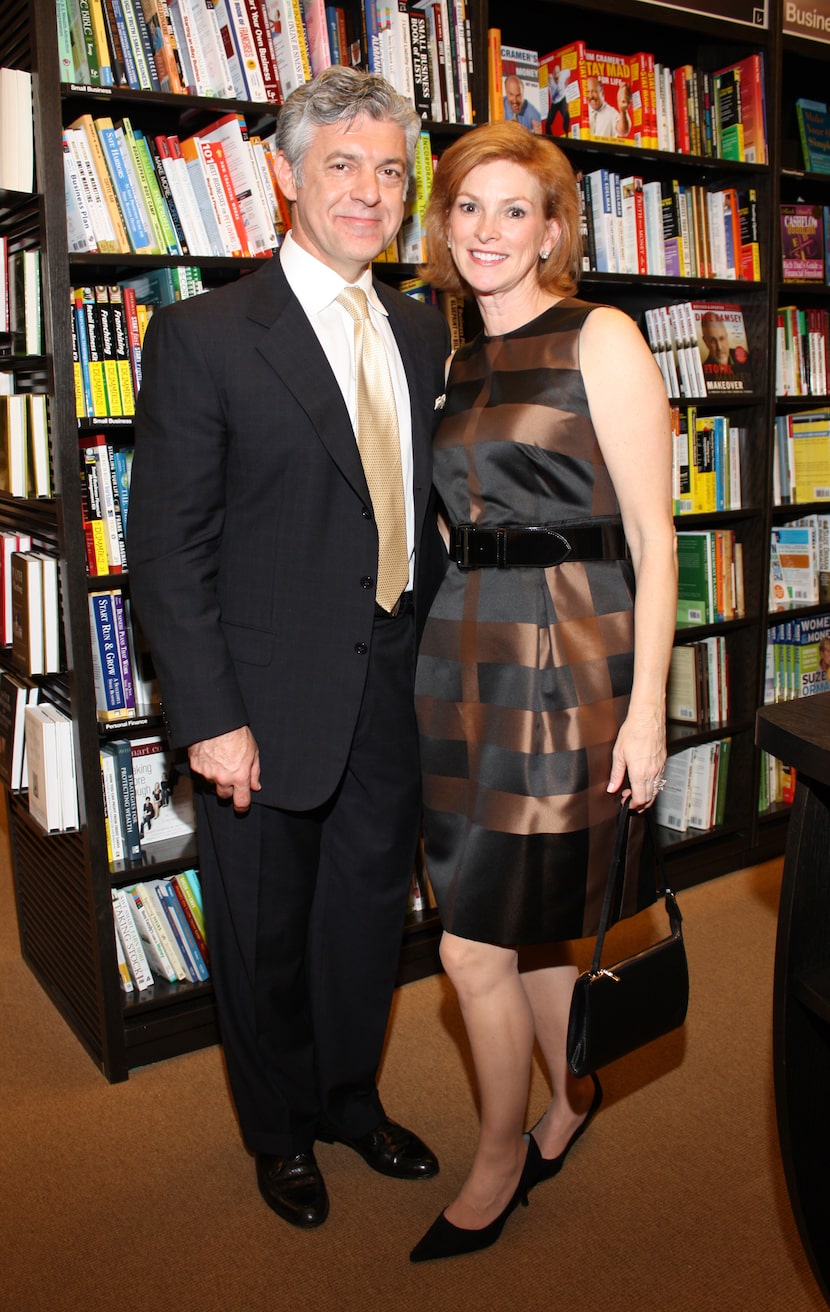
Fehmi Karahan once considered leaving the commercial real estate business when the market took a downturn during the savings and loan crisis. He credits his wife, Elizabeth, for sticking with it. “You love what you do. You’re good at what you do. We should stay in business,” she told him.
SAM GRANADO
‘That crazy Turk’
While others pulled back, Karahan moved in.
As the government-owned Resolution Trust Corp. sold the assets of failed savings and loan institutions, he formed small partnerships and bought strip centers for a fraction of their worth.
Brokers kept calling to fill his new properties, so he built more retail strips in Coppell, Las Colinas and other neighboring suburbs. The real estate world began to notice.
Karahan’s connection with prominent construction executive Michael Sinacola eventually got him in front of real estate decision-makers for Electronic Data Systems. It’d been over a decade since Ross Perot sold the company to General Motors.
Sinacola was doing the roads for Legacy Business Park, and the EDS team was looking to do a more urban-style development near the headquarters.
They could have picked anyone to do the retail centerpiece for Legacy Town Center. Folks at EDS took a liking to Karahan. Soon, he, Sinacola and EDS executives were examining mixed-use, retail-centric developments across the country.
It was Karahan who landed the contract for Legacy Town Center. The project was going to be sandwiched between Stonebriar Mall and Willow Bend. There were concerns that the project wouldn’t work.
“A lot of people said ‘Oh that crazy Turk’ — they use the F word too, but I’m not going to repeat that — ‘is out of his mind,’ ” Karahan said. “We proved everybody wrong.”
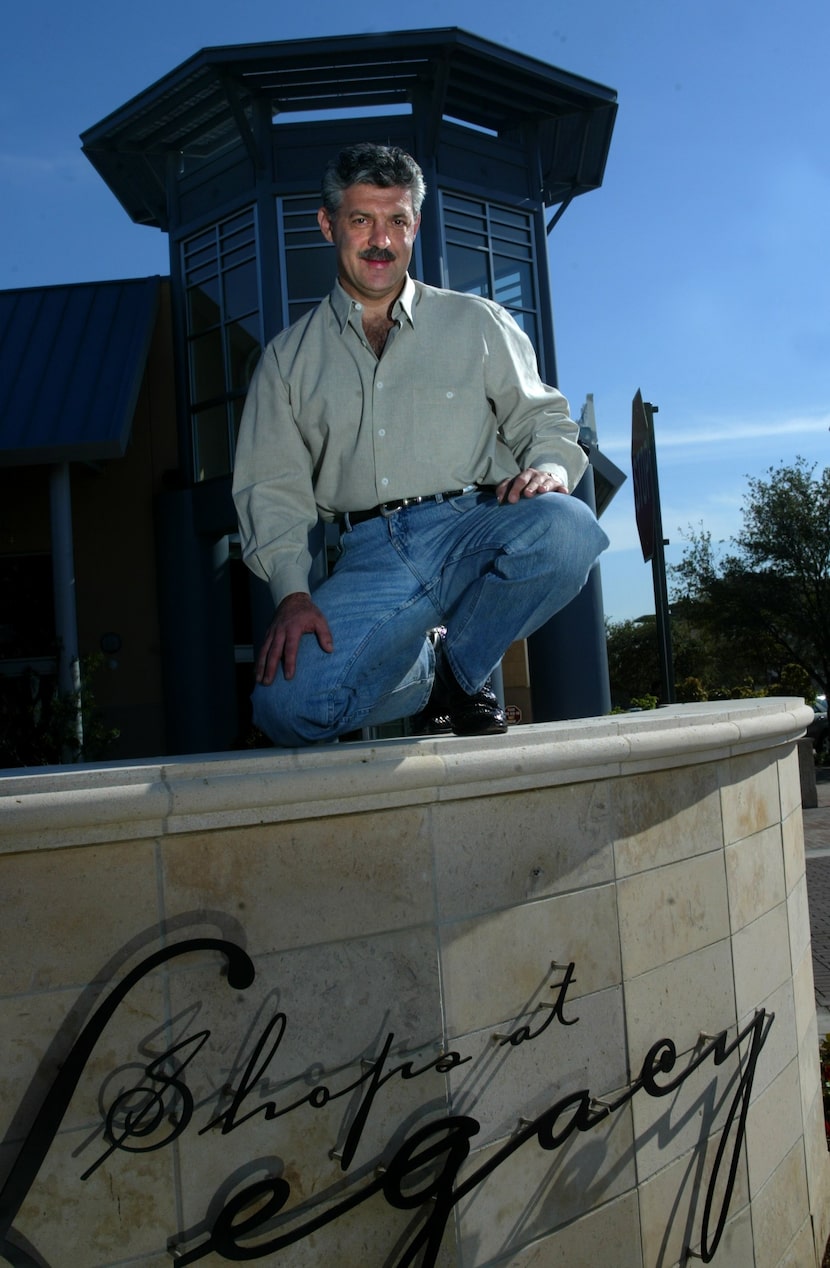
Fehmi Karahan said his strategy for his development at Legacy was the key to its success. He didn’t go after GAP and those sorts of retailers. He went after Mi Cocina, Bob’s Steakhouse and other local restaurateurs and retailers.
HUY NGUYEN / 177342
Karahan credited the ultimate success of his developments at Legacy to his strategy. He didn’t initially go after Gap and other national retailers you might see at the other malls. He went after Mi Cocina, Bob’s Steakhouse and other local restaurateurs and retailers.
As more cropped up around him in Plano, Karahan wanted to make a big play.
He approached then-J.C. Penney CEO Mike Ullman about buying 240 acres of undeveloped land around the retailer’s corporate headquarters.
Ullman said he would consider it. His successor, Ron Johnson, ultimately put out a call for project offers. Karahan recruited KDC and Columbus Realty to compete against heavyweights of D-FW development — Trammell Crow Co., Hines, Lincoln Property and others.
Karahan and crew won. Months later, Toyota announced it was building its North America headquarters there. Karahan initially had no idea the company was looking at the site.
“That was a game changer,” he said.
FedEx Office was already there. Then came JPMorgan. Then Liberty Mutual and condos and apartments and hotels. The Legacy West mixed-use development exploded with activity.
By 2022, Karahan had sold all of his interest in the Legacy West mixed-use project to Invesco.
By then, Karahan was already deep into his next venture — one that he hoped would define his legacy.
Fields and the future
Karahan teamed up with Hunt Realty as well as investors Chief Partners and Crosstie Capital in 2018 to acquire what was the largest remaining vacant property in Plano — a tract that belonged to the estate of Dallas businessman Bert Fields.
Karahan first developed a relationship with the Hunt family in the early 2000s when Ashlee Kleinert, the daughter of real estate tycoon Ray Hunt, wanted to acquire land near Legacy Town Center for an event space.
The developer didn’t think it was a good idea, and he advised against the purchase. Ashlee saw shades of her father in Karahan.
Ashlee and her husband, Hunt Realty executive Chris Kleinert, became close family friends with Karahan over the next two decades.
“[Ray Hunt] loves people that have, in essence, seized the American Dream,” Chris Kleinert said. “If [Karahan] isn’t exhibit A, he’s exhibit A with an asterisk.”
The Karahans and Kleinerts have taken trips to Hawaii, Wyoming, Utah and Las Vegas. Chris Kleinert and Karahan once took a trip to Istanbul to watch Karahan’s favorite soccer club, Galatasaray S.K., play in a Champions League game.
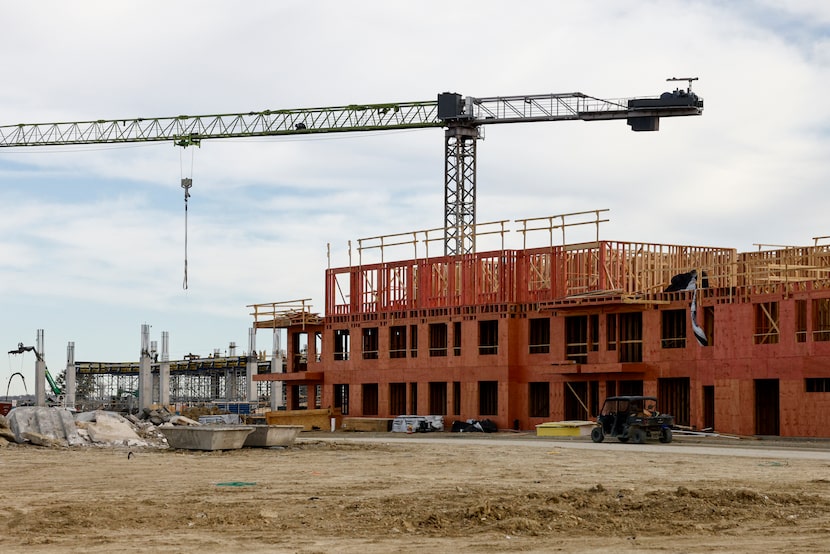
Construction continues at Fields West in Frisco. The total value of the entire Fields project ranges between $10 billion and $15 billion, developer Fehmi Karahan said. Fields West makes up $800 million of the project.
Elías Valverde II / Staff Photographer
Despite the friendship, the Kleinerts hadn’t worked with Karahan until Chris Kleinert called Karahan to get his opinion on the Fields land.
His advice — buy. But Karahan wanted in on the deal.
Frisco had finally lured Karahan over to its side.
A few months after the group bought the land, Karahan got another major break. PGA of America said it would move its operations to the Fields development. Two golf courses and a resort would join the headquarters.
The Omni PGA Frisco — the brand run by Dallas billionaire Robert Rowling — would be its centerpiece.
Others followed.
In late 2023, Universal Parks & Resorts announced it would build a kid-focused park and hotel at the site. Construction at the site is ongoing, and the park is planned to open later this year.
He’s tried to land some of the region’s biggest relocations as well.
Karahan said AT&T examined the Fields site as it scoured the suburbs looking for office space. The telecom giant instead selected a 54-acre site at 5400 Legacy Drive — the old EDS campus near where Karahan made his name.
Karahan said he got the sense that AT&T felt Fields was just too far north. He pitched the site in an initial meeting with the company.
“[AT&T] could go high. They could go low. They could have gotten as much land as they needed,” he said. “We’re always in the hunt for [corporate relocations]. … There’s no question the next destination is Frisco.”
Current plans call for as many as 14,000 homes and apartments, up to 11 million square feet of office space, and roughly 1 million square feet of retail, restaurant and entertainment space. The total value of the project ranges between $10 billion and $15 billion, Karahan said.
Fields West, an $800 million portion of the project, went vertical late last year.
In January, there were only two tower cranes working on various portions of the Fields project. Crews were hard at work on mixed-use retail and apartments along a main drag. By March, there were four tower cranes and a crawler crane.
In August, Karahan estimates there will be 11 total cranes spread across Fields West. The mixed-use portion will be finished in 2028, but as for the rest of the site, who knows?
“This is such a big opportunity here,” Karahan said. “There is a lot to do as long as I want to do it.”
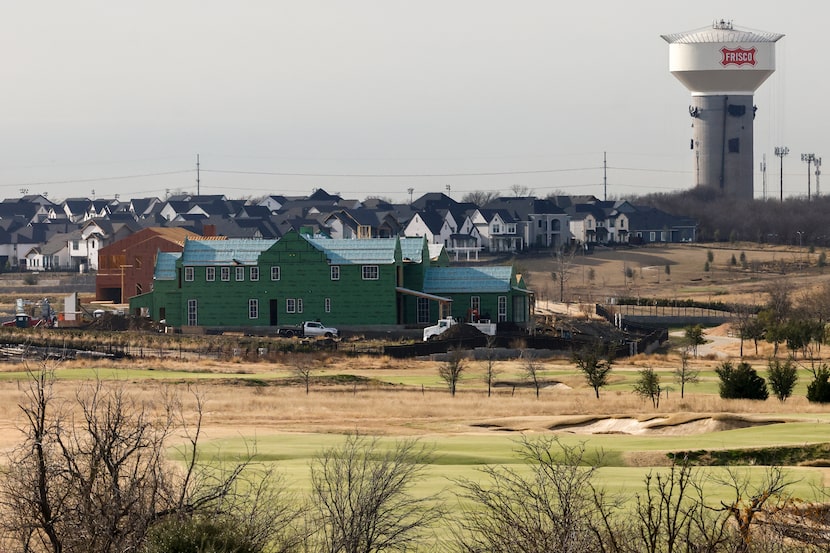
The Preserve and Brookside residential communities serve as the backdrop for the Fields Ranch East golf course in Frisco.
Elías Valverde II / Staff Photographer