
Incident overview and what is known
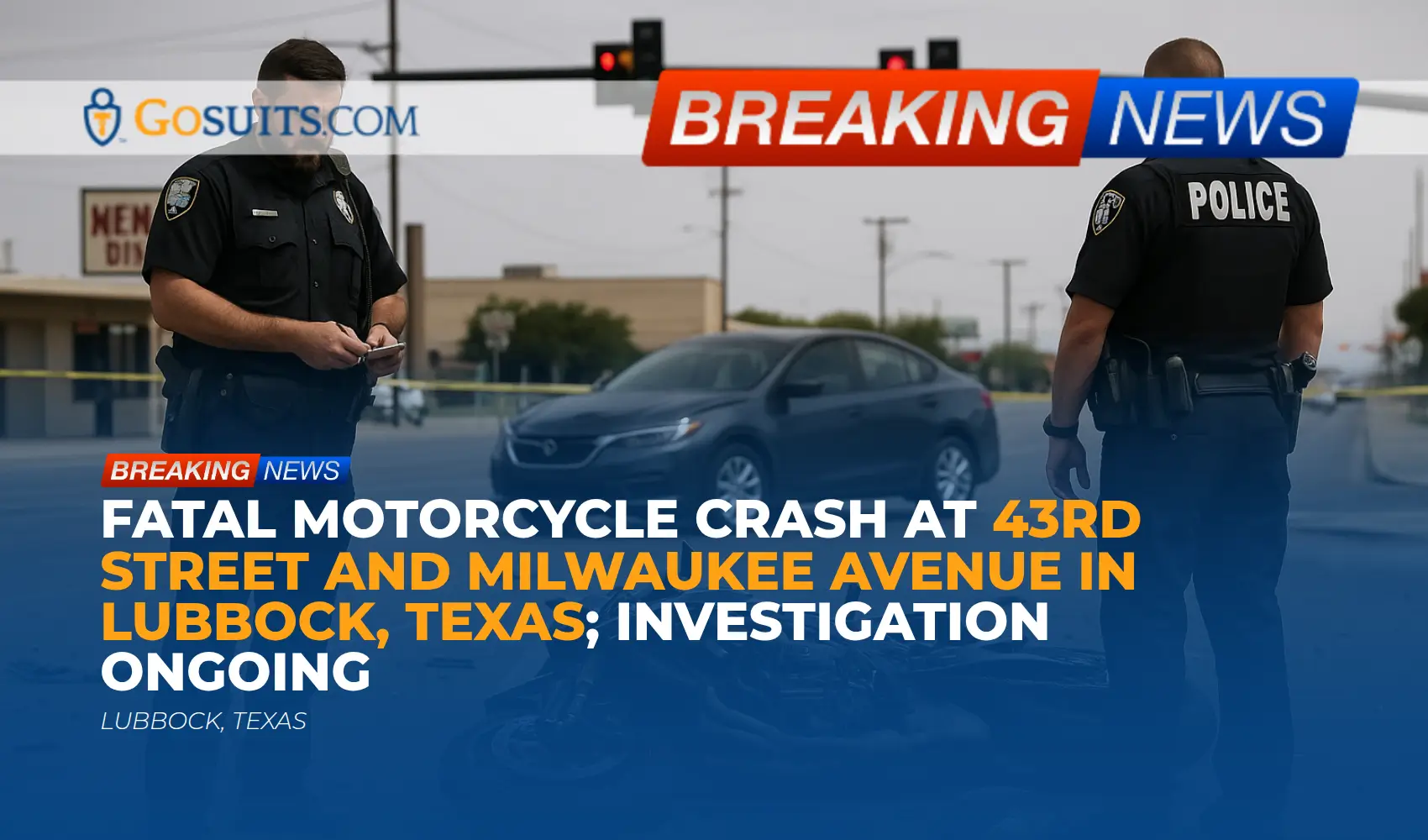
Lubbock Police reported a fatal motorcycle collision on Sunday morning at the intersection of 43rd Street and Milwaukee Avenue. Officials stated one person has died. The call for service came in at 10:49 a.m., and officers responded to the scene. As of the latest public update, further details about the circumstances remain pending and the investigation is ongoing.
At this time, there has been no public identification of the person who died, and no official description of the collision dynamics has been released. It is common for investigators to take time to document the scene, collect witness statements, and analyze roadway evidence before releasing additional information.
Location and timing
Location: 43rd Street and Milwaukee Avenue, Lubbock, Texas.
Date and time: Sunday morning, with the call received at 10:49 a.m. according to police. This timing is relevant because weekend late morning traffic patterns can differ from weekday rush periods, and sun angle, traffic volume, and signal timing can play a role in visibility and flow.
Motorcycle collisions at intersections
Although the specific causes in this event are not yet publicly known, intersection crashes are a well-recognized risk area for motorcyclists. Motorcycles present a smaller profile, which can make it harder for other road users to detect riders, particularly during turns, lane changes, and when sightlines are partially obstructed. Federal traffic safety agencies emphasize that motorists must take extra care at intersections to scan for and yield to smaller road users like motorcyclists and pedestrians. Helpful high-level guidance is available from the National Highway Traffic Safety Administration at NHTSA Motorcycles.
Common risk patterns at intersections
Traffic safety research highlights several recurring patterns in severe motorcycle crashes at intersections. Without attributing any cause in this case, these patterns include scenarios where a vehicle turns left across a rider’s path, sudden stops in queues at signalized intersections leading to rear-end impacts, and limited gap acceptance by drivers judging the approach of a rider. NHTSA consistently encourages drivers to look twice for motorcycles and to yield appropriately at intersections, especially during turns and lane changes. See NHTSA’s general safety resources for motorcycle awareness at NHTSA Motorcycles.
Visibility and human factors
Visibility challenges can be compounded by time of day, sun glare, and complex traffic movements. Human perception limits, like the difficulty of judging a motorcycle’s speed and distance, are recognized in traffic safety literature. While law enforcement will analyze specific evidence such as skid marks, vehicle positions, damage patterns, and signal phasing data, the broader context helps explain why intersection environments demand heightened caution from all road users.
What families can do in the first 72 hours
In the immediate aftermath of a fatal crash, the days can be overwhelming. The following steps are practical, respectful of the investigative process, and focused on preserving information that may be important later. No one has to do everything at once. Consider asking a trusted person to help gather and organize documents.
Confirm official notifications and basic facts
Families typically receive notification from law enforcement or the medical examiner. If you have not received an official notification but believe your loved one may have been involved, contact local authorities and ask for the appropriate unit handling traffic fatalities. Maintain a simple log of who you speak with and when. Authorities are careful about verifying identity and next of kin and may not release information publicly until that process is complete.
Preserve evidence within your control
If you have access to the rider’s helmet, riding gear, motorcycle, or mounted cameras, preserve these items in their current condition. Do not repair or alter anything. Photographs of the gear and the motorcycle’s condition can be helpful later. Save any GPS or smartphone location data, ride-tracking app data, and text or call records near the time of the crash. This is separate from the official police investigation and focuses on items families can safeguard.
Avoid recorded statements to insurers until you have guidance
Insurance companies often reach out quickly. Consider speaking with a qualified attorney before providing recorded statements to any insurer. What someone says to an insurance adjuster can be used later when liability and damages are evaluated. An initial consultation can help you understand rights, potential coverage, and how to approach communications in a way that protects your interests.
How to obtain key records in Lubbock and across Texas
Official records can provide clarity about what happened. Different agencies maintain distinct records, and there are specific processes for requesting each item. Where possible, the links below direct to government resources that explain those processes in Texas.
Texas crash report and release laws
Crash reports in Texas are governed by state law. Access is restricted to certain individuals and entities, such as the persons involved, their authorized representatives, and insurers, among others. The relevant statute describing access to crash reports is Texas Transportation Code § 550.065. The investigating agency prepares the report, and Texas maintains a statewide system for distributing certified copies.
Purchasing a certified crash report
Certified copies of Texas crash reports are available through the Texas Department of Transportation’s statewide system. TxDOT’s public information about crash reports and access to forms and instructions is available at TxDOT. The certified report generally includes diagrams, narrative fields, and codes the officer used to describe conditions and possible contributing factors. Note that some sensitive information may be redacted under state law.
Police incident records, 911 audio, and scene documentation
Texas has a public records framework that allows people to request certain non-privileged materials such as 911 call audio, CAD logs, and some photographs or videos, subject to statutory exceptions. Guidance for making a public information request is provided by the Texas Office of the Attorney General at Texas Public Information Act — How to Make a Request. Requests should be as specific as possible, for example by providing the date, approximate time, location, and type of record sought.
Medical examiner and autopsy records
Lubbock County utilizes a medical examiner system. Families can inquire about autopsy status, next-of-kin notifications, and procedures for requesting reports through the Lubbock County Medical Examiner’s Office. Information is available from the county at Lubbock County. Autopsy reports typically become available after completion of the examination and any required testing. Access is subject to Texas law, including privacy protections, and some materials may be withheld if an investigation is open.
Death certificates
Certified death certificates in Texas are provided through the Texas Department of State Health Services, Vital Statistics Section. Instructions for eligibility, required identification, and ordering are available at Texas DSHS — Death Certificates. Funeral homes can also assist with the process.
Traffic signal timing, engineering records, and prior crash data
In some cases, families or their representatives review traffic engineering information such as signal timing plans, phasing, signage, and prior crash history to understand the environment. Requests for statewide crash data and traffic safety information can begin with TxDOT. See TxDOT for public information processes and safety program contacts. Engineering records can be subject to disclosure exceptions, so be precise in describing the records you seek.
Potential civil liability in a fatal intersection crash
The investigation will ultimately determine cause and contributing factors. In general, civil liability in intersection crashes can involve multiple layers. The following are common civil law considerations in Texas and are offered for general information.
Driver duties and right of way
All drivers owe a duty to keep a proper lookout, obey signals and signs, yield the right of way when required, and travel at a reasonable and prudent speed for conditions. When a driver fails to meet those duties and that conduct contributes to a collision, civil liability can arise. Typical intersection issues include improper turns, failure to yield during left turns, running red lights, or entering an intersection on a late yellow when it is unsafe to do so. The precise signal phase, lane markings, and traffic control devices at 43rd Street and Milwaukee Avenue would inform any analysis.
Comparative responsibility in Texas
Texas follows a proportionate responsibility system. If multiple parties are alleged to have contributed to a crash, a fact finder can assign percentages of responsibility. A claimant who is found to be more than 50 percent responsible is barred from recovering damages from others. See Texas Civil Practice and Remedies Code Chapter 33. This framework underscores why careful evidence collection and analysis matter in intersection crashes, where visibility, timing, and movement of more than one vehicle are at issue.
Potential defendants beyond the other driver
Depending on the results of the investigation, civil claims may involve additional entities:
Employer liability if a driver was operating a vehicle in the course of employment. Employers can be responsible for their employees’ negligence.
Vehicle or component issues such as brake failures or tire defects, which would be assessed by examining the vehicles involved and maintenance records. This requires technical review and is not assumed.
Roadway conditions like obscured signage, malfunctioning signals, or hazardous design. Claims involving government entities in Texas are subject to the Texas Tort Claims Act and strict notice rules. See Texas Civil Practice and Remedies Code § 101.101 for general notice timing requirements.
Insurance considerations after a fatal motorcycle crash in Texas
Understanding insurance coverage can help families prepare for communications and potential claims. The summary below is for general information.
Minimum liability coverage and how it works
Texas requires motor vehicle liability coverage that, at a minimum, provides $30,000 per injured person, up to $60,000 per crash, and $25,000 for property damage, often described as 30/60/25. See the Texas Department of Insurance overview at Texas Department of Insurance — Auto Insurance. Actual policies may carry higher limits. When a driver’s negligence causes injury or death, the at-fault driver’s liability coverage may respond to claims by those harmed.
Uninsured or underinsured motorist coverage and medical payments
Uninsured or underinsured motorist coverage, personal injury protection, and medical payments coverage are optional in Texas but can be significant sources of recovery when the at-fault driver has low limits or no coverage. These coverages can be part of the deceased rider’s policy or other applicable household policies, depending on policy language. Policy terms vary, and prompt notice is often required.
Commercial and employer policies
If a driver involved was operating a vehicle within the course and scope of employment, commercial auto or business liability policies may be implicated. Identifying whether the other driver was on the job is an early investigative priority. Evidence such as vehicle branding, delivery apps, or employer statements can help clarify.
Recorded statements and releases
Insurers may request recorded statements or ask family members to sign medical or claim releases. Consider seeking an attorney’s guidance before providing recorded statements or signing documents. Statements can be used later to dispute liability or the extent of losses, and releases can limit access to vital information if drafted narrowly.
Wrongful death and survival claims in Texas
Texas law recognizes two related civil claims after a fatality: wrongful death and survival actions. These mechanisms exist to address different types of losses. This content is educational and not case-specific.
Who may bring claims
Under the wrongful death statutes, the surviving spouse, children, and parents of the deceased may bring a wrongful death action individually or for the benefit of all statutory beneficiaries. If the surviving beneficiaries do not bring an action within a set period, the executor or administrator may file. See Texas Civil Practice and Remedies Code Chapter 71.
The survival statute allows the decedent’s estate to bring claims that the person could have brought had they lived, such as damages tied to the decedent’s own injuries prior to death. See Texas Civil Practice and Remedies Code § 71.021.
Categories of damages
In general terms and subject to proof, wrongful death claims can include losses such as loss of companionship and society and loss of financial contributions. Survival claims may address medical expenses prior to death, conscious pain and suffering, and related damages. Each case is unique, and any evaluation depends on facts, insurance, and applicable law.

Time limits to file
Texas sets a two-year limitations period for most wrongful death and personal injury claims, counted from the date of death or injury, with some exceptions that may extend or shorten the time. See Texas Civil Practice and Remedies Code § 16.003. Claims involving governmental entities require timely notice, often within six months, and sometimes sooner if a local charter requires it. See Texas Civil Practice and Remedies Code § 101.101. These timeframes are procedural and strictly enforced.
Community safety and infrastructure notes for 43rd Street and Milwaukee Avenue
Intersections like 43rd and Milwaukee manage multiple streams of traffic, including turning movements and through traffic. The safety of such intersections depends on sight distance, signal timing and phasing, lane markings, sign visibility, and driver compliance. While the current investigation will focus on the collision in question, community members often look at broader safety measures to reduce future risks. The Federal Highway Administration provides an overview of intersection safety strategies, including signal upgrades, protected turn phases, improved visibility, and access management, at FHWA Intersection Safety.
Requesting a review of signal timing, checking for obscured signs or vegetation, and monitoring crash trends are typical community-driven steps. If patterns of similar crashes emerge, agencies can evaluate whether engineering or operational changes might improve safety. These reviews are data-driven and involve both state and local transportation professionals.
Practical next steps without delay
The timeframe after a fatal crash is challenging, but some steps are time-sensitive. Acting promptly can preserve rights and protect access to crucial information.
Secure official documents by requesting the Texas crash report when available and by obtaining the death certificate from the state. The crash report may not be immediately available, but a request can be made once the report is released under Texas Transportation Code § 550.065. Death certificate guidance is at Texas DSHS Vital Records.
Preserve evidence early, including the motorcycle, rider gear, and any digital data such as dashcam footage from nearby vehicles or businesses. Video systems often overwrite within days.
Keep communication organized. Maintain a simple file with claim numbers, adjuster names, and letters received. Save all envelopes and emails.
Be cautious with insurance communications. Consider consulting an attorney before speaking on a recorded line or signing releases. Statements made to insurers can be used to challenge liability or damages later.
Calendar key dates, including the two-year limitations reference in § 16.003 and any earlier government notice requirements in § 101.101 if a governmental unit could be involved. This helps ensure no deadlines are missed.
Identify all potentially applicable insurance, which can include the other driver’s policy, the rider’s own policy, household policies, and any commercial policies if a driver was working at the time.
Commentary from Gosuits Lubbock, Texas Personal Injury Attorney
We extend our deepest sympathies to the family and loved ones affected by the fatal motorcycle collision at 43rd Street and Milwaukee Avenue. This article is intended for educational purposes and to provide general information to the community as details continue to emerge. No article can capture the weight of such a loss, and we recognize the grief and uncertainty that follow.
From a civil safety and accountability perspective, intersection crashes demand careful analysis. Investigators will typically examine signal phases, lane movements, sightlines, vehicle damage, and data from event recorders or cameras. Because motorcycles are smaller and less visible, even brief lapses in attention or judgment by other road users can have devastating consequences. Without speculating about the facts here, the legal evaluation often focuses on whether each party kept a proper lookout, yielded as required, and operated at a safe speed for existing conditions.
In our experience, insurance companies and corporate defendants move quickly to shape the narrative. Adjusters may ask grieving families for recorded statements soon after the incident, request broad medical authorizations, or push for early, incomplete resolutions before the full picture is known. These tactics can take advantage of a lack of familiarity with the process and can affect both liability determinations and the valuation of losses. Taking time to understand your rights, collecting the necessary records, and avoiding hasty agreements can help ensure decisions are informed and fair.
Consultations can be a practical first step to gain clarity on coverage, fault, evidence preservation, and timelines. Speaking with a seasoned attorney before contacting insurance companies can help protect privacy and prevent statements from being used in ways that do not reflect the full scope of what happened. A no-cost, no-obligation conversation can help families decide what to do next, on their own timeline, with a fuller understanding of the process ahead.
This article is provided solely for general informational and educational purposes. It is not intended as legal advice and should not be relied upon as such, particularly by individuals affected by the incident discussed. Reading this article does not create, nor is it intended to create, an attorney–client relationship.
An attorney–client relationship with our firm can only be established through the execution of a written contingency fee agreement signed by both the client and the law firm. If you are a victim of this incident, you should not interpret the information herein as legal advice. Instead, we strongly encourage you to contact an attorney of your choice to obtain a proper consultation tailored to your specific situation.
Some or all of the information found on this site maybe generated by AI. Images of the scene of the incident are not real images and are created by AI. We do not guarantee the accuracy of the research and infromation found here. You agree to indemnify, defend, and hold Gosuits and the affliated companies harmless for damages or losses caused by you or another party due to any access to or use of the Services on this website or any information contained therein whether authorized or unauthorized. We will not be liable for any information or access caused by unauthorized disclosure of your information by any third party. You agree to notify us in writing immediately if you suspect any unauthorized use of or access of your information from this website by a third party.
We rely on the information found on the net and do not always have first hand knowledge of the matters. If you find any information here inaccurate or offensive contact us and we will have it immediately removed.
By using this website you are agreeing to these terms and conditions along with our terms and conditions on our disclaimer page. https://gosuits.com/terms-use-disclaimer/
If you would like this article removed, please call 800-972-4355 and ask for Sean Chalaki, who will assist you with your request.