
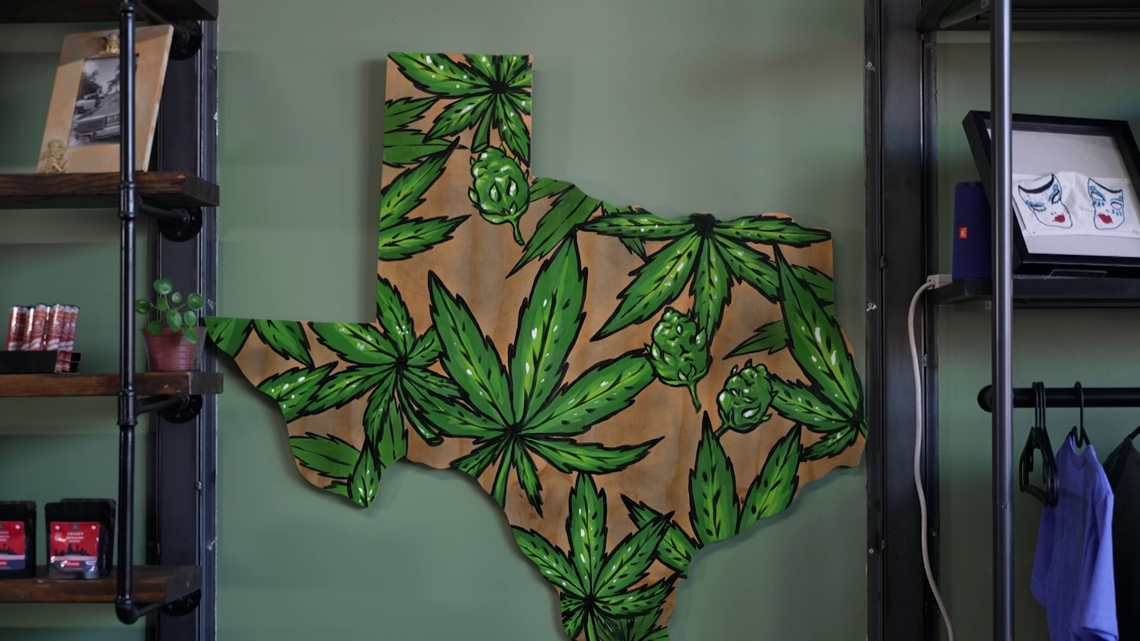
In this week’s Texas: No Filter, WFAA is at Rio Dulce in downtown Fort Worth, breaking down the new rules, arguments, and consequences of Texas’ new hemp rules.
FORT WORTH, Texas — Every week on Texas: No Filter, Political Reporter Natalie Haddad breaks down the state’s latest political trends in language everyone can understand, while showcasing some of DFW’s best coffee shops. Reach out to Natalie with any suggestions for topics to cover or coffee shops to check out.
Something is about to change in Texas, quietly and quickly. And for a lot of small business owners… painfully.
On March 31, new state rules take effect — rules that don’t outright ban hemp, but, depending on who you ask, may do something pretty close.
In this week’s Texas: No Filter, WFAA is at Rio Dulce in downtown Fort Worth — where the coffee is filtered, but the facts are not. We’re breaking down the new rules, arguments, and consequences of Texas’ new hemp rules.
At first glance, the changes sound reasonable: child-resistant packaging, clearer labels, more testing, and raising the legal purchase age to 21— something already in place.
But the state is also redefining how THC is measured. Not just what’s active on the shelf, but what could become active. That includes compounds like THCA, which don’t produce a high until they’re heated.
Under the new rules, if the total THC or THCA crosses 0.3% at any point in that process, it’s no longer legal.
Which means a whole category of products — hemp flower, pre-rolls, the kinds of items that line display cases across Texas — suddenly don’t make the cut.
For some stores, that’s not a small hit: that’s more than half their inventory.
And then there’s the cost of staying open.
State licensing fees are jumping — from a few hundred dollars to thousands. Manufacturers could go from about $258 to $10,000 per facility. Retailers — from $155 to $5,000.
On top of that: more paperwork, more testing, more tracking of product, down to individual batches and ingredients.
For larger companies, it’s a challenge. But for smaller shops — especially in rural parts of Texas — it could be the end.
Supporters of the rules say this is about safety and keeping high-potency products away from kids. They want to close loopholes that allow a quasi-recreational THC market to grow without lawmakers ever fully signing off.
Back in 2019, Texas legalized hemp, not marijuana. The line was always supposed to be clear: under 0.3% Delta-9 THC. But the industry adapted, found workarounds, and built a booming market around them.
Now, the state is drawing that line again, more firmly this time.
Hemp leaders say it won’t just redraw the map — it’ll erase businesses altogether. Some are already preparing legal challenges, hoping to stop the rules before they take hold.
Because come March 31, the landscape changes… Not with a headline-grabbing vote or a sweeping new law, just a set of rules that may quietly hollow out an entire industry.
Unfiltered recommendation of the week: Rio Dulce in downtown Fort Worth
The Harvestlight Latte is Natalie’s pick at Rio Dulce; it’s a blend of caramel and maple flavors with a touch of cinnamon. The owner suggests getting a latte flight, which currently includes its signature Irish Cream Latte.