
As a financial hub, Dallas isn’t just growing — it’s coming for Wall Street’s crown. Leaders from Texas and beyond are now calling it “Y’all Street.”
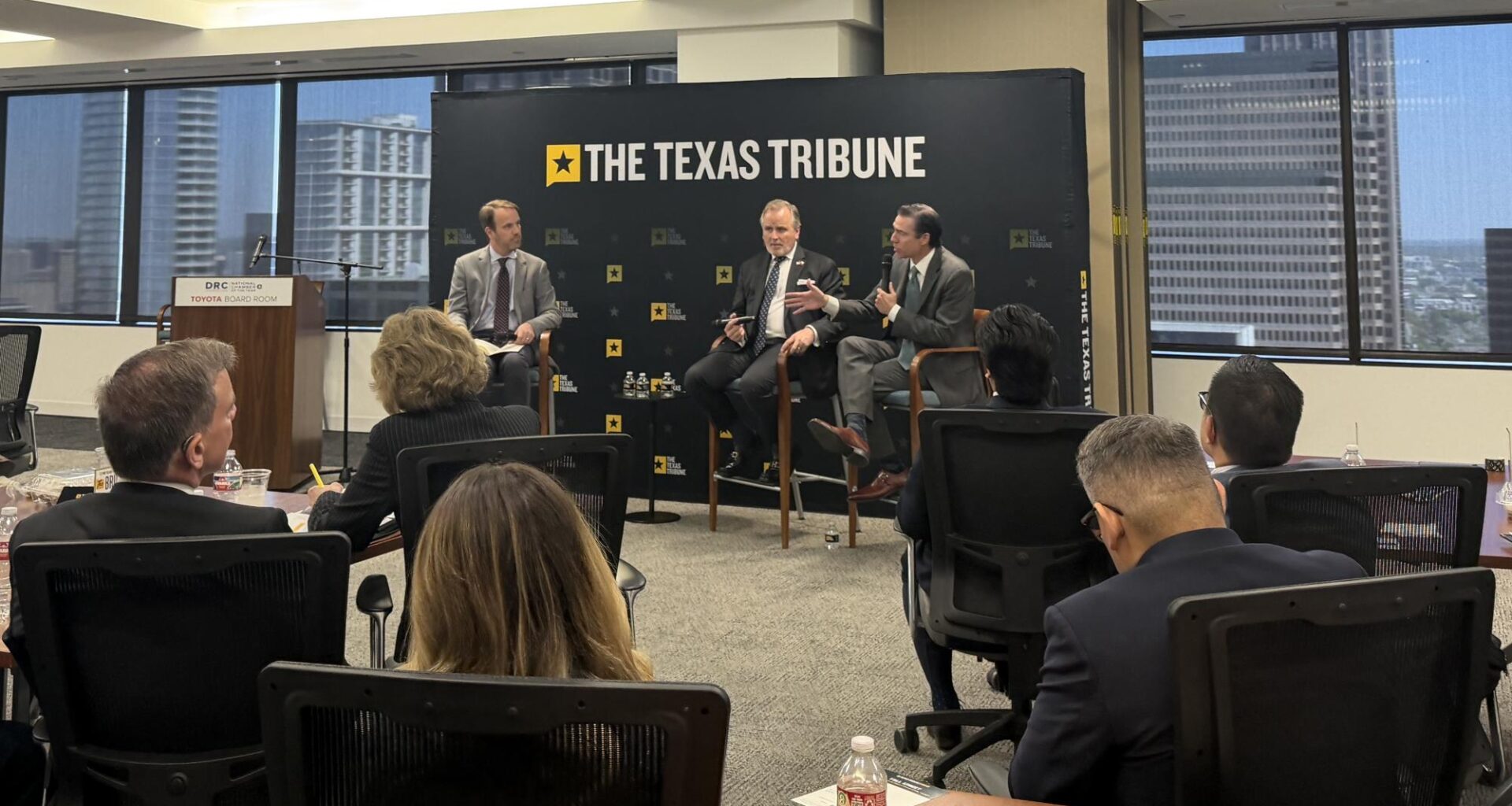
For younger generations, that means more economic opportunities are coming, according to politicians and business leaders who gathered downtown on March 24 at the Dallas Regional Chamber for an event hosted by The Texas Tribune to discuss the bold ideas shaping the city’s financial future.
The New York Stock Exchange began operating NYSE Texas in Dallas nearly a year ago and now has more than 100 dual-listed companies on both exchanges. Meanwhile, the Texas Stock Exchange is set to begin trading in July, marking another major step in the state’s push to establish itself as a financial hub.
“Dallas will be the financial services capital of America,” said State Sen. Bryan Hughes (R-Mineola), a panelist at the Tribune event. “New York is not going to be for much longer. That’s just a fact.”
Inside the room, the message was clear: Texas is not just growing, it is positioning itself to compete directly with long-established financial capitals like New York and Delaware as a growing list of companies, including JPMorgan Chase and Goldman Sachs, build out their presence in North Texas.
For students, that future is unfolding in real time. Brian Page, a managing director at JPMorgan Chase, said the growth of jobs and companies in North Texas will create new economic opportunities and long-term growth in the region for Gen Z and its successors.
“It’s going to be a great place to live, work and play,” Page said.
That future is especially relevant for SMU students, who sit just minutes from downtown Dallas.
“Growth is happening,” Page said. “You can see it with all the headlines. You can see it in the building around this one.”
As financial institutions expand and corporations continue relocating to Texas, career pathways in finance, banking and technology are increasingly shifting closer to Dallas. Opportunities that once required a move to New York may now be accessible within the city.
For some SMU students, that shift is already becoming a reality.
“From my experience interning at Goldman Sachs, I saw how much firms really value SMU students,” said Katherine Wachtell, an SMU economics senior who interned at Goldman Sachs last summer and will return after graduation. “They’re a core part of the Dallas office, and now with so many companies expanding here, it’s creating even more opportunities. It’s putting SMU students in a really strong position for success in Dallas.”
Panelists also emphasized that this growth extends beyond large corporations. They predicted that expanded access to capital and new financial infrastructure will increase opportunities all around Dallas, further broadening career options for students entering the workforce.
Still, speakers acknowledged that maintaining this kind of momentum will require continued investment in infrastructure and workforce development, as well as consistent, stable policy. State Rep. Morgan Meyer (R-University Park), an SMU alum, explained that today’s momentum is the product of an intentional growth strategy launched long ago.
“This is something which has been planned out and planned out for years and years and years,” Meyer said. “This wasn’t happenstance. This just didn’t occur over the past six months or last session or the session before.”
The effort, according to Meyer, has been building for over a decade. He explained that he saw this type of legislation and priorities at work soon after he was first elected in 2014, with a focus on ensuring Texas continues to grow as a leading economic destination.
The policies behind Texas’s economic momentum are rooted in legislation designed to make the state more business-friendly, panelists said. At the core of it all is predictability.
“Businesses are concerned about the cost, but more than the cost is not knowing what the cost is,” Hughes said. “You just want a stable market and predictability with where you’re going to be.”
The idea of reducing uncertainty for businesses has driven efforts like Senate Bill 29 and the expansion of specialized business courts, panelists added.
As companies continue to leave traditional corporate hubs, Texas leaders believe those changes are already paying off.
“Dallas has been, historically, a regional insurance and banking hub,” said panelist John Sepehri, of counsel at Foley & Lardner LLP. “Now it’s becoming the international hub over time.”