
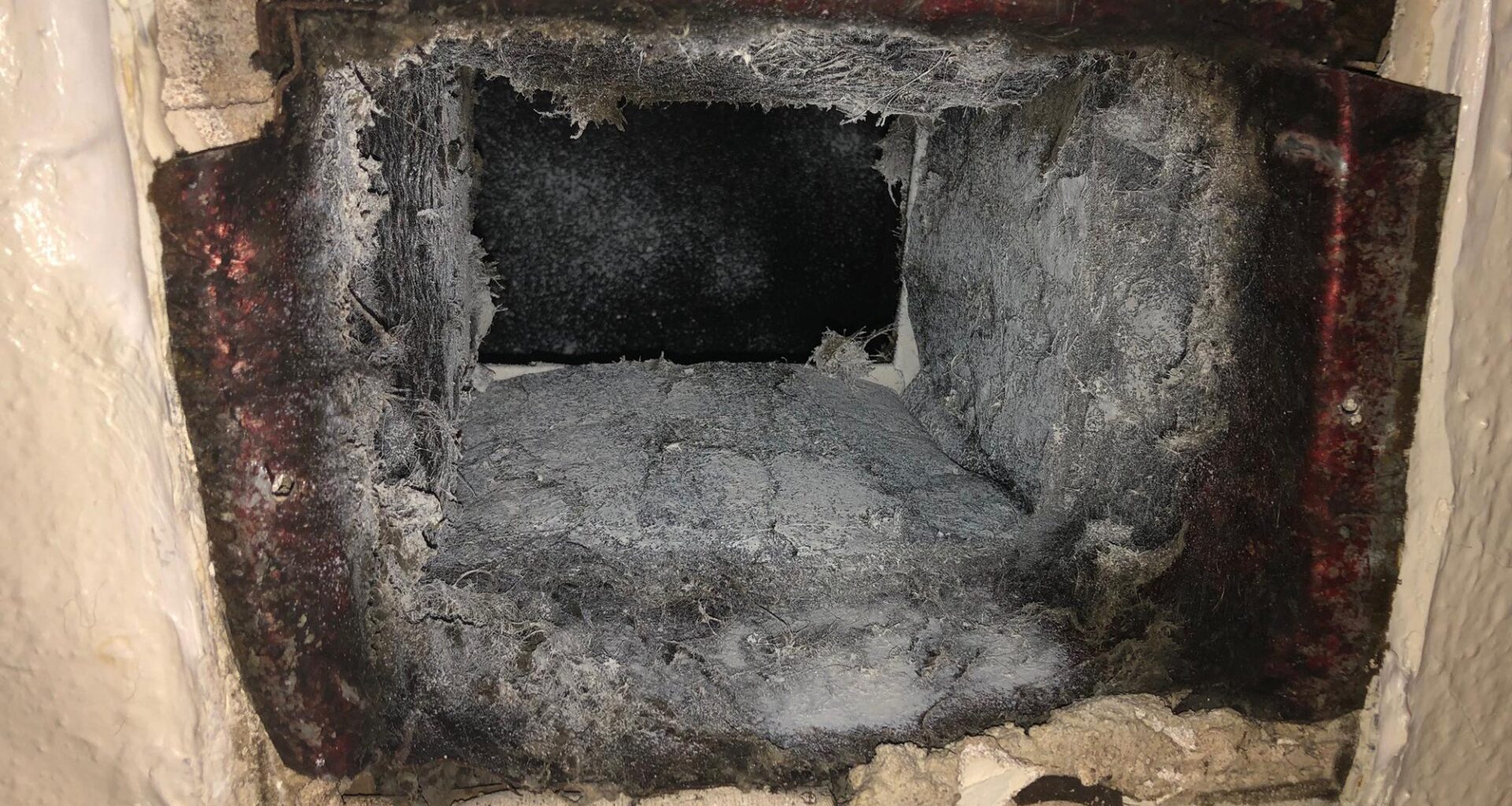
Mold in the duct work of a home at Randolph Air Force Base in San Antonio. The image was included in a 2019 lawsuit against private companies that manage housing at military installations across the U.S. A new lawsuit filed by three families includes fresh complaints of mold, leaky plumbing, and rodent and insect infestations in rental housing at Randolph.
Pulman, Cappuccio & Pullen, LLP /
Mold grows in the closet of a home at Randolph Air Force Base in San Antonio. The image was included in a 2019 lawsuit against private companies that manage housing at military installations across the U.S. A new lawsuit filed by three families includes fresh complaints of mold, leaky plumbing, and rodent and insect infestations in rental housing at Randolph.
Pulman, Cappuccio & Pullen, LLP
Three military families say in court papers that private housing providers subjected them to wretched living conditions in rented homes at Randolph Air Force Base in San Antonio, including leaky plumbing and “repulsive rodent and insect infestations.”

The families make the assertions in a lawsuit filed March 13 in U.S. District Court in San Antonio. The complaint names as defendants AETC II Privatized Housing and AETC II Property Managers, companies affiliated with Hunt Military Communities based in Alpharetta, Ga.
Article continues below this ad
Hunt describes itself as the nation’s largest military housing provider, with about 190,000 residents in 60,000 homes on Navy, Air Force, Marine Corps, Army and Space Force installations across the country.
The lawsuit contends that “instead of providing satisfactory housing, the landlord companies have for many years concealed harmful housing conditions from unsuspecting military personnel and their families.”
The three families paid rent from their military housing allowances to live in homes at Randolph from 2017 to 2025. The residences were “replete with deplorable living conditions (including, without limitation, rainwater intrusion; leaking pipes; seeping sewage; excessive moisture; repulsive rodent and insect infestations; and systemically-poor maintenance),” the complaint asserts.
RELATED: Troubled housing management firm expands to San Antonio’s Fort Sam Houston
Article continues below this ad
The plaintiffs are represented by San Antonio attorney Ryan Reed. He represents a total of 150 military families at seven bases across Texas who are suing private housing companies. Reed said Hunt “continues to place families in harm’s way, and we continue to advocate for these families and try to give them relief in the court system.”
Walter Boone, a Jackson, Miss., attorney for the private housing providers, said: “It’s not our policy or normal practice to respond.”
The latest lawsuit echoes 15 others filed by military tenants at Randolph. Reed and attorney Frank Guerra also represent 20 families with similar claims over housing conditions at Lackland Air Force Base and Fort Sam Houston in San Antonio; Laughlin Air Force Base in Del Rio; Fort Bliss in El Paso; Sheppard Air Force Base in Wichita Falls; and Fort Hood in Killeen.
The suits allege that families suffered from mold and pest infestations in rented on-base housing, and that private housing companies acting as their landlords largely failed to fix the problems.
Article continues below this ad
Privatized housing was launched by the Pentagon decades ago to get the federal government out of the business of providing homes to military families and their dependents. In 1996, Congress established the Military Housing Privatization Initiative under the Defense Authorization Act to improve the quality of housing conditions for active-duty military personnel. The armed services were encouraged to seek private-sector financing for construction and renovation of military housing.
Under the system, troops sign over their basic housing allowances to private landlords. They have “no control over their (housing allowance) and no leverage against the landlord companies when problems arise with their homes,” according to the latest suit over housing conditions at Randolph.
RELATED: After winning mold suit, military couple is stymied by appeals court
The plaintiffs in that case are retired Master Sgt. Michael Kellar and his wife, Angela; retired Staff Sgt. Leroy Holmes and his wife, Shelvella; and Senior Master Sgt. Matthew Eller and his wife, Ashley, along with their children and other family members. They’re demanding a jury trial.
Article continues below this ad
They say their on-base housing had structurally unsound floors and walls, faulty insulation, pervasive mold, “inescapable contamination due to the presence of asbestos and lead-based paint,” deficient electrical, plumbing and HVAC systems, and “other unacceptable departures from applicable building and housing codes.”
The complaint contends that the plaintiffs suffered “difficulty breathing, asthma, bronchitis, serious allergic reactions, nose bleeds, skin rashes and gastrointestinal issues.
“As they observe their families get sicker and sicker and realize the landlord companies take no action or grossly inadequate action, they suffer severe and ongoing mental anguish,” the suit states.
Kellar and Holmes were retired from the military but were allowed to live with their families in rented housing at Randolph.
Article continues below this ad
“Hunt leased to them, and then they regretted that decision,” Reed said.
Reed said Eller, who is still serving, and his family moved into a Hunt-managed home at 2A 1st Street West in August 2020. Early on, the Ellers complained of a musty smell. “The maintenance workers would tell the Ellers that the smell was due to recent rain and that, because the home had no foundation, the smell was the dirt in the crawlspace,” the lawsuit states. “The Ellers believed them.”
Over the five years they lived in the home, the Ellers “experienced pervasive and serious problems related to mold growth, water damage, insect infestation and structural deficiencies,” the complaint says. In August 2023, the family saw “visible mold growth” around an air conditioning vent and reported it.
A maintenance worker told the family the growth was not mold and wiped it off with a rag.
Article continues below this ad
Water leaked into a utility closet in 2024, and conditions worsened last year, with mold growth, insect infestation and structural problems “all present in the home,” the suit stated. The family moved out of the house on Sept. 1.
RELATED: Family fled sewage-contaminated house on San Antonio base
Ashley Eller “experienced the most severe and well-documented health consequences, including migraines, choking sensations, brain fog, severe fatigue, chest tightness, joint pain, medication-resistant post-nasal drip, recurrent nosebleeds, gastrointestinal issues, and swollen tonsils,” the lawsuit states.
“Heidi Eller, the couple’s adult daughter, suffered from frequent migraines, fatigue, brain fog, respiratory irritation, and nosebleeds. Minor children C.E and A.E experienced headaches, fatigue, respiratory irritation, post-nasal drip, and sinus congestion and received medical care for those symptoms,” the complaint contends.
Article continues below this ad
Complaints about Hunt-managed homes at Randolph have persisted for years.
An extreme case was the notorious “poop house,” a stucco and clay tile-roofed home on Randolph occupied in 2019 by Mary Beth Pisano and her husband, Lt. Col. Carmen Pisano, an Air Force lawyer.
They moved into a new residence on the base after a repair contractor found the source of the odor they and two previous occupants of the house had complained of — raw sewage that swirled eight inches deep in a crawl space. The Pianos had paid $2,271 a month to rent the home.
Article continues below this ad