
Austin city leaders have approved a new strategic plan to address some of the issues people experiencing homelessness face.
David Gray, the city’s homeless strategy officer, said it will act as a road map for addressing homelessness over the next two years. The plan was crafted with more than two dozen community partners and includes adding shelter beds to the system, opening two centers that help coordinate services and increasing collaboration with community partners.
“If we want to get people out of our abandoned buildings and out of parks and greenbelts, we need more beds to put them in, and we need more spaces to bring those people inside,” Gray said. “And that is exactly why our plan touches on adding more shelter beds, enhancing rapid rehousing and permanent supportive housing service delivery and boosting our navigation centers.”
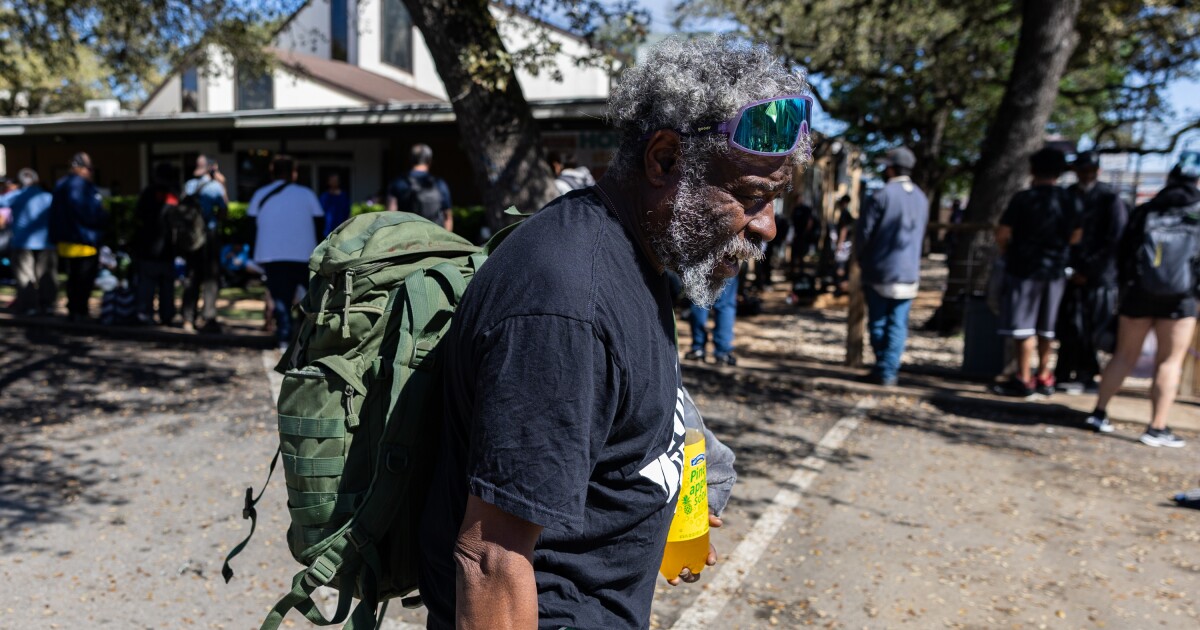
Tony Carter said those are the kinds of services that could help get him and keep him in housing. Since 2019, Carter has been in and out of homeless camps and rapid rehousing all while trying to hold down a job. Rapid rehousing provides the person with a rent subsidy and case management services as they work to become self-sufficient.
“If they are going to keep kicking us out [of our camps], we need housing,” Carter said. “Because you are kicking people out that don’t have a place to go. We need the resources, we need permanent supportive housing, and we need a place where we can go get help.”
Gray said some of those goals are already underway. The city is working to open a new navigation center, which would help match people with services, in South Austin. The city purchased the property back in October. And several permanent supportive housing units are already set to be opened.
Carter said having a place to sleep and access to resources aren’t the only needs. He said it’s important to have the right people running these facilities so that people come in feeling safe and welcomed.
“A lot of people will go to the shelter but they aren’t going to stay,” he said. “Because the employees don’t know how to treat the people, the facilities aren’t cleaned [properly] and people’s stuff gets stolen.”
People living in the shelters have also complained about a lack of nutritious food.
The city’s plan wants to address those concerns by establishing standards at shelters, including staff training and service expectations.
As the city looks to adopt and implement the plan, Gray said the city will be leaning on its community partners to help bring some of these needs to fruition, especially as the city navigates budget constraints.
One of those partners will be the Ending Community Homelessness Coalition, or ECHO. The organization recently announced a new program that will provide financial assistance to more than 1,000 families in Austin.
Ashleigh Hamilton, the program’s manager, said the goal is to keep people housed by stepping in before they hit a crisis point.
“When we talk about a person being able to have income to get to work, they need to have a car, but maybe their car broke down, and they need to pay for repairs,” Hamilton said. “That all contributes to them staying housed. If they can’t get to work, they can’t pay their rent, if they can’t pay their rent, then eventually the eviction process comes in.”
She said the same could apply to child care costs or medical care.
“We want to be able to step in in those instances where it doesn’t necessarily look like rental assistance,” she said.
Hamilton said several organizations in the homelessness response system are doing what they can to help people, and hopefully this new plan will help guide them.
“We are now stepping into a time where we are acknowledging that our current kind of system isn’t working to the best that we think it could be, and it may take us to do some things a little bit differently in order to achieve our goals.”
Carter said all the work to help people is good, but he hopes the city plan is thorough enough to help the people who really need it.
“Because you have over 6,000 some people still out there, and a lot of them are afraid to come in,” Carter said. “And for the ones that do come in, have something there for them to go to. Give them some hope.”