
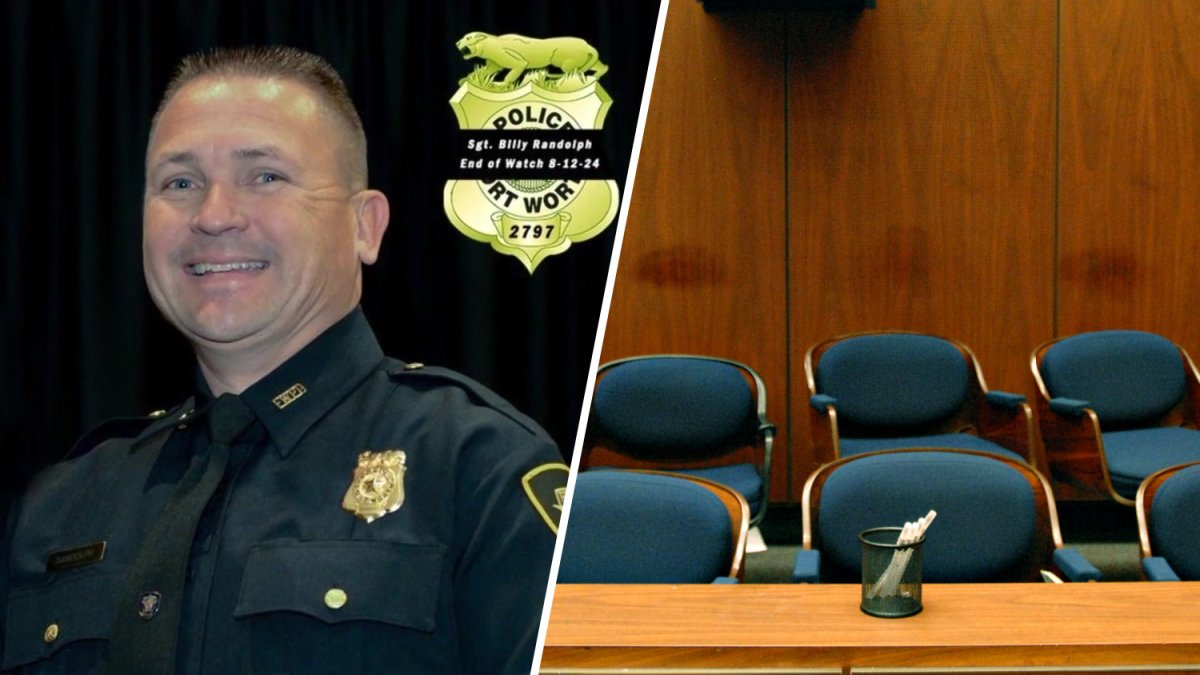
Fort Worth police officers delivered emotional testimony Thursday as a jury prepares to decide the punishment for a woman who pleaded guilty in the death of Sgt. Billy Randolph.
Randolph was working the scene of a crash in August 2024 when investigators said De Aujulee Evans drove through and hit him.
Evans pleaded guilty Thursday morning. Prosecutors said her punishment could range from probation to 99 years or life in prison.
In court, multiple officers described Randolph as a mentor, a father figure and a leader who cared deeply about both his officers and their families. Several became too emotional to continue speaking while recounting the events of that morning.
Officer Taylor Massey described witnessing the crash and seeing Randolph “flying through the air.”
Jurors were also shown dash and body camera footage capturing the chaotic moments after Randolph was hit.
Officers were seen rushing to load Randolph into a squad car to take him to the hospital. In the back seat, an officer performed CPR, repeatedly urging him to hold on.
Once at the hospital, the body camera video went dark as an officer appeared to embrace someone. The audio captured sobbing.
Emotions were also visible in the courtroom, where Randolph’s family watched the footage of his final moments.
Evans’ loved ones also became emotional as jurors viewed video from her police interrogation.
In that interview, Evans said she had consumed more than 10 tequila shots at a party before the crash and was not wearing her bifocals while driving. She initially told detectives she did not remember running from police, but later admitted calling a friend and saying she believed she had been involved in a hit-and-run.
Dozens of officers attended Thursday’s proceedings, many watching from an overflow room. Fort Worth Police Chief Eddie Garcia was also present, saying he wanted to show support for Randolph’s wife.
Prosecutors said they expect to continue calling witnesses through Monday as the sentencing phase continues.
This story was originally reported for broadcast by NBC DFW. AI tools helped convert the story into a digital article, and an NBC DFW journalist edited it again before publication.