
The amount is less than former Celtics owner Steve Pagliuca offered to the Mohegan tribe last summer in his bid to purchase the team and move it to Boston. The Globe reported in August he was prepared to pay $325 million for the team and would put up $100 million for a practice facility in the area.
But the WNBA swiftly stepped in and said it had the final say over team relocations.
While announcing the three newest expansion franchises in June 2025 — Cleveland, Detroit, and Philadelphia — WNBA commissioner Cathy Engelbert made mention of just one of the nine cities that applied but did not receive a team.
“One of those I wanted to shout out, because they have such a strong history in this league and their great ownership group, is Houston,” Engelbert said. “… we’ll stay tuned on that.”
Houston was home to an original WNBA powerhouse: the Comets, which won the first four championships from 1997 to 2000 behind legends Cynthia Cooper and Sheryl Swoopes.
But the franchise, originally owned by former Rockets owner Leslie Alexander, was sold in 2007. It folded in 2008.
ESPN reports the Houston franchise will adopt the Comets name. The Rockets are now owned by Fertitta, who is also the United States ambassador to Italy and San Marino and made his fortune in casinos and hospitality. The team would likely play at the Toyota Center in downtown Houston.
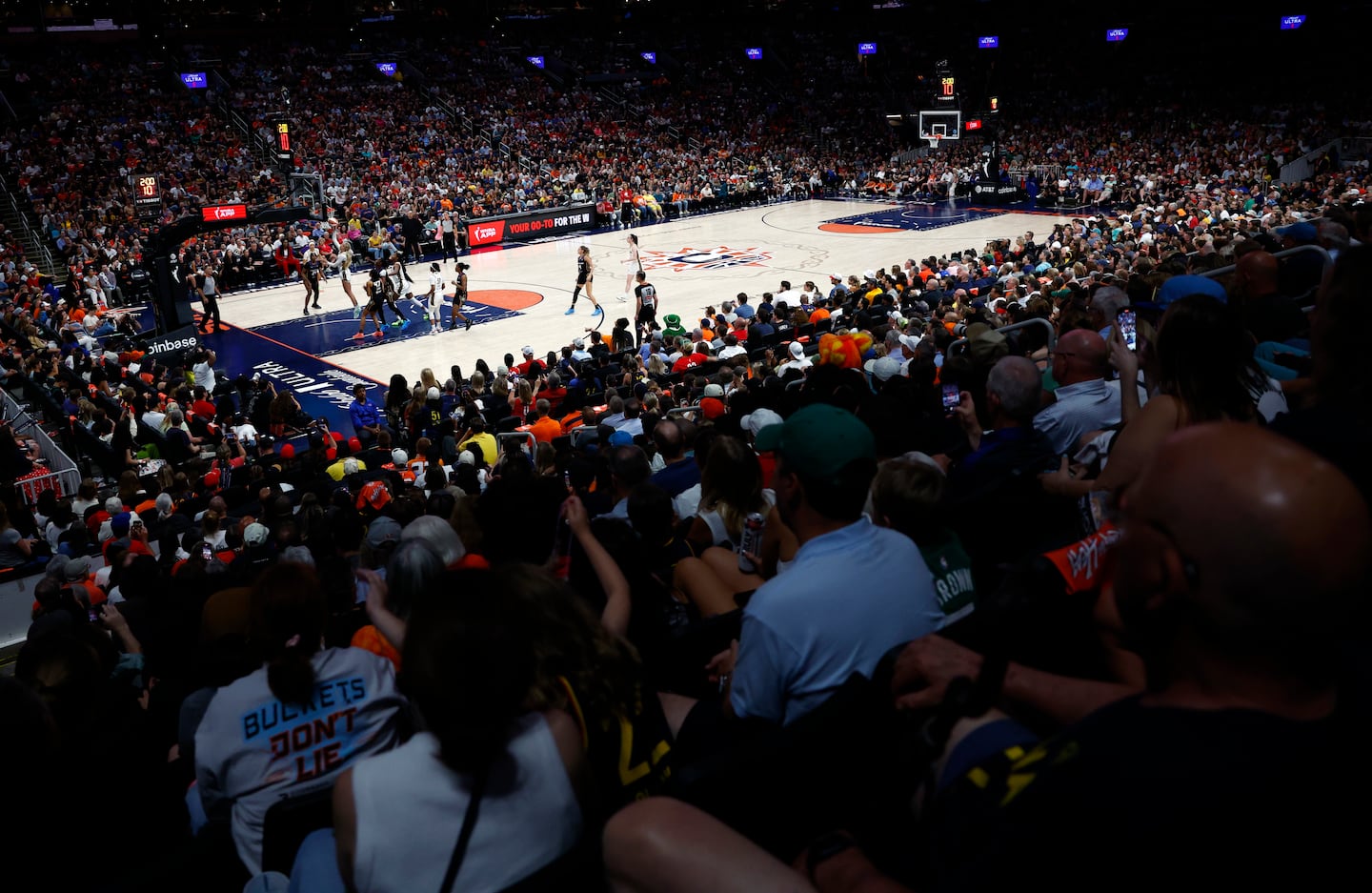
In 2002, the Mohegan tribe purchased the Orlando Miracle franchise as it was about to fold and relocated it to Connecticut. Since 2003, the team has played at Mohegan Sun Arena located inside the casino of the same name in Uncasville.
The tribe had been looking to sell the club as interest in the WNBA has grown rapidly in recent years. Ownership groups across the league have been increasing investments in women’s basketball, especially after the WNBA signed a record television deal in 2024 worth more than $2 billion.
The investments include dedicated practice facilities like the $80-million space the New York Liberty intend to build in Brooklyn, and the $150-million facility coming to southern California for the Los Angeles Sparks. Both are scheduled to open in 2027.
The news of the franchise sale comes just days after the WNBA and its players’ association agreed to a new collective bargaining agreement after more than a year of tense negotiations. The new CBA will increase the salary cap from $1.5 million in 2025 to $7 million entering 2026. The average salary will be around $600,000, up from $120,000 last season.
Because of labor unrest and the anticipation of a new deal, more than 90 percent of the league’s players are free agents. The Sun have more players under contract than most teams because of a young core added via the draft in recent years. Saniya Rivers and Aneesah Morrow were drafted in the first round in 2025; the franchise traded for Aaliyah Edwards, a 2024 first-round pick by Washington, last year; and Leila Lacan, the Sun’s first-rounder in 2024, joined the team last season from France.
Two new teams will join the league this year: the Toronto Tempo and the Portland Fire. An expansion draft will be held on April 3, followed quickly by the college draft on April 13. The season is set to open in mid-May.
What’s next for the WNBA in Boston? Well, it may be a while. Cleveland will begin play in 2028, Detroit in 2029 — both cities that previously had teams — and then Philadelphia in 2030. That will bring the league to 18 teams. The Globe reported in August that 2033 could be the next expansion round in which Boston might be a candidate for a team.
The Golden State Valkyries joined the league last year, becoming the WNBA’s first expansion franchise since 2008. Of the six teams added in 2025 or later, four have direct connections to NBA ownership groups (the NBA holds a sizable ownership stake in the WNBA).
Mass. Governor Maura Healey said in August she was working with Pagliuca and Celtics owner Bill Chisholm to broker a partnership that could land Boston a team.
“The league has been saying this is a timing issue and Boston needs to wait, and I don’t believe that Boston should wait,” Healey told the Globe at the time. “Nor should the Tribe have to wait. We’ve got women players right now, management, staff, and a women’s professional league that would benefit from this. Why people would stand in the way of that, I don’t understand. Again, it does nothing to take away from expansion opportunities or future expansion opportunities.”
At least for now, the opportunity seems to have slipped away.
Katie McInerney can be reached at katie.mcinerney@globe.com. Follow her on Instagram at @katiemac.sports.