
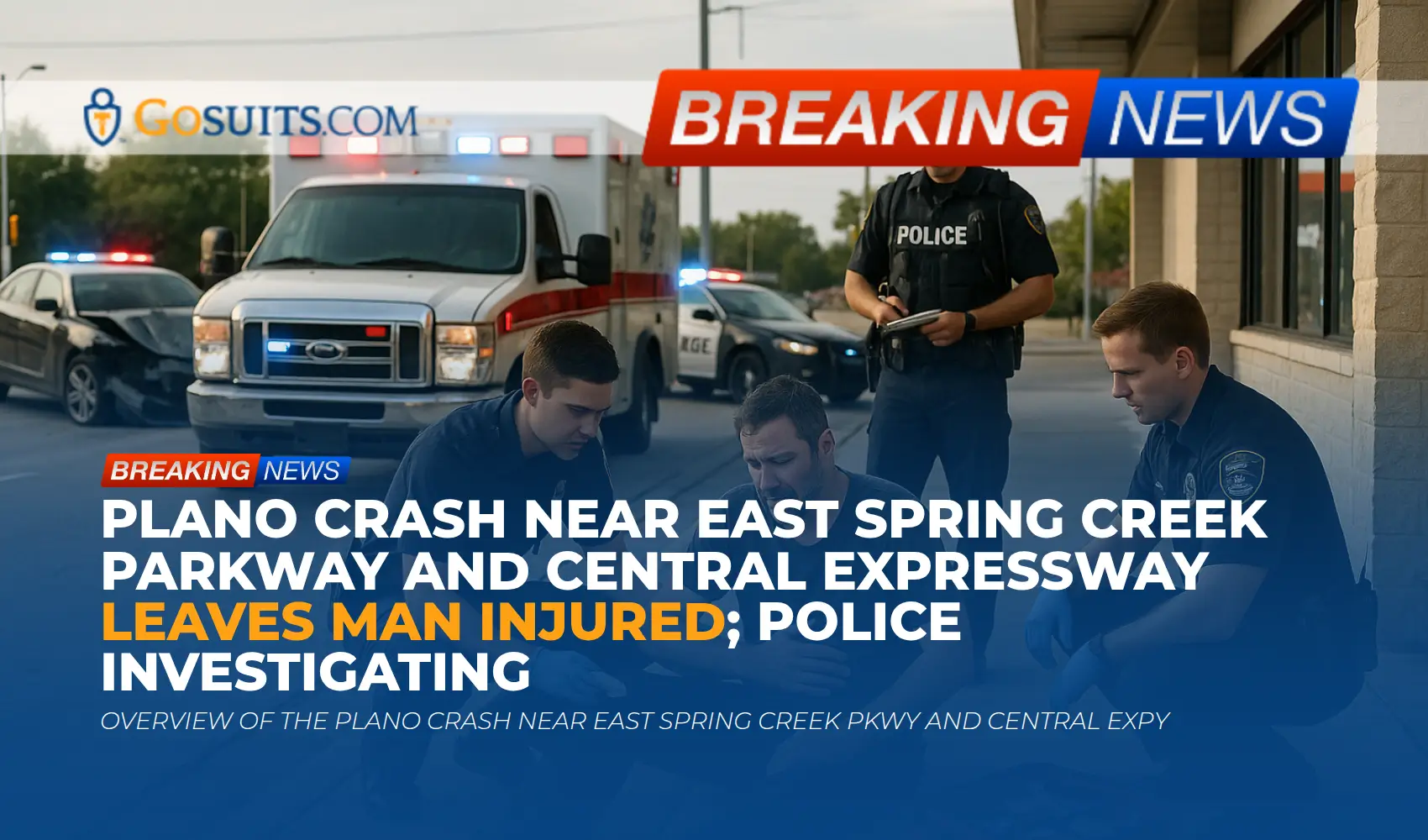
Overview of the Plano crash near East Spring Creek Pkwy and Central Expy
On Saturday evening, shortly after 5:15 p.m., a traffic incident occurred near the intersection of East Spring Creek Parkway and the northbound lanes of Central Expressway in Plano, Texas. Dispatch information indicates an adult male was injured and required medical attention. Emergency responders assessed the scene and ensured safety in the surrounding area. The injured individual received treatment from paramedics, including continued care at a nearby gas station. Authorities have not released additional details about how the crash occurred or whether other vehicles or parties were involved. The investigation is ongoing.
This corridor serves residential neighborhoods, retail destinations, and commuters, which can make traffic patterns dynamic. In such areas, speed changes, lane merges, and turning movements often increase the likelihood of collisions, especially near major highways and high-volume intersections. While the exact cause here remains under review, the response highlights the importance of quick medical assessment and scene safety after any roadway incident.
What authorities have reported so far
According to dispatch information from the Plano Police Department, the collision took place near the intersection of Spring Creek Parkway and Central Expressway northbound. One adult male was injured and required medical care at the scene and nearby. As of the latest update, there is no publicly available description of how the crash occurred, whether other vehicles were involved, or the severity of the injuries. Investigators typically review witness statements, physical evidence from the roadway, and any available camera footage. There may be relevant traffic management or nearby private surveillance video depending on the exact location and timing.
It is common for officers to document roadway markings, vehicle resting positions, and other observable factors to determine how a crash unfolded. In Texas, officers who investigate and meet certain criteria must submit a formal crash report. Those reports, when filed, are generally available through the state’s portal to eligible parties.
Why intersections like Spring Creek Pkwy and Central Expy see injury crashes
Intersections are complex decision points. Drivers may be entering or exiting highways, changing lanes to prepare for turns, or adjusting speed in response to traffic signals and congestion. The Federal Highway Administration notes that intersections concentrate conflict points involving left turns, right turns, and through movements, which can increase crash exposure for drivers, passengers, bicyclists, and pedestrians. Engineering solutions like protected turn phases, improved signal timing, and access management are among the countermeasures used to reduce risk at busy junctions. For general information on intersection safety strategies, see the Federal Highway Administration’s proven safety countermeasures for intersections at highways.dot.gov.
Traffic density also matters. As a growing city with active commercial corridors and proximity to US 75, Plano experiences significant traffic volume. Variable speeds between freeway frontage roads and arterial streets can complicate merges and turns. Even when signals and signs are properly functioning, visibility, driver attention, and timing can influence outcomes. These are among the issues investigators often consider when reconstructing an incident.
Immediate health and safety steps after a collision in Texas
Health comes first. After any collision, it is vital that anyone who is injured be evaluated promptly by qualified medical professionals. Some injuries can be subtle at first, including concussions and soft-tissue trauma, and symptoms may worsen over hours or days. Early care helps protect well-being and creates medical documentation that can be important later.
From a practical standpoint, there are additional steps that can help protect safety and preserve information:
Call 911 and request police and EMS. In Texas, officers generally document reportable crashes and provide guidance at the scene. If a formal report is filed, it will later be retrievable by eligible parties through the state system.
Request medical evaluation even if symptoms seem mild. Headaches, neck or back pain, dizziness, and confusion can signal injuries that require attention. The Centers for Disease Control and Prevention provides educational materials on concussion and mild traumatic brain injury at cdc.gov.
Avoid discussing fault at the scene. Provide factual information to officers and medical personnel. Statements made to others, including insurers, can be misinterpreted later.
If considering an insurance claim, consult a qualified attorney before speaking with any insurance company. What is said to an adjuster can be used to limit or deny a claim later. An initial consultation can help clarify options and next steps.
How to obtain official records in Plano and Collin County
Several public records can become important after a collision. Availability and eligibility depend on the type of record and who is requesting it. Below are common sources and how to find them.
Police crash reports
Texas peace officers submit the official crash report when required by law. Eligible parties, including those involved in the crash and their authorized representatives, can usually obtain a copy through the Texas Department of Transportation’s Crash Records Information System. Visit cris.txdot.gov to search and purchase a report when it is available.
The City of Plano also processes public information requests under the Texas Public Information Act. For city records, including certain reports or communications, see the City of Plano’s Open Records page at plano.gov. Response times and available materials are governed by state law and applicable exemptions.
911 audio, CAD logs, and scene photos
Dispatch audio, computer-aided dispatch logs, and scene photographs may exist depending on the incident. These materials are typically requested through the City of Plano’s Open Records process. Some content may be redacted under the Texas Public Information Act to protect privacy or sensitive information. The Texas Attorney General provides an overview of the Public Information Act at texasattorneygeneral.gov.
Traffic camera or roadway video
Some municipalities maintain traffic management cameras for live monitoring and signal timing rather than long-term recording. Availability of any footage varies by location and retention policy. If seeking traffic-related video held by the city, submit a specific date, time, and intersection via the City of Plano Open Records portal at plano.gov. Nearby private businesses may also have exterior surveillance; requests to private entities are voluntary and outside the public records process.
EMS and hospital records
If transported or treated by emergency medical services or a hospital, patients can generally request their own medical records directly from the provider. Plano Fire-Rescue provides emergency response in the city; information about city departments can be accessed via the City of Plano website at plano.gov. Hospitals have their own release-of-information procedures. Medical records are protected by privacy laws and typically require patient authorization.
Medical examiner or autopsy reports in fatal cases
In the event of a fatality, autopsy and investigative reports are typically maintained by the county medical examiner. For Plano incidents, the Collin County government site is at collincountytx.gov, where families can locate the Medical Examiner’s Office page and its procedures for requesting records. Release policies, eligibility, and timelines vary by office and case status.
State crash data and statistics
TxDOT maintains statewide crash data dashboards and publications. These can be helpful for understanding broader trends and context. See TxDOT crash statistics resources at txdot.gov.
Understanding Texas insurance and fault rules
Texas uses a fault-based system for motor vehicle crashes. Liability is determined by the facts of the incident, and the at-fault party’s insurer may be responsible for covered losses up to policy limits. Several state rules shape how claims unfold.
Comparative fault. Texas follows proportionate responsibility. A claimant found more than 50 percent responsible cannot recover from others. See Texas Civil Practice and Remedies Code Chapter 33 at statutes.capitol.texas.gov.
Statute of limitations. Most personal injury claims in Texas must be filed within two years of the incident. See Texas Civil Practice and Remedies Code Section 16.003 at statutes.capitol.texas.gov. Time limits can vary for certain parties or claims, so individualized guidance is important.
Required and optional auto coverages. Liability insurance is required. Optional coverages can include personal injury protection, medical payments coverage, and uninsured or underinsured motorist coverage. The Texas Department of Insurance provides consumer information about auto coverages at tdi.texas.gov.
Hospital liens. Texas law allows hospitals to assert a lien for reasonable and necessary charges related to treatment of accident injuries, subject to statutory requirements. See Texas Property Code Chapter 55 at statutes.capitol.texas.gov.
Before engaging with any insurer about fault, injuries, or settlement, it is generally wise to speak with an attorney. Recorded statements and broad medical authorizations can affect a claim’s outcome. Early conversations focused on “just getting the basics” can lead to misunderstandings about pain, limitations, or time away from work. A free consultation can clarify options and help avoid common pitfalls.
Preserving evidence and documenting losses
Evidence often determines how claims are evaluated. Local roadway video, event data recorders, and witness recollections can be time sensitive. The earlier key materials are identified and preserved, the clearer the picture becomes.
Photographs and video. Take or preserve photos of vehicle positions, damage, roadway markings, traffic signals, and the general scene. Even images taken after the scene is cleared can help document damage and context.
Witness information. Names, phone numbers, and brief notes about what witnesses observed can become critical. If police collected statements, those may appear in the crash report.
Vehicle data. Many vehicles store event data, such as speed or brake application, around the time of a crash. Preserving the vehicle and avoiding repairs until documentation is complete can prevent loss of this data.
Medical documentation. Keep discharge summaries, imaging results, prescriptions, and therapy notes. These records help connect symptoms to the collision and show progress or setbacks over time.
Expense and wage records. Track out-of-pocket costs, mileage to appointments, time missed from work, and any modifications needed at home or work due to injuries.
Requests to preserve third-party video. Nearby businesses may have exterior cameras. Written preservation requests sent promptly can improve the chance that relevant footage is retained before routine deletion.
Common injuries and the importance of follow-up care
Motor vehicle collisions can lead to a wide range of injuries. Some are immediately apparent. Others emerge over time as inflammation develops or as the body’s stress response settles.
Head and brain injuries. Concussions and other traumatic brain injuries may present with headache, dizziness, light sensitivity, memory issues, or mood changes. The CDC offers educational resources for recognizing and managing concussions at cdc.gov.
Neck and back injuries. Whiplash, muscle strain, herniated discs, and facet injuries are common in traffic crashes, especially at intersections where speeds change quickly.
Orthopedic injuries. Fractures, joint sprains, and soft-tissue tears may require immobilization, therapy, or surgery depending on severity.
Psychological effects. Anxiety, sleep disruption, and driving avoidance are not uncommon after collisions and deserve attention and care.
Follow-up matters. Adhering to treatment plans, attending therapy, and reporting new or worsening symptoms help promote recovery and provide a clear medical record. Communicate with providers about activity restrictions and job duties to reduce the chance of re-injury. If insurance questions arise about coverage for recommended care, the Texas Department of Insurance provides consumer assistance and information at tdi.texas.gov.
Potential civil liability paths in intersection crashes
Every collision is fact dependent, and investigators often begin by evaluating how vehicles approached, whether traffic control devices were obeyed, and how visibility and speed may have influenced outcomes. When evidence supports a civil claim, several liability theories may be considered:
Negligent turning or failure to yield. Left-turn and right-turn conflicts with oncoming through traffic are common at signalized intersections. Driver attention, signal phase compliance, and gap selection are central considerations.
Unsafe speed or following distance. Approaches and departures from signals require drivers to adjust speed. Inadequate following distance can lead to rear-end collisions when traffic slows unexpectedly.
Lane changes near intersections. Merges or last-second lane changes to reach turn lanes can create side-swipe or angle impacts.
Distraction. Even brief inattention can be critical near intersections, where conditions change rapidly.
Commercial vehicle considerations. If a commercial vehicle or rideshare is involved, additional evidence such as electronic logs, dispatch records, or company safety policies can be relevant. Preservation letters are often needed early to avoid data loss.
Texas law on proportionate responsibility can reduce or bar recovery if a claimant’s share of responsibility is significant. See Civil Practice and Remedies Code Chapter 33 at statutes.capitol.texas.gov. A careful, evidence-driven approach is important to accurately assess what happened.
Government safety and reporting resources
These government resources provide reliable information about crash reporting, safety guidance, and public records processes:

Commentary from Gosuits Plano, Texas Personal Injury Attorney
Our thoughts are with the injured individual and their loved ones. Collisions near busy intersections can be frightening and disorienting. This article is intended for educational purposes and general information to help the community understand the process that often follows an injury crash.
Based on what is known, investigators will likely focus on the interaction of turning and through traffic near a major highway corridor, the timing of lights or movements, and sightlines near the intersection. It is not unusual for emergency crews to reposition to a nearby location to administer or continue care where space is safer or access is easier. As facts develop, the official crash report and any available scene documentation will be central to understanding how the incident occurred.
Insurance companies and large corporations often move quickly after a crash. Adjusters may ask for recorded statements or broad medical authorizations early on. Those requests can feel routine, but the information collected is often used to reduce claim value, dispute the severity of injuries, or shift responsibility. People unfamiliar with the process may unintentionally minimize symptoms or agree to terms that limit their recovery. The best practice is to obtain a free consultation with a seasoned injury attorney before making statements to insurers. A brief conversation can clarify rights, highlight time-sensitive evidence, and identify coverage that might otherwise be overlooked, such as uninsured motorist or personal injury protection benefits.
Early guidance can also help avoid surprises involving medical billing and liens. Texas law permits certain providers to assert liens tied to accident-related treatment, and negotiating these obligations is a key part of resolving a claim. Understanding how these liens work and how to document all losses, from medical needs to time away from work, is important as the case progresses.
Why taking timely action matters
There are concrete, time-sensitive steps that can protect health, preserve evidence, and safeguard legal options after a roadway injury in Plano:
Confirm medical evaluation and follow-up. Establishing a clear record of injuries and care supports both recovery and documentation. Delays can be misinterpreted as a sign that injuries are minor.
Secure the official crash report. When filed, obtain the Texas Peace Officer’s Crash Report through the state system. The report typically includes diagrams, narrative observations, and listed factors. It is often a starting point for insurers and investigators.
Request public records early. If seeking dispatch logs, 911 audio, or possible traffic-related video, submit targeted requests through the City of Plano Open Records portal. Many systems overwrite data on short cycles.
Preserve private video. Nearby businesses frequently retain footage for limited periods. Prompt, written preservation requests can make the difference between having objective video and losing it to routine deletion.
Document symptoms and limitations. Maintain a simple journal of pain levels, sleep disruption, mobility, and work limitations. These real-world details help connect medical findings to daily impact.
Protect insurance claims. Before giving a recorded statement or signing any medical authorization for an insurer, speak with an attorney. What is said to the insurer can be used later to dispute or narrow the claim. A free consultation helps map next steps and avoid common traps.
Mind legal deadlines. Texas has strict time limits for filing injury claims, and some notices for certain coverages or public entities are shorter. Acting early helps ensure deadlines are met and that evidence is gathered while it is still available.
Acting promptly can improve access to records, increase the chance that key video is preserved, and give treating providers the information they need to chart an effective recovery plan. At the same time, early planning reduces the risk that insurance processes get ahead of the facts and shape a claim before the full picture is known.
This article is provided solely for general informational and educational purposes. It is not intended as legal advice and should not be relied upon as such, particularly by individuals affected by the incident discussed. Reading this article does not create, nor is it intended to create, an attorney–client relationship.
An attorney–client relationship with our firm can only be established through the execution of a written contingency fee agreement signed by both the client and the law firm. If you are a victim of this incident, you should not interpret the information herein as legal advice. Instead, we strongly encourage you to contact an attorney of your choice to obtain a proper consultation tailored to your specific situation.
Some or all of the information found on this site maybe generated by AI. Images of the scene of the incident are not real images and are created by AI. We do not guarantee the accuracy of the research and infromation found here. You agree to indemnify, defend, and hold Gosuits and the affliated companies harmless for damages or losses caused by you or another party due to any access to or use of the Services on this website or any information contained therein whether authorized or unauthorized. We will not be liable for any information or access caused by unauthorized disclosure of your information by any third party. You agree to notify us in writing immediately if you suspect any unauthorized use of or access of your information from this website by a third party.
We rely on the information found on the net and do not always have first hand knowledge of the matters. If you find any information here inaccurate or offensive contact us and we will have it immediately removed.
By using this website you are agreeing to these terms and conditions along with our terms and conditions on our disclaimer page. https://gosuits.com/terms-use-disclaimer/
If you would like this article removed, please call 800-972-4355 and ask for Sean Chalaki, who will assist you with your request.