
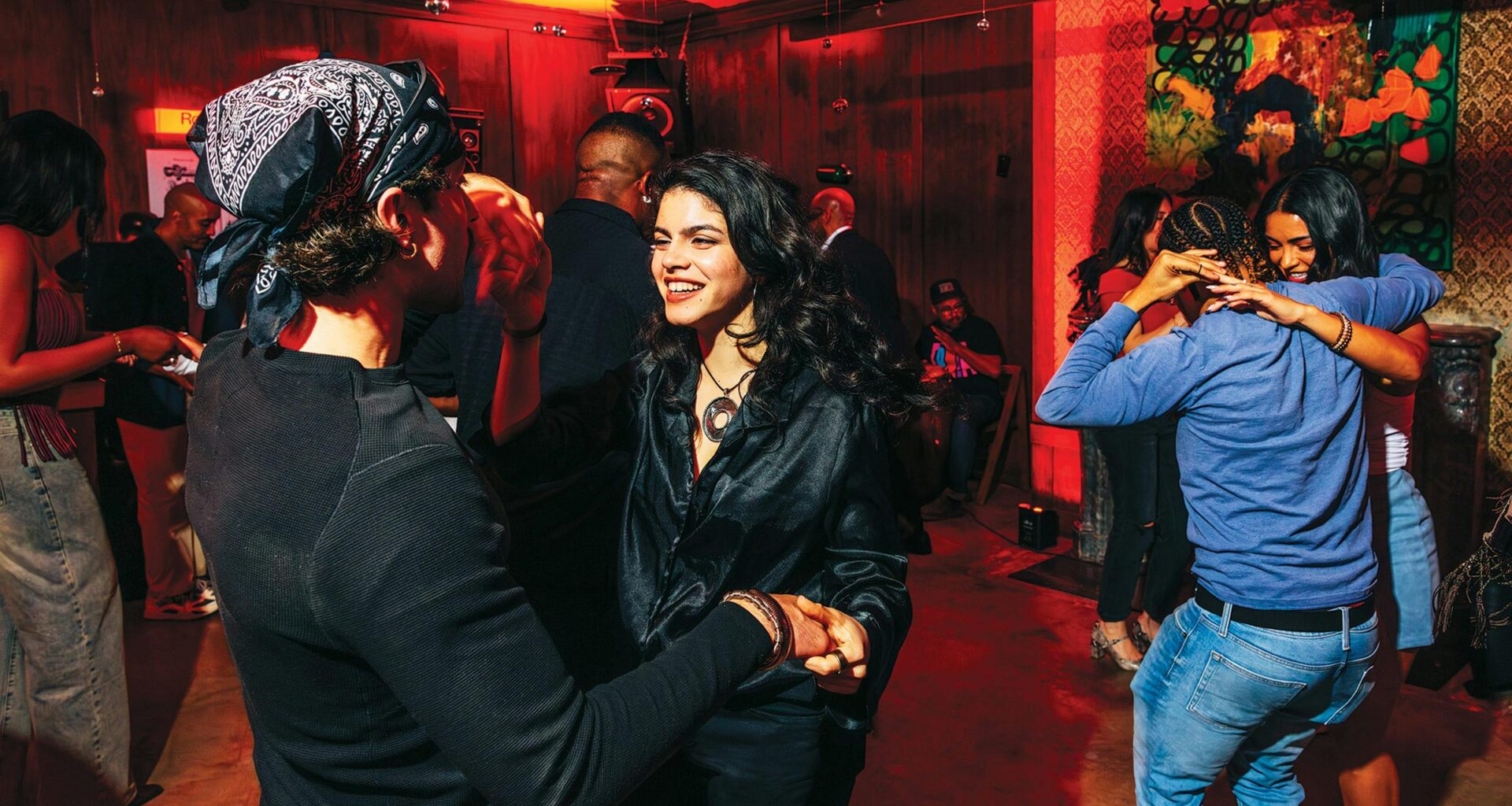
It’s Saturday night, and Houston’s East End is full of surprises. I’m looking for a speakeasy tucked inside a mid-century office building when I hear the faint pulse of bongos. Following the beat up a narrow flight of stairs, I emerge into a packed, wood-paneled space called Room 808, where rows of aspiring dancers follow an instructor in flared black pants. “Sway, step together, sway, step together,” she says, tapping out beginner cumbia moves between tosses of her waist-length black hair. “You want to find your flow within your steps!”
I’m not sure what this is, but I want to be a part of it. I squeeze between a bearded thirtysomething and a statuesque brunette and follow the instructor’s cues. When it’s time to partner up, the brunette grabs my hands. She’s glamorous in big gold hoop earrings and a leather jacket, and her moves are butter smooth. Dancing with her, I catch a side-to-side cumbia sway that makes my skirt twirl. I’ve found my flow.
I’ve also lucked out. The cumbia gods have landed me in the hands of Karla Blanco, the Venezuelan owner of El Sabor de Houston Dance Academy. She was hired by Room 808, a vinyl lounge with a speakeasy next door, to teach these classes. “She’s the real deal,” says Room 808 proprietor Brijan Turner when we meet afterward at the speakeasy. Wearing a mustard-yellow hoodie and a floral-print head scarf, Turner gives off a laid-back vibe that suits the businesses she’s growing here; in addition to Room 808, she runs a cafe, a bookstore, and a gallery, all within this building, known as the List. While clustered with Turner and her friends at the busy bar, I notice dominoes players of many ages and ethnicities huddled over the surrounding tables, intensely focused on their games.
Cumbia in Room 808 is but one of many unexpected delights I’ve stumbled upon during a weekend wandering through this former industrial area that was once home to so many coffee manufacturing plants that the air smelled like French roast. In the course of one night, I will guzzle a frothy banana-rum concoction at the Voodoo Queen Daiquiri Dive, where drink machines churn like bright, boozy portholes in the dimly lit bar. I’ll witness quick and funny improv at the Coronation Theater and catch some of a rock opera at Super Happy Fun Land, a cavernous performance hall. And I’ll find myself at a dream of a dive bar called D&W Lounge; it’s festooned in a hodgepodge of statuary and taxidermy, and chandeliers dangle from the ceiling, which has holes in it, reportedly from the time raccoons fell through. The D&W used to open at 7 a.m., back when it was a first stop for factory workers getting off the night shift.
I meet a couple of D&W regulars watching a Texans football game: Linda, who works for a passport-expediting service and says she can help me out in a pickle, and Paul, an Irishman who lives in the East End. Paul tells me that the D&W reminds him of small-town Irish pubs and then asks in his thick accent, “Did you know that Houston has more people than the entire country of Ireland?” This seems unbelievable, but if you look at the greater metropolitan area, which includes suburbs like The Woodlands and Sugar Land, Paul is not wrong.
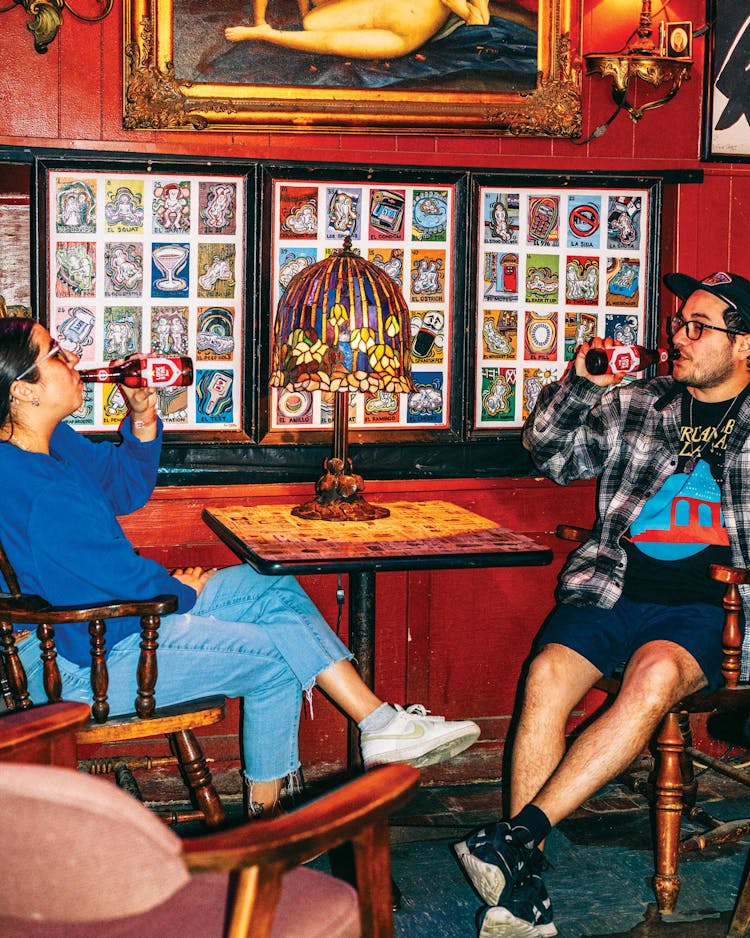 Enjoying a cold one at D&W Lounge. Photograph by Arturo Olmos
 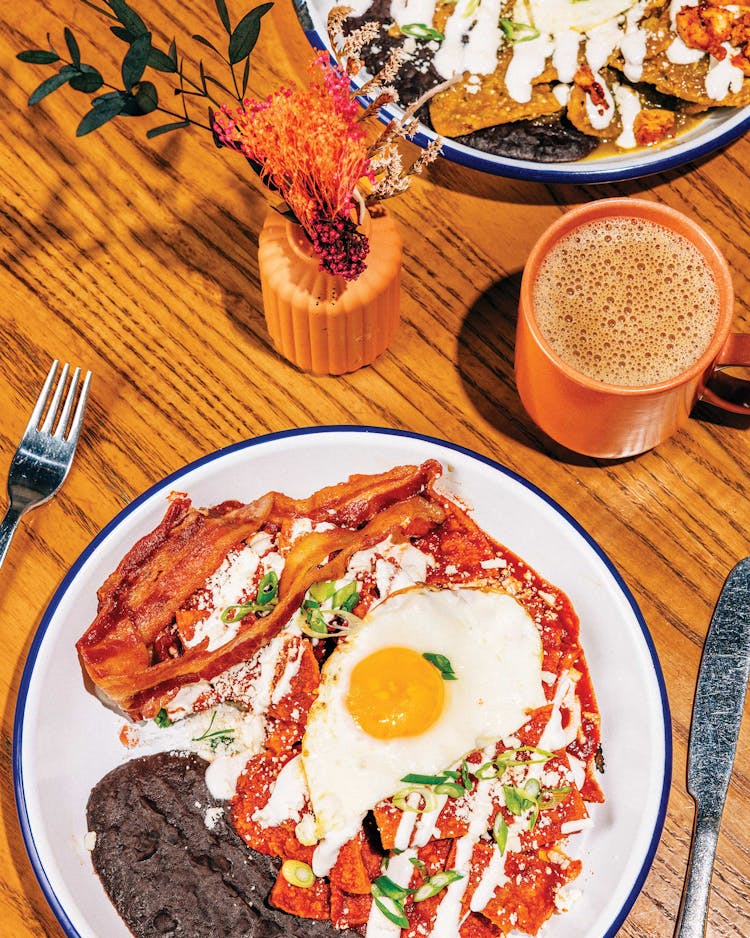 The chilaquiles rojos at Cochinita & Co. Photograph by Arturo Olmos
How did I stumble upon such a cache of riches, just two light-rail stops from my downtown hotel? “It’s because we are in an ecotone,” says Marlon Hall, an artist and anthropologist who was preparing for an exhibition of found-object sculptures at the List’s gallery. “An ecotone is a zone of tension between ecosystems,” he says. “It’s where the action is—where flows, species richness, and interactions intensify. You ever been swimming in a pond before? You run down the grass and you’re in the messy, mighty, middle space in the reeds in between the water and the land? That’s what this neighborhood is.”
There are cities where I expect to find the messy, mighty middle, places like New Orleans or New York City, where people walk and stand on street corners and take subways or streetcars, where lives intersect in parks and plazas and cafes. But in Houston? A city where much of your life is spent alone behind a steering wheel? Serendipitous encounters like what I’m experiencing here feel like gold doubloons found scattered on the sidewalk.
The East End is an area of about sixteen square miles between downtown on its west side and the Port of Houston to the east, with Buffalo Bayou flowing along its northern edge and Interstate 45 at a perpetual standstill to the south. It’s not just one neighborhood but many, each with its own story. There’s Magnolia Park, which was first platted in the 1890s and became home to Mexican immigrants who found work at the nearby Ship Channel. The majority-Hispanic Second Ward, or Segundo Barrio, is home to the Original Ninfa’s, famous for popularizing fajitas, and Champ Burger, a walk-up-window burger joint that opened in 1963. Sprawling oaks line streets of cheerful bungalows in Eastwood, a neighborhood built in the same era (the early twentieth century) and style as the now trendy Houston Heights; given Eastwood’s relative affordability, it could be called “half-price Heights.” With its many bars and clubs—and the soccer stadium that will host World Cup games in June and July—the East Downtown neighborhood has a somewhat bougie vibe and even a portmanteau, EaDo, which is often incorrectly used to refer to all of the East End.
Exploring Segundo Barrio in search of coffee the morning after my Saturday-night revels, I pass the former Maxwell House roasting plant—at sixteen stories, the empty building was once one of the world’s largest coffee-manufacturing facilities—and cross the tracks to walk alongside an expansive rail yard where machine parts are strewn across the concrete lot like driftwood. I find Segundo Coffee Lab inside a refurbished ironworks that also houses vintage clothing shops and a cannabis dispensary; in the coffee line, I meet friendly endorphined-up members of one of several East End running clubs. From there I head past a parking lot full of construction cranes to a restored industrial laundry facility. Now named the Plant, it’s home to several locally owned businesses, including a paleta shop, Neighbors Pizza Bar, and the popular Latina-owned Las Perras Cafe.
A woman in white leggings with a belt of gold chains stops me and asks with a smile, “Ma’am, do you know where I can find some weed?” I point her in the direction of the old ironworks. She gives me a high five, tells me her name is Queen, and takes a long look at my sneakers and shorts. Perhaps mistaking me for a member of a run club, she says, “You can run marathons, but make sure to take time to be yourself, just as you are.”
I check out the East End Farmers Market, which takes place every Sunday, and stop by the cheekily named Harrisburg Country Club, a neon-lit burger-and-beer joint on the eponymous long main thoroughfare that runs through Segundo Barrio. A sign over the bar reads “May Wifes and Girl Friends Never Meet.” Like the D&W, this was once a morning refuge for workers getting off their night shift. “People stopped coming after the Maxwell House plant closed,” says the owner, whom everyone calls Mr. Kim—he emigrated here from Vietnam over thirty years ago. “But now we have new neighbors. I’m glad people are coming back.”
New neighbors are coming to the East End, and fresh, shiny condos, many with affordable units, are springing up like mushrooms after a rainstorm. The old coffee plants have been replaced with small-batch roasters. A bounty of community cultural events are advertised on bulletin boards and telephone poles. In addition to dance and dominoes nights, businesses are hosting chess nights, jazz nights, lotería nights, and block parties. A few years ago, some local skaters built their own park, called the Burg.
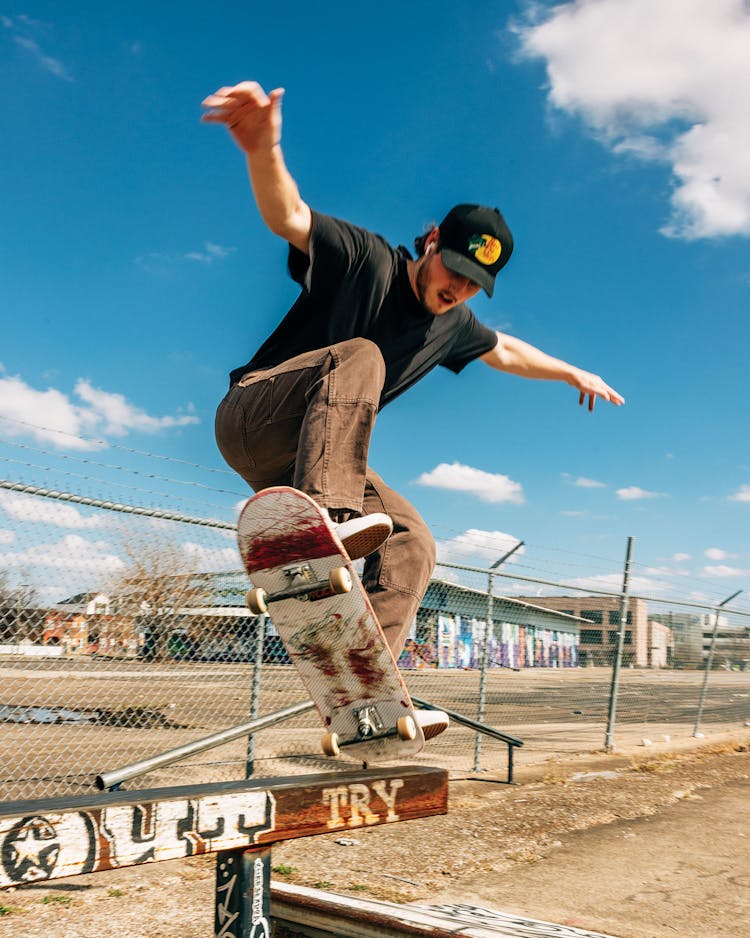 Skateboarding at the Burg. Photograph by Arturo Olmos
 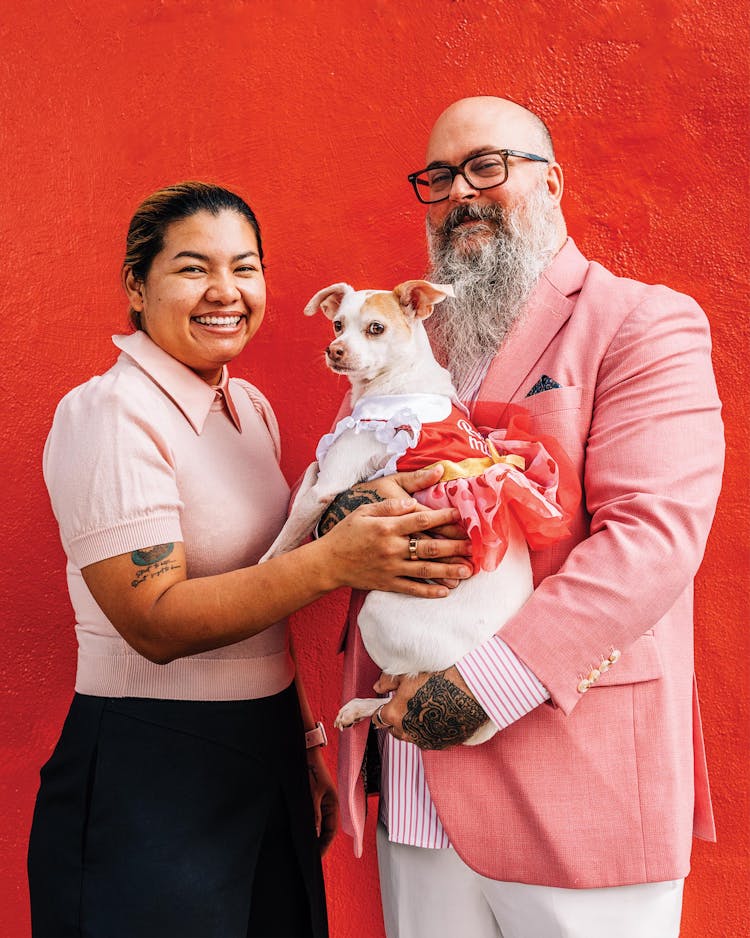 Street to Kitchen’s Benchawan Jabthong Painter (left) and Graham Painter with their dog, Kitty. Photograph by Arturo Olmos
“This restaurant is my love letter to the neighborhood,” says Victoria Elizondo, owner of the award-winning Mexican restaurant Cochinita & Co., in a strip mall in Segundo Barrio. Elizondo, a 2024 James Beard semifinalist for Best Chef: Texas, helped launch, with the Magnolia Fund, a shared commercial kitchen for food entrepreneurs in the East End.
Another James Beard honoree, Benchawan Jabthong Painter (a.k.a. Chef G) of Street to Kitchen, has also found a home in the East End. Chef G, who hails from the city of Nakhon Sawan, in north central Thailand, and her husband, Graham Painter, opened Street to Kitchen in a different location in 2020; the business survived the COVID-19 pandemic by serving meals from a to-go window next to a gas station. When a spot opened up at the Plant in 2023, it moved in. Painter tries to explain to me the different neighborhoods and boundaries of the East End, which can get confusing. “Whatever you do, just don’t say ‘EaDo,’ ” he says. (Many East Enders perceive the businesses there to be hallmarks of gentrification.) “When we moved into the area,” he says, “a constable I know warned me, ‘You call this neighborhood EaDo, and I’ll slap some cuffs on you.’ ”
The passionate entrepreneurs I meet who are bringing new businesses to the East End are not build-and-leave developers but people who live in and are invested in the neighborhood. Jeff Kaplan, a cofounder and partner at Concept Neighborhood, the development group that owns the buildings for the List and the Plant, approaches projects in Segundo Barrio as a way to build an even more walkable community-focused district. He prioritizes renting spaces at flexible prices to locally owned businesses that might have a hard time getting a leg up in other areas of Houston.
On a walk around Segundo Barrio, Kaplan shows me the defunct rail easements that Concept Neighborhood now owns and that will one day become walking trails. He talks about how he and his business partner, Monte Large, envision a mile-long “rewilded” pedestrian corridor that links Buffalo Bayou to the light-rail station and how some of the broad industrial-era streets near the List will be home to a Mexico City–inspired warehouse event space, a dog park, a plaza, a soccer court, and other “third places,” a term he uses often.
We crash a wedding party in a historic restored fire station; the son of the couple who live there, Michael Skelly and Anne Whitlock, had married just that afternoon. As a Filipino deejay keeps the dance floor full, Skelly tells me how he and his wife have loved the neighborhood since moving to the firehouse more than ten years ago. He is “obsessed” with picking up trash when he walks his dog, often filling a couple of bags a day.
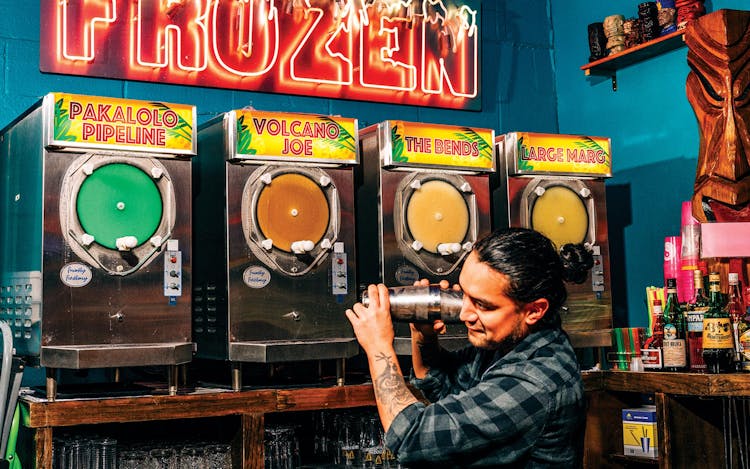 Voodoo Queen Daiquiri Dive. Photograph by Arturo Olmos
 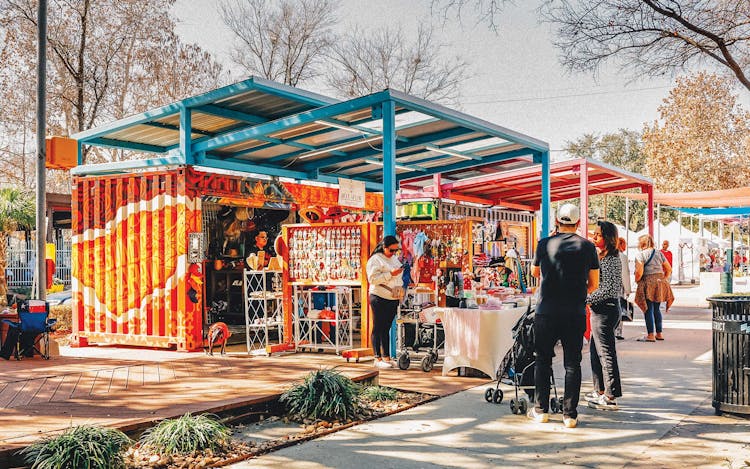 The farmers market. Photograph by Arturo Olmos
But the majority of East End’s roughly sixteen square miles is not walkable. Ricky Cardenas, who works for the East End District, the management entity for the area, wants to change that. Cardenas grew up near the East End, moved away, and, when he and his wife saved up enough money, bought a house here later. “The immigrant culture here is a part of me. It’s how I grew up,” he says. Now he is trying to shepherd the neighborhood through the inevitable changes growth brings, and part of that is making the roads safer: more shared-use paths, better public transportation (a light-rail line connects the East End with downtown and the Magnolia Park Transit Center). The East End District is also collaborating with Concept Neighborhood to expand walkability. “We’ve got these wide roads designed for industrial traffic that now remain empty ninety-nine percent of the day, so that space could be used to create a green, walkable corridor,” Cardenas says.
While I wonder whether some of the small businesses and initiatives sprouting in the East End will have an uphill battle, no one else seems too worried. Entrepreneurs like Turner and Elizondo and community leaders like Kaplan and Cardenas believe the neighborhood will change in positive ways while keeping its culture and soulfulness alive. And now two of Houston’s biggest philanthropists, Nancy and Rich Kinder, are also invested: The Kinder Foundation donated over $100 million to help the Buffalo Bayou Partnership expand its trails from downtown east along the Bayou to the Ship Channel, a ten-year-project that will culminate by 2032 with canoe docks, the Turkey Bend community center, and enhanced parks.
Chances are, with all the cumulative momentum and good faith effort, the East End will become even more of that rare thing in Houston: a place you can walk.
An East End WeekendEat
Cochinita & Co.: Chef Victoria Elizondo transformed a sunlit Second Ward storefront into a beloved neighborhood Mexican restaurant where multigenerational families linger over cochinita pibil and mole negro. Bonus: a primo espresso machine.
Neighbors Pizza Bar: This New York–style pizzeria also serves as a coffee shop by day and a bar by night. On Monday evenings its live jazz shows pack the house.
Street to Kitchen: James Beard Award–winning Chef G’s fiery, unapologetically traditional Thai cooking hits with the heat and freshness of a Bangkok street stall. Don’t miss the green curry—a specialty of her Thai hometown—and the decadent Wagyu strip steak with sticky rice bark.
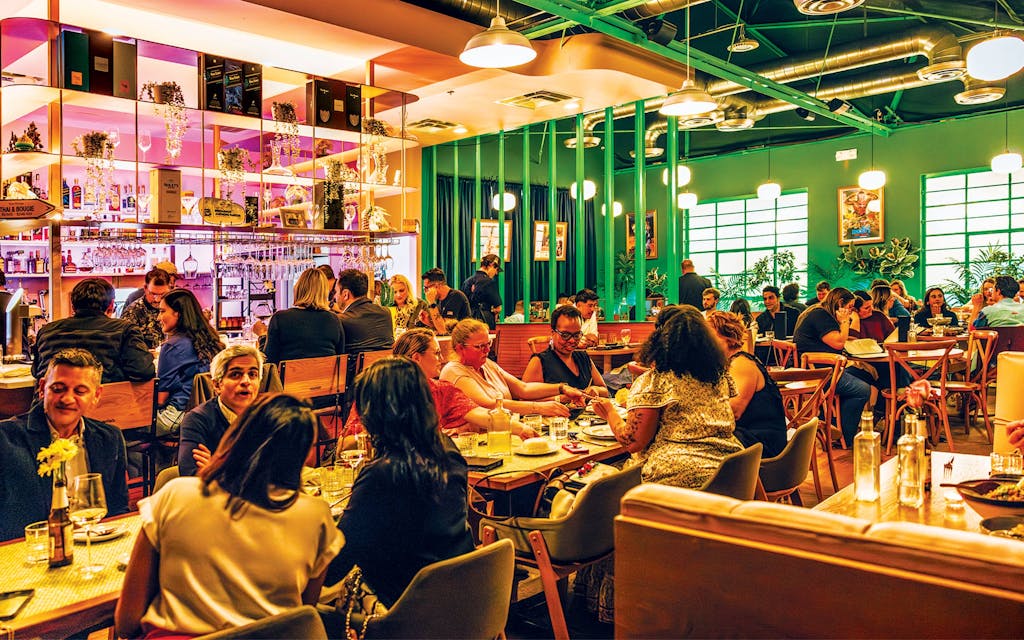 Inside Street to Kitchen. Photograph by Arturo OlmosDo
The Coronation Theater: Owner Saurabh Pande—along with a coterie of talented performers—has created an improv venue so good it could make Chicago’s Second City jealous. Audience prompts encouraged.
Stay
Wanderstay Boutique Hotel: Five years after launching Wanderstay Houston Hostel, which was funded in part by a grant from Beyoncé’s BeyGood Foundation, Deidre Mathis opened this whimsical, adults-only hotel featuring ten themed rooms.
The Plant House: This compound of early-twentieth-century white wooden bungalows turned airy vacation rentals offers an economical home base in the heart of Segundo Barrio.
Clayton Maxwell is a nonfiction writer from Victoria and a regular contributor to Texas Monthly. She lives in Austin.
This article will appear in the April 2026 issue of Texas Monthly with the headline “The East End’s Era.” Subscribe today.
Read Next