
“We might have had to do what the state said on their property, but we’re going to do what we want on ours,” Councilwoman Sukh Kaur said.
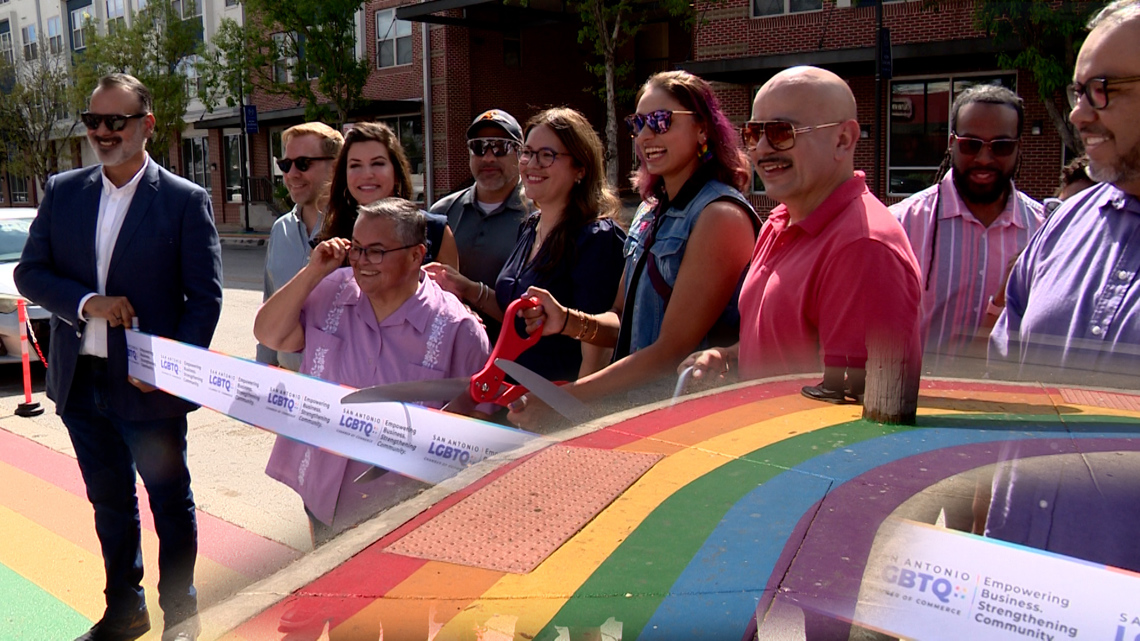
After months of conflict and debate, two blocks of newly installed rainbow sidewalks north of downtown San Antonio were unveiled Sunday, marking a compromise in a dispute that had divided some of the community.
Residents and local leaders gathered in the city’s Pride Cultural Heritage District for the ceremony, applauding the sidewalks during a ribbon cutting ceremony.
The project follows an order by Texas Gov. Greg Abbott directing cities to remove rainbow crosswalks and other political or ideological markings from roadways, citing roadway safety concerns. The directive led to the removal of rainbow crosswalks originally installed in 2018 at North Main Avenue and Evergreen Street.
District 1 Councilwoman Sukh Kaur said the state’s order forced the city to act to preserve infrastructure funding.
“The state mandated that if we wanted to keep state funding for any infrastructure, we would have to remove our rainbow crosswalks or any other artistic features on our streets,” Kaur said.
City officials and community members later worked to find a compromise, resulting in the installation of rainbow-themed sidewalks instead of street markings.
“We tried, but we came to a compromise of doing two blocks of sidewalks right here on North Main in the center of the cultural heritage district,” Kaur said.
The combined cost of removing the crosswalks and installing the sidewalks was about $170,000, according to city officials.
The project also faced legal challenges. In January, a lawsuit filed on behalf of Pride San Antonio and the Texas Conservative Liberty Forum sought to halt the projects, arguing that the allocation of city funds required public approval. A judge later rejected the claim, ruling that the changes did not require additional authorization from city leaders.
Community members at Sunday’s event said the new sidewalks represent both resilience and unity after months of tension.
Lindsay Andrews, who attended the ceremony, said the installation reflects the diversity of the community.
“It doesn’t just represent one aspect of the LGBTQ+ community,” Andrews said. “It incorporates so much more … including trans individuals and people of color.”
Andrews added that the removal of the crosswalks had initially created divisions but ultimately brought people together.
“People wanted different things, but ultimately I think it showed us how to reunite and to overcome the adversities,” she said.
Kaur said the sidewalks are only the beginning of broader plans for the Pride Cultural Heritage District, with additional art projects expected to be proposed by her office in the future.