
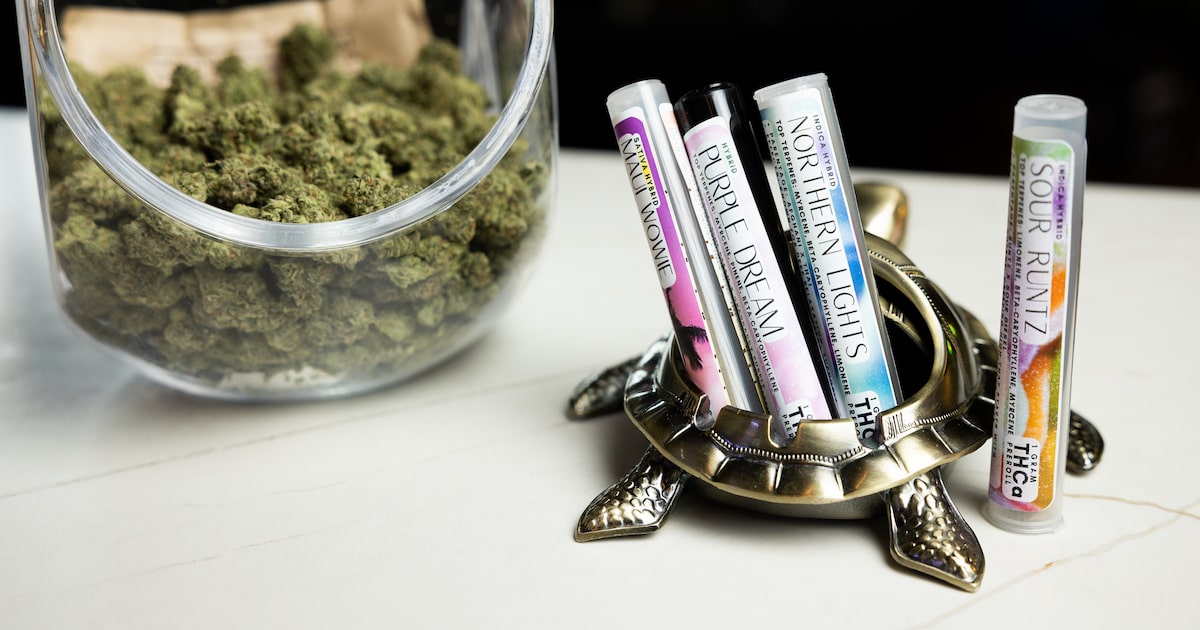
As new Texas restrictions on smokable THC products take effect March 31, some North Texas retailers say the changes could eliminate a large share of their inventory and increase operating costs.
The Texas Department of State Health Services has adopted new rules restricting certain smokable hemp products and other items containing THC-related compounds.
The changes also revise how THC levels are calculated and increase licensing requirements for businesses that manufacture or sell hemp products.
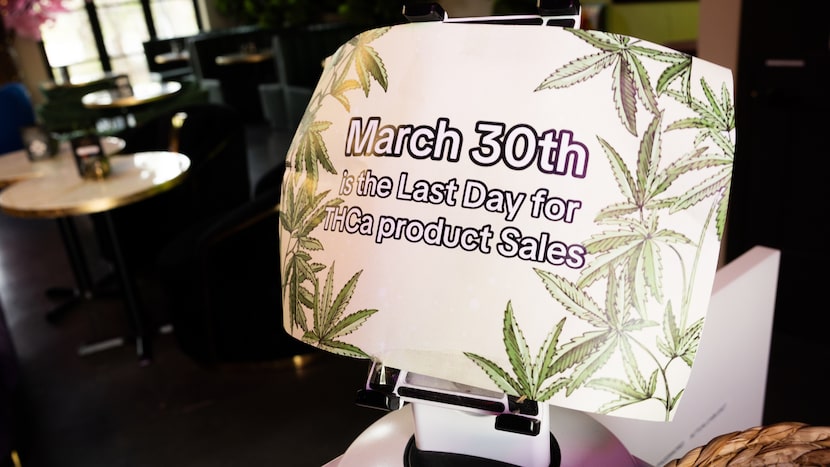
A sign reads “March 30th is the Last Day for THCa product Sales” at the front door of Emerald City Dispensary & Lounge on Tuesday, March 24, 2026, in Fort Worth, TX.
Juan Figueroa / Staff Photographer
Breaking News
The updates focus on two key areas: expanding the definition of what qualifies as illegal THC products — including how compounds like THCA are measured — and raising licensing fees for retailers and manufacturers.
Industry leaders say those changes could have widespread consequences.
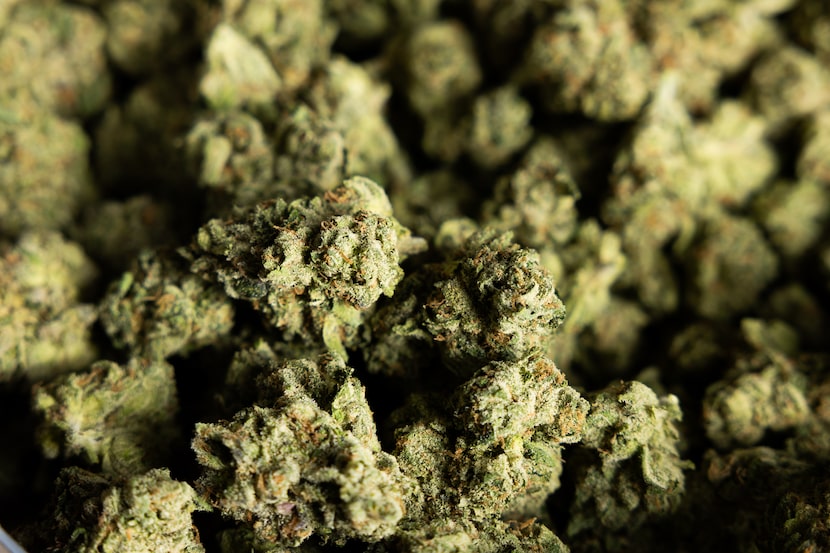
Smokeable THCA flower – prerolled hemp cigarettes as well as flower buds sold in jars and packets – will disappear from the shelves of retailers, many of whom were having fire sales over the weekend to get rid of inventory. The Pineapple Express cannabis flower strain shown was available at Emerald City Dispensary & Lounge on Tuesday, March 24, 2026, in Fort Worth, TX.
Juan Figueroa / Staff Photographer
“The changes are hugely consequential to the industry,” said Mark Bordas, executive director of the Texas Hemp Business Council. “You’re going to be wiping out access to a lot of product in a very short period of time.”
The Texas Hemp Business Council is a nonprofit trade association and advocacy organization dedicated to the hemp industry in Texas.
Concerns about product bans, financial impact
Retailers say the new rules will immediately affect the types of products they are able to sell and how they operate their businesses.
Smokeable THCA flower – prerolled hemp cigarettes as well as flower buds sold in jars and packets – will disappear from the shelves of retailers, many of whom were having fire sales over the weekend to get rid of inventory.
Todd Harris, co-owner of The Happy Cactus in Austin and chair of the retail committee for the Texas Hemp Business Council, said the changes target products that make up a large share of store inventory.
“The product that would now be banned is about 70% of our sales,” Harris said.
Harris also said new licensing requirements could sharply increase operating costs.
“We’re going from under $600 to about $20,000,” he said. “That’s a pretty terrifying number to encounter as a small business.”
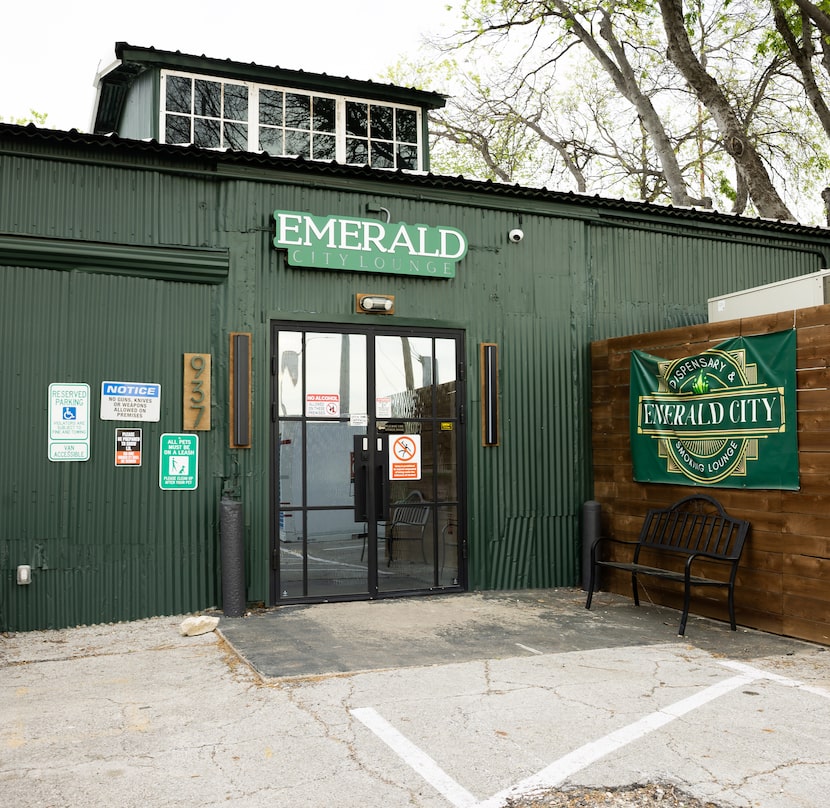
Candice Stinnett, owner of Emerald City Dispensary & Lounge in Fort Worth, said customers at her Fort Worth shop have already expressed concern about the changes. “Their reaction has been a mix of profound sadness and genuine concern,” she said. “They’re worried about their access to relief.”
Juan Figueroa / Staff Photographer
At Emerald City Dispensary & Lounge in Fort Worth, owner Candice Stinnett said her business is facing similar challenges.
“The elimination of THCA products is about 60% to 70% of our business,” Stinnett said. “Every retail location is now required to pay a $5,000 registration fee, and that can be a significant burden for small local businesses that are already stretched thin.”
In addition to fees, industry representatives say changes to THC calculations will make products previously considered legal no longer compliant.
“They’ve changed the way they enforce measuring total THC to include THCA,” Bordas said. “A lot of product overnight is no longer going to be legal.”
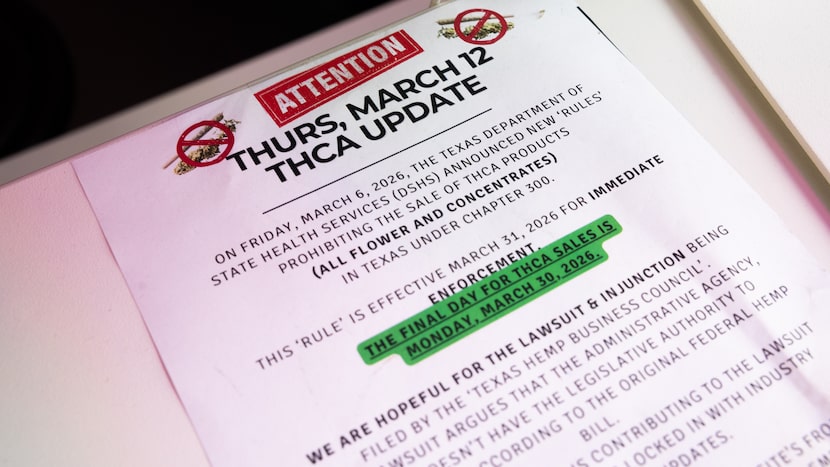
A sign advertises changes to the sale of THCA at Emerald City Dispensary & Lounge on Tuesday, March 24, 2026, in Fort Worth, TX.
Juan Figueroa / Staff Photographer
THC, or tetrahydrocannabinol, is the primary psychoactive component of cannabis.
For a cannabis product to be classified as legal hemp rather than illegal marijuana, it must contain THC from the hemp plant – the sister to the marijuana plant – and contain a concentration of delta-9 THC- of not more than 0.3% on a dry weight basis.
THCA is defined by the Texas Department of State Health Services as a non-psychoactive cannabinoid that converts to delta-9 THC when heated. Current rules measure THCA products for delta-9 before they’re heated. The new rules would apply those standards to products after they’re heated – rendering those currently sold in stores illegal.
Concerns about possible legal challenges
Legal challenges have arleady begun as businesses and trade groups respond to the new rules.
Texas hemp retailer Boomtown Vapor LLC has filed a lawsuit to block new state regulations.The challenge, filed March 17 by Boomtown Vapor LLC, targets the Texas Department of State Health Services (DSHS) and its commissioner, Dr. Jennifer Shuford.
The lawsuit alleges the agency is overstepping its authority by unilaterally redefining the legal standard for hemp.
Bordas said the Texas Hemp Business Council has been preparing for potential litigation.
“It looks like it’s going to become a legal issue at this point,” he said.
Legal disputes over hemp-derived products are not new in Texas. In recent years, courts and regulators have addressed questions around delta-8 THC and other hemp-derived compounds, reflecting ongoing tension between state regulation and federal law. Courts often side with Texas retailers.
Texas’ current hemp laws
Under federal and Texas law, hemp is defined as cannabis containing no more than 0.3% delta-9 THC by dry weight, according to the Texas State Law Library.
The definition stems from the 2018 federal Farm Bill, which legalized hemp production nationwide. Texas followed by legalizing hemp in 2019, allowing products that meet the THC threshold to be manufactured and sold.
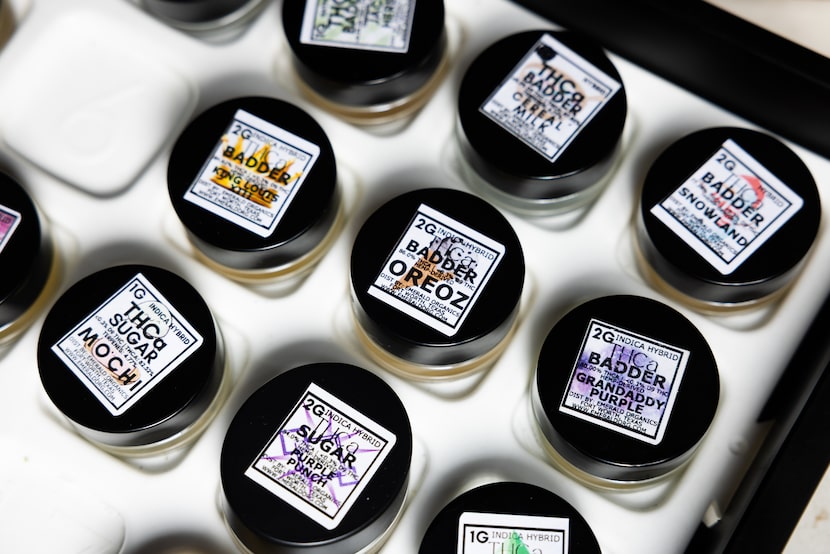
THCA concentrate available at Emerald City Dispensary & Lounge on Tuesday, March 24, 2026, in Fort Worth, TX.
Juan Figueroa / Staff Photographer
That framework led to the rapid expansion of hemp-derived products, including edibles, drinks and smokable items, across retail stores in Texas.
Products that exceed the THC limit, or that are made from marijuana plants instead of hemp, are illegal unless they are part of the state’s medical cannabis program.
What hemp products remain legal
Texas will continue to allow the sale of several hemp-derived products if they meet THC limits and regulatory requirements, including:
CBD oils and tincturesEdibles such as gummies and candiesHemp-infused beveragesTopical products like creams and lotions
Businesses must comply with state rules on testing, labeling and licensing, and retailers are responsible for verifying THC levels.
Looking ahead
Business owners say the changes could reshape the industry and limit access to certain products for consumers.
Stinnett said customers at her Fort Worth shop have already expressed concern about the changes.
“Their reaction has been a mix of profound sadness and genuine concern,” she said. “They’re worried about their access to relief.”
Bordas said the industry has grown steadily since legalization and now supports tens of thousands of jobs across Texas.
“The industry has grown year over year,” he said. “You’re talking about more than 50,000 Texans employed.”
Still, he said the combination of product restrictions and higher fees could create challenges for smaller operators.
“You’re going from fees in the hundreds of dollars to thousands overnight,” Bordas said. “For many small businesses, that’s a major burden.”