
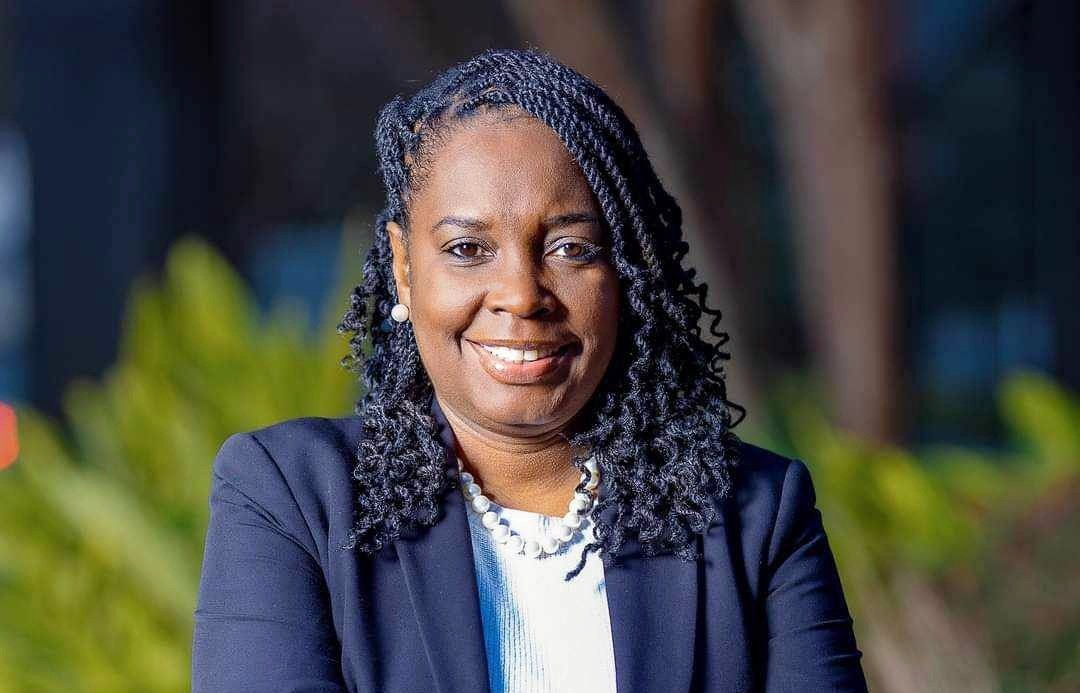
Courtesy of the Harris County District Clerk’s Office
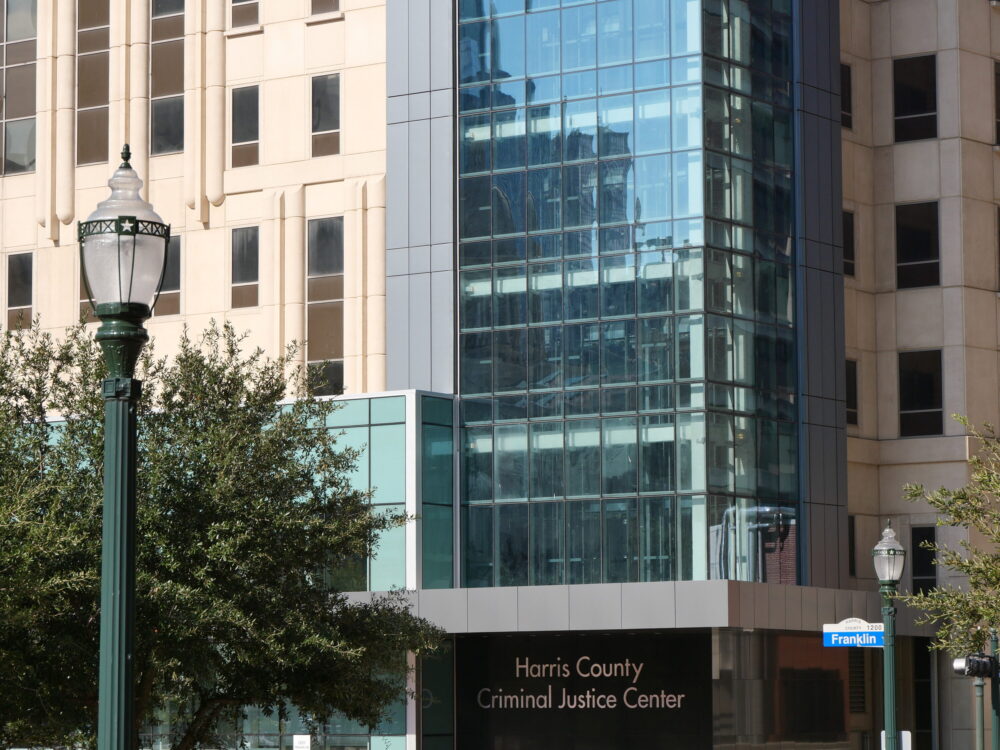
Harris County Criminal Justice Center
Harris County Treasurer Carla Wyatt’s misdemeanor burglary charge will go before a grand jury, shutting off certain parts of the high-profile case from public view.
Wyatt’s case has lingered in court for longer than two months. In January, a probable cause hearing to determine whether enough evidence existed was delayed because a brief winter storm temporarily closed the downtown Houston courthouse. The hearing — which was set to go before Judge Shannon Baldwin in Harris County Criminal Court at Law No. 4 — was again rescheduled last week.
Chris Downey, an attorney representing Wyatt, said that the Harris County District Attorney’s Office wanted additional time to go through evidence in the case. Recent court records indicate that evidence will now be presented to a grand jury.
Sign up for the Hello, Houston! daily newsletter to get local reports like this delivered directly to your inbox.
The district attorney’s office did not say when the case is set to go before a grand jury, an often uncommon occurrence for misdemeanor cases. The probable cause hearing is set to take place in the Harris County Criminal Justice Center on April 7.
“The role of grand juries is especially important in cases involving elected officials,” Rafael Lemaitre, a spokesperson for the DA’s office, said. “They provide independent, community-driven oversight and ensure prosecutors have probable cause that a crime was committed before any charges move forward.”
Wyatt, 55, was arrested in December on a burglary charge and accused of breaking into another person’s vehicle in a restaurant parking lot with the intent to commit theft. Prosecutors said several people watched as Wyatt searched through items inside a vehicle that wasn’t hers.
RELATED: Harris County treasurer faces misdemeanor burglary charge
After Wyatt’s initial court appearance in January, Downey told reporters that the incident was odd, but that she had no intention of committing theft, according to news reports.
Sandra Thompson, a criminal justice professor with the University of Houston, said sometimes prosecutors take cases to grand juries as a way of involving the community in the decision of whether a charge is appropriate.
“Grand juries can be used for investigative purposes,” Thompson said. “They can also be used in politically sensitive cases, which I would think that this is.”
She said the move is also common for cases in which police officers are accused of shooting civilians. The district attorney’s office regularly presents evidence of officer-involved shootings to grand juries to decide whether enough evidence exists to press charges against the involved officer.
“Even if it’s a clear case of self-defense, typically prosecutors will take those cases to grand juries to make the determination whether a charge is appropriate or not,” Thompson said. “Even if they believe it’s not, and they might tell the grand jury that they think it’s not, but still leave the decision to the members of the public who are impaneled as grand jurors.”
In 2023, near the end of her first year in office, Wyatt was arrested and charged with driving while intoxicated after allegedly having a blood-alcohol concentration of at least .15%, nearly twice the legal limit. The case record includes two bond violation reports — one in January 2024 for failing to obtain an ignition interlock device for her vehicle that tests for blood alcohol content, and again in March that year for a blood alcohol content level that was above the legal limit.
That DWI charge was dismissed in August 2025 after Wyatt completed a pretrial diversion program, court records show.