
Among all the feats of humankind, space exploration stands out as one of our nation’s greatest scientific achievements. Even decades after astronaut Neil Armstrong first set foot on the moon, his oft-repeated words in 1969 are hardly an overstatement.
It has taken over five decades, but a journey back to the moon is getting closer, and even today, it is still awe-inspiring. It is also a space race with China.
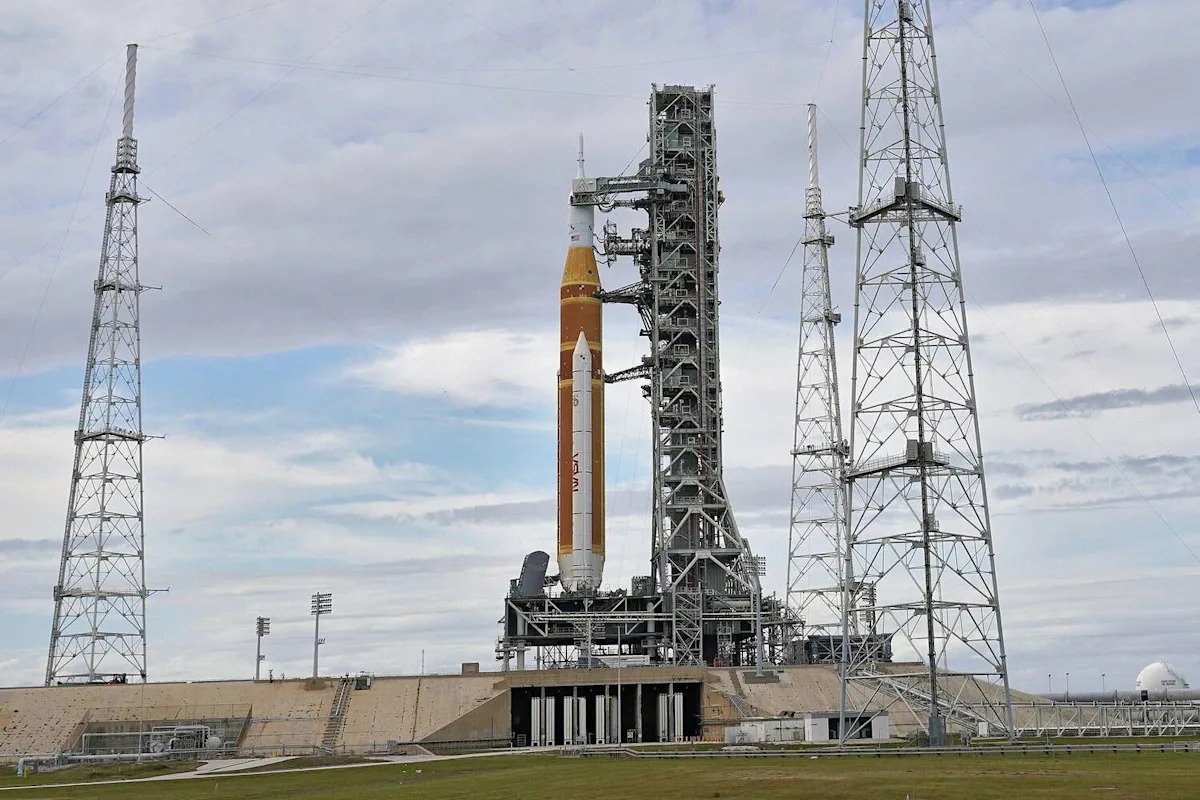
After several delays, NASA’s Space Launch System is expected to lift off the Artemis II mission from Florida’s Kennedy Space Center as early as Wednesday, with a crew of four astronauts: Reid Wiseman, Victor Glover, Christina Koch, and Canadian Jeremy Hansen. Artemis II’s 10-day mission will fly around the moon in what is seen as a test mission for an eventual moon landing, planned for 2028.
Texas can claim a piece of the moon pie in this new space era, with several companies — many of them based in our state — involved in space exploration and some receiving funding from the Texas Space Commission.
Established in 2023, the TSC administers the Space Exploration and Aeronautics Research Fund (SEARF). The program provides grants to companies, universities and other institutions for space exploration. The initial $150 million in SEARF grants have been fully committed, and, in the last Legislature, lawmakers approved $300 million for a new set of grants.
This funding shows a strong commitment to space exploration in our state. Some of these SEARF grants are related to the Artemis mission.
One example is a $7.5 million grant awarded to Elon Musk’s SpaceX to establish a vertical integration facility at SpaceX Starbase near Brownsville. This is where rockets are assembled upright before launch. This facility supports the development of NASA’s lunar lander, known as Starship, which will be used on Artemis missions.
Another grant — about $6.7 million — was awarded to KULR Technology Group to develop cold-temperature lithium ion batteries for space missions.
There is also an $8.2 million grant for Texas-based Firefly Aerospace for expanding facilities and workforce development. This funding is not directly tied to Artemis, but Firefly is behind the Blue Ghost lunar lander, which achieved an unmanned soft landing on the moon last year.
No humans have set foot on the lunar surface since 1972. After the Nixon administration canceled the Apollo program, there was no real political motivation to continue to explore the moon until China entered the picture with its ambitious program. China is planning its own moon landing by 2030. It may be the dawn of a new space race.
Getting back to the moon will be a remarkable achievement. To paraphrase Wiseman, the Artemis II mission commander, the nation and the world have been waiting a long time to do this again.