
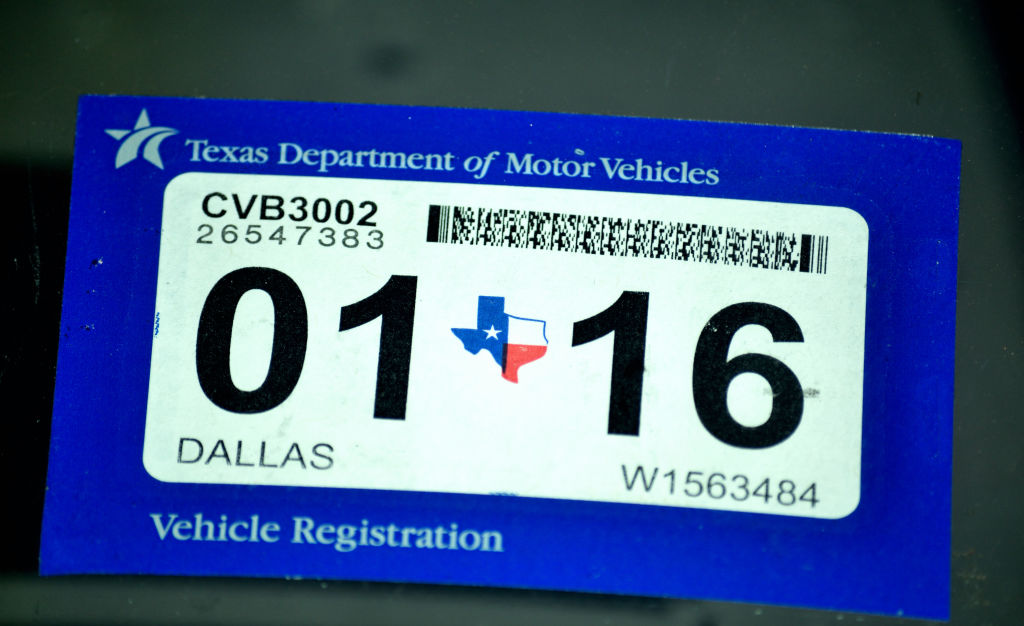
With all the daily tasks a Texan faces, it’s easy to forget chores like renewing your vehicle registration. However, it can result in some hefty fees.
At the beginning of last year, a CARFAX study found that nearly 17 million vehicles on U.S. roads were traveling with expired tags, with the Lone Star State reporting the highest amount. Here’s what to know about potential consequences for doing so in 2026.
Yes. In Bexar County, if you get pulled over by the police, you could get a $201 ticket. The cost rises if the registration is for a trailer or if you’ve attached a “fictitious or false” sticker.
Yes. You get five working days, meaning those not including Saturday, Sunday, or a legal holiday) past the expiration, per the Texas Department of Motor Vehicles.
According to the state law (Sec. 502.407), it becomes a punishable offense for you to operate “a motor vehicle, trailer, or semitrailer” on a public highway after the expiration grace period has passed.
There are sometimes exceptions to hefty fines if you get a ticket. The Texas Transportation Code cites that a justice of the peace or municipal court judge with jurisdiction of the offense can dismiss the charge if you show proof you renewed it within 20 working days of “the offense or before the defendant’s first court appearance date” and show receipt of the required registration fees. You may still have to pay a small fine of up to $20.
Drivers who provide “evidence to establish good reason for delinquent registration and who comply with the other requirements for registration” can start with a fresh, 12-month registration, per Texas Transportation Code Sec 502.045.
This would help those who, by the time they finally renew, are about to come in contact with yet another expiration date. It keeps them from being tied down by their initial registration month.
For most Texans, it would be most helpful to mark your calendar. You can renew your registration online 90 days before the expiration date.