
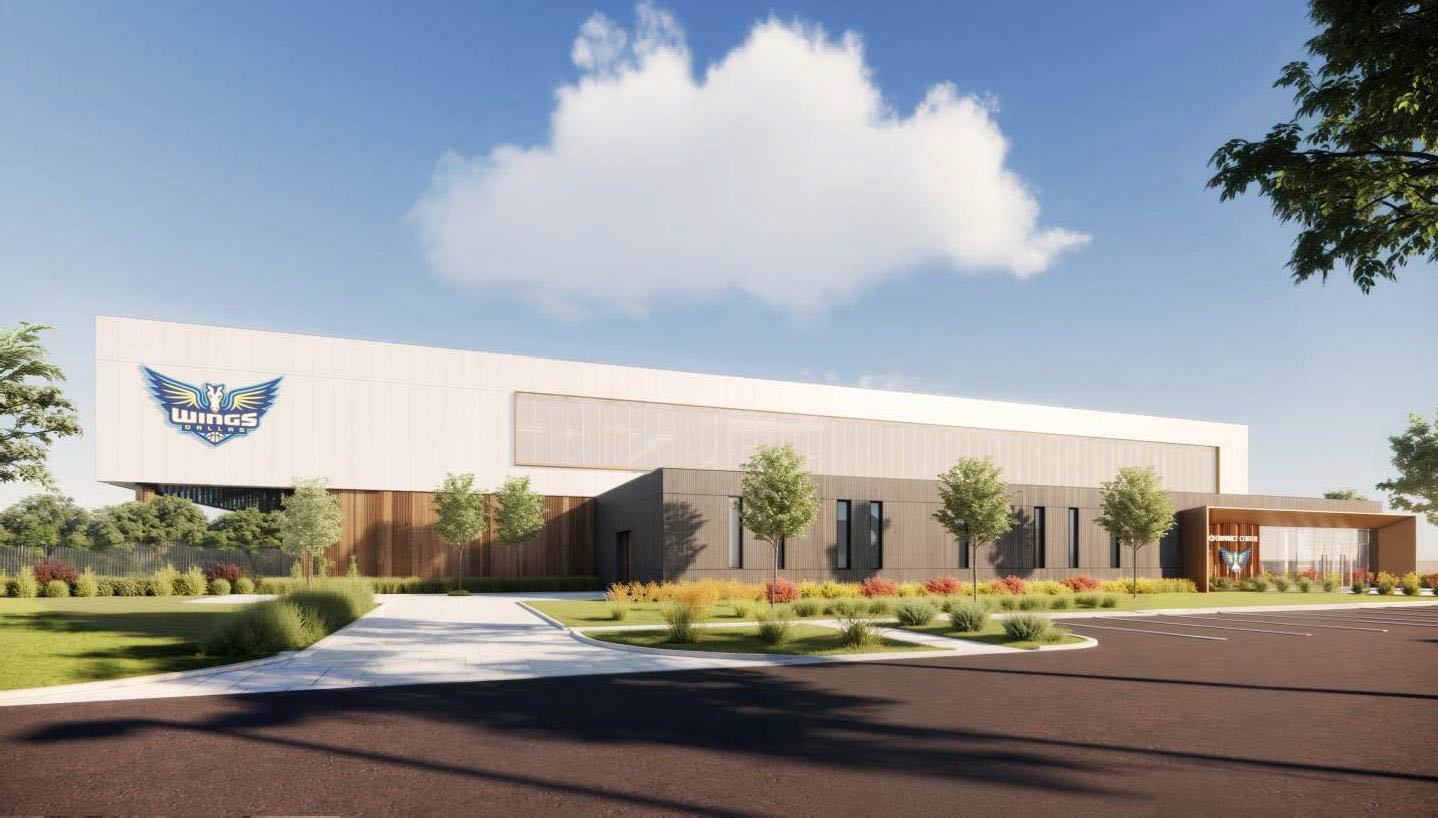
In the latest installment of the Dallas Wings practice facility saga, the WNBA team will now be responsible for constructing its practice space. This despite Dallas’ promise to provide the team with that facility as part of their agreement to relocate the Wings from Arlington to downtown Dallas.
In the months since the Dallas City Council first approved $55 million for the practice facility, the project, once promised as a quick turnaround ahead of the season, has slipped further behind schedule, and its cost has ballooned to $81 million.
Last week, the City Council voted to approve a revised deal with the team, stipulating that the city will contribute no more than $57 million for the training facility in west Oak Cliff and that the Wings will take over construction and cover the rest of the project’s costs. In other words, the Wings are being asked to clean up a mess the team didn’t create.
But where is Dallas’ commitment to the Wings?
We’re not advocating that the city spend $81 million in public dollars on a basketball training facility. The question is why the city would put itself on the hook for a big-ticket item that it couldn’t deliver.
Dallas originally signed a $19 million incentive agreement with the Wings in 2024 to move the team into a renovated Memorial Auditorium and a new practice facility by the start of the 2026 season. Delays with the Kay Bailey Hutchison Convention Center prompted the city to look at other spaces to at least get the practice facility online for the 2026 season, but with the season around the corner, the Wings will take the court with no practice space in Dallas and no downtown arena.
The city said the delays to the practice facility were in part due to missed deadlines by the project management firm McKissack and McKissack. While the firm is no longer involved with the construction of the practice facility, it’s still on deck for the Memorial Auditorium, which is now delayed until 2028.
The delays that we have seen with the Wings facility give us pause.
The Memorial Auditorium is a much larger undertaking than the Wings’ training facility. If the city can’t get out of its own way to deliver a training space, how will it handle overseeing an arena that is part of the larger convention center redevelopment?
At this point, Dallas might serve the Wings best by handing off the project. The more the city has inserted itself into this process, the more complicated, delayed and expensive the practice facility has become.