
Listen, I’ve got no beef with John Wayne. The Man Who Shot Liberty Valance, Stagecoach, Rio Bravo, True Grit—all great movies. Admittedly, I probably haven’t seen 1960’s The Alamo since a TV was wheeled into my fourth-grade Texas history class so we could watch Wayne pretend to be Davy Crockett. Even back then—even sitting among an indulgent audience of kids who were just grateful to take a break from memorizing the state’s rivers—I didn’t find The Alamo to be particularly good. It’s just too long, too riddled with inaccuracies, too padded with corny dialogue to be a great movie.
But The Alamo has one thing going for it. It admirably evokes the feel of Texas, with big, booming, cannonball-size sentiments about defiance, nobility, and self-reliance that give you a sense of pride and belonging to something larger than yourself. When it comes to what makes a Texas movie, the feelings are crucial—far more important than whether it was actually shot here (as opposed to in Utah or New Mexico) or stars any genuine Texans (Wayne was a Californian). It doesn’t even matter if the director is Texan; some of the best Texas films were made by Yankees and Australians. Meanwhile the state has produced many great filmmakers, including Wes Anderson, Robert Rodriguez, and David Lowery, all of whom have set and shot movies here yet none of whom have made what I would call a Texas movie. That’s because a Texas movie isn’t just a story that happens to take place here. It has to feel like Texas. It could never be set anywhere else.
This question of what makes a great Lone Star movie pops up every few years here at Texas Monthly. In 2011 the magazine convened a quorum of cultural experts to determine the ten greatest Texas films. The Alamo didn’t make the cut, of course. But the films that did—including two other Wayne movies—might arguably be taught in state history classes, so deftly do they capture something about the strong emotions and mythical forces that shaped us.
Looking back at that 2011 list, I see several major themes. Red River, The Searchers, and Giant are stories of conquest, captained by stubborn, self-made men who assert their dominion over the wilderness only to be driven to Pyrrhic victories by their racism and rapacious greed. Hud, The Last Picture Show, and Tender Mercies languish in the loneliness and ennui that were left behind once the frontier was finally tamed. Bonnie and Clyde, Blood Simple, No Country for Old Men, and The Texas Chain Saw Massacre show how all that isolation became a breeding ground for violence and evil. They are all mandatory viewing for anyone hoping to better understand the Texas state of mind.
But those films are also history—set in a Texas that increasingly feels as distant as the days of the Alamo and steeped in a frontier-minded version of the state. It’s high time we expand that list—and our notions of what constitutes a great Texas movie. Why now? Because hopefully we stand on the verge of a bright new era of Lone Star film. Last year the Legislature approved $1.5 billion in incentives to be spent over the next ten years on attracting movie, TV, and gaming productions. It’s an unprecedented investment; in addition to encouraging Hollywood filmmakers to bring their projects here, those grants give our homegrown directors, screenwriters, and actors greater impetus to tell their own stories right here, about the Texas that only they know.
All of these films are singular visions, from Texans and non-Texans alike, that broaden our definition of our state and the “Texas movie.” Most of them are smaller in scope, more subdued in tone, and more modern in setting than the films in the 2011 list. But although they may shrink in the shadow of Giant and the like, every one of these movies reflects some essential truth about the state. Most important, they get the feeling right. In Texas, that’s all that matters.
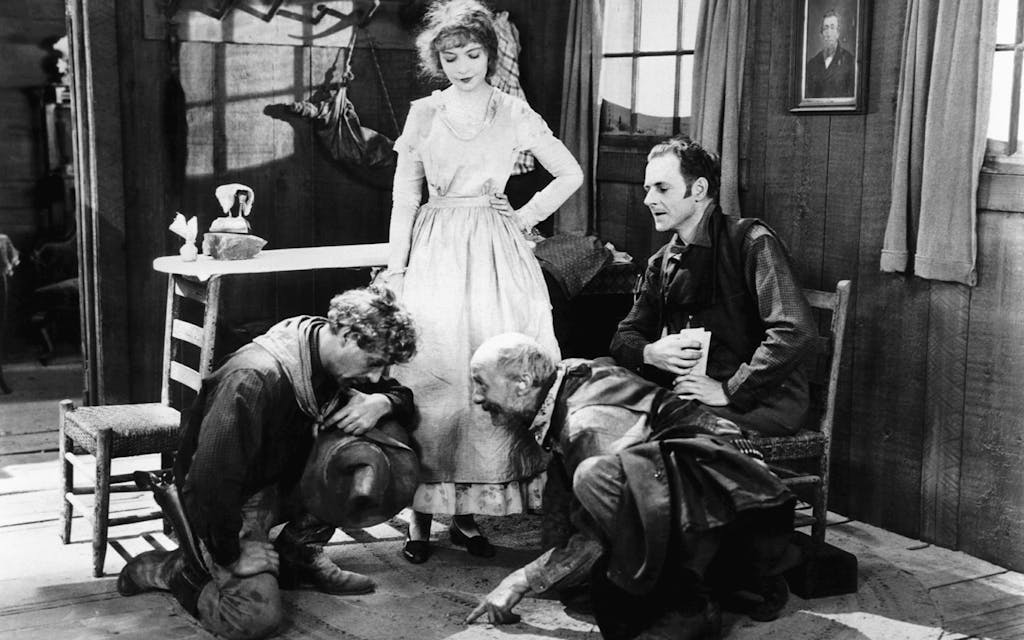 Lillian Gish in The Wind.Mary Evans/All Film Archive/Everett CollectionThe WindA silent movie that speaks volumes about Texas’s unforgiving terrain.1928
At its core, the quintessential Texas movie is about the immortal conflict between humankind and nature, a war of attrition that this silent film summarizes with florid poetry: “Man—puny but irresistible—encroaching forever on Nature’s vastness, gradually, very gradually, wresting away her strange secrets, subduing her fierce elements—conquers the earth!” reads the opening title card. Such chest-beating aside, The Wind is less a hero’s tale than a horror story. Lillian Gish stars as Letty, a Virginia naïf who arrives in Sweetwater, in the godforsaken Texas plains, about forty miles west of Abilene, where the dust storms are said to drive people crazy (“especially women!”). Swedish director Victor Sjöström (also known as Seastrom) films her ordeal like a rural Nosferatu whose monster is the harsh landscape. As the brutal northers, represented by ghostly white stallions, come pounding down from the mountains, Gish’s eyes widen in liquid terror at the incessant sandstorms. Her only hope for survival is to marry one of the town’s bachelors, violent oafs who whip out their guns at the slightest provocation. Setting a precedent for Giant and other Texas movies, The Wind—which was based on the 1925 novel of the same title by Dorothy Scarborough, who was born in East Texas and spent part of her childhood in Sweetwater—understandably drew the ire of locals who didn’t appreciate the depiction of their home as a backwoods Hades. Still, as the Texas folklorist J. Frank Dobie wryly observed, their objections were only a “tribute to its realism.”
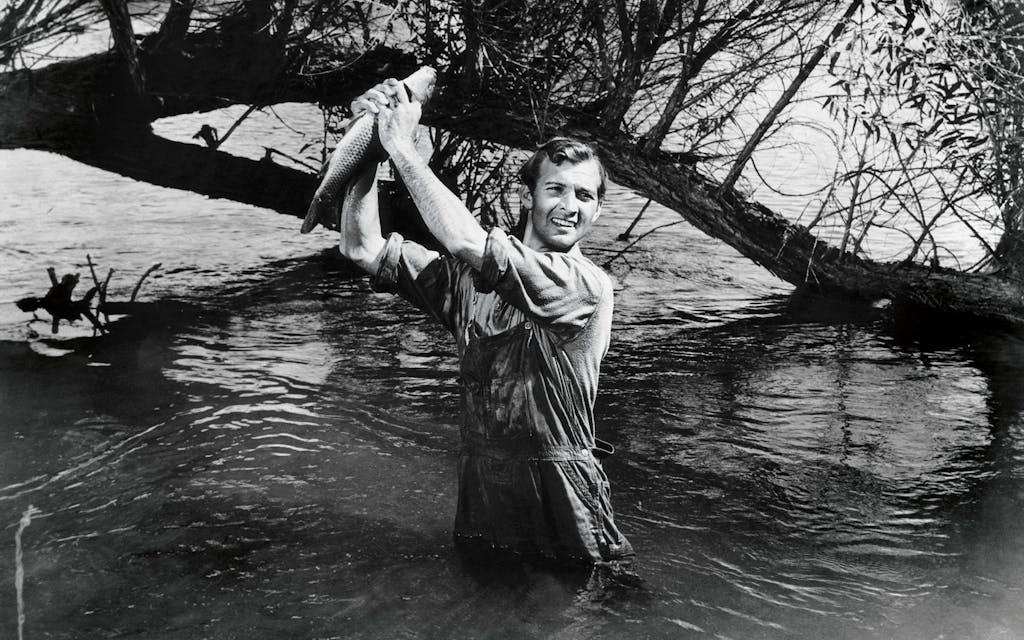 Zachary Scott in The Southerner.Everett CollectionThe SouthernerThe state’s frontier spirit is tested—and very nearly broken.1945
“Grow your own crops,” a dying cotton picker tells Sam, an aspiring farmer played by Austin native Zachary Scott, near the beginning of The Southerner. His words inspire Sam to move his family to a piece of land in Texas, and that’s pretty much where the inspirational stuff ends in this hardscrabble rural drama from the French director Jean Renoir. Sam’s loved ones endure a year of near biblical torment, struggling through freezes and failed crops and barely scraping by on possum meat and well water borrowed from a neighbor who, contrary to the Texas credo of “friendship,” openly seeks to ruin them. And just when their little farm finally seems to be taking off, the floods roll in. Much like The Wind, The Southerner plumbs the darker side of Texas’s rugged individualism, but here it’s shot through with the same humanism that Renoir, making one of his few Hollywood films, brought to his classics Grand Illusion and The Rules of the Game. The resilience of Sam’s family—particularly that of his wife and mother, both of whom are uncommonly strong characters for stories of this era—should give even the modern, jaded Texan a much deeper appreciation for everything their great-great-grandparents went through just to settle here, those absolute nutjobs.
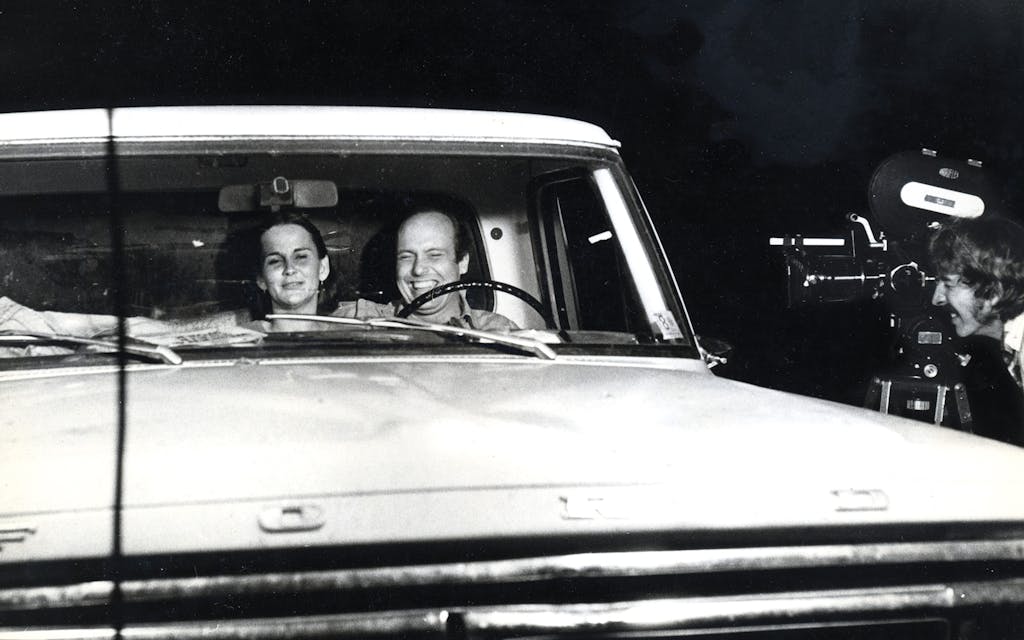
Doris Hargrave and Sonny Carl Davis on the set of The Whole Shootin’ Match.Courtesy of Watchmaker FilmsThe Whole Shootin’ MatchA charming indie about two guys with dreams as big as the Texas sky. 1978
Austin director Eagle Pennell’s low-budget, black and white feature debut arrived on the festival circuit barely a month before the premiere of the TV show Dallas, offering a photonegative inverse of the glamorous, swaggering Texas that J. R. Ewing and co. would soon enshrine in the popular imagination. Filmed guerrilla-style around Austin for less than $30,000, The Whole Shootin’ Match follows roustabouts Frank (Sonny Carl Davis) and Loyd (Lou Perryman) as they bounce between stints of temporary employment and steady boozing, dreaming up get-rich-quick schemes and bemoaning their repeated failures to launch. Compared with most Texas-size epics, The Whole Shootin’ Match feels almost claustrophobically small, like an Italian neorealist film that’s been transplanted to the world of good ol’ boys and pickup trucks. But as the title suggests, the themes are big, honking, universal things: This is simply the best movie ever made about that uniquely Texan human condition of being forced to measure one’s life against the state’s outsized mythos. Frank and Loyd, inspired by (and envious of) the generations of cattle wranglers and wildcatters before them, remain convinced that amassing their own outrageous fortunes is simply a matter of “getting your mind right.” And their refusal to be licked, even when fate repeatedly proves them wrong, makes for a film that’s both bleakly funny and quietly poignant.
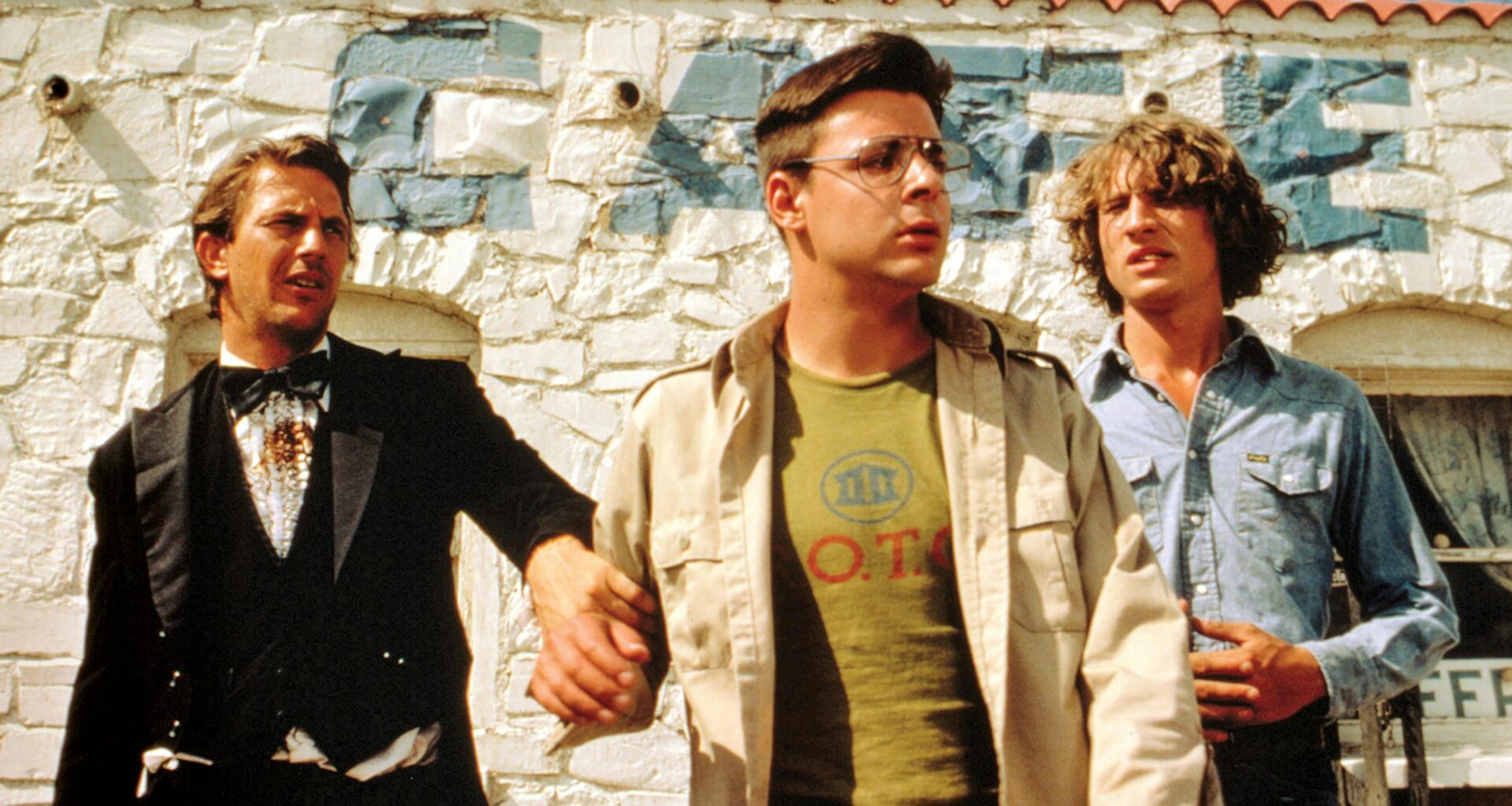
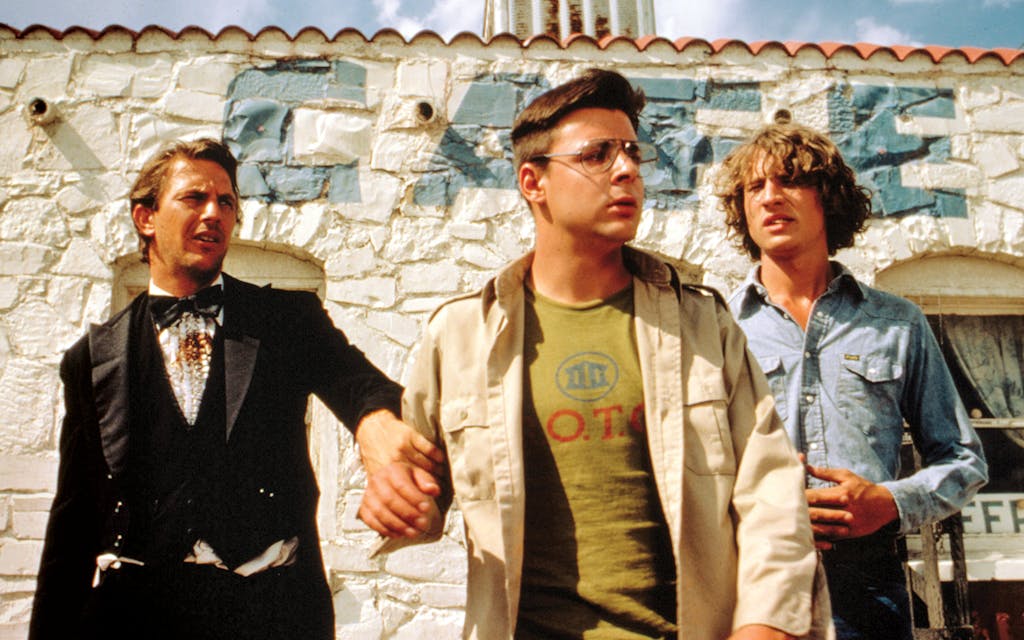 Kevin Costner (from left), Judd Nelson, and Sam Robards in Fandango.Everett CollectionFandangoKevin Costner cuts loose across West Texas in a comic elegy for gloriously wasted youth.1985
In movies such as The Last Picture Show, Hud, and What’s Eating Gilbert Grape, this state has long been a favorite backdrop for the coming-of-age story, where all of life’s potential finds its metaphorical purchase in the wide-open skies—or, if you prefer, its flat and barren plains. Both analogies could apply to Fandango, a tale of Tex-istential crisis wrapped in a zany college comedy. Kevin Costner, in one of his earliest lead roles, plays the head of a gang of newly minted University of Texas grads who call themselves the Groovers. In the summer of 1971 they set out to delay their inevitable futures—beginning with the threat of being drafted into Vietnam—with one final rager of a road trip through the West Texas desert. Writer-director Kevin Reynolds, a San Antonio native, based Fandango on his Baylor University years, and his film feels authentically imbued with the young Texans’ love-hate relationship with their home state. “[Texas] is wild . . . just like us,” Costner tells his buddies, although the subtext is that for both Texas and the Groovers, that wildness is already disappearing. Fandango underlines this by having the gang spend a night inside the rotting facade of the Giant set, in Marfa, the Texas of myth crumbling around them as they contemplate what’s next.
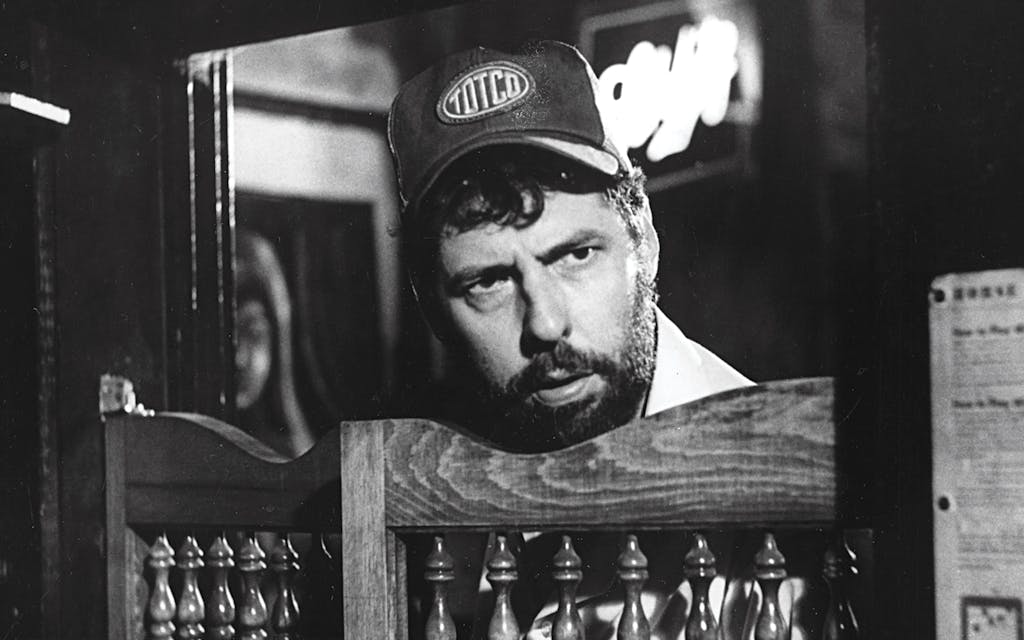
Lou Perryman in Last Night at the Alamo.Cinecom Pictures/PhotofestLast Night at the AlamoHouston friends stumble into the harsh morning after of the state’s future.1983
Pennell reunited with his The Whole Shootin’ Match cast of Davis, Perryman, and Doris Hargrave for this spiritual sequel set in a rapidly gentrifying Houston (and if I accomplish nothing else during my tenure at Texas Monthly, it will be nagging everyone to add both these movies to their watch lists). Last Night at the Alamo, released three years after Urban Cowboy, similarly concerns itself with the clash between Texas’s frontier past and its cold, mechanical present, which here is embodied by a beloved dive bar on the verge of being bulldozed to make way for a skyscraper. Speaking of obvious symbolism, Davis plays Cowboy, a big fish in a beer-filled pond who dreams of going to Hollywood to become the next John Wayne, confident that he’s the real deal—not some carpetbagging pretender like John Travolta. In the meantime, Cowboy strokes his ego by rallying his buddy, Claude (Perryman), and the other adoring barflies into making a quixotic last stand against the advancing armies of urbanization. Last Night at the Alamo’s screenplay was written by The Texas Chain Saw Massacre’s Kim Henkel, and it ratchets up a similar, if far less homicidal, tension as it stumbles through twilight hours marked by drunken arguments and minor epiphanies. But the film is also an affecting, affectionate look at ordinary lives spent in rowdy desperation, and it deserves a prominent place on the continuum between The Last Picture Show and Richard Linklater’s openly indebted movies.
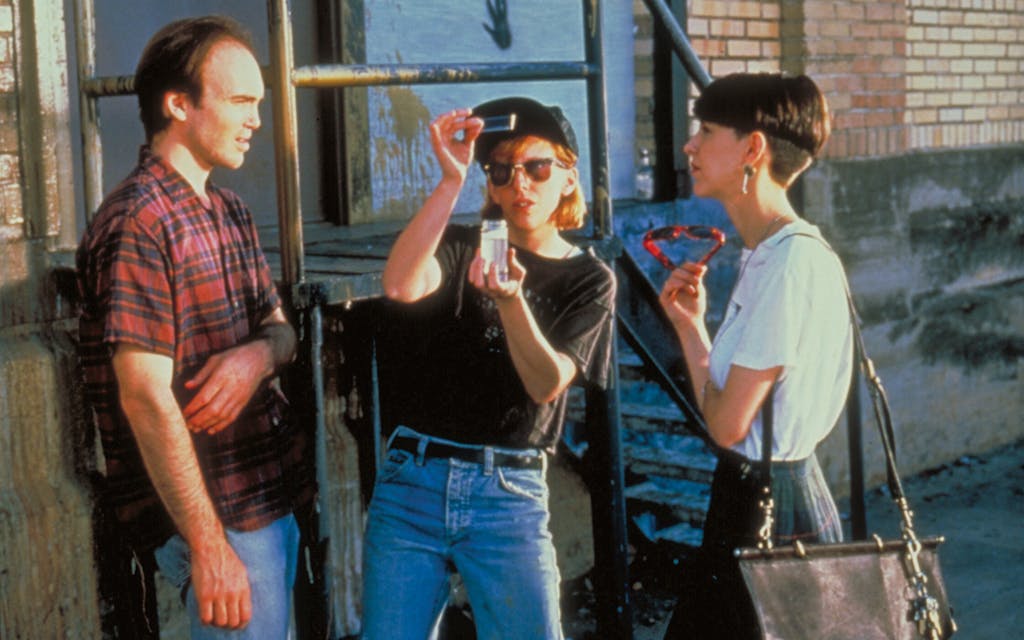 Teresa Taylor (center) in Slacker.Orion Pictures/PhotofestSlackerThe spirit of Texas’s rebellion ambles on in this tribute to aimless Austinites.1990
Richard Linklater’s dreamy, drifting ode to a now bygone Austin, where the Houston-born director moved in his twenties, is usually excluded from lists of great Texas movies, much like the city itself is often separated from quote, unquote “real Texas.” But Slacker doesn’t just belong to a proud lineage of movies, including Linklater’s Dazed and Confused, about restlessly brooding Texans. Beneath its discursively philosophical rambles about The Smurfs and the Kennedy assassination lies a uniquely incisive distillation of the Texan psyche: its mistrust of (and paranoia toward) the outside world; its stoic acceptance of violence; and, above all else, its supreme dislike of being told what to do. Sure, there are plenty of sleepy college towns out there where underemployed, overeducated young people sit around yakking in coffeehouses. But only one of them also happens to be the capital of a state founded by misfits, malcontents, and other obstinate folks who just wanted to be left the hell alone. And seeing as Slacker was filmed vérité-style, without a permit, on Austin streets in the years right before the city became a playground for rise-and-grind tech bros, Linklater’s movie has also become an unexpected historical document, preserving the last remnants of another vanished Texas frontier.
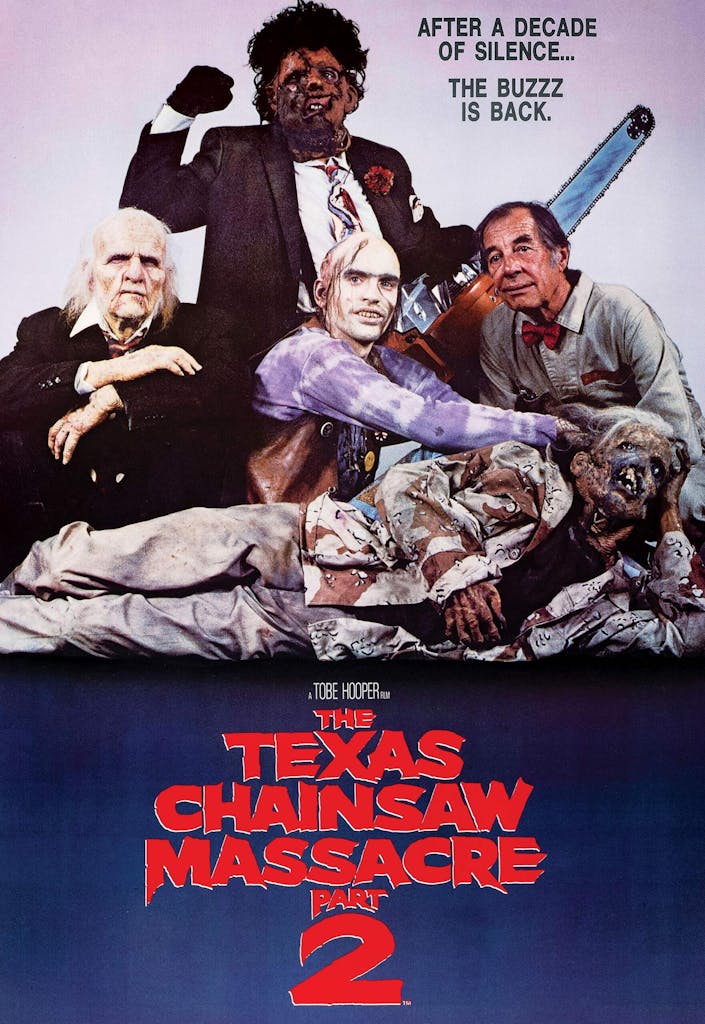
The Texas Chainsaw Massacre Part 2, 1986.Cannon Films/AlamyThe Texas Chainsaw Massacre Part 2The cannibal capitalism of eighties Texas runs amok in this satirical splatter fest.1986
That’s right, I said Part 2. Tobe Hooper’s sequel to his genre-defining, Austin-film-scene-igniting classic doesn’t enjoy nearly the same reputation as its predecessor; it’s often dismissed by cinephiles and horror hounds alike as too gory or silly. But The Texas Chainsaw Massacre Part 2 deserves special recognition for emphasizing the Texas of its title: Here it’s not just the lunatic fringe hidden along the farm roads that is bloodthirsty and deranged; the entire state has gone insane. Leatherface’s family of murderous, chainsaw-wielding cannibals are just the most self-actualized of all the psychos, having moved their slaughterhouse into the big cities and monetized their kills with a booming chili business. With a script by Dallas’s L. M. Kit Carson, the sequel satirizes the distinctly eighties era of Texas, when our backwoods lawlessness began to rebrand itself as a more country-club-friendly breed of nihilism. Now the biggest threat facing the people-eating Sawyer clan is government regulation, along with the unhinged Texas Ranger who’s hell-bent on taking them down. (He’s played by Dennis Hopper, in a performance that makes his character in Blue Velvet look like a model of Alec Guinness–level restraint.) Finally, their feud builds to a subterranean showdown beneath a crumbling amusement park themed around famous Texas battles, a not-so-subtle nod to the history of violence that’s baked into the very bedrock.
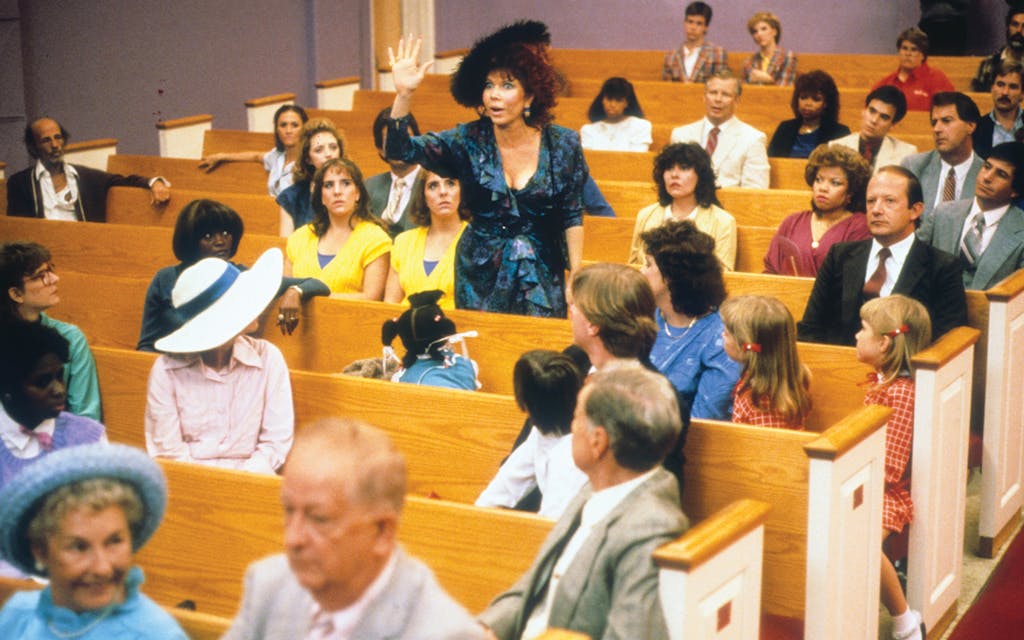 Jo Harvey Allen in True Stories.Warner Bros./PhotofestTrue StoriesAn outsider’s view of a suburbanized Texas that’s trying very hard to retain its singularity.1986
“This part of the country’s been through a lot of changes,” David Byrne says near the beginning of True Stories, a droll understatement that the former Talking Heads front man, making his directorial debut, follows with a crash course in Texas history from the age of the dinosaurs through cowboys and Comanches, all the way up to the founding of Texas Instruments. The kinds of changes that Byrne’s film captures are more subtle, though no less seismic: Filmed around what were then the outskirts of Dallas–Fort Worth using a mostly local cast and crew, including a plum role for Lubbock legend Jo Harvey Allen, True Stories documents the dorky, awkward adolescence of our suburban sprawl, when open fields began to blossom with manicured subdivisions and semiconductor factories, and the last vestiges of our distinct regional identities started to erode under the influence of shopping malls and MTV. True Stories, like Byrne’s (possibly extraterrestrial) narrator, doesn’t pass judgment on these shifts, nor does it reduce the quirky lives of “a bunch of people in Virgil, Texas,” to patronizing punch lines. Much like the fictional Virgil itself—whose preparations for commemorating Texas’s sesquicentennial with a festival saluting “150 Years of Specialness” give the film its loose narrative thread—True Stories celebrates the individualism of lovably oddball characters like John Goodman’s aspiring country singer. In doing so, it offers its own reassuring tribute to the philosophy, so key to the Texan character, that although the landscape around us may change and become homogenized, our iconoclastic spirit remains.
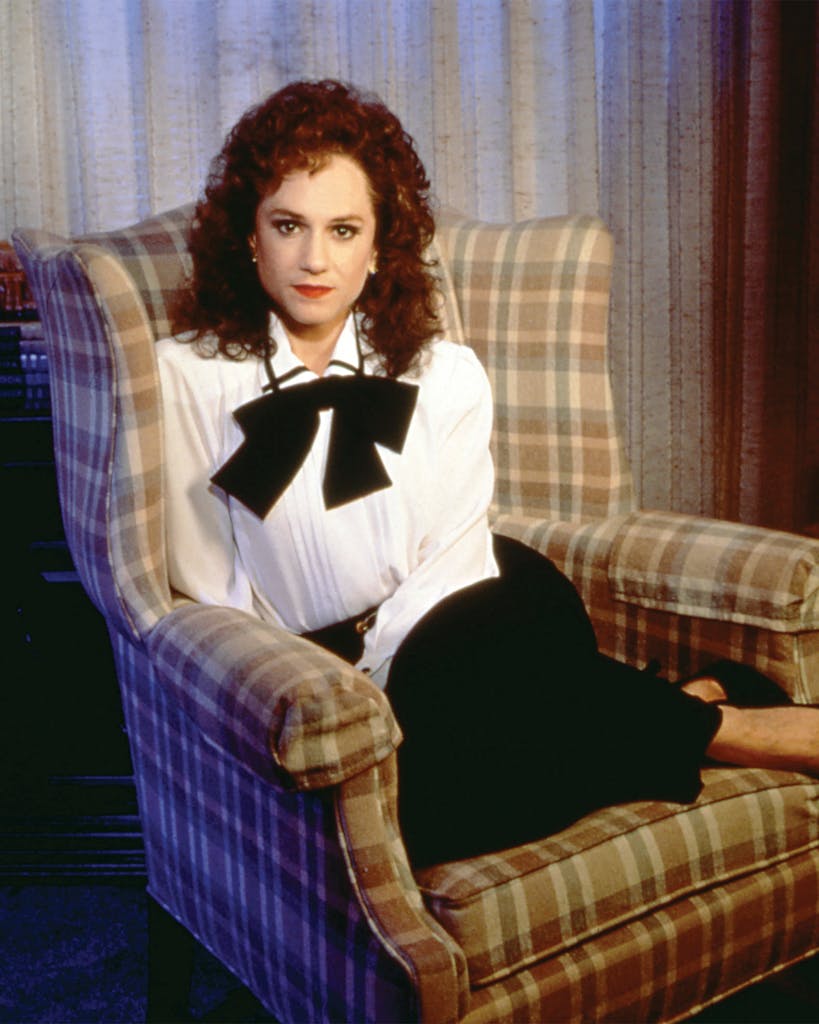
Holly Hunter. Debbe Edelstein/HBO/Courtesy Everett CollectionThe Positively True Adventures of the Alleged Texas Cheerleader-Murdering MomProving the old saying that “Texas is hell on women and horses,” even in the age of minivans.1993
Based on the real story of Channelview homemaker Wanda Holloway, who was convicted in 1991 of attempting to hire a hit man to kill the mother of her daughter’s high school rival, this made-for-TV movie is a lot of things. It’s a sharp satire of the tabloid culture of the early nineties, when Holloway and other “crazy” women, like Amy Fisher and Lorena Bobbitt, were exploited for newspaper headlines and late-night jokes. It’s a showcase for Holly Hunter at her absolute peak, with her barnstorming portrayal of Holloway—all honey-dripping Southern politesse wrapped around a raging beehive of homicidal mania—earning her an Emmy just a few months before she won the Oscar for The Piano. More than anything, Cheerleader-Murdering Mom is a shrewdly perceptive look at the way that Texas can be especially hard on women. As with Gish’s character in The Wind, Holloway’s descent into madness feels like a byproduct of her environment: She’s driven to desperation not only by her patriarchal small Texas town—which forces its women to cling to any modicum of power, even the petty hierarchies of high school cheerleading—but also by the existential terrors that come from living next door to refineries that randomly burst into flames. The film doesn’t ask you to forgive Holloway, but it does invite you to understand where she came from.
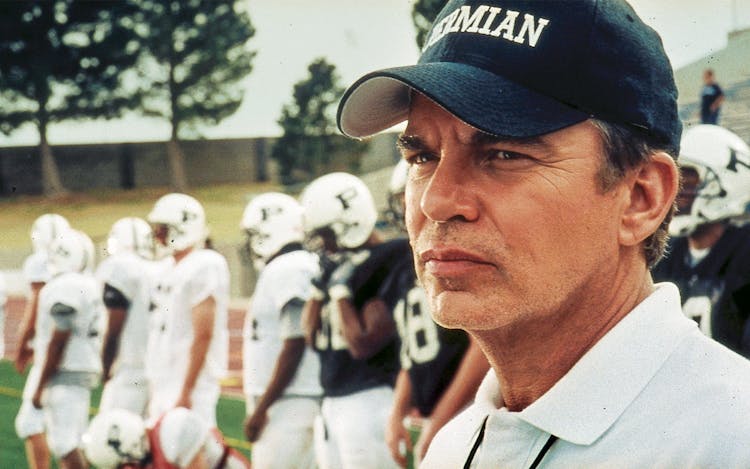 Billy Bob Thornton as Coach Gary Gaines. Universal/Photofest
 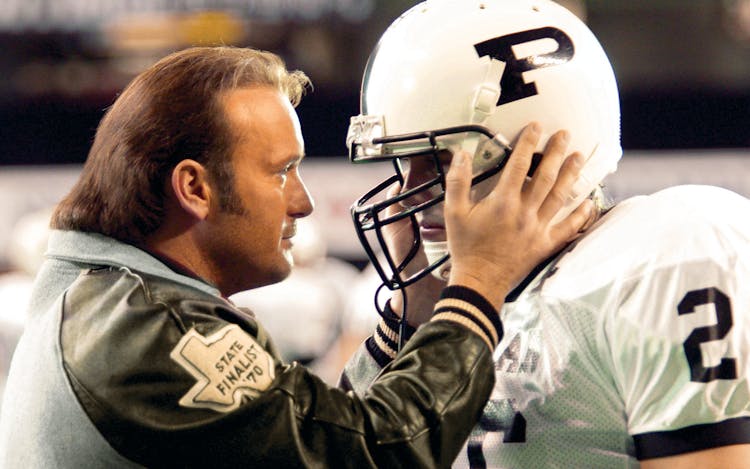 Tim McGraw and Garrett Hedlund. Universal/Photofest
Friday Night Lights2004
Let’s just get this out of the way: The TV show is better, if only because any movie that hires Connie Britton then keeps her on mute for most of its running time is a lesser work. Nevertheless, director Peter Berg’s first attempt at adapting Buzz Bissinger’s book about the Odessa Permian Panthers’ 1988 almost championship season deserves its own special commendation, because it remains the best movie ever made about Texas’s obsessive, symbiotic, occasionally ruinous relationship with football—particularly high school football, which, in both the movie and in life, is less a sport than a sort of mass psychosis. “Gentlemen, the hopes and dreams of an entire town are riding on your shoulders,” Panthers Coach Gary Gaines (Billy Bob Thornton) tells his young charges. “You may never matter again in your life as much as you do right now.” These lines, ostensibly meant to inspire, speak to the ludicrous pressures that are placed on these seventeen-year-old boys—by their school, by the local boosters, by jaded parents whose only remaining glories are vicarious. They also foreshadow the inevitable cycle that will see those same players age into deeply unfulfilled adults themselves. Without the luxury of five seasons of character development afforded by Friday Night Lights the show, the film feels smaller and bleaker in comparison. Still, the magic of Friday Night Lights the movie is in the way that all those nagging moral quandaries are forgotten in the excitement once the team takes the field, an experience not unlike watching football itself.
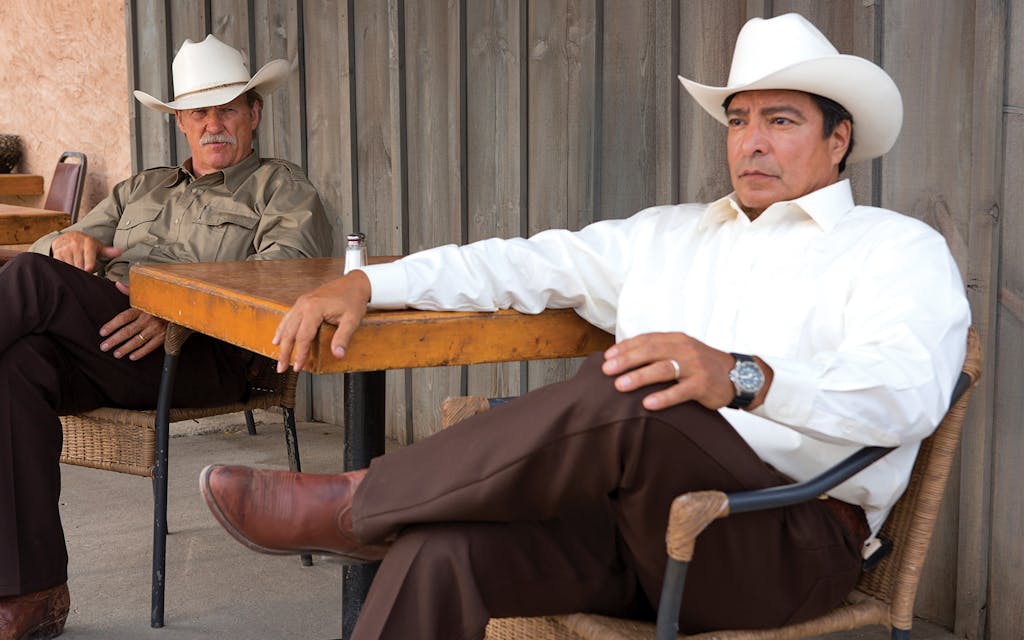 Jeff Bridges (left) and Gil Birmingham in Hell or High Water.CBS Films/PhotofestHell or High WaterA classic cowboy yarn set amid the ruins of a weary, disenfranchised West.2016
Like a lot of Taylor Sheridan’s work, this lean, mean neo-western traffics in archetypes that are as old and creaky as the past-his-prime Texas Ranger played by Jeff Bridges. The protagonists are a couple of classically noble outlaws—hotheaded brothers, played by Ben Foster and Chris Pine, who rob a string of West Texas banks as revenge against an unjust system. Bridges’s grizzled lawman, tasked with hunting down the brothers just days before his retirement, is a similarly righteous bastard, a shrewd and stubborn relic who can’t help making racist digs at his Mexican and Native American partner (San Antonio native Gil Birmingham). A game of cat and mouse plays out across a Texas desert (actually New Mexico, but close enough) that’s haunted by empires past: The script’s working title, Comancheria, makes plain the parallels that Sheridan draws between generations of Texas lands stolen first with blood, then with bureaucracy. Yet even as Hell or High Water lingers elegiacally over shots of lonely pump jacks and decaying one-stoplight towns, the film avoids waxing overly romantic. (“[It’s the] twenty-first century, I’m racing a fire to the river with a herd of cattle, and I wonder why my kids won’t do this s— for a living!” Sheridan himself quips in a cameo.) Instead, the film brings all those cowboy movie clichés into an anxious new era, where even regular folks pack AR-15s and the ambient threat of horse thieves and Comanche raids has been replaced by more insidious crooks peddling reverse mortgages.
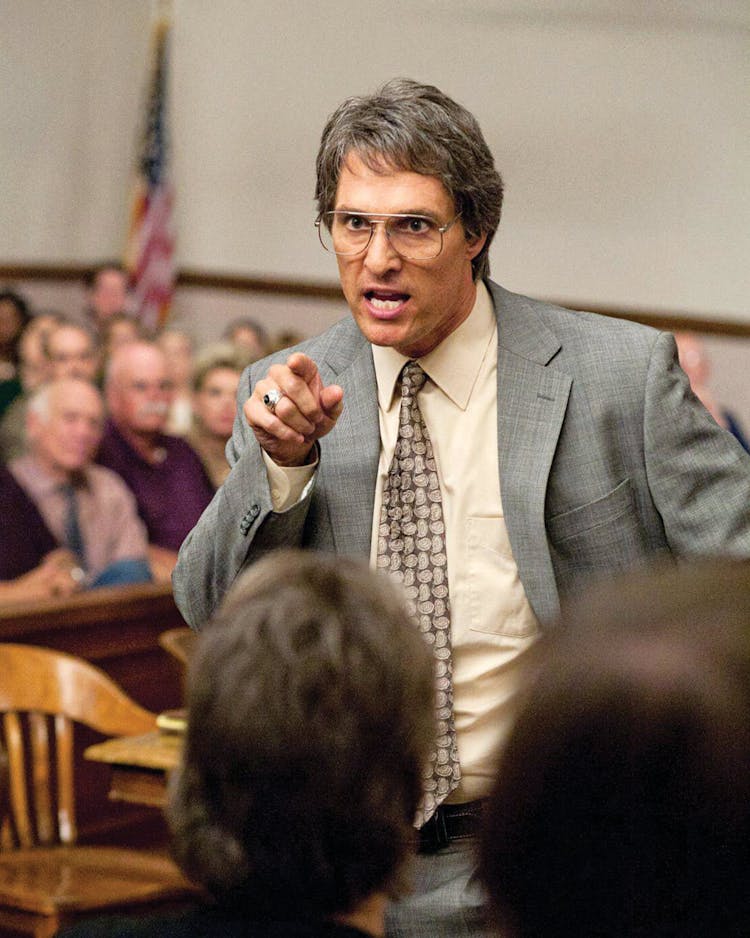 Matthew McConaughey as Danny Buck in Bernie. Millennium Entertainment/Cinematic Collection/Alamy
 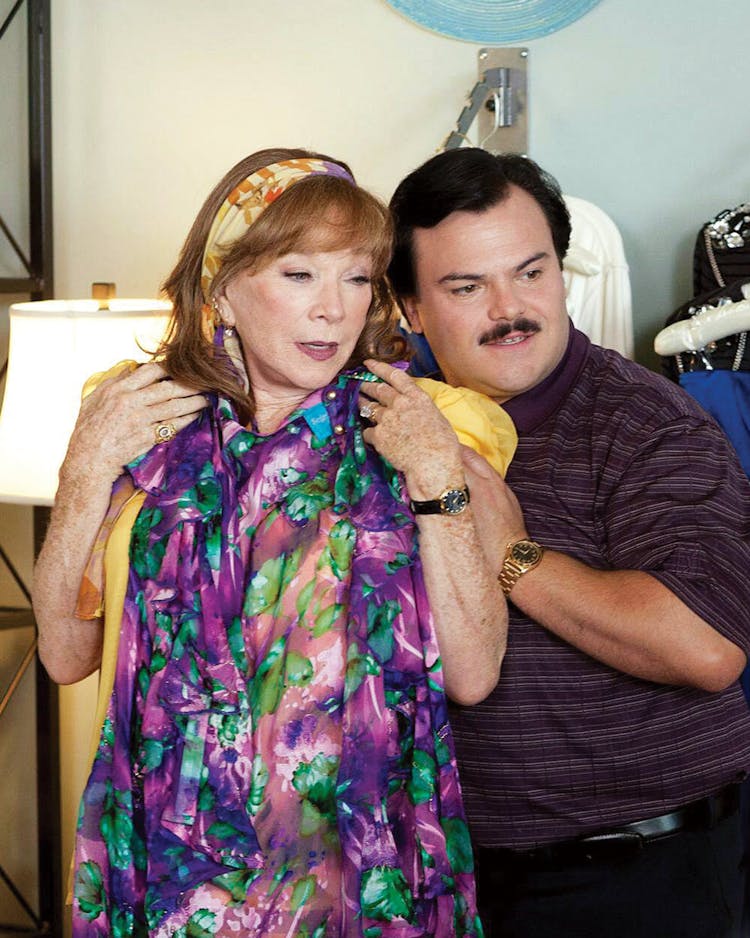 Shirley MacLaine and Jack Black in Bernie. Millennium Entertainment/Alamy
Bernie2011
In the early days of the movies, Texas was America’s gladiatorial arena—the backdrop for classic battles between good and evil, white hats versus black hats. Over time, however, the state has proved to be an even more fertile ground for exploring the gray areas that those simplistic morality plays tended to obscure. Bernie, adapted from a true crime tale written by Texas Monthly’s Skip Hollandsworth, delves into the ethical murk that surrounded East Texas mortician Bernie Tiede (Jack Black), who was convicted in 1999 of murdering his elderly widowed companion, Marjorie Nugent (Shirley MacLaine), three years earlier and hiding her body inside a deep freezer for almost nine months. Tiede’s crime seems self-evidently evil. Yet Linklater’s film is about the way that Tiede’s many friends in his adopted hometown of Carthage managed to compartmentalize, rationalize, and even outright ignore their misgivings about his behaviors, up to and including homicide, simply because they liked him. “You cannot have grief tragically become a comedy,” Tiede declares early in the movie, and Bernie repeatedly puts that assertion to the test. But comedy and tragedy, good and evil, right and wrong: The movie shows us that these things are not always so cut-and-dried as they may appear, just like people living in small-town Texas are much more complex than you might assume.
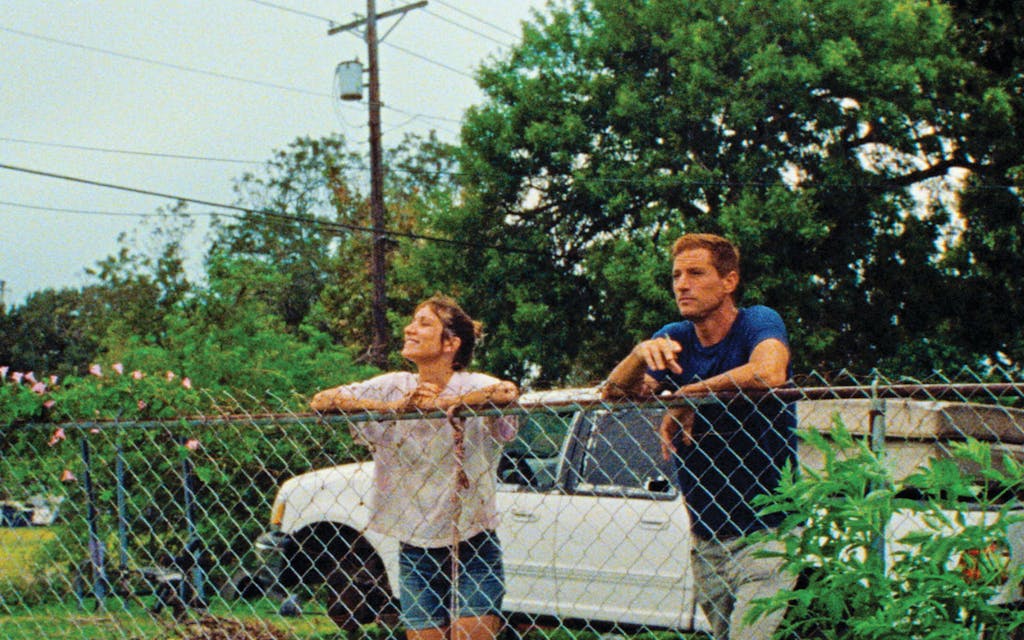
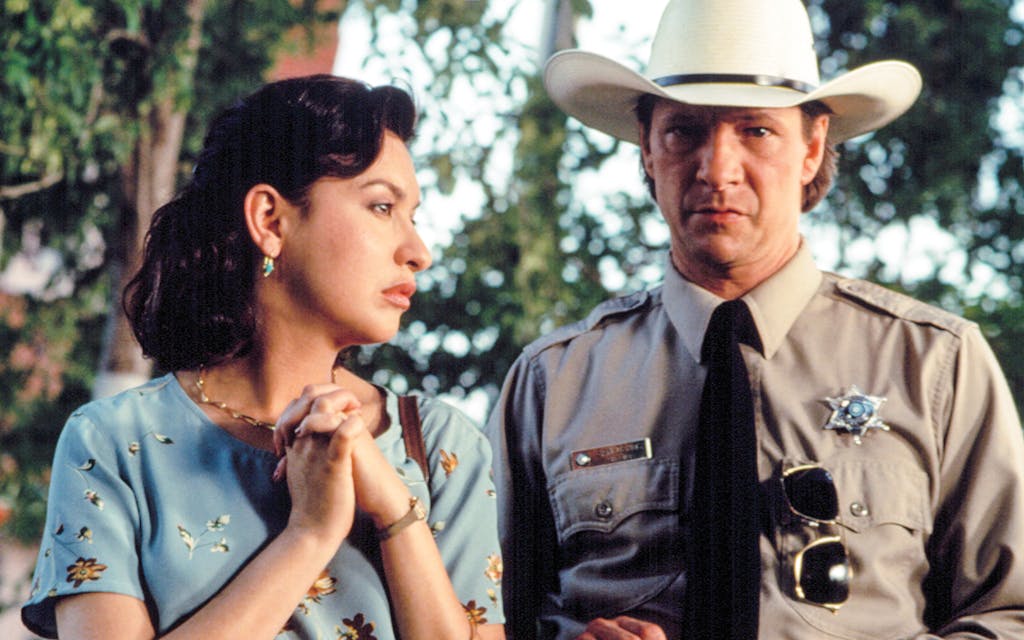 Elizabeth Peña and Chris Cooper in Lone Star.Everett CollectionLone StarA twisty drama about the borders, both real and imagined, that keep us apart.1996
Writer-director John Sayles hails from upstate New York, a minor biographical detail that, depending on your biases, could lend a whiff of condescension to his assertion, as delivered in the opening scenes of Lone Star, that if “you live in a place, you should know something about it.” Most Texans don’t know all that much about Texas, the film suggests, because they cling to the legends that have always obscured them from seeing—or allowed them to avoid—the much uglier truths. In Lone Star, exposing that truth becomes deeply personal for Sheriff Sam Deeds (Chris Cooper), after the discovery of a sun-bleached skeleton in the fictional border town of Frontera reopens a decades-old mystery involving Deeds’s locally revered father (Matthew McConaughey) and the corrupt lawman (Kris Kristofferson) he heroically deposed. But that whodunit is just a framework for the larger reckoning that Lone Star’s characters are having with the past, as Texas’s many unresolved racial tensions roil the fragile armistice of the present. At the center of these overlapping conflicts is Deeds’s Mexican American love interest, Pilar (Elizabeth Peña), a headstrong high school teacher whose efforts to present a more complicated version of Texas history ruffles Anglo parents who accuse her of pushing “propaganda” (a plotline that has somehow proved even more prescient in the thirty years since the film’s release). While Deeds, Pilar, and the rest of Frontera dismantle the many lies that have shrouded their personal lives, the film likewise deconstructs the myths that continue to shape Texas’s present. “Forget the Alamo,” Pilar declares in the pugnacious closing line, which some may consider sacrilege. Yet the sentiment—revoke the tyranny of the past and forge your own future—is one that any Texan could get behind.
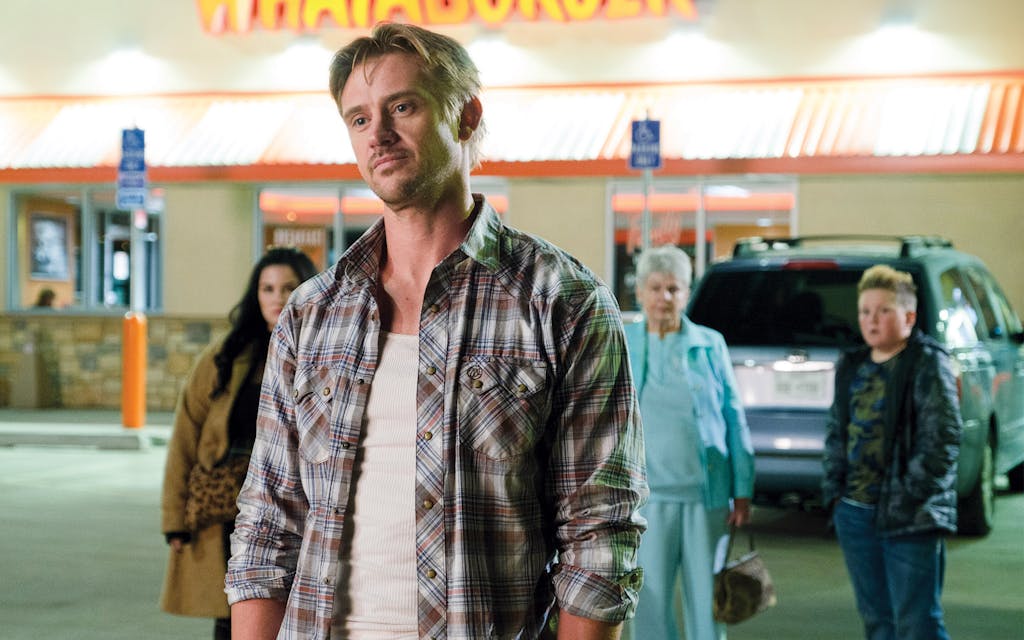 Boyd Holbrook in Vengeance.Focus Features/PhotofestVengeanceA fish-out-of-Whataburger comedy that both perpetuates and pokes fun at common Texas stereotypes.2022
According to Vengeance, Texans are football-and-rodeo-obsessed gun nuts who take our college rivalries way too seriously, who seek refuge from the emptiness of our surroundings by throwing ourselves full bore into violence, conspiracy theories, and drug abuse, and whose dull, desperate, borderline-illiterate lives are but a microcosm of the incipient crumbling of America itself. Yes, but as this black comedy presupposes, what if some Texans are also decent people? Vengeance stars The Office’s B. J. Novak, who also wrote and directed the movie, as a snooty New York media type who gets roped into a West Texas murder mystery that he’s hoping to exploit for a podcast. The film adopts its protagonist’s elitist views of the state in order to deconstruct them. The portrait of Texas it paints isn’t always flattering, but it’s also far from simplistic. Novak spent time researching the region with the help of former Texas Monthly writer Christian Wallace, and, in his desire to portray its residents honestly (and avoid getting hog-tied should he pass through here again), he avoids the easy stereotypes of evil rednecks and saintly rubes. Instead, Novak’s character discovers that Texans aren’t defined solely by their geography, their history, or even their love of Whataburger. “Texas invented vengeance,” Novak is told. But as he soon discovers, there’s a whole lot more to the story.
Bree Elrod and Simon Rex in Red Rocket.A24/PhotofestRed RocketA tragicomic trip into the industrial underbelly of Texas’s Gulf Coast.2021
Director Sean Baker makes uniquely uncomfortable movies about overlooked Americans living on the margins, like the budget-motel
dwellers of The Florida Project or the highly paid sex workers of 2025’s Best Picture–winning Anora. But few of Baker’s films are as squirm inducing as Red Rocket. Filmed along the fringes of Texas’s Gulf Coast, the movie tests the extremes of its audience’s ability to empathize with a guy like Mikey “Saber” Davies (Simon Rex), a sleazy, washed-up porn star who slinks back to his hometown of Texas City, then sets about grooming a seventeen-year-old girl (Suzanna Son). As with all of Baker’s movies, Red Rocket neither condemns nor celebrates even its most reprehensible characters, whose ranks here include pimps, drug pushers, and con artists—most of them played by locally scouted nonactors. Instead, Baker allows the viewer to discover, along with the other victims in Mikey’s orbit, that they’ve been charmed in spite of themselves. In much the same way, the film locates the cinematic allure in Galveston’s Pleasure Pier and the twinkling chemical haze of Texas City’s refineries. (“Mom calls that one Old Smokey,” a character sighs wistfully over a flare stack.) Red Rocket isn’t easy to watch; it’s even more difficult to recommend. But it feels true, which is its own kind of beauty.
The Updated Canon
The 25 Essential Texas Films
What are the greatest Texas movies of all time? In 2011, Texas Monthly writer-at-large Christopher Kelly put that question to an expert panel: film critic John Bloom (a.k.a. Joe Bob Briggs), screenwriters Anne Rapp and Kyle Killen, University of Texas at Austin film studies professor Charles Ramírez Berg, and Alamo Drafthouse cofounder Tim League. They came up with ten titles that they believed constituted the Texas canon. (Their selections were then echoed in a 2020 Texas Monthly column by the Texanist, thus making them official.) Without daring to challenge that initial list, here we present an expanded compilation of great Texas movies, ordered by release date, with new additions in bold. After all, every canon could use a little extra fodder.
• The Wind, 1928
• The Southerner, 1945
• Red River, 1948
• The Searchers, 1956
• Giant, 1956
• Hud, 1963
• Bonnie and Clyde, 1967
• The Last Picture Show, 1971
• The Texas Chain Saw Massacre, 1974
• The Whole Shootin’ Match, 1978
• Tender Mercies, 1983
• Last Night at the Alamo, 1983
• Blood Simple, 1984
• Fandango, 1985
• The Texas Chainsaw Massacre Part 2, 1986
• True Stories, 1986
• Slacker, 1990
• The Positively True Adventures of the Alleged Texas Cheerleader-Murdering Mom, 1993
• Lone Star, 1996
• Friday Night Lights, 2004
• No Country for Old Men, 2007
• Bernie, 2011
• Hell or High Water, 2016
• Red Rocket, 2021
• Vengeance, 2022
This article originally appeared in the April 2026 issue of Texas Monthly with the headline “The Best Picture Shows (Part Two).” Subscribe today.
Video credits: Bernie: Millennium Entertainment/Cinematic Collection/Alamy; Fandango: Everett Collection; Hell or High Water: Prod DB/Film 44/Sidney Kimmel Entertainment/Alamy; Friday Night Lights: Universal/Courtesy Everett Collection; The Texas Chainsaw Massacre Part 2: Cannon Films/Courtesy Everett Collection; Lone Star: Columbia/Courtesy Everett Collection; Last Night At The Alamo: Courtesy of Watchmaker Films; The Wind: Everett Collection; Slacker: Orion Classics/Courtesy Everett Collection; True Stories: Warner Brothers/Courtesy Everett Collection; Vengeance: Focus Features/Courtesy Everett Collection; The Southerner: Everett Collection
When you buy a book using a link on this page, a portion of your purchase goes to independent bookstores and Texas Monthly receives a commission. Thank you for supporting our journalism.
Read Next