
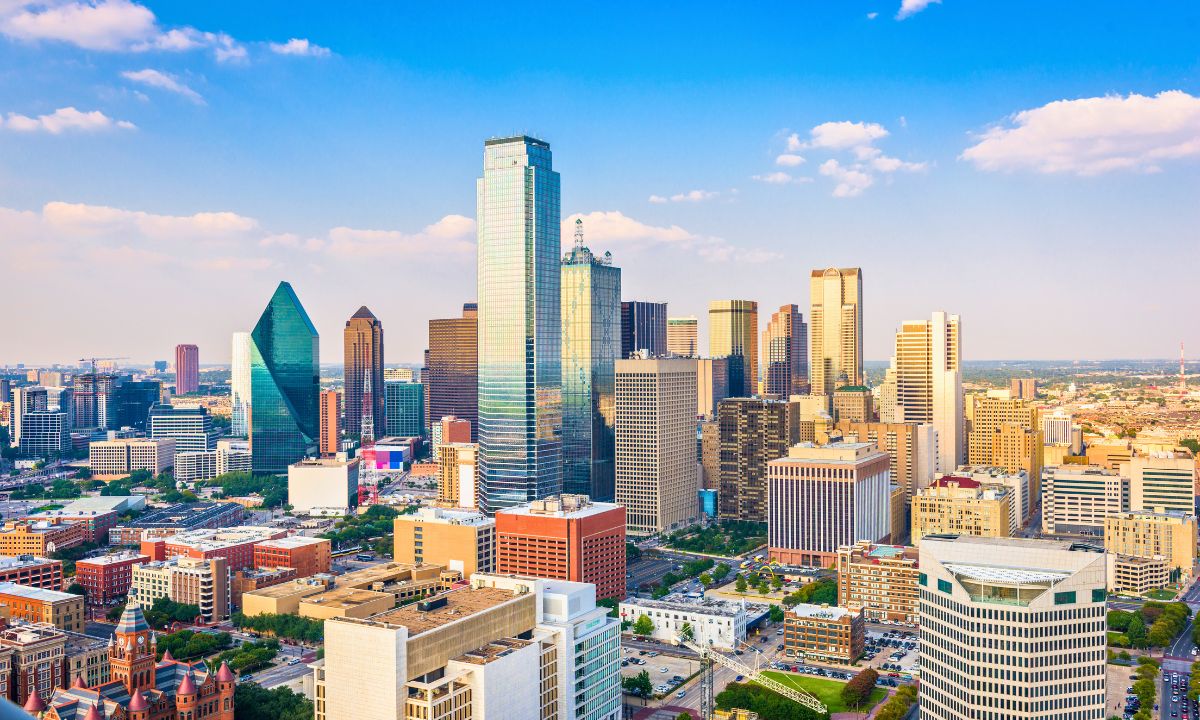
Dallas County’s population declined last year even as surrounding North Texas counties posted some of the fastest growth in the nation, according to newly released Census estimates.
New data from the U.S. Census Bureau show Dallas County lost an estimated 2,616 residents between July 1, 2024, and July 1, 2025, placing it among the top 10 counties nationwide in population decline. The time period examined covered the last few months of President Joe Biden’s term and the beginning months of President Donald Trump’s second term.
The drop comes as other nearby counties surged. Collin County added nearly 43,000 residents during the same period, the second-highest numeric increase in the country, while Montgomery County and Fort Bend County also ranked among the top gainers.
Despite the decline in its urban core, the broader Dallas-Fort Worth-Arlington metro area continued to grow, adding more than 123,000 residents, the second-largest increase of any U.S. metro area.
Census officials attributed the broader slowdown in large counties to shifting migration patterns, particularly reduced international migration and continued domestic outflows.
“The nation’s largest counties … are often international migration hubs,” Census demographer George M. Hayward said in a press release, adding that with fewer international arrivals, “population growth diminish[ed] or even turn[ed] into loss.”
The data reflects a broader national trend. Among counties with populations exceeding 1 million, a category that includes Dallas County, growth slowed sharply to 0.3% between 2024 and 2025, down from 1.1% the year prior. These large counties collectively lost more than 637,000 residents through domestic migration, according to the agency.
By contrast, mid-sized and suburban counties gained population, continuing a redistribution pattern away from dense urban centers.
That shift has been particularly pronounced in North Texas.
A November 2025 relocation analysis previously reported that suburban cities like Frisco were attracting significantly more inbound moves than major urban cores, while interest in Dallas itself had declined by nearly 19% since 2019, according to prior reporting by The Dallas Express.
Corporate movement has followed a similar pattern. In January 2026, AT&T confirmed plans to shift its global headquarters operations from downtown Dallas to a campus in Plano, reinforcing concerns about the long-term competitiveness of the city’s urban core.
That decision followed years of documented concerns about crime, homelessness, and quality-of-life issues downtown, as previously reported by The Dallas Express.
Dallas recorded a 15% increase in murders in 2023, even as overall violent crime declined, according to year-end police data reported at the time, per NBC 5 DFW.
At the same time, federal immigration enforcement actions increased during the period covered by the Census estimates. Enforcement efforts under Trump included worksite investigations and fines against Dallas-area employers in 2025, as previously reported by The Dallas Express, reflecting a broader push to curb demand for illegal-alien employment.
Census data suggests such factors may intersect with migration trends. Nationwide, net international migration, a driver of growth in large urban counties, declined significantly between 2024 and 2025, with nine out of 10 counties seeing reduced inflows.
Even so, Texas remains a leader in population growth overall. Harris County led the nation in numeric growth, adding nearly 49,000 residents, while several other Texas counties ranked among the fastest-growing by percentage, including Kaufman County and Waller County.
The contrast underscores a growing divide: while the region continues to expand, growth is increasingly occurring outside traditional urban centers.