
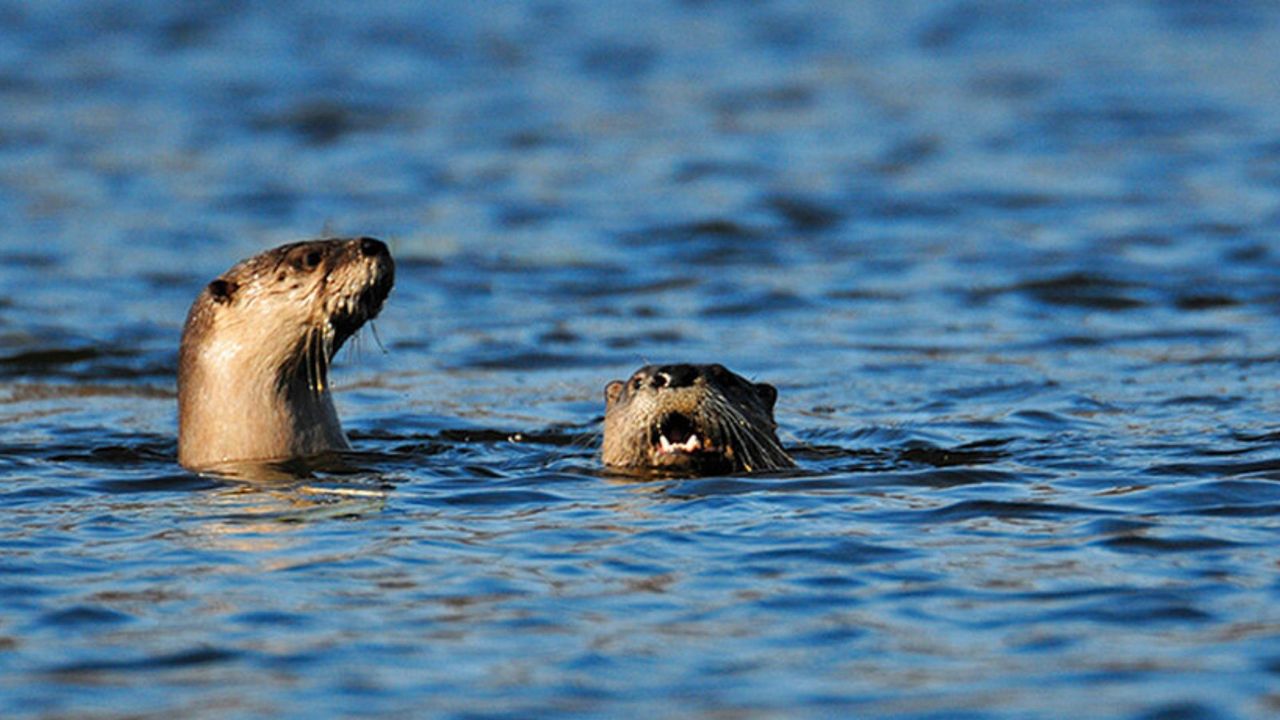
BEXAR COUNTY, Texas — San Antonio waterways are filled with all kinds of fascinating things: fish, snakes, algae, even lawn chairs and Lime scooters.
But a special creature has raised its whiskered head in Central Texas rivers over the past few years, surprising many with their unexpected homecoming.
The San Antonio River Authority first spotted a North American river otter last March in the city’s upper watershed. In a Facebook post, the authority said trapping and habitat loss drove out what once lived as a common species in the area.
The authority also received reports of otters around Goliad, which sits close to the coast, and the San Marcos River. In January, a Texas real estate agent posted a video of otters he spotted near Waco.
Alicia Ramsey, senior watershed ecologist at the San Antonio River Authority, said otters have a particularly prevalent history in East Texas. The otters’ return to Central Texas could stem from a variety of factors, including food and habitat availability.
“There have been more and more sightings for people throughout Central Texas, so really that’s just a combination of they have food sources, they have habitat, and sometimes that’s even just they’re expanding, possibly because they don’t have that in other places,” Ramsey said. “It could be that they’re driven out of areas, or it’s just a success story and they’re increasing into other areas.”
Ramsey said recent evidence suggests some otters may be living in Wilson County, which sits southeast of San Antonio’s Bexar County. However, the authority has no confirmed sightings there, and sightings become complicated when otters are mistaken for beavers or nutria, an invasive rodent species.
Since river otters are native to Texas, their reappearance in Central Texas is not considered invasive, Ramsey said. In fact, they are a good omen for the San Antonio River Authority.
“It’s honestly a really good sign to see them in all these different places because you know that your waterway, your ecosystem around the rivers, are healthy enough to support a predator like that,” Ramsey said.
As carnivorous predators, river otters feast on small fish, crustaceans and potentially frogs. They also shy away from humans, saving their social energy for other otters, and they have claws and teeth to defend themselves against anyone who comes too close. Despite the distance otters maintain, Ramsey said the authority and wider community have to find a balance between animal habitats and human access to rivers.
Ramsey said the authority is also looking to improve Bexar County’s rivers, with one project centering on the Otilla Dam. The dam, located in Trueheart Ranch Nature Park, is set for either retrofitting or removal in the next few years so animals like the river otter can enjoy better passage up and down the San Antonio River.
“We have a lot of interest and project potential for stream restoration, which is really going to help boost those [otter] populations over time,” Ramsey said.