
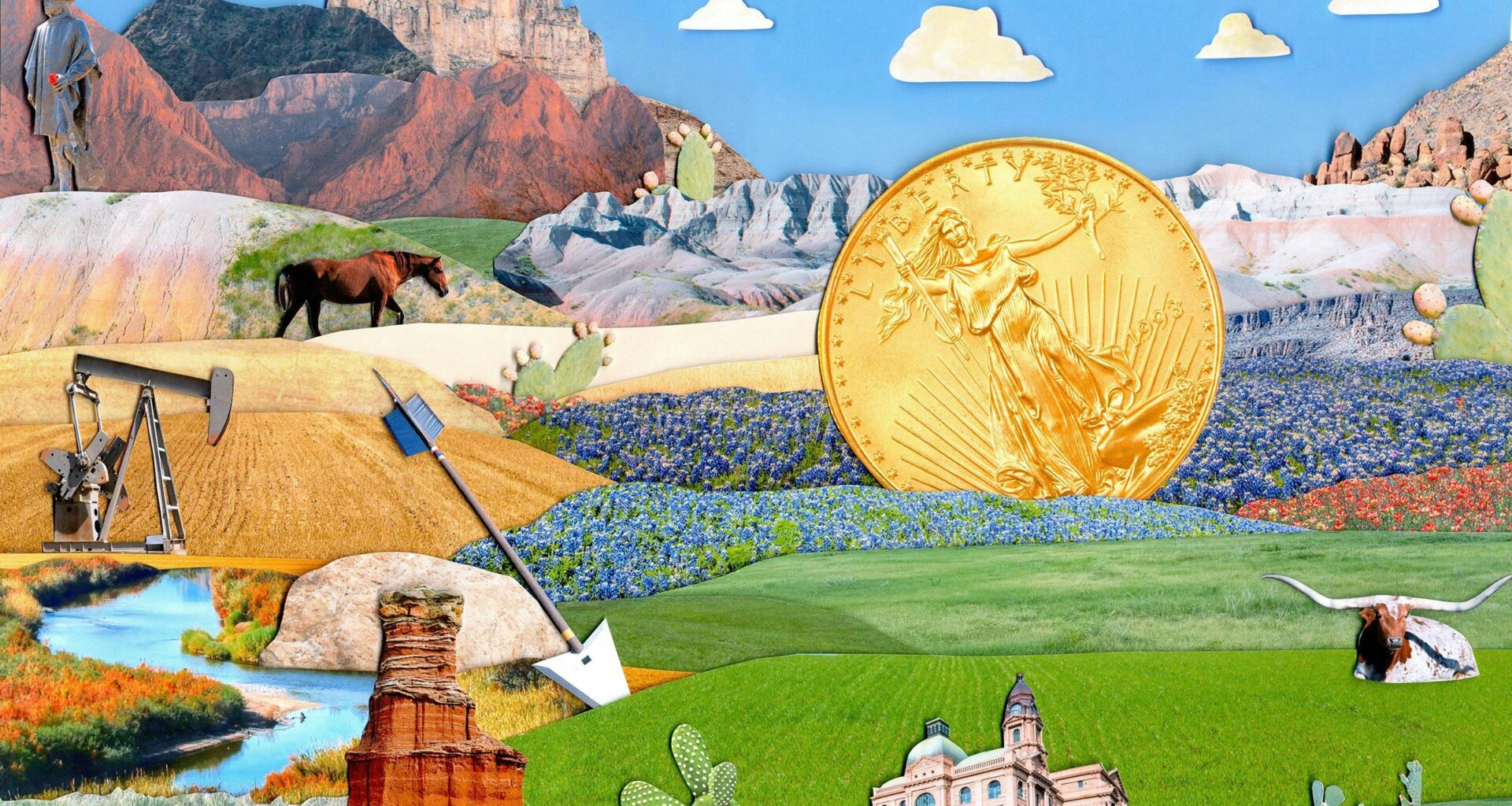
The town of Comanche straddles U.S. 67 on a flat, featureless stretch of a region variously known as the Western Cross Timbers, the Osage Plains, or simply the Big Country. Founded in 1858, in its early days it served as a supply depot for local ranches. The population—about 4,300 residents—has barely budged in a century. Two hours from both Fort Worth and Austin, Comanche receives relatively few visitors and even fewer tourists.
For John and Aimee Jolly, though, it was more than a dot on a map. It was an X. The couple had become convinced that a three-inch nickel medallion was hidden somewhere within the city limits. If they found it, they would win tens of thousands of dollars in gold and cash. Enough to pay off their F-150, catch up on bills, and take a nice vacation.
On a cool, bright Sunday afternoon in December, I met the Jollys in the crowded parking lot of the local Tractor Supply. They’d driven about 75 miles, from their home in Clyde (near Abilene), where John works in public sanitation and Aimee serves on the city council. After we introduced ourselves, Aimee, a middle-aged woman with platinum hair and an air of cheerful determination, produced a spiral-bound coffee-table book and placed it reverently on the trunk of my rental car.
At first glance, the book, titled SeekTexas, looks like something that might have been published by the state tourism bureau. Some sections extol the beauty of various regions, while others recount state history or are devoted to miscellaneous Texana: famous ranches, old movie palaces. All of it is lavishly illustrated with color photography.
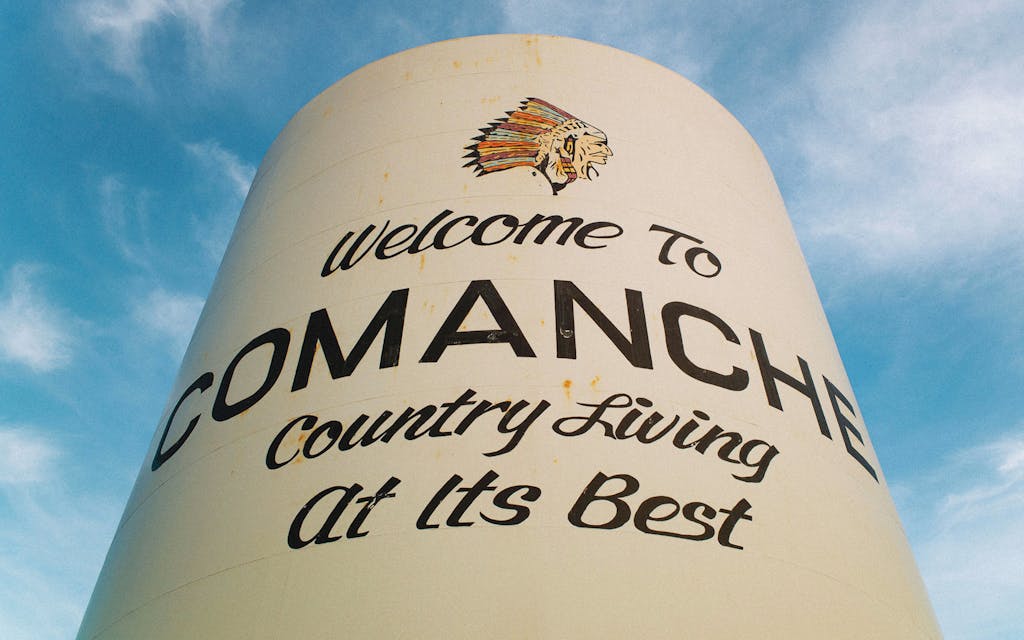 The Comanche water tower.Photograph by Chad Wadsworth
A closer perusal reveals some incongruous features. Ciphers. Poems. Musical notes. According to the book’s creators, a semiretired Fort Worth tax accountant named K C Wright and his 94-year-old mother, Liz, this mysterious volume contains everything you need to find the medallion. A note on the inside cover informs readers that “all places, pictures, and ideas within SeekTexas have equal value. They are all clues—for example, the Alamo.”
To enter the hunt, you must purchase the $70 book and register it on SeekTexas.com. Whoever finds the medallion will win eleven gold coins and $5,000 in cash, supplemented by $5 for every book sold. If the medallion isn’t found by June 2028, the Wrights will give all the money to the Remember the Alamo Foundation. The value of the treasure fluctuates with the price of gold—as of the deadline for this story, it had climbed to over $72,000.
The Jollys purchased the book last summer after Aimee saw a Facebook Reel about the treasure. Launched in June, the hunt had already attracted a small but passionate group of searchers. “I was super excited,” she told me. “I opened the book and was like, ‘This is fun!’ And then I got confused, and I went crazy. I thought, ‘This is ridiculous. This can’t be real.’ ” Discouraged by the difficulty of the puzzles, she and John set the book aside for a few weeks, but the possibility of hidden treasure lingered in their imaginations. They decided to give it another shot.
The Jollys identified one puzzle that appears early in the book, a series of dots and dashes, as Morse code. Translated, it reads: “It will be in plain view on level land.” This clue spurred a trip to the High Plains towns of Plainview and Levelland, each of which is home to one of sculptor Charles A. Smith’s 22-foot-high steel arrows; the series marks sites associated with Quanah Parker, the great Comanche chief. SeekTexas devotes a full spread to Smith’s project. The Jollys were searching near one of the sculptures when a truck pulled in behind them. “This girl comes up to me and goes, ‘Are you doing the SeekTexas treasure hunt?’ ” Aimee recalled. “We stood around and talked about things, but nobody gave away any clues.”
Next they considered a cryptogram known as a pigpen cipher, an eleven-by-eleven grid containing a series of runic symbols. It baffled the Jollys. “We had no clue,” Aimee said. They weren’t alone. Last fall, after fielding months of complaints that the puzzle was too hard, KC provided the key to the cipher on Facebook.
But that solution turned out to be yet another riddle: “If you listen closely, you can hear them whisper their legacy to you. Go on, lean in. Hear it. Carpe diem. Seize the day. Make your life extraordinary.” It’s a quote from Dead Poets Society, a 1989 Robin Williams movie without any obvious
connection to Texas. Was the medallion hidden near a whispering willow? Was there a Latin inscription in the vicinity? The Jollys racked their brains trying to make sense of the clue.
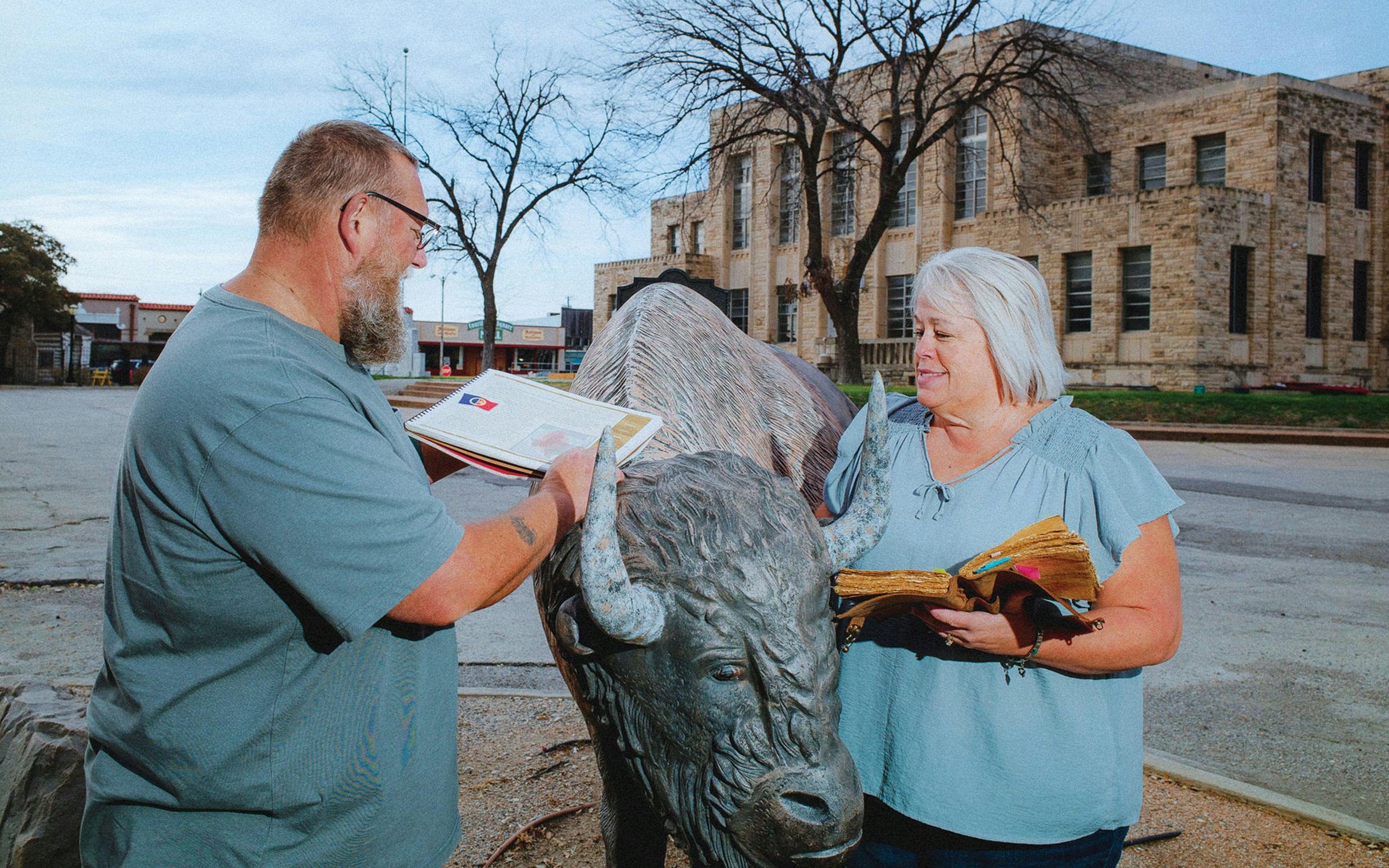 John and Aimee Jolly treasure hunting in Comanche on February 20, 2026.Photograph by Chad Wadsworth
In the Tractor Supply parking lot, Aimee took out a leather journal, bristling with colored tabs, where she keeps track of potential hiding spots. She has compiled a complete list of place names that appear in SeekTexas, cross-referenced by font (italicized or bolded) and number of appearances in the book. John, a taciturn man with close-cropped hair and a long beard, let his wife do most of the talking. He unfolded a Texas map that the couple uses to track their dozen or so road trips. The routes, marked in yellow highlighter, crisscrossed the state like a spiderweb.
The Jollys had been eyeing Comanche for some time. Aimee opened the book to a full-page spread about Comanche Nation. There was a list of Comanche words, a map of Comanche territory circa 1875, and a sepia photograph of Chief Parker. “The Comanches are in here a lot,” she said. “Comanche just kept coming back in my head, coming back. I thought, well, it’s in the book, and we’ve never really checked it out thoroughly.”
After carefully examining satellite photographs of the town on Google Maps, the Jollys had identified two locations where they believed the medallion could be hidden. Now it was time to put their theories to the test. I climbed into the back seat of their well-used pickup, and we rumbled out of the parking lot.
The hunt was on.
KC Wright, an energetic, fast-talking polymath who looks at least a decade younger than his 66 years, has always been fascinated by hidden treasure. One of his earliest memories is of his father reading to him from Treasure Island. As a precocious child growing up in Oklahoma City, he devoured Mark Twain’s The Adventures of Tom Sawyer, with its tale of Tom and Huck Finn finding a cache of stolen gold, and Edgar Allan Poe’s “The Gold-Bug,” in which a fortune hunter must decode a cipher that reveals the location of buried loot. “I always wanted to be on a boat, going to an island with a treasure map,” KC told me.
KC learned the rudiments of cryptography from working on crossword puzzles and the Jumble with his mother, a speech therapist. “She taught me how to do that at a super young age,” he recalled. Liz bought Masquerade, a 1979 book by English artist Kit Williams that contained visual clues to the location of a buried golden hare. Mother and son spent years trying to solve the puzzle until someone found the treasure in the United Kingdom, in 1982. On a recent video call, they showed me their copy of the book, filled with handwritten notes.
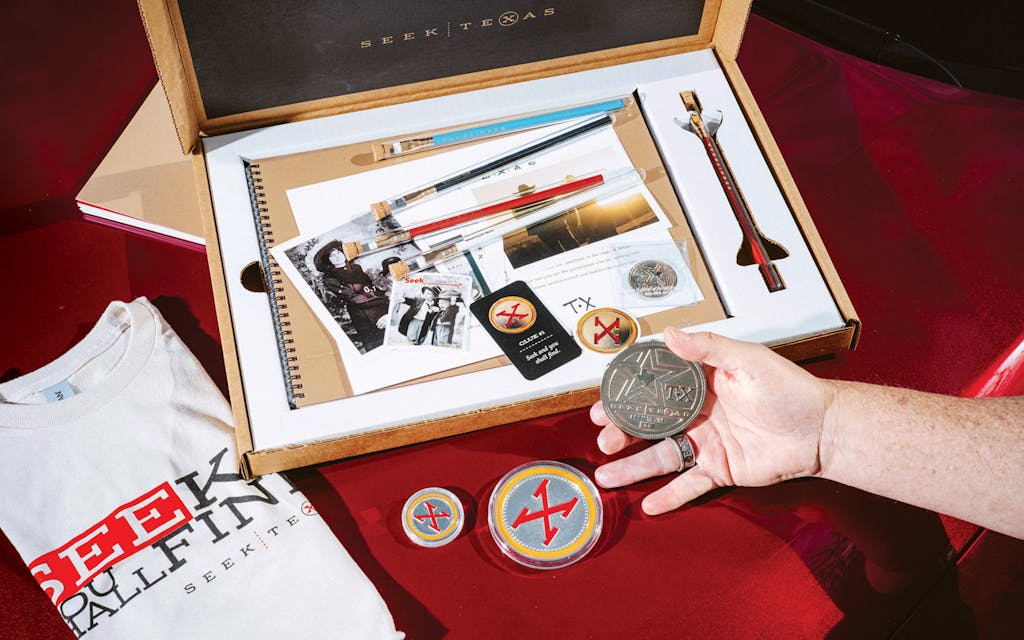 The SeekTexas book and replica medallion.Photograph by Chad Wadsworth
After graduating from Oklahoma City University and becoming a certified public accountant, KC moved to Texas to take a job at the firm Arthur Young & Co. He embraced the state with the zeal of a convert, immersing himself in historical research and amassing an impressive library. He was particularly fascinated by Quanah Parker and the Comanches. A few years ago, he and his wife decided to visit all 254 of the state’s historic county courthouses. Most of the photographs in SeekTexas were taken during those trips.
“We would pull off the road at every historical marker we could find,” KC recalled. “In Archer City there’s a plaque that tells you Jesse James’s sister lived down the road, and that’s where he would hide out. Or, you know, there’s a marker saying there was a gunfight on the spot where you’re standing. There are all of these stories.”
In 2019, KC’s father, a retired petroleum geologist still living in Oklahoma, died at 89. Shortly afterward, Liz moved to Fort Worth to be near her son. Even in her nineties, she remained a dedicated puzzle solver. After navigating a six-week gauntlet of word game challenges and Zoom interviews, she and KC were selected to compete as a team during Wheel of Fortune’s recurring “Home for the Holidays” week.
In September 2023 the Wrights flew to Los Angeles to film their episode. KC had spent weeks honing his puzzle-solving skills, while his mother took a more relaxed approach. “She was like, ‘Eh, whatever,’ ” he told me. But when the game began, it was Liz who solved most of the puzzles. She correctly guessed the bonus-round answer, “Drizzled Honey,” with just seven letters revealed. Host Pat Sajak was visibly impressed. The Wrights won $65,000 and a Caribbean vacation. Liz later appeared on Good Morning America with Vanna White. “I will never forget this episode,” White told Liz. “And I’ll never forget you.”
Over a bottle of Riesling in Antigua, KC and Liz decided to use most of their winnings to fulfill a dream: launching their own treasure hunt. “We were comfortable,” KC explained. “We considered it free money, so we started thinking, well, let’s just give it back.” They took inspiration from Masquerade, as well as from the notorious Forrest Fenn treasure hunt.
In 2010, Fenn, a wealthy, Texas-born New Mexico art dealer, published a cryptic poem containing clues that he said would lead readers to a treasure chest he had buried somewhere in the mountains north of Santa Fe. Inside the chest was around $1 million in gold nuggets, rare coins, jewelry, and other valuables. The hunt became an international phenomenon, drawing thousands of treasure seekers into the wilderness. The booty was finally claimed in 2020 by a Michigan medical student. Netflix released a documentary series about the hunt last year.
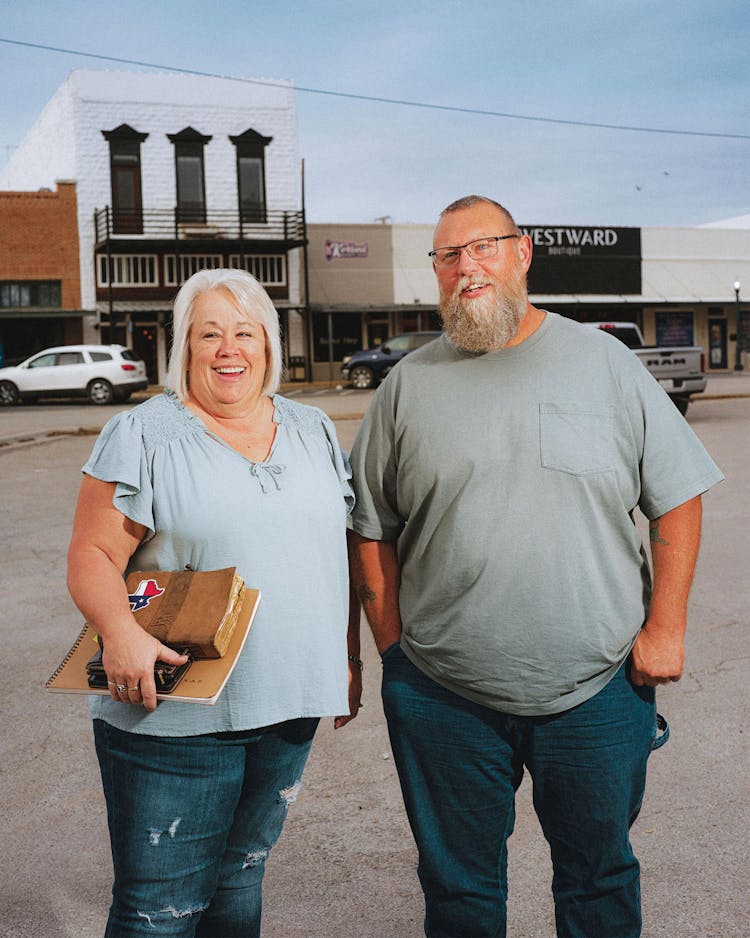 The Jollys in downtown Comanche. Photograph by Chad Wadsworth
 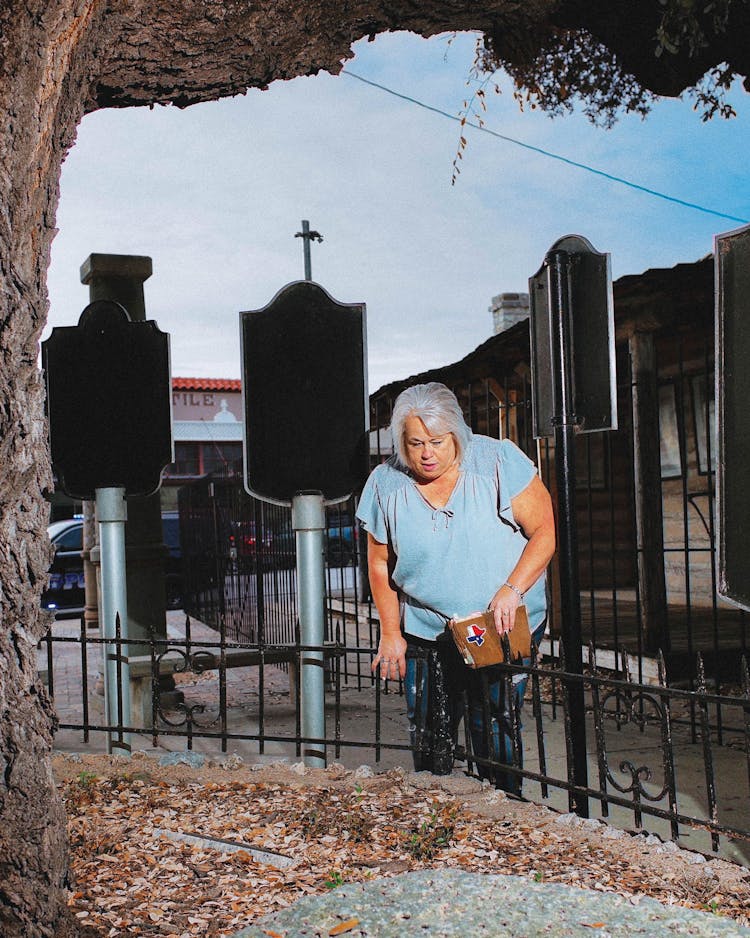 Aimee Jolly searching near historical markers. Photograph by Chad Wadsworth
KC and Liz admired Fenn, but they also saw his hunt as a cautionary tale. At least five people died in the pursuit, several after getting lost in the mountains. Others broke federal laws by digging in national parks. For many the search became an obsession, consuming years of their lives, ruining relationships, and emptying bank accounts. Fenn was stalked by deranged treasure hunters and pressured by law enforcement to end the hunt to avoid further loss of life. (He declined.) “It was just a stampede,” KC said. “You could dig anywhere; you could do anything. I felt like it didn’t have love or protection for things that are sacred. It was every person for themselves.”
To prevent someone from accidentally stumbling upon the gold, KC decided to hide a cheap medallion. On its reverse side is one final puzzle—solvable only by someone with the SeekTexas book—that entitles the finder to the actual treasure.
KC already had a hiding spot in mind, an out-of-the-way place that holds personal significance. He devised the puzzles, and Liz modified some. “I’ve tried to keep it simple enough for anyone to participate, yet interesting enough for a lot of people to want to participate,” she told me. A graphic designer friend of KC’s helped him create the book, and the Wrights hired a custom publisher to print four thousand copies. They began advertising the hunt on Facebook early last year. It quickly attracted attention from treasure seekers across the country, including many veterans of the Fenn search.
Hoping to avoid Fenn’s mistakes, the Wrights set strict parameters for the SeekTexas hunt. A note on the inside cover informs readers that the
treasure is “hidden and not buried” and asks seekers to respect state parks and historical sites: “Do not harm, dig, deface, or disgrace the legacy of any of these hallowed grounds.”
The hockey-puck-size medallion is ensconced inside an eight-by-five-inch weatherproof box, which is coated in protective black wax and stamped with an X. Whoever finds the medallion and solves the final puzzle will gain access to the gold coins, which are being held in a safe-deposit box at First Capital Bank in the town of Quanah, and a savings account with the cash portion of the prize.
The true purpose of the treasure hunt, KC says, is to foster an appreciation of Texas by encouraging participants to explore its forgotten corners. “Our tagline is ‘Texans Bringing Texas to the World,’ ” he told me. “We’re trying to get people off the interstates and into these small towns. That’s where our heritage lies.”
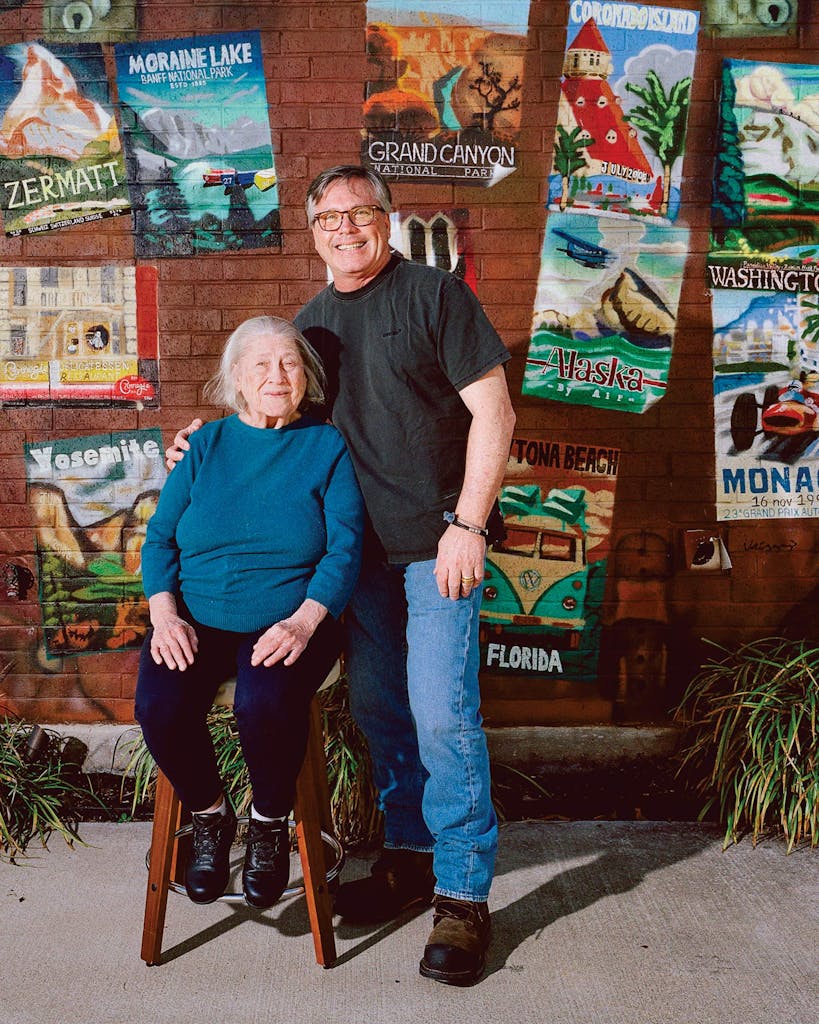 Liz and K C Wright in Fort Worth on February 19, 2026.Photograph by Chad Wadsworth
To promote the book, KC has hosted public roundtables in Fort Worth, Seguin, and Nacogdoches, drawing several dozen treasure seekers. After a short presentation about how he designed the hunt, he takes questions from the audience—although he doesn’t always provide answers. At the Fredonia Brewery, in Nacogdoches, in November, KC declined to disclose the population of the county where the medallion is hidden, or whether the town has a one- or two-word name.
Some of the questions seemed like desperate shots in the dark. “What was the weather like when you hid the medallion?” (“Overcast.”) “If you were hanging out by the medallion at night, how would the stargazing be?” (“I’m sure I could see the Big Dipper.”) “Is it hidden outside the Menger Hotel?” (“Go find out!”)
During these sessions, KC has revealed that the medallion is hidden within a town or city’s limits, that it’s near a historical marker, and that the city and county are named somewhere in the book. Liz, who uses a walker to get around, can access it.
The roundtables are now on par with the book itself in the growing body of SeekTexas lore. Fans spend hours watching and rewatching videos of the events, which are available on SeekTexas 2025: Treasure Hunters Field Guide, an unofficial Facebook page where searchers discuss clues and post photos from their reconnaissance trips.
KC seems increasingly impatient to speed things along. In February he began sending a weekly email to registered book owners that reveals some additional information about the hiding spot. He may up that to twice a week if nobody finds the medallion in the final months before the 2028 deadline. He worries that without a steady stream of new clues, some searchers will get discouraged and drop out.
When it comes to the Wrights’ goal of encouraging exploration of the state, the hunt has already succeeded. Michael Walton lives in Mustang, Oklahoma, and works for thirty days at a stretch near Kermit, in the West Texas oil patch. When he isn’t monitoring a drilling rig, he’s poring over SeekTexas. “I have gone through the book a hundred times,” he told me. “I’ve spent more than twelve hours a day at work reading the book and researching.” He estimated that he’s put more than 25,000 miles on his 2007 GMC Sierra pursuing various clues. “To me, it’s not so much the excitement of, ‘Hey, I’m hoping to find this coin.’ It’s more the sense of adventure that’s taken me to new places, small towns.”
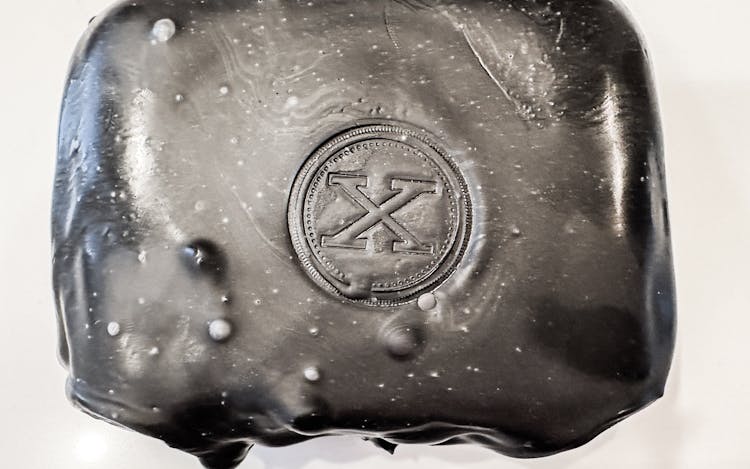 The box containing the medallion is coated in protective black wax and stamped with an X. Courtesy of KC Wright
 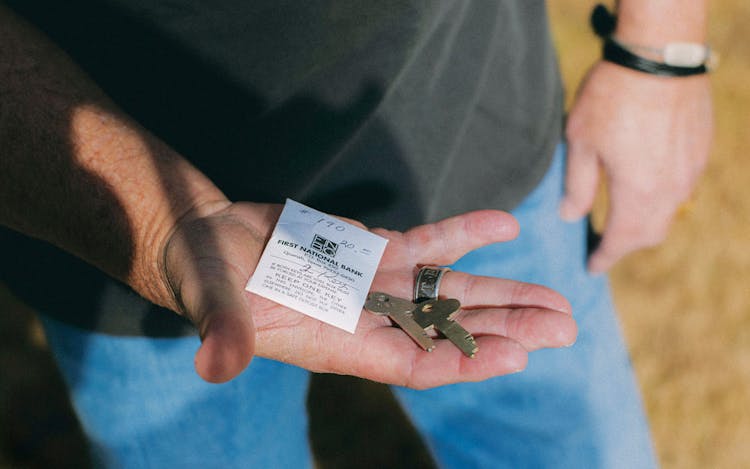 Keys to the safe-deposit box containing the treasure. Photograph by Chad Wadsworth
Walton had spent a day in Albany, a town of about two thousand residents northeast of Abilene that hosts an annual outdoor musical, Fort Griffin Fandangle, about the area’s first settlers. SeekTexas devotes two pages to the tradition. “I met with a few of the older ladies, and they walked me around, gave me a brief history,” he said. Walton didn’t find any treasure, but he did discover the Old Jail Art Center, a nineteenth-century prison that’s been converted into an exhibition gallery.
For many, the hunt has turned into something like a second job. Rachel Parker, the county treasurer of Hill County, north of Waco, told me that she’s visited more than sixty towns and cities looking for the medallion, often with her boyfriend and teenage son in tow. “I was pretty much a history buff to begin with, but there are some new things I’ve learned about,” she said. “You know, these little battles that you don’t really home in on in high school or college.”
Both Walton and Parker participated in the Fenn treasure hunt. Parker made a trip to the Rockies in search of the buried riches. “It was exhilarating,” she recalled. “Every corner you turn, you’re like, ‘Is that it?’ It kind of gets your mind off work and things going on in your life. The treasure hunt takes that stress away.”
Seeking hidden riches may count as a leisure activity, but it’s also serious business for people like the Jollys. In Comanche their first stop was the county courthouse, which stands at the center of an old-fashioned town square lined with local restaurants and boutiques. A drab art moderne edifice built in 1939 by the Works Progress Administration, the building isn’t much to look at compared with some of the state’s grand nineteenth-century piles. As we pulled into the parking lot, we saw that the building was partly encased in scaffolding. The Jollys decided that that ruled out the location. KC had divulged at his roundtables that the medallion wasn’t likely to be accidentally disturbed during the three-year time span of the hunt.
At one of his Q&A sessions, KC revealed that he and his mother could smell hot dogs at the hiding spot. When the Jollys arrived at the courthouse, they began looking around. Restaurants? Check.
We climbed out of the pickup to explore the area on foot. Aimee and John made a beeline to a majestic live oak on the southwest corner of the square. Before coming to town, they had read up on the so-called Fleming Oak. According to a historical marker, a young man named Martin V. Fleming was camping nearby in 1854 when “hostile Indians rode through.” Fleming saved himself by hiding behind the tree.
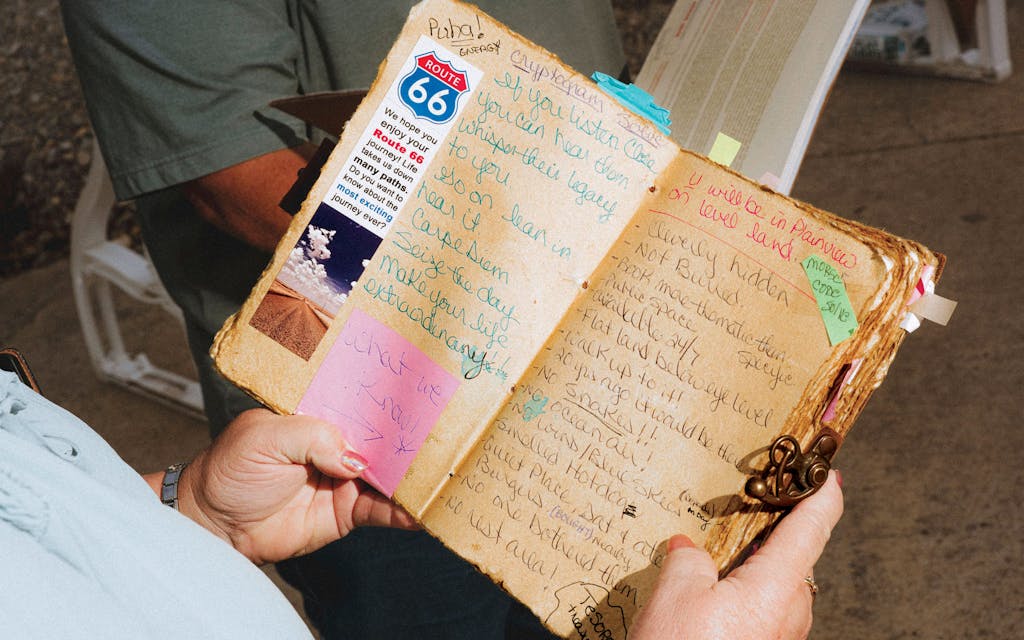 The Jollys reviewing clues to the medallion’s location in their leather-bound journal.Photograph by Chad Wadsworth
Today the Fleming Oak is ringed by a low wrought iron fence. A second historical marker details a nighttime Indian raid in 1861—“one of the boldest depredations in Texas history”—during which Indians stole nearly all of the town’s horses. At dawn, a posse of men and boys under the command of Captain James Cunningham traveled 36 miles southwest to Brown’s Creek, where they killed nineteen of the raiders.
Aimee and John walked slowly around the tree, looking for the wax-covered box. “I feel like it will be in a spot like this,” Aimee said. “Maybe near a tree, or in a park. Something in nature.” The couple was about to give up when they noticed a pair of bronzed statues on another corner. A life-size
Comanche warrior, wearing a feather headdress and brandishing a spear, stood a few feet from a pensive-looking buffalo.
A closer examination of the area around the sculptures also proved fruitless. “There’s not a lot of hiding locations around here,” Aimee said with disappointment. “It would be too easy to find.”
Our next stop was Comanche City Park, a forty-plus-acre recreational complex featuring picnic areas, baseball diamonds, and a public swimming pool. While scouting the city on Google Maps, Aimee and John had spotted a Texas-shaped flower bed, outlined in white limestone, on the bank of a creek running through the park. Now seeing the flower bed up close, they realized that someone would have to cross the creek to hide something there—impossible for a nonagenarian using a walker.
We kept driving around the park, but the Jollys seemed resigned to another failed search. On the way back to the Tractor Supply, the couple reflected on their quest. They had spent months combing through the book, rewatching KC’s town halls, taking trip after trip, and kept coming up short. Yet they didn’t seem discouraged. “I’ll sit down later and take notes,” Aimee said. “Maybe think of new places to look.”
Within a month they were back on the road, heading to Independence, a small community north of Brenham. They wanted to check out the cemetery where one of Sam Houston’s sons was buried and a grocery store that looked a bit like the Alamo. “There were a lot of really interesting things,” Aimee told me afterward. “But it didn’t really pan out.”
At a certain point during the Forrest Fenn hunt, searchers had begun to question whether his treasure was real. Had Fenn just made the whole thing up as a publicity stunt? KC seems intent on assuring people that the medallion is out there. He set the 2028 deadline in hopes that his mother would still be alive when the treasure is found. “She wants to meet the winner,” he said.
I asked the Wrights if they’d be willing to give an exclusive clue to Texas Monthly readers. KC pondered the request for a moment, then offered to share a photograph of the hiding place. Shortly after hanging up, he texted the shot to me (see below). It showed a fallen oak leaf on a patch of barren ground, nestled against a small limestone crevice.
The medallion is still there. Yours for the taking.
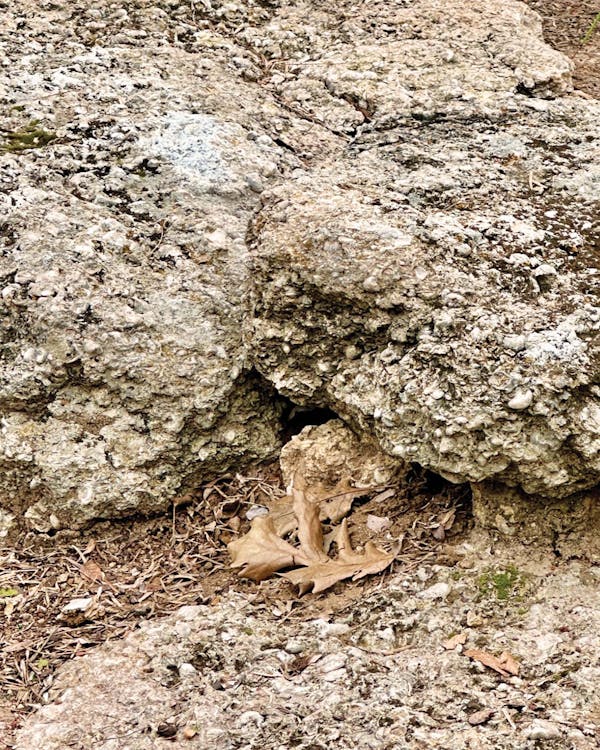 Courtesy of KC Wright Look Here
This article originally appeared in the April 2026 issue of Texas Monthly with the headline “Seek & Y’all May Find.” Subscribe today.
When you buy a book using a link on this page, a portion of your purchase goes to independent bookstores and Texas Monthly receives a commission. Thank you for supporting our journalism.
Read Next