
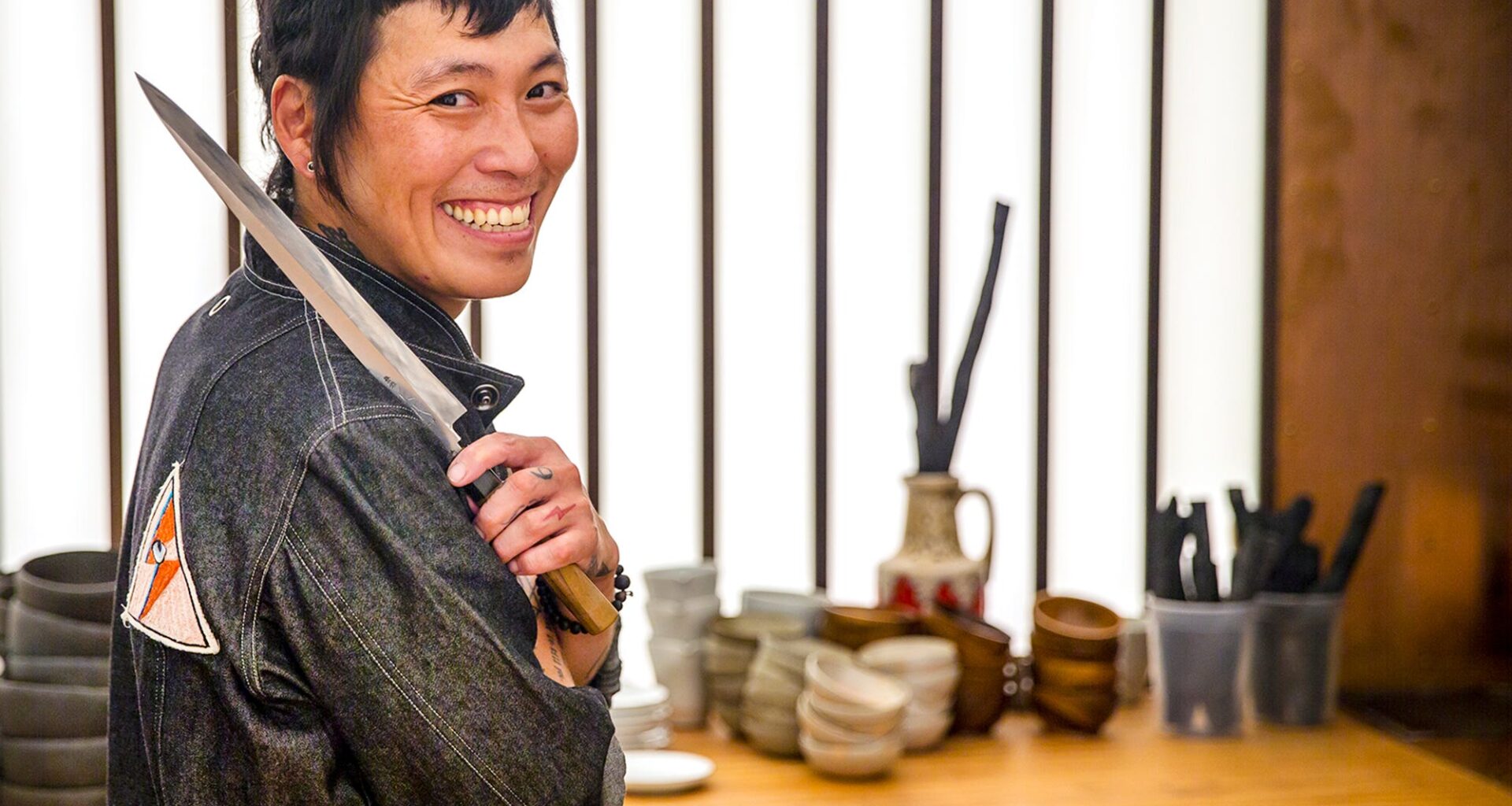
The 12-seat counter at Otoko offers an intimate dining experience.Otoko on Tuesday, June 12, 2016.
Ricardo Brazziell, Austin 360
The South Congress Hotel is preparing to go dark for more than a year, taking with it two high-profile restaurants that helped define the property’s identity.

The 83-room hotel, acquired by Hyatt Hotels Corporation in December, will shut down for renovations and rebranding, with operations expected to cease by the end of May. According to a notice filed with the Texas Workforce Commission, roughly 126 employees, from housekeepers to servers, will be laid off as part of the closure. The hotel is slated to reopen in early 2027 as a Standard, as first reported by Texas Monthly.
Article continues below this ad
Existing restaurants and retailers housed within South Congress Hotel, with the exception of the hotel’s coffee shop Mañana, are expected to close as Hyatt prepares to rebrand, marking a significant contraction in Austin’s dining landscape.
For years, the hotel served as a culinary anchor on South Congress, home to restaurants like Otoko, Maie Day and Café No Sé. Maie Day opened in 2022 under Michael Fojtasek, who was named a Best New Chef by Food & Wine in 2015 for his work at Olamaie, while Yoshi Okai earned the same honor in 2017 for Otoko.
South Congress Hotel to replace restaurants with new concepts
A sauce made with soy sauce, mirin and sake puts a salty and tangy finish on an exceptional piece of kanpachi at Otoko.
Austin American-Statesman
In their place, a new food and beverage lineup is planned. Leadership has signaled a shift toward concepts that blend global culinary influences with Texas-sourced ingredients, anchored by a Texas-based chef expected to draw significant attention. Specific details, including restaurant names and timelines, have not been released.
Article continues below this ad
The closure follows Hyatt’s acquisition of the hotel from New Waterloo, the Austin-based group behind restaurants like Sway and La Condesa.
Maie Day brings a casual approach to the steakhouse genre.
MATTHEW ODAM/AMERICAN-STATESMAN
The redevelopment is being led by Amar Lalvani, who oversees Hyatt’s lifestyle portfolio, including brands like The Standard and Bunkhouse Group, both folded into Hyatt’s orbit in recent years, according to Texas Monthly. He is joined by James Moody — founder of the creative agency Guerilla Suit and owner of the Mohawk, a popular concert venue in the Red River Cultural District — and architect Michael Hsu, who will revisit his original design. Development is tied to Timberline, which also has stakes in nearby hospitality properties like Austin Motel and Hotel San José.
Article continues below this ad
Otoko’s closure underscores South Congress’ transition
Chef Yoshi Okai worked at Uchi for more than a decade before leading the kitchen at Otoko.
AMERICAN-STATESMAN FILE
Yoshi Okai, who built Otoko into one of the city’s most intimate dining experiences, described the restaurant as a deeply personal project over the past decade. He said the space became a destination not just for locals but for visiting diners and touring musicians, anchored by a sense of celebration and community that he fears will be difficult, if not impossible, to replicate.
“So sad about everything. For my staff and my guests. Running Otoko was like my home, and I invited all my guests to my living room,” Okai told the American-Statesman via text. “A lot of happiness, laughing. Also, (it was a) vibe like visiting Japan and (an) escape from reality. It felt like a miracle.”
Article continues below this ad
The street has already seen an influx of national and international brands in recent years, raising questions about what remains of its once fiercely local character. Lalvani’s counterargument is pragmatic: without sustained investment, South Congress risks becoming a retail corridor devoid of the social energy that made it a destination in the first place.
In the meantime, that energy will take a hit. When the hotel closes this spring, one of the corridor’s most concentrated clusters of dining, drinking and gathering spaces will disappear all at once.