
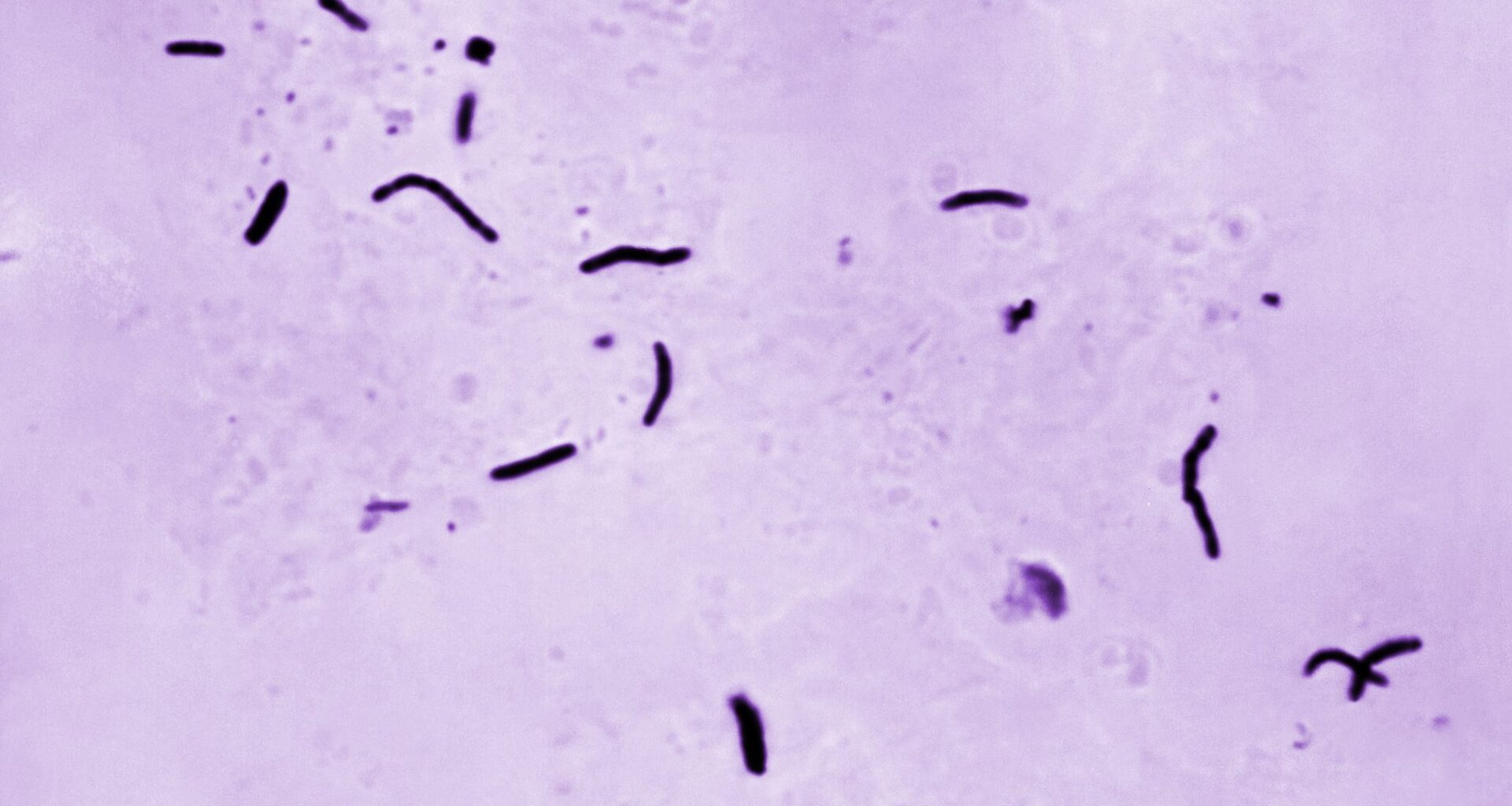
This 1966 microscope photo provided by the U.S. Centers for Disease Control and Prevention shows Mycobacterium tuberculosis bacilli, the organism responsible for causing the disease tuberculosis. (Elizabeth S. Mingioli/CDC via AP)
Elizabeth S. Mingioli/AP
Texas is among the states with the highest number of cases of tuberculosis in the United States — and Dallas County is among the areas to report infections.

But what exactly is tuberculosis, and how is it diagnosed and treated? Here’s what you need to know.
Article continues below this ad
An ancient infection
Tuberculosis is an ancient infectious disease that has circulated among humans for millennia. It is caused by rod-shaped bacteria called Mycobacterium tuberculosis that were discovered in 1882.
It was once a leading cause of death in the United States, with the death rate in the 1900s exceeding 200 per 100,000 people. Now, thanks to public health interventions and advances in modern medicine, the death rate is 0.2 per 100,000 people, according to the Centers for Disease Control and Prevention. Provisional 2025 data from the CDC suggests that tuberculosis cases in the U.S. are declining slightly after increases in recent years.
This 2006 electron microscope image provided by the Centers for Disease Control and Prevention shows Mycobacterium tuberculosis bacteria, which cause the disease tuberculosis. (Janice Carr/CDC via AP)
Janice Carr/AP
In 2024, an estimated 10.7 million people worldwide contracted tuberculosis, and in the U.S., over 10,000 cases were reported in 2025, according to the CDC’s provisional data.
Article continues below this ad
Latent versus active infection
Much like measles and COVID-19, tuberculosis spreads from person to person through respiratory droplets, said Dr. Michael Shiloh, an infectious disease specialist and tuberculosis researcher at UT Southwestern Medical Center.
Make Dallas News a preferred source so your search results prioritize writing by actual people, not AI.
Add Preferred Source
“When someone coughs, sneezes, talks, sings or even breathes, the bacteria aerosolize and can, in fact, dwell in the air for an extended period of time,” Shiloh said. He added that the best way to reduce the risk of spreading the disease is proper ventilation.
Article continues below this ad
Generally, tuberculosis spreads through prolonged, close contact with someone who has an active infection. While most people can clear the bacteria on their own, 90% of those infected with tuberculosis develop a latent infection. This is when the bacteria grow slowly over time, remaining in the body but not causing illness or symptoms, said Shiloh and Dr. Philip Huang, director of Dallas County Health and Human Services.
People with latent tuberculosis cannot spread the pathogen because it’s dormant, Huang said. Without treatment, about 5% of infected people develop active disease within the first two years after infection, with another 5% developing it later, according to the CDC.
People who develop active tuberculosis are often immunocompromised, either due to age or medical conditions such as human immunodeficiency virus, organ transplantation, malnutrition or diabetes. In Texas, about one in five people with tuberculosis has diabetes, said Dr. Annie Kizilbash, medical director of the Texas Center for Infectious Disease in San Antonio.
A relative adjusts the oxygen mask of a tuberculosis patient at a TB hospital on World Tuberculosis Day in Hyderabad, India, March 24, 2018.
Mahesh Kumar A./AP
In 2022, more than 7,400 Texans were exposed to tuberculosis, and just over 1,000 were diagnosed with the disease, according to Texas Health and Human Services. This ranked the state as second highest in the nation for tuberculosis cases.
Article continues below this ad
In Dallas County, 155 active tuberculosis cases were reported in 2025, bringing the total to 703 cases since 2021. Texas reports more cases than most states in part because of its large population, including people born in countries where tuberculosis is more common.
How is tuberculosis diagnosed and treated?
Because people with latent tuberculosis do not have symptoms, the disease is often not detected until it becomes active. Symptoms can include a persistent cough lasting weeks, coughing up phlegm or blood, weakness and weight loss, said Shiloh, Huang and Kizilbash.
“When we have a TB case, then our public health staff interview and assess who might have been exposed to that active case,” Huang said. “That’s when we do skin tests or blood tests and try to get them on medication so they don’t develop active TB.”
Article continues below this ad
If someone has active tuberculosis, they are often put on a six-month or longer course of four medications, some of which are antibiotics, Kizilbash said. She added that the CDC is now offering a new four-month regimen, although it has not yet been rolled out in Texas.
Because staying consistent with the regimen can be challenging, patients often take their medications under supervision at a health care facility, tuberculosis clinic or other setting — an approach known as directly observed therapy.
“The medicine has effectively been a major public health intervention,” Shiloh said. He added that a key reason why treatment fails — and antibiotic-resistant tuberculosis crops up — is patients don’t complete their medications, often stopping when they start feeling better.
Tuberculosis vaccine.
Hailshadow/iStockphoto
Another public health intervention has been the Bacille Calmette-Guérin, or BCG, vaccine. It is not used in the U.S., where the risk of tuberculosis infection is low, but it is given to infants and small children in countries where the disease is more common. The vaccine is not fully effective — it reduces the chance of tuberculosis infection by about 20% — and offers limited protection against lung infections associated with the disease in adults. Scientists are investigating more efficacious tuberculosis vaccines.
Article continues below this ad

By signing up, you agree to our Terms Of Use and acknowledge that your information will be used as described in our Privacy Policy.
Research into how tuberculosis evades the immune system for years may help identify and treat latent infections before they become active. For now, Huang said, the focus remains on public health measures and treatment to keep tuberculosis in check.
Controlling tuberculosis will require a comprehensive approach, including early diagnosis and making sure clinicians remain alert to the disease, Huang said. “I remember in medical school, tuberculosis was called The Great Imitator,” he said, because its symptoms are similar to those of other diseases. “We tested everyone coming in and made sure when they’re diagnosed, they complete their full treatment. Because it is treatable and we have effective medications.”
Miriam Fauzia is a science reporting fellow at The Dallas Morning News. Her fellowship is supported by the University of Texas at Dallas. The News makes all editorial decisions.