
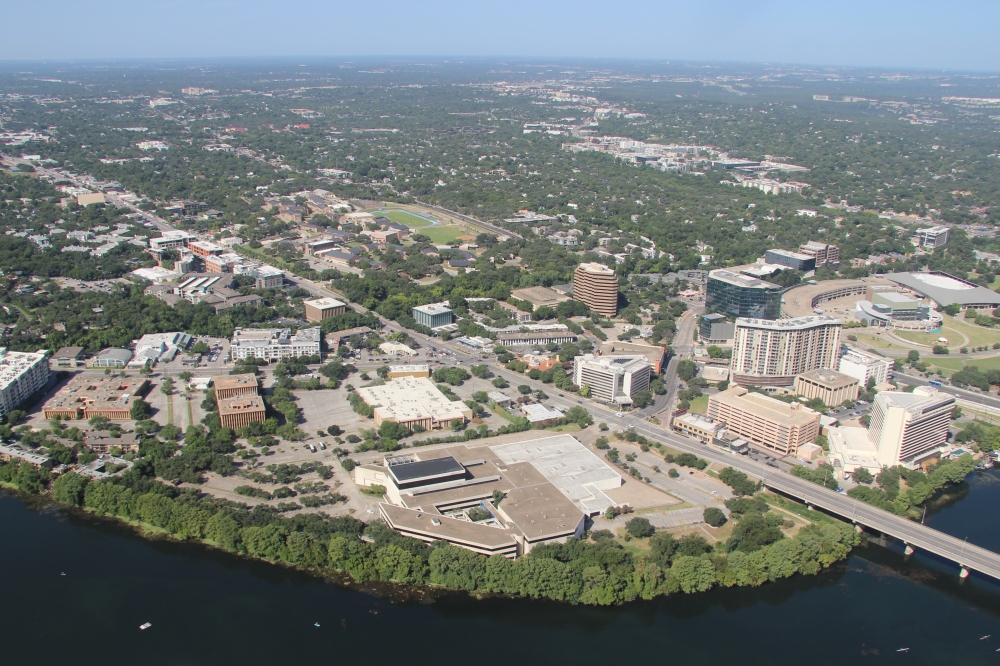
City Council voted to dissolve the South Central Waterfront Advisory Board, the body established almost a decade ago to help guide a wave of planned development south of downtown.
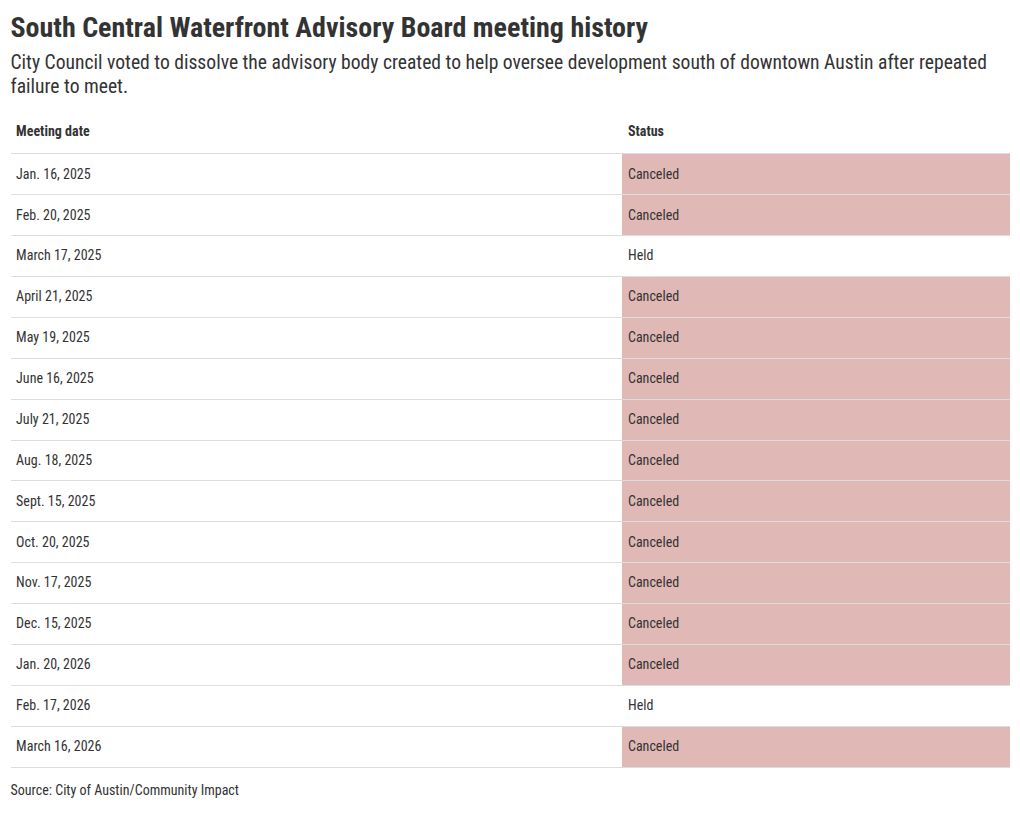
The board’s deactivation came after it had struggled to meet on a regular basis since early 2025, and as a series of civic planning updates made its duties less critical.
“Certain things have happened over the past couple of years that created real difficulty in what was intended when this board was created. So this is not a reflection on the board or any of the people that have served on the board; it is the circumstances,” Mayor Kirk Watson said in early March.
What happened
Officials unanimously moved to dissolve the advisory board March 26. It may continue to exist for about a month until it’s formally disbanded.
“>
Austin requires its resident-led boards and commissions to meet regularly or face the potential of being shut down. The South Central Waterfront board had experienced frequent turnover and meeting cancellations, only convening once in the year leading up to council’s vote this spring.
The board’s last meeting took place in February, when members held officer elections for the upcoming year. Its scheduled March meeting was canceled.
The context
The board’s work is ending as Austin wraps the nearly 120-acre South Central Waterfront into a wider initiative for the future of the central city area stretching from south of Lady Bird Lake to The University of Texas at Austin campus.
 A new decade-long plan for Central Austin evolved this year to include the traditional downtown area, as well as the South Central Waterfront and West Campus. (Courtesy city of Austin)Austin leaders and residents have long expected the South Central Waterfront to see a wave of new development, and many landmark projects there are now moving forward. Back in the 2010s, community input helped shape a detailed vision plan for the area with goals for public benefits like new parkland and affordable housing to be added throughout the district’s anticipated transformation.
However, formal regulations in support of the public vision were never adopted, while a city strategy to finance public improvements in the area was struck down in court. Without broader plans for a cohesive district build-out, board Chair David Sullivan noted major projects like the “Statesman PUD” at 315 South Congress Ave. and other luxury high-rises are now instead proceeding on a case-by-case basis.
“Along the way, what’s been happening is individual projects have come through as planned unit developments. There’s still issues, though, about connecting them so that it’s one big project instead of a number of small projects where they put up walls between them,” he said in February. “That’s partly why we were set up, was to create a single entity that’s the South Central Waterfront, and that’s what we’ll be dealing with in our meetings.”
Elements of previous efforts meant to guide development across the South Central Waterfront are now including in the ongoing Central City District Plan. Past work is being considered as that new outline moves ahead, according to Financial Services Director Kim Olivares, who also said the board’s responsibilities have become more limited.
“There are few implementation tools that are actually meaningful specifically to this advisory board because the regulatory framework has been postponed and the [tax increment reinvestment zone] was struck down. Also, Planning Commission oversees [planned unit development] review for projects that are continuing to move through the process for this area of town,” she told council in March.
What else?
While the dedicated district advisory board will cease to exist, Olivares noted the Downtown Commission’s oversight may expand to include the South Central Waterfront. That commission’s members voted last year in favor of a proposal to broaden their purview outside the historic downtown boundaries to better align with the new Central City District.