
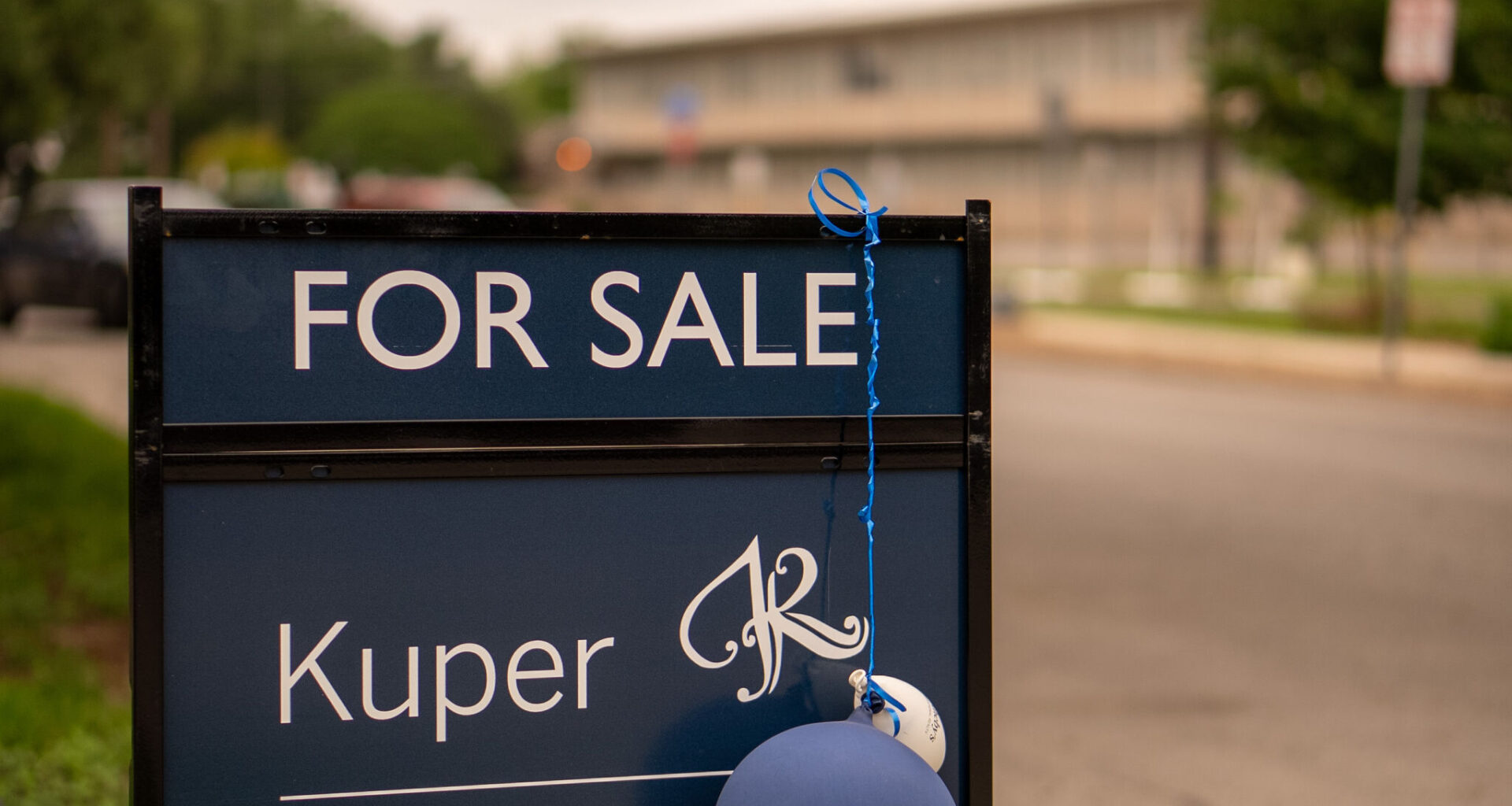
In February, San Antonio had the second-highest rate of home listings that had been on the market for at least 60 days in the U.S., according to Redfin.
Monte Bach/San Antonio Express-News
San Antonio had one of the highest shares of stale home listings in the U.S., according to a recent report from Redfin.

Around 58.3% of the homes on the market in February had been listed for 60 days or more, earning San Antonio the No. 2 spot on Redfin’s list of major metros. The total value of stale inventory was around $3.4 million.
Article continues below this ad
The San Antonio Board of Realtors reported that homes in the San Antonio area spent an average of 102 days on the market in February, a 20% increase from the same time last year.
MORE HOUSING NEWS: San Antonio housing market showing signs of sellers pulling out as new listings plummet
Miami, where 62.6% of the market was comprised of stale listings, took the top spot. Elsewhere in Texas, Austin’s market was comprised of 53.4% of stale listings, Dallas had 49.3% and Houston was closest to San Antonio with 54.5%.
San Antonio Express News Logo
Make us a Preferred Source on Google to see more of us when you search.
Add Preferred Source
Nationally, more than half (52.2%) of the February listings had been lingering on the market for at least two months without a contract. This is the highest share since 2019 and a 2.1% increase from a year earlier.
Article continues below this ad
Homes are sitting on the market longer because there are twice as many sellers as buyers, and with the increase in competition, buyers have ample time to mull over their options. In February, Redfin reported that San Antonio was the fifth-strongest buyers market in the nation, with 104% more sellers than buyers. Austin ranked third with 112% more sellers.
Buyers also are waiting on the sidelines in light of rising mortgage rates and listing prices, as well as overall economic uncertainty due to job insecurity, inflation and the Iran war. The average rate on a 30-year mortgage rose for the fifth straight week, hitting 6.46%, the highest level in nearly seven months, mortgage buyer Freddie Mac said Thursday.
New builds
This seller slump is not new for certain sectors of the market, such as the luxury category, since it typically takes longer for million-dollar homes to go under contract.
Article continues below this ad
New builds, on the other hand, are bearing the brunt of the slowdown.
“When it comes down to neighborhoods that have newer builds in that general area, those houses are going to sit far longer because there’s really no equity in those homes for sellers,” said local Redfin agent Jesse Landin.
RELATED: Rebuilding expectations: Builders bear the brunt of the 2025 slowdown
Closed sales — for new and existing homes combined — were down 3.6% year-over-year in 2025. Sales were particularly down in the new-construction category, a surprising data point given the robust demand for new builds in 2024.
Article continues below this ad
In February, existing homes continued to account for the majority of sales activity, while builders were forced to adapt with price adjustments and incentives for buyers.
“There’s too much competition among builders,” Landin said. “In San Antonio, we have way too many developments going on. Builders are driving up price points, rather than that house that’s been there for five years.”
In response to the lull in demand, homebuilders are trying to woo buyers with cost-cutting incentives, such as amenity upgrades, reduced rates, contributions to closing costs and appliances as part of the package.
What does this mean for buyers and sellers?
Sellers of preexisting homes also are starting to get creative if they’re looking for a quick sale. Landin said he’s spoken to several sellers who are considering short-sale opportunities or the possibility of foreclosures.
Article continues below this ad
“I have a client right now who bought their home two years ago for $430,000 in a newer build section in the Northwest community, and they’re about to list it at $400,000,” he said. “You can’t go higher. If a seller has the money to lose and they have to relocate, like a military family, they can do it, but a lot of people can’t afford to.”
The first step sellers need to take to get a signature on that dotted line is to price accordingly, and they have to be prepared for worst-case scenarios in this buyers market, whether that’s breaking even or investing more in home upgrades to create a move-in-ready property.
READ MORE: What will San Antonio’s housing market look like in 2026? Local real estate agents offer a preview.
Buyers, now more than ever, will move on quickly if the home is not up to their standards, including needed repairs, because they know there’s plenty of other inventory to sift through. In February, 17.8% of home-purchase agreements were canceled, the second-highest rate in the country behind Tampa, Fla., according to a Redfin report.
Article continues below this ad
Even though buyers have the upper hand, Landin doesn’t suggest waiting too long to make a final decision.
“I’ve had a buyer who missed out on two homes because they were overthinking, but by the time they decided to jump in, somebody else had it,” he said. “That’s all it takes these days, is one party to make an offer before it’s gone. If a home is an 8 out of 10, then jump on it because you may not get another.”
The real estate market has been struggling to bounce back after the pandemic-induced fire sale, and while local industry experts were hopeful that 2026 would return to a semblance of normal, external factors have put a wrench in that optimism.
Article continues below this ad
Landin said he predicts it could be at least another year before things start to improve for both sellers and buyers.
“Obviously, with this new global economic challenge that we have, I don’t know if we will see any adjustment in the next year or two,” he said. “When rates started to trickle under 6%, we started seeing more activity and thought it would get better this year. When the war happened, and rates jumped up almost a third of a point, it changed everything again. Now we’re in the wait-and-see mode.”