
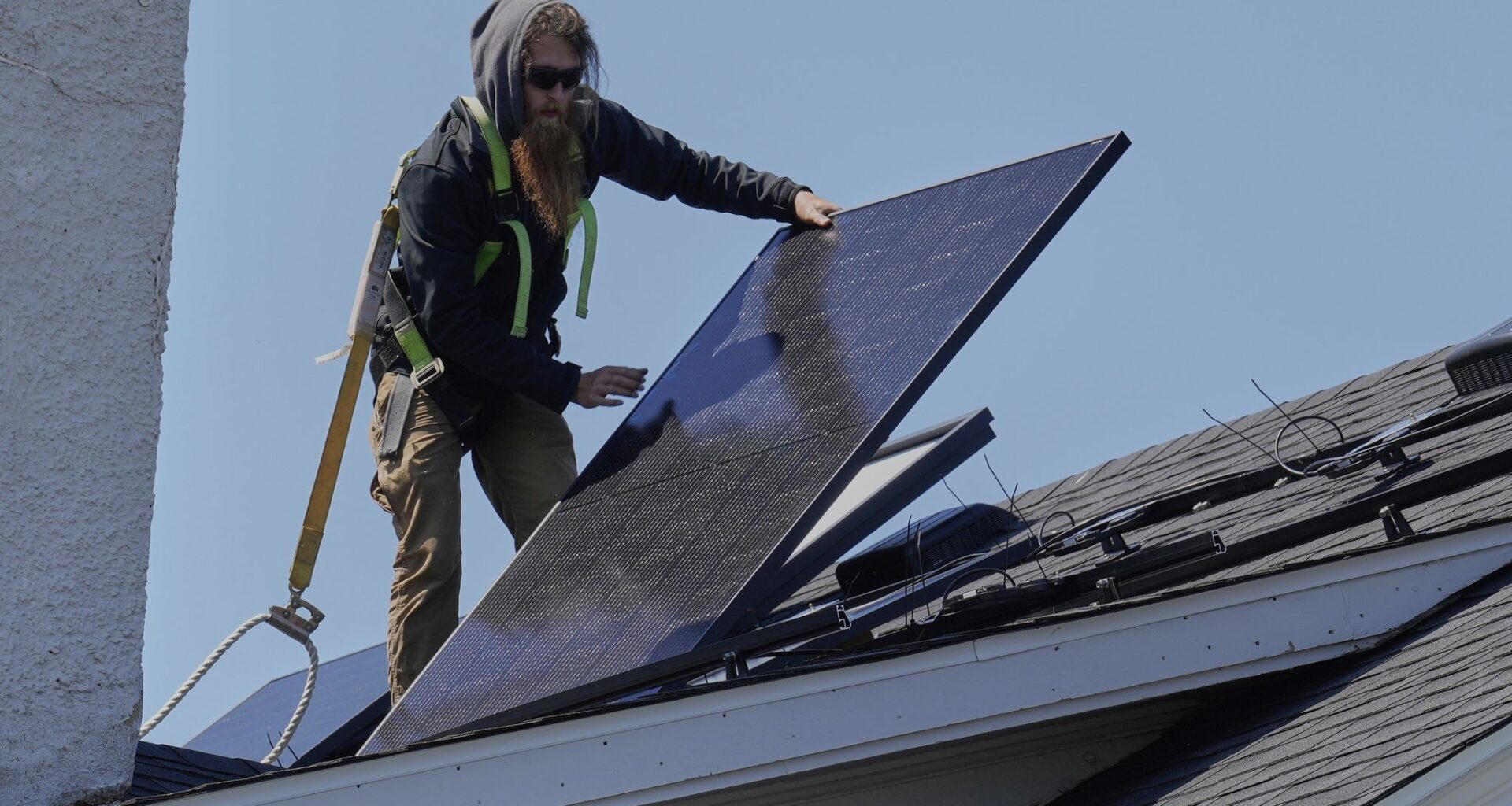
Theodore Tanczuk, of solar installer YellowLite, puts a panel on a roof of a home in Lakewood, Ohio, Wednesday, April 16, 2025. (AP Photo/Sue Ogrocki)
Sue Ogrocki/AP
In my previous Watchdog column, I documented how unscrupulous solar sales operators exploited some of Texas’s most vulnerable residents.

Their victims included a blind woman, a double amputee, a terminally ill hospice patient, and an illiterate homeowner.
Article continues below this ad
The tactics were as troubling as the targets: forged signatures, deceptive contracts, and promises that were never intended to be kept.
How did a technology as promising as rooftop solar panels become associated, so quickly, with such abuse?
As William Shakespeare wrote in The Tempest, “Hell is empty and all the devils are here.”
Solar scams
In just a few years, complaints about the rooftop solar industry have lit up. There’s a lot of bad news for victims who answered their front door and met lying salespeople in search of commissions.
Article continues below this ad
Make Dallas News a preferred source so your search results prioritize writing by actual people, not AI.
Add Preferred Source
Texas government faced a fork in the road. Would it allow the scams to proliferate? Remember, Texas doesn’t like regulations. Or would it demand accountability?
Before I share the answer, which is surprising, I want to share some basic hard facts you should know about this industry. Thanks to the Texas Elder Justice Coalition and Ann Baddour of pro-consumer Texas Appleseed and Stephanie Mace of AARP for the refresher course.
Basic solar facts
There are the salespeople, the installers and the loan company, usually different companies. When something goes wrong, Baddour says, “Everybody is pointing figures at the other. It’s hard to find out in the end who is the responsible party for some of the problems we’ve been seeing.”
Article continues below this ad
The biggest lie in the business: “You will have no monthly electricity bill, and this system will pay for itself.”
If you know, by chance, someone who installed panels on their roof and has had no problems and the economics make sense, then good for them. Consider it a miracle.
The bad players have no conscience. I heard one story about a 90-year-old woman who signed a 25-year loan. I wonder how the salespeople sleep at night.
Although the complaint level is growing at a tremendous rate, not everyone who falls victim files a complaint.
Article continues below this ad
Sometimes, victim advocates notice a cluster of complaints in one neighborhood. Baddour explains: “They descend on neighborhoods, leaving a concentration of complaints.”
If you’re interested, the deadline to submit public comments to the Texas Department of Licensing and Regulation’s new sales rules is a few days away on April 12. You can tell your story to the rules’ writers. And there’s your hint.
New state law
I promised word of which road Texas takes to combat solar fraud. It’s a rarity when I get to share this, but a new state law (Senate Bill 1036) authored by state Sen. Judith Zaffirini (D-Laredo) is one of the strictest regulatory laws to come out of the Texas Legislature in recent years.
Article continues below this ad
Under the new Residential Solar Retailer Regulatory Act, all those connected to the industry must register with the licensing agency, starting on Sept. 1. Criminal background checks and annual training courses are required.
Contracts will be standardized with clear, plain language. Contracts must disclose costs, financing, and estimated energy savings.
Consumers have a right to cancel before five business days expire.
Penalties can hit $10,000 per violation, and offenses against seniors and vulnerable consumers can leap up to $100,000.
Finally, big penalties for spreading misinformation will now hang over the industry’s head. If a company goes bankrupt, it must pass along the lifetime warranty to another company.
Article continues below this ad

By signing up, you agree to our Terms Of Use and acknowledge that your information will be used as described in our Privacy Policy.
That’s some new law. And as an aside, shouldn’t home builders, renovators, and roofers in Texas be held to the same standard?
Now, real consequences are finally on the table. Companies that spread misinformation will face serious penalties. And if a business folds, it won’t get to walk away from its promises — lifetime warranties must be honored by another provider.
At the outset of this column, I invoked Shakespeare on hell. Here’s a more Texas way to put it: the solar industry didn’t just flirt with trouble — it signed a deal with the devil, and called it business.