
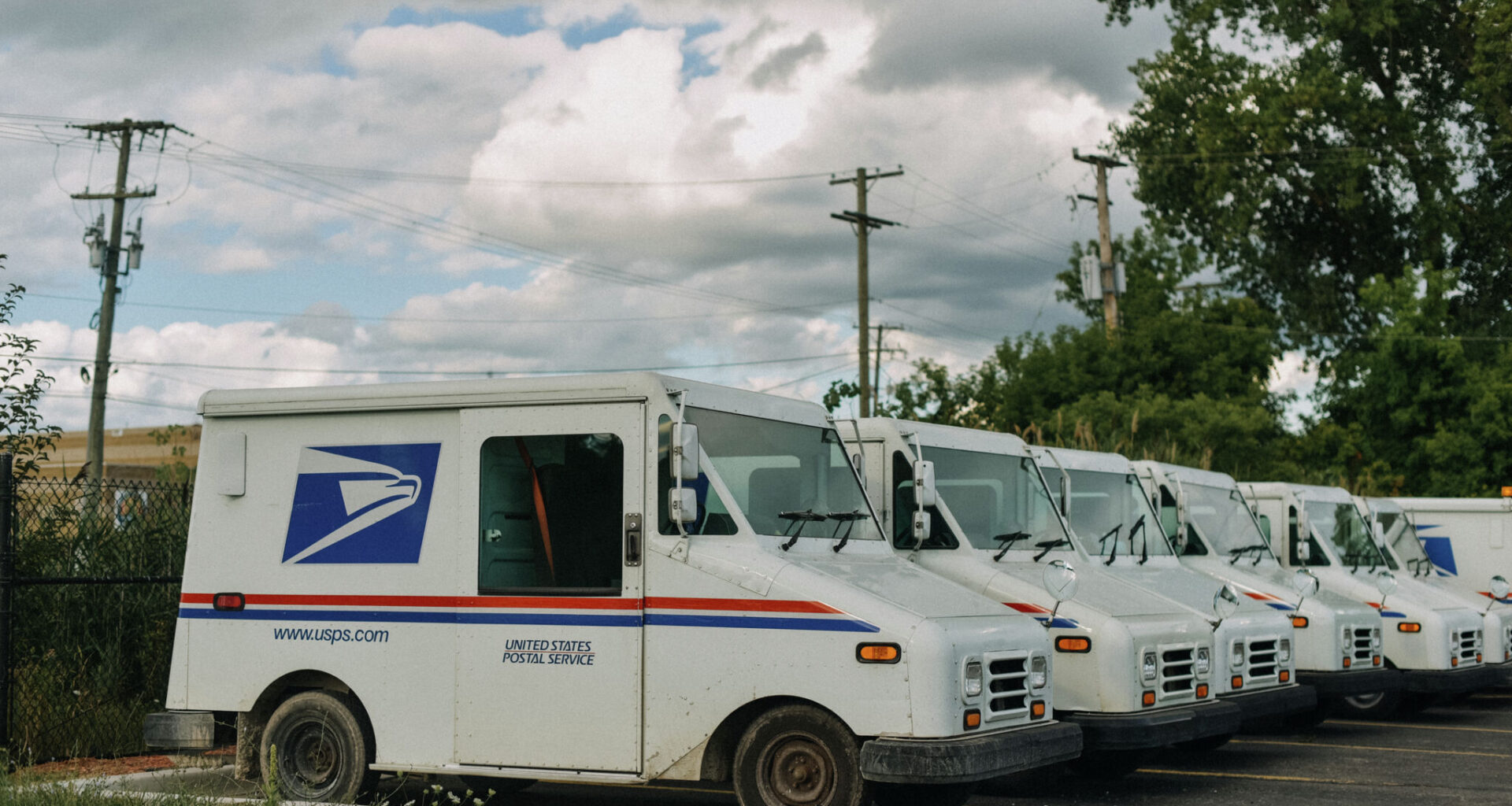
Like most Americans, Texans use the U.S. Postal Service (USPS) for sending letters, shipping small packages and managing essential mail. However, the agency could stop delivering mail in 2027 if it runs out of money, according to warnings from the Postmaster General David Steiner.
Steiner told lawmakers on March 17 that the USPS may not have enough cash to pay employees or vendors within the next year unless Congress takes action. He stated, “If we continue to pay our required obligations in the same manner as we have done in recent years, then we will be out of cash in less than 12 months. So, less than a year from now, the Postal Service will be unable to deliver the mail if we maintain the status quo.”
USPS is the only delivery service that reaches every address in the nation: nearly 167 million residences, businesses and Post Office Boxes, according to its website. The federal government agency generally receives no tax dollars for operating expenses and relies on the sale of postage, products and services to fund its operations.
Steiner told Congress the agency is facing serious financial problems, listing several reasons for the crisis. One major problem: Americans send far fewer letters than they used to.
Mail volume fell from 213 billion pieces per year at its peak in 2006 to 109 billion pieces today. The drop represents more than 100 million pieces of lost mail volume. The sharp declines since 2007 have severely impacted the agency’s finances and the sufficiency of its processing, logistics, and delivery networks, Steiner added. He said domestic mail revenue declined from $59.1 billion in 2007 to $42.6 billion in 2025, a decline of over $16.5 billion.
“For perspective, if all of that lost volume was paid at the current price of a stamp, which is 78cents, that’s about 81 billion dollars. No company could weather that much revenue loss,” Steiner wrote in his statement to the U.S. House Committee on Oversight and Government Reform. “For comparison, if UPS or FedEx lost that much revenue, they could not survive.”
USPS can also borrow only from the U.S. Treasury and is capped at $15 billion in borrowing authority, a limit that has not changed since the early 1990s despite inflation and increases in the Postal Service’s revenues and costs, according to Steiner.
During the hearing, Republican Rep. Tim Burchett of Tennessee asked Steiner for a more precise timeline, to which the Postmaster said USPS could run out of money as early as this October if it keeps paying retirement and other obligations at current levels, according to NPR.
Steiner asked Congress to increase the borrowing limit to give the Postal Service more time to stabilize its finances. He said, “By expanding our borrowing capability, the Postal Service could invest in the assets we will surely need to compete in the growing package delivery marketplace and continue to achieve our universal service mission.” He’s also asking Congress to raise postage prices beyond its current limits.
David Marroni, a senior official at the Government Accountability Office, told lawmakers he believes Congress will need to help decide exactly what level of service the country needs from USPS going forward and how to fund it, according to NPR.
GOP Rep. Pete Sessions of Texas, the subcommittee’s chair, said he’s against raising the price of a first-class stamp from its current 78 cents to a dollar, NPR reported. However, he said, “It’s going to come down to the three or four of us who are going to have to make some tough decisions that we can look at other people and say, ‘That was a problem. The postmaster general laid it on our doorstep, and we’re not going to kick the can down the road.'”