
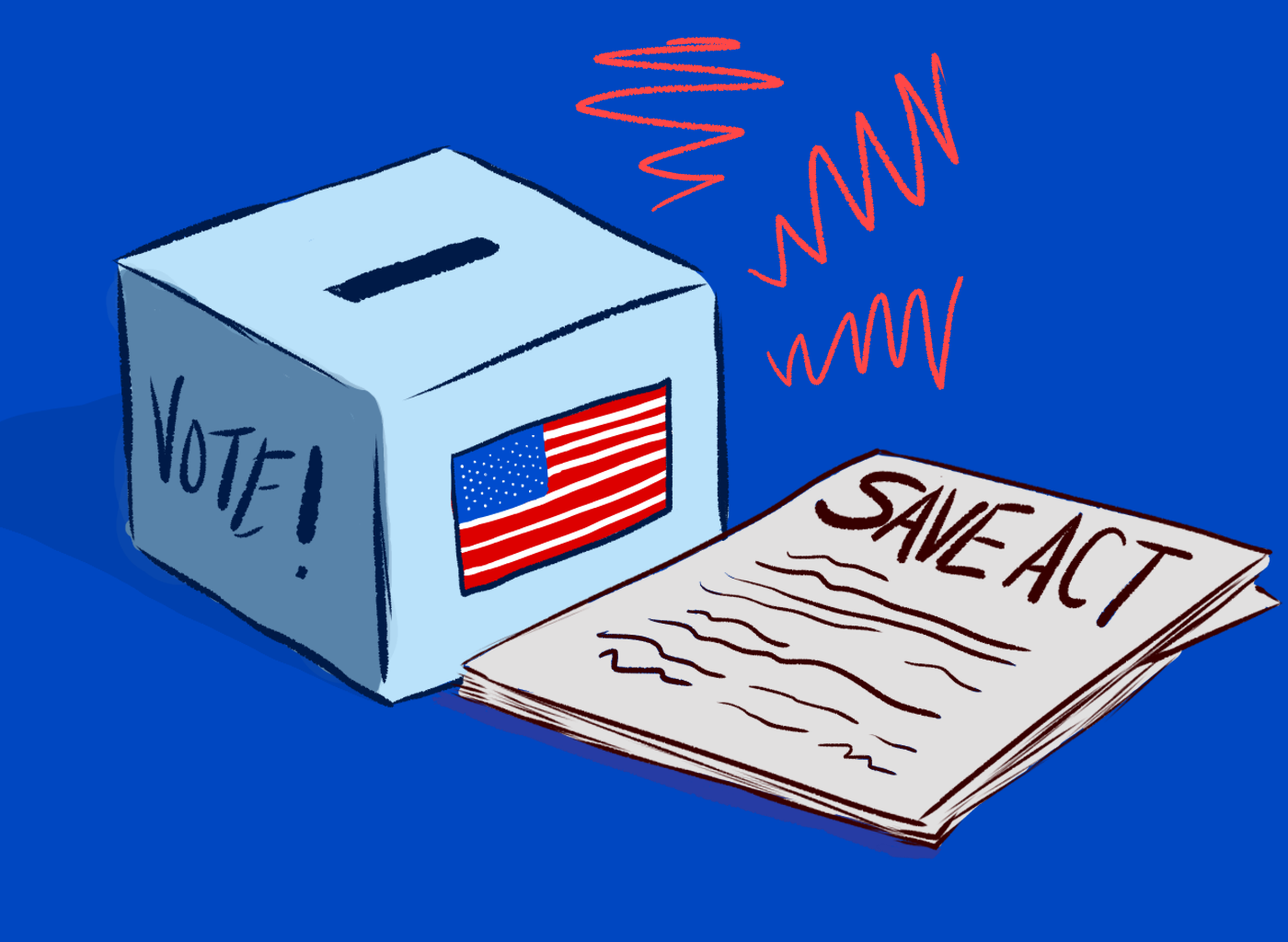
A new voter eligibility bill that aims to prevent undocumented immigrants from voting could affect University students. The bill is currently stalled in the Senate, which began a marathon debate on the bill last month.
What is the bill?
The Safeguard American Voter Eligibility Act, also known as the SAVE America Act, is a bill aimed at eliminating voter fraud, but it could also increase voting difficulty for college students not registered to vote where they go to school, said Joshua Blank, research director of the Texas Politics Project at UT.
“It could make the process of mail-in ballots significantly more complicated for most people,” Blank said. “You need to go home with all this documentation, go there, prove your citizenship, and then you can go back. But if that’s not possible, then you just can’t.”
For students who still want to vote in their hometown district, the bill could require them to return home to show physical proof of citizenship to register, even if they live out-of-state or far from campus, Blank said. According to UT enrollment data, 10.2% of UT’s Fall 2025 enrollees came from out-of-state and nearly every in-state student graduated from a high school outside of UT’s congressional district.
“Any time an adjustment is made to the voting system, it is unlikely that that change is going to lead to a uniform impact across the electorate,” Blank said. “It’s almost always true that changes to voting rules impact some groups more than others, and with the SAVE Act, it appears as though this would likely impact lower income and younger voters.”
Younger voters, including college students, already vote less than other demographics. According to research from UT’s Annette Strauss Institute for Civic Life, voters under 30 underperformed in 2022 by 45% nationally and over 50% in Texas.
“The underperforming groups are often the ones with the most at stake in our elections, and who would benefit the most from making their voices heard at the polls,” Mark Strama, director of the Strauss Institute, said in a Dallas Morning News op-ed.
When reached out for further clarification, Strama pointed to his op-ed.
How close is it to becoming law?
The current version of the bill, introduced by U.S. Rep. Chip Roy, R-Austin, in January 2026, passed in the House of Representatives in February with 218 votes. Nearly every Democrat voted against it, with only one member of the party voting in favor. The act currently awaits a vote in the Senate, but Blank said it is unlikely the bill would pass the chamber.
The Senate left for a two-week recess on March 30 without voting on the act. They were unable to secure the 60 votes needed to end the filibuster — a tactic to block a bill by continuing debate. If the bill does not receive the 60 votes to end debate, it will be effectively stalled.
“(The bill) is gonna sit there and not do anything,” Blank said. “Unless the filibuster is removed for this particular bill … there’s not enough votes to pass this act in the U.S. Senate.”
If the bill does pass, Blank said it could also create “chaos” as states attempt to comply with the law or sue to strike it down.