
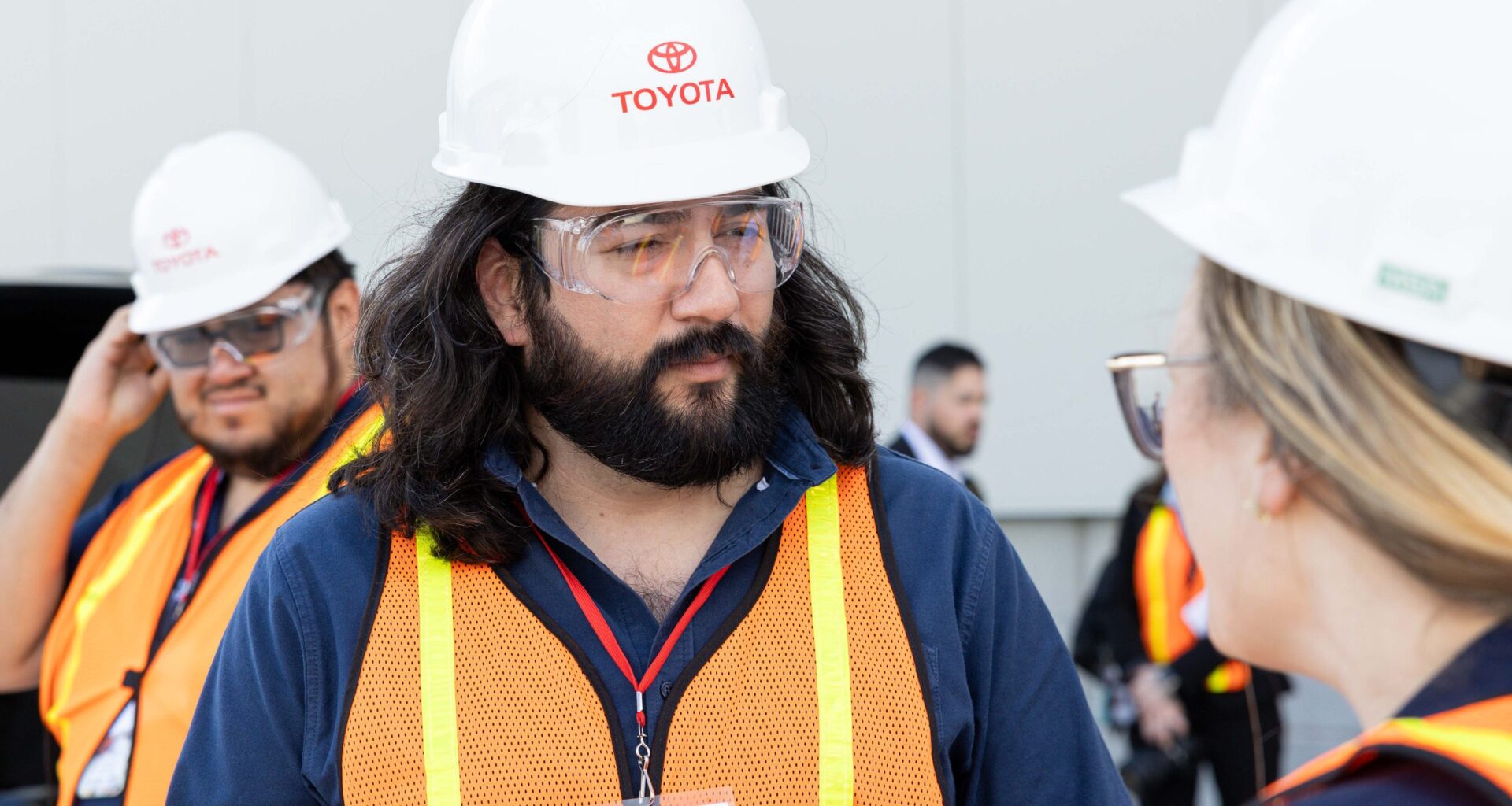
The word is out — the South Side of San Antonio is a hub for manufacturing.
Since Toyota announced its factory in 2003, manufacturers have looked to the area for its open land and highway access.
Toyota’s footprint has expanded with more factories and suppliers, but other major companies have are starting to move in. Navistar opened a facility in 2022. JCB will open its own factory later this year. Industrial Electric Manufacturing is considering a site at Brooks.
The San Antonio Report sat down with Councilman Edward Mungia, born and raised on the Southwest Side and elected in 2025 to represent District 4, to discuss the growth in manufacturing and the needs of the community.
This interview has been edited for clarity and length.
Why are manufacturers choosing the South Side?
The main reason why you see such a large presence on the South Side is specifically because of the amount of raw land available. If you look around Loop 410 for example, across the entire city, there is nowhere else but the south that has that much available land to develop inside Loop 410 and even a few miles outside of Loop 410.
Toyota was one of the first major manufacturers that came to San Antonio, and I think their presence has also kind of had a gravitational pull to that area. For other people, it’s also close to the access point on U.S. Interstate 35 coming from the south, which is the entryway into San Antonio.
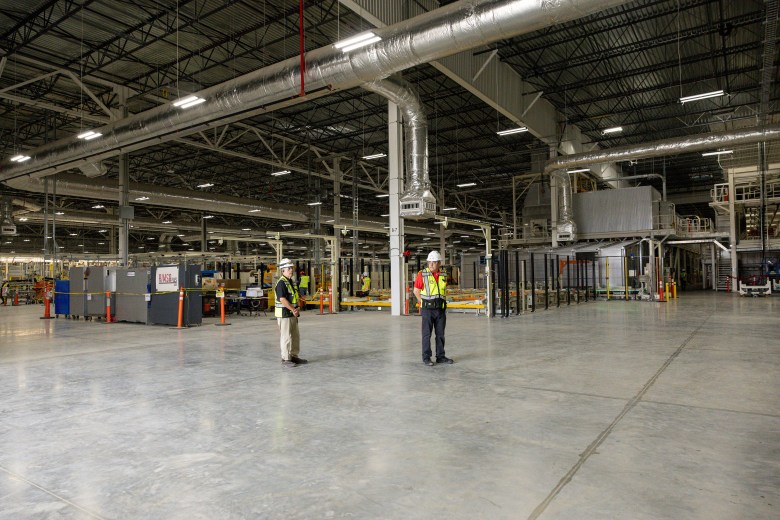 A look at the floor of the new rear axle plant at Toyota Motor Manufacturing Texas on March 2, 2026. Credit: Amber Esparza / San Antonio Report
You also have U.S. Interstate 37 and you have Loop 410 connecting those two. That connectivity is important for what they’re trying to do. And of course, long term, the east-west connector that we’re working on is vastly important to not only that development, but the entire growth of the South Side.
For the most part, local leaders have supported this strategy of bringing manufacturers to the south side. Why is that?
The wages are good for folks. The starting hourly rate is higher than the state averages. They’re good jobs that bring a lot of investment in addition to the city’s investment. Some of the jobs, the entry jobs in these manufacturing places, are easily accessible to a lot of San Antonio’s [residents]. Folks that did not have a high school degree and they have a GED, folks that did not finish or go to secondary education, are able to be trained on the job to do the work.
The barriers are low, entry points are low and the ability to grow wages there is important. That’s why they’ve been attracted and supported.
What’s the broader impact of industrial development on the South Side for the community living there?
That’s where we start to get into some things that give people concern and pause. Certain parts of town have had examples of pollution and industrialization. That is not different on the South Side.
We see a lot of industrial properties in general on the South Side, not just manufacturing. People do have concerns about pollution. There are a lot of neighborhoods on the South Side. People still live here, and people want to continue to build and live here. We have to also get smarter about planning industrialization.
If you look at the area between I-35, I-37, Loop 410 and Loop 1604, that’s the main growth portion on the South Side. We want to have neighborhoods. They’re gonna have parks, they’re gonna have expanded waterway connections.
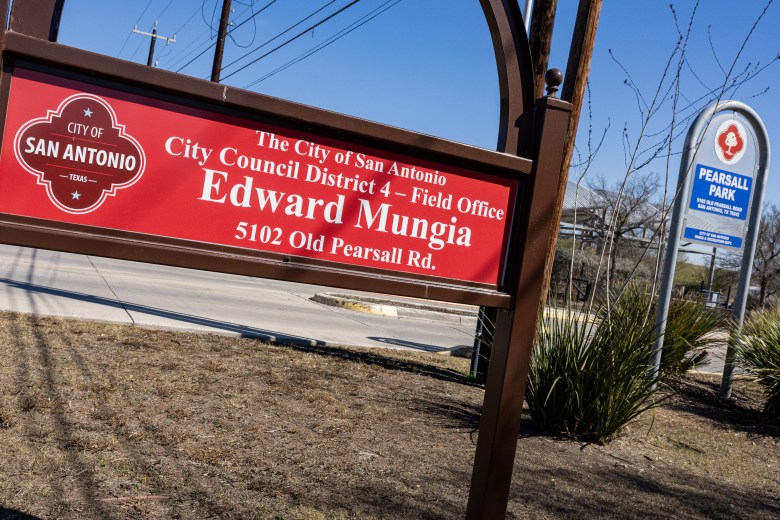 The District 4 Field Office for councilman Edward Mungia is located at Pearsall Park on the city’s Southwest side. Credit: Amber Esparza / San Antonio Report
But it’s hard to do that when you have a lot of industrial properties in that mix … Broadly speaking, every district right now, not just the South Side, has to consider that.
What are the other kinds of development and construction that are coming to your district? And then what do you want to see in the future?
Vida is doing some great work, and they’ve allotted some of their property to do commercial activity. The Housing Trust is building a lot of residential properties out there. Obviously, other employers are moving there.
It’s a culmination of a lot of people getting to these places. But also, how do we carve out specific needs for residents and people who work in these places that want to have lunch off campus? Having a balance to that is important.
Do you have any thoughts about the changes to the natural landscape?
The South Side, south of Loop 410, is one of those special places where there’s a lot of trees. If you drive down Zarzamora or State Highway 16, you can see acres of land and it’s very beautiful. A little southeast, you have Mitchell Lake.
You look at Medina River Park, which is one of my favorite parks in the city, it has beautiful acres of land. You have Leon Creek and you have properties that abut it that are industrial.
You worry about access to that park and waterways. Elimination of treescapes is concerning. It should give people pause. We have to weigh property owners’ legal right to do things, the jobs that they bring and investment compared to what exists there now.
Would you want to see more industrial and manufacturing development in the area in the future?
I don’t know that I want to see too much more industrial activity in District 4. In certain areas, there’s fewer people that live around there and it’s less of a proximity issue. We do have areas like New Laredo Highway, where we have a lot of metal recycling facilities. We have a lot of used auto parts places; the highest [concentration] in the entire city is in District 4.
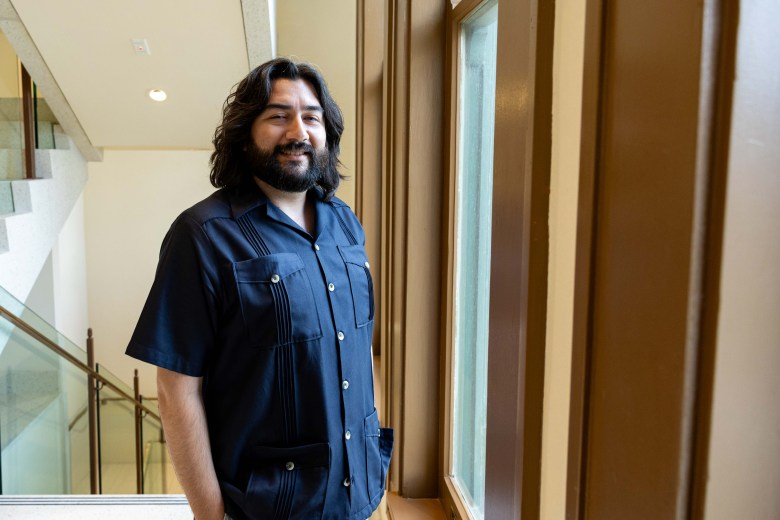 Councilman Edward Mungia’s District 4, which covers the Southwest Side of San Antonio, is a hub for manufacturing and production in an otherwise underdeveloped part of town. Credit: Amber Esparza / San Antonio Report
We have a lot of manufacturing already going there. We have a lot of industrial already there. We have Port San Antonio, which also has a lot of industrial work.
People are kind of like, ‘We get it, pause, hold up on the industrial, what are we losing and eliminating while achieving this great goal?’
A lot of industrial, not necessarily manufacturing industrial, but a lot of other types of industrial could be further out into the county area.
We also have to be strategic about the region around us. How do we utilize areas around us that maybe are outside Bexar County, but they could offer great places for industrial space that are maybe not near residential places or not eliminating a tree canopy to make sure that we have good residential areas?
You’re starting to see more of that friction happening in District 4. You have to be really considerate about that, and think about what size property it is. For every manufacturer that comes into District 4 that the city’s a partner with, I am not an automatic ‘yes’ to that.
I don’t know what the history has been on that, but I know that I have to take some pause with every new development deal, especially if it’s hundreds of acres of property. A larger conversation about manufacturing that I consider is: what’s the long term benefit to somebody working there? Do they have the ability to go upward and mobilize?
 Edward Mungia speaks at the San Antonio Report District 4 Candidate Debate at the Boeing Center at Tech Port April 11, 2025. Credit: Brenda Bazán / San Antonio Report
Yes, the starting [pay] rate is great, especially if you’re making a lot less than that. That’s hugely beneficial to families, but can you make a 30-year career out of it? Can you take those skills that you learned there and go higher and do something else?
When you’re considering additional manufacturers and folks who are interested in setting up in that area, what are you looking at when they come to the table?
The most important thing is: what are the starting wages? The city has a deal on what our minimum is.
What’s also big to me is how they’re going to be community partners for us. We have great assets with Toyota, who have been long-time partners on so many different issues in the community, especially on education, and JCB, which hasn’t even fully opened yet, and they’re already trying to partner with schools, our Alamo Colleges, [Texas A&M University-San Antonio]. They’ve been at meetings advocating for more work development on Zarzamora.
Those two are great examples of people who have large tracts of land to manufacture, great employees, good relations with them, no accidents.
Those are the things that top of mind for me: jobs, size of your property and how are you going to contribute to the area in San Antonio, especially South Side [Independent School District], [South San Antonio Independent School District, Southwest [Independent School District], Harlandale [Independent School District]. I always look to those schools to get more support from people on the South Side.