
This marks the first time in 20 years the university has had three students receive
the prestigious and highly competitive honor.
CREATORS

Texas Tech University students Eli Heath, Dylan Jenkins and Kaleb Jewell have been selected as 2026 Goldwater
Scholars, the organization sponsoring the prestigious and highly competitive undergraduate
awards announced.
Heath, an Honors College student also serving this year as student regent on the Texas Tech University System’s Board of Regents, is a chemical engineering major with a double minor in bioengineering and biology. Jewell is a chemical engineering student while Jenkins is also an Honors College
student majoring in psychological sciences with a double minor in philosophy and cognitive science.
“Goldwater recognition represents a national standard of research excellence at the
undergraduate level for STEM (science, technology, engineering and mathematics) students,”
said Honors College Dean Jill Hernandez. “It is a mark of prestige to have faculty like we do here at Texas Tech who do a
great job mentoring undergraduate students in STEM research. As a result, we have
a long history of Goldwater Scholars.”
The Texas Tech students were selected from a pool of almost 1,500 college sophomores
and juniors nominated by 482 academic institutions. The Goldwater Foundation is a
federally endowed scholarship program designated to identify, encourage and financially
support undergraduates interested in pursuing research careers in the sciences, engineering
and mathematics. The scholarship is considered the preeminent undergraduate award
of its type in these fields.
“The Goldwater Scholarship recognizes the intellectual contribution and STEM skills
our undergraduate students contribute to the university’s research enterprise and
supports their journey in becoming world-class scientists,” said Archie Pitsilides, director of prestigious external student awards.
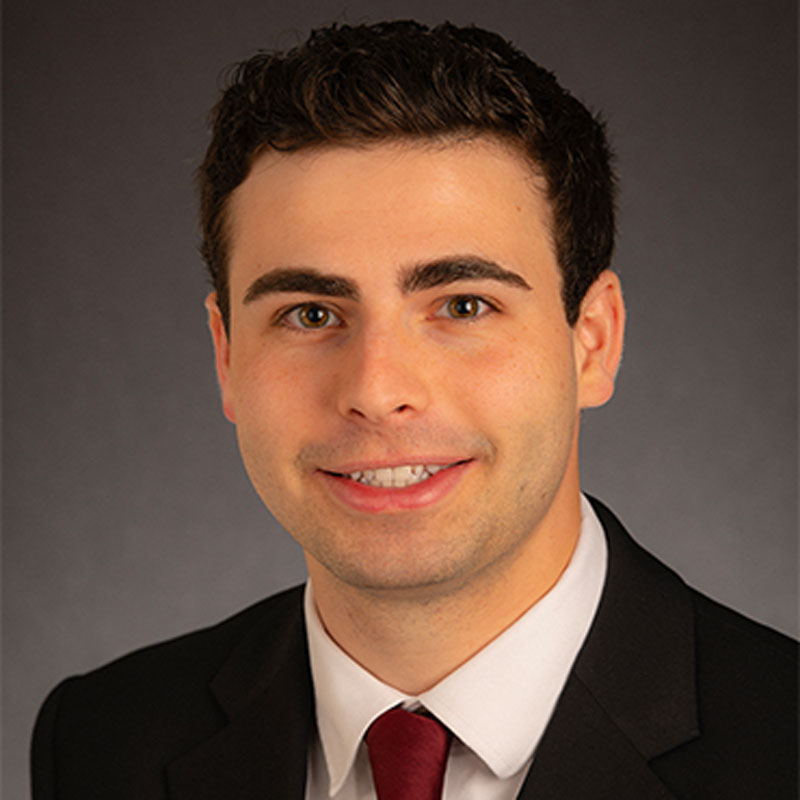
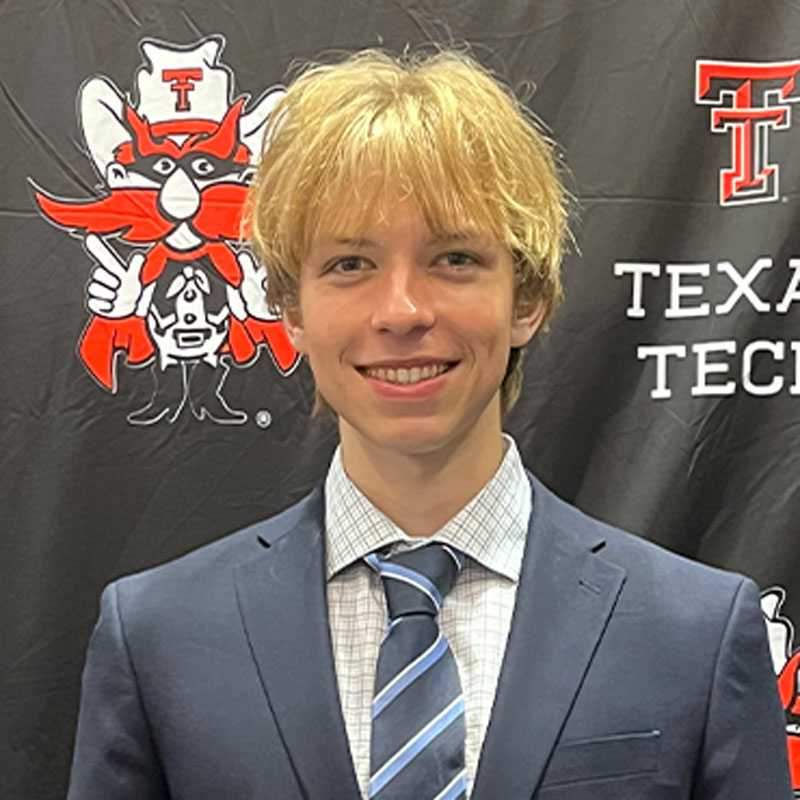
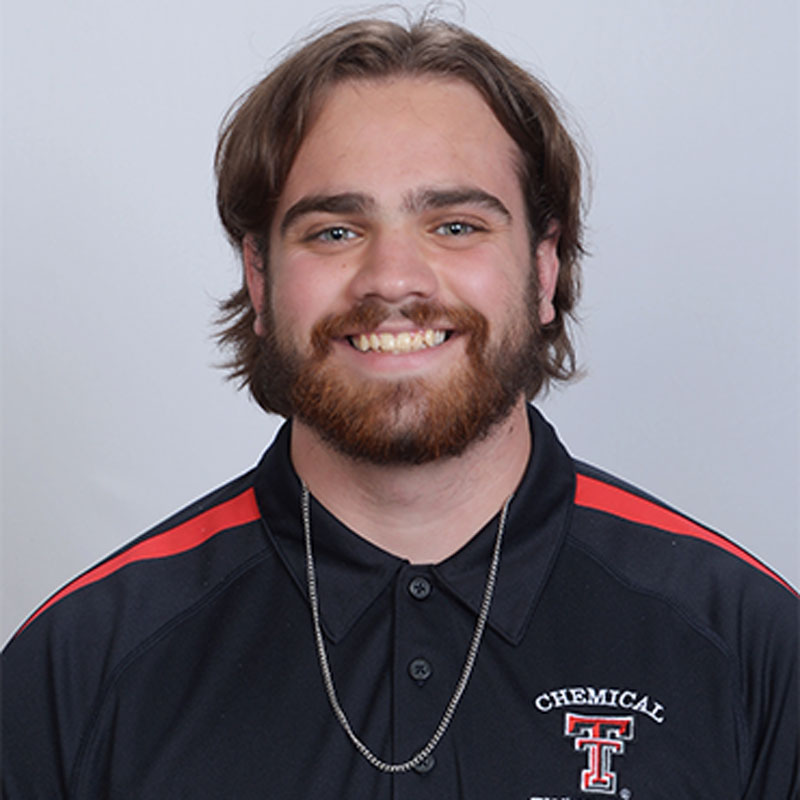 Eli Heath, Dylan Jenkins and Kaleb Jewell
Heath’s research essay was titled, “Investigating the Role of HIV Antiretroviral Therapy
in Modulating Cancer Initiation and Progression: A Proteogenomic Approach.” He said
his plans include leading translational research to develop next-generation cancer
therapies and drive breakthroughs in cancer treatment.
Jewell’s essay was titled, “Developing Iron-Selective Organic Electrochemical Transistors.”
He plans to earn his doctoral degree in materials science and engineering while researching
innovative nanomaterials with emergent photonic and optoelectronic behaviors for next-generation
nanosensors.
Jenkins plans to earn a doctorate in experimental psychology with a concentration
in cognitive psychology and become a tenure-track professor. His research essay was
titled, “Digital Accessibility and the Cognitive Dynamics of Technology Mediated Consent.”
“This is one of the numerous metrics that feeds into AAU aspirations,” Hernandez explained,
“because one AAU metric looks at research production of our students, and having these
Goldwater Scholars differentiates us. Of course, the goal will be to continue to add
to that total to make sure we’re continuing to place multiple students.”
According to records, Texas Tech also had three Goldwater Scholars in 1996, 2000 and
2006. The historical high-water mark for the university occurred in 1995 with four
Goldwater Scholars.
Through its current ongoing partnerships, the Goldwater Board will award 454 scholarships
for the 2026-27 academic year. With these awards, more than 11,000 scholarships will
have been given through the foundation.
“The Goldwater Scholarship recognizes students who have the curiosity, discipline
and vision to become the next generation of research leaders,” said Dr. Chandra S.
Pemmasani, founder and CEO of UWorld.