
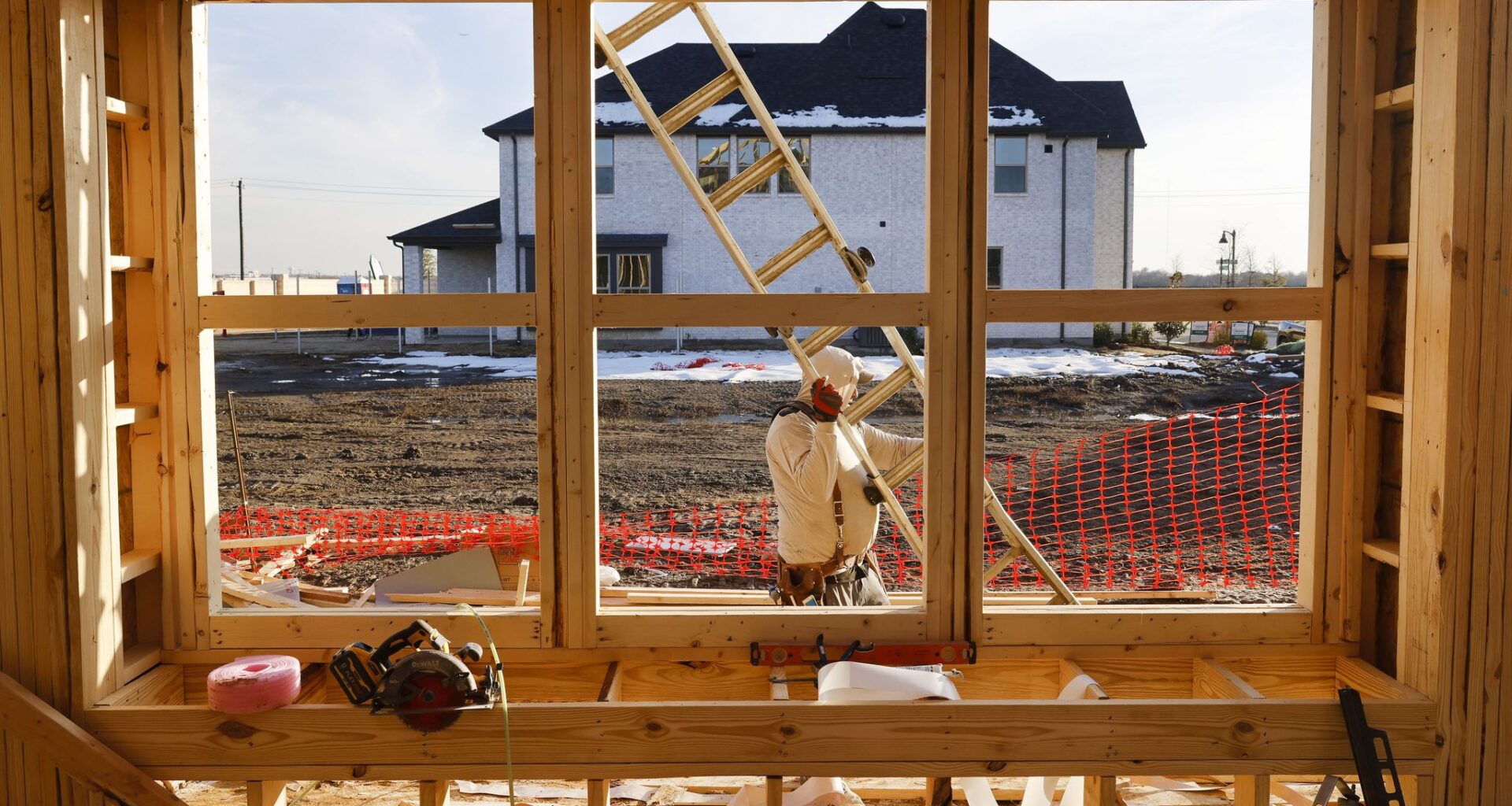
According to a Labor Department report released Friday, American employers added 178,000 jobs last month, with major gains coming from construction and health care.
Tom Fox/Staff Photographer
After particularly strong recent monthly job gains, Texas is expected to add nearly 280,000 jobs this year, according to a model-based forecast published Friday by the Federal Reserve Bank of Dallas. The figure would represent a 1.9% employment growth rate for the year — a pace that’s close to the state’s famously high-growth historical average and represents a notable uptick from recent, more modest growth estimates.

“Texas employment growth strengthened notably in December and January, contributing to an increase in the employment forecast for 2026,” Luis Torres, a senior economist at the Dallas Fed, said in a release.
Article continues below this ad
Yet Torres also sounded a major note of caution. The 1.9% figure is in fact the midpoint of a statistical range produced by the bank’s modeling, with the forecast in fact indicating, with 80% confidence, that Texas jobs growth will land between 1.1% and 2.7%. The bank’s researchers expect it to be on the low end of that range, because of what Torres described as “several headwinds.”
“Declining immigration is constraining labor supply, higher productivity is suppressing labor demand, business activity captured by our Texas Business Outlook Surveys recently moderated, and geopolitical uncertainty is elevated,” Torres said in the release. “High oil prices, meanwhile, are expected to boost state economic activity only if they are sustained.”
A 1.1% growth rate, the low point on the new projection range, would be consistent with the annual forecast the bank released in February. That projection came after the state — which has long ranked among the country’s fastest growing economies — added virtually no jobs in 2025, a downshift economists attributed in large part to labor supply issues stemming from the Trump administration’s immigration crackdown.
Make Dallas News a preferred source so your search results prioritize writing by actual people, not AI.
Add Preferred Source
“It’s not back to trend growth,” Pia Orrenius, another senior economist at the bank, said in February of the 1.1% forecast. “I don’t think that trend growth is really achievable given the labor supply constraints that we’re experiencing right now.” Yet considering those constraints, the outlook was still fairly positive, Orrenius said.
Article continues below this ad
The bank’s new forecast was based on an average of four models that include projected national GDP, oil futures prices and various Texas and U.S. data indexes. The forecast rose largely because data showed two recent strong months for the state: In January, Texas employment grew by an annualized 2.3%, according to figures from the bank, and in December employment grew by an annualized 2.2%.
The January figure equated to 27,000 jobs, Dallas Fed researchers noted, with particularly strong gains in construction, leisure and hospitality, education and health care services and professional business services. That month all of the state’s major metro areas also saw strong employment growth, with Dallas adding jobs at a rate of 4.8% and Fort Worth at a rate of 2.9%. The economies of Austin and San Antonio grew even faster, at a rate of 5.9%, although the unemployment rate in those metro areas also ticked up. The rate held steady in Dallas and Fort Worth.
The Dallas Fed’s more optimistic projection comes as the national economy also appears to have received an unexpected shot in the arm: According to a Labor Department report released Friday, American employers added 178,000 jobs last month — about three times more than economists had predicted, with major gains coming from health care and construction.
Yet while the strong national jobs numbers added a dose of optimism, they also followed a particularly weak February, when the country lost over 130,000 jobs, according to BLS figures. The health care gains were also attributed in part to the tens of thousands of Kaiser Permanente employees who had returned to work following a strike.
Article continues below this ad
Analysts also noted that the numbers did not reflect the economic costs of rising energy prices from the war in Iran.

By signing up, you agree to our Terms Of Use and acknowledge that your information will be used as described in our Privacy Policy.
“The larger-than-expected rebound in nonfarm payrolls in March mainly reflects a reversal of the strike and weather effects that weighed on hiring in February, rather than being a sign that the labor market is rapidly growing momentum,” said Stephen Brown, chief North America economist at Capital Economics, who also warned of a coming economic hit from higher oil prices.
Data recently gleaned from Texas businesses also points to a more cautious outlook. One recent survey of manufacturing industry executives, published by the Dallas Fed late last month, suggested the sector grew at a notably slower pace in March than it did in February. A survey of service sector executives revealed that revenue in the sector was nearly flat.
Article continues below this ad
Executives from both sectors, meanwhile, indicated that their outlooks for future business activity had dimmed compared a month prior. They also expressed rising economic uncertainty, with many pointing specifically to the war in Iran