
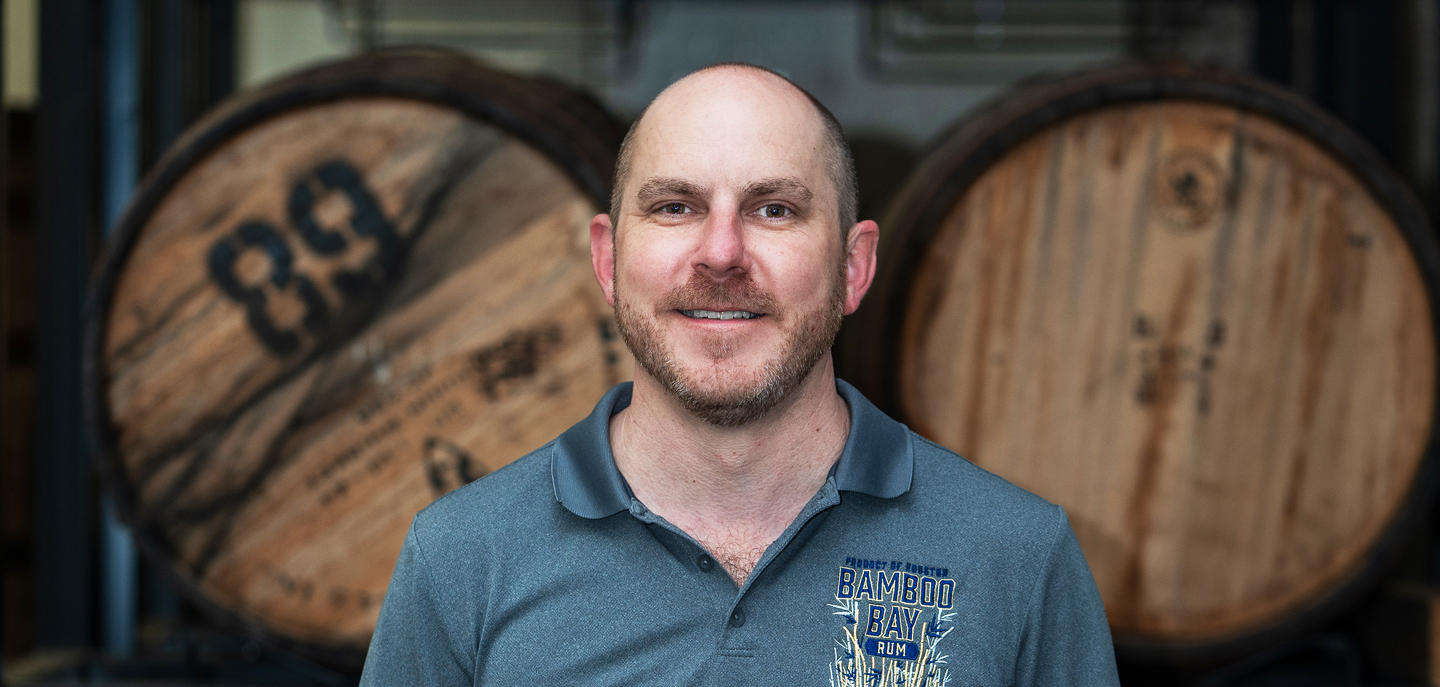
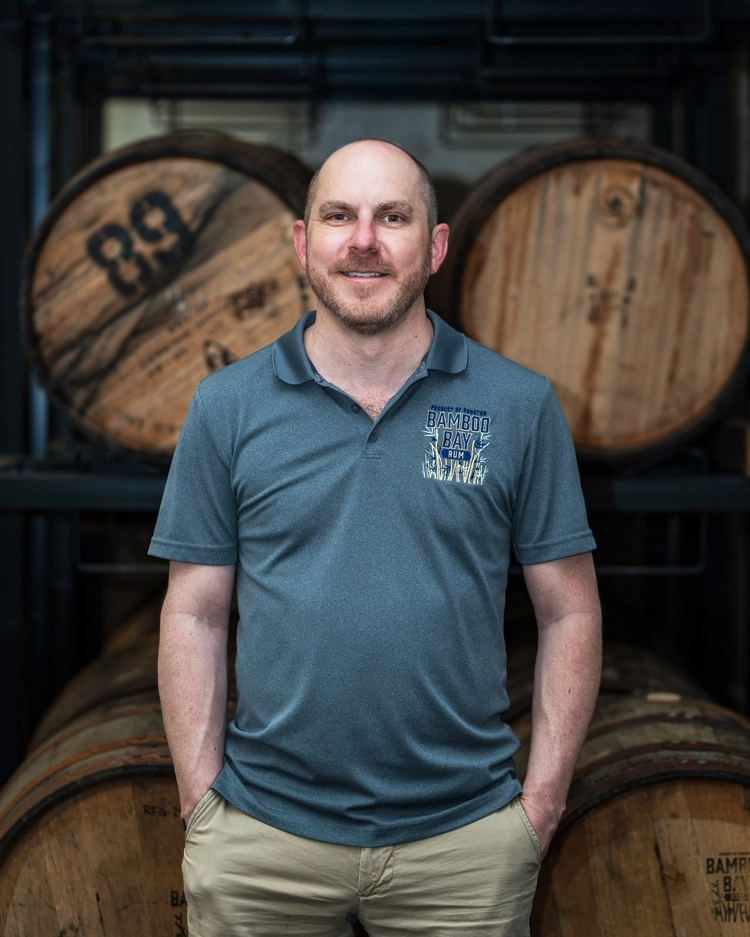
 Bamboo Bay Rum co-founder Matthew Barré (Images courtesy)
For Houston–based entrepreneur Matthew Barré, rum isn’t just a product. It’s a full-circle story rooted in geography, memory, and craft.
“I grew up right outside of New Orleans, but spent a lot of time traveling growing up,” Barré says. “Between my grandfather’s house in West St. John Parish, Louisiana—which is primarily sugarcane and swamps—and New Orleans being a hospitality town, I’ve always had an awareness of the products that came out of sugarcane.”
That early proximity to sugarcane and the culture surrounding it didn’t immediately translate into a business idea. “I didn’t imagine that one day I’d make a rum brand out of this,” he reveals. “It was later in life that that came about.”
The turning point came unexpectedly, through a career move far removed from distilling. While working in oil and gas, Barré accepted a three-year assignment in Trinidad, an experience that quietly laid the foundation for Bamboo Bay Rum.
“I went down to Trinidad not knowing anything about the culture and never having been to the Caribbean,” he recalls. “Then, one day sitting by the pool, my upstairs neighbor and I jokingly said, ‘We should make rum.’”
What began as a casual idea among friends evolved into something far more tangible. “Fast-forward to us both ending up back in Houston in 2017. Then, in 2020, we started working on the project.”
The name Bamboo Bay is a nod to those Trinidadian origins. “Bamboo Bay is actually the name of the apartment complex that we lived in in Trinidad,” Barré explains. “It doesn’t exist anywhere in the world on a map,” but the image it evokes stuck—a tropical escape made for sipping rum.
Today, Barré runs the business largely on his own, balancing a full-time career in oil and gas with the realities of building a spirits brand from scratch. “Monday through Thursday is oil and gas stuff. Friday, Saturday, and Sunday is usually rum production,” he says.
That schedule reflects not just ambition, but the necessity of bringing the brand to life. “Do I give up my current career to become a rum producer, or do I keep making a paycheck?” he candidly asked himself. “The paycheck won.”
Still, what sets Bamboo Bay Rum apart isn’t scale—it’s intention. From the beginning, Barré has prioritized transparency and craftsmanship in an industry often dominated by mass production and additives.
“We wanted to be transparent about what’s in the bottle,” he says. “We just wanted to be honest about the product we were making, and to make it with our hands.”
That philosophy extends to sourcing. After navigating the complexities of the US sugar market, Barré partnered with a small Louisiana mill to secure molasses, the foundational ingredient in rum.
“We want to use the stuff with the most flavor in it,” he explains. “It’s all the leftovers, and it’s how rum was originally made. That’s what we wanted to stick with.”
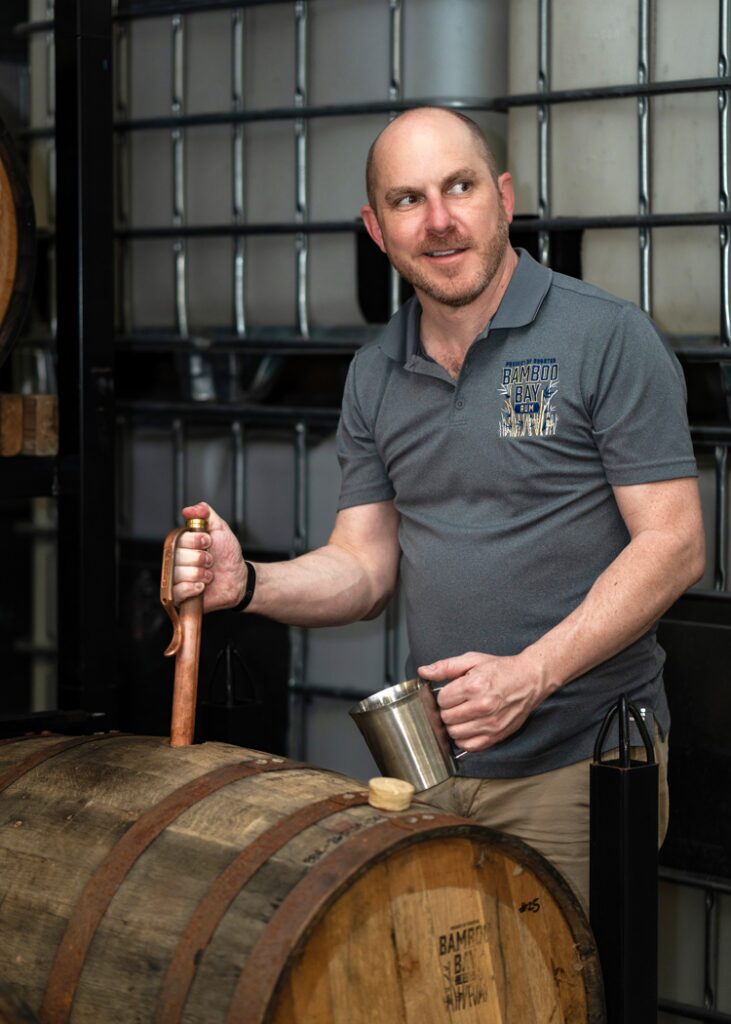
The process itself is deeply hands-on. “It takes me about eight days to make a batch,” Barré says, describing fermentation, distillation, and refinement stages that transform molasses into a finished spirit.
Like many craft ventures launched during the pandemic, Bamboo Bay Rum was built through trial and error. “We made a lot of bad rum in order to find the way to make good rum,” he says.
That persistence has paid off. “Seeing it on bar shelves and people going, ‘Oh, look, what’s this brand?’ And knowing people are coming back to buy it has been really rewarding.”
As a gay entrepreneur, Barré’s identity is part of his story, but not the defining lens through which he operates. Instead, his focus remains on building a sustainable business in a challenging and evolving market. “Bar profit margins are going down, so they’re less interested in buying something that’s more expensive,” he notes.
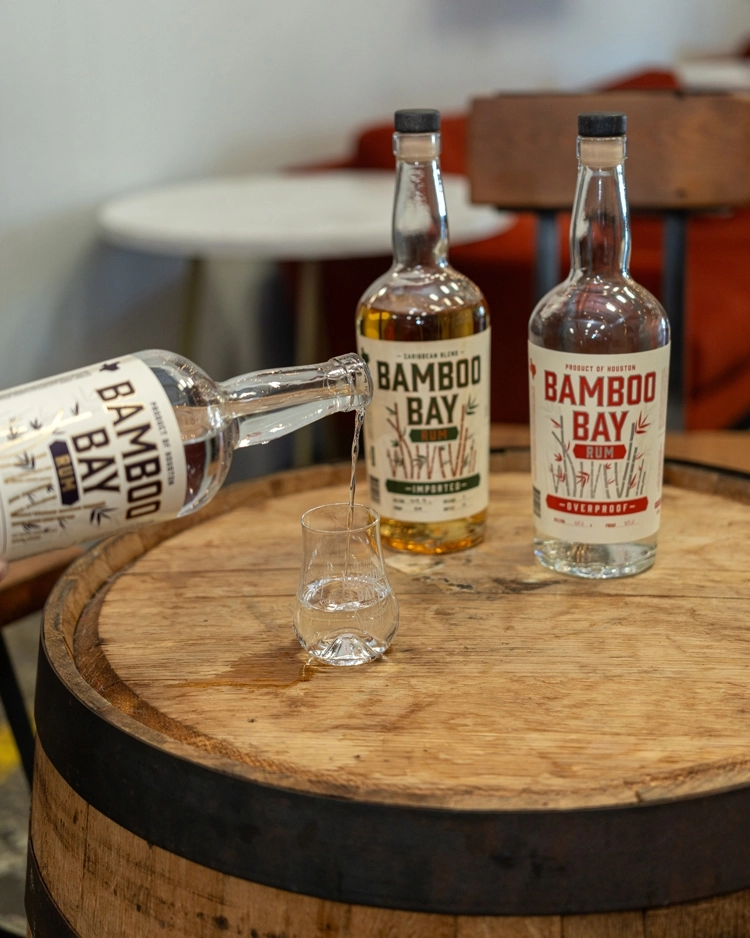
Even so, Barré is optimistic about what’s next. With 27 barrels currently aging, he’s preparing to introduce his own aged rum—a natural expansion that marks a new phase for the brand.
For now, Bamboo Bay Rum can be found at select Houston retailers, including Houston Wine Merchant and Longhorn Liquors. But for Barré, the real goal isn’t just distribution. It’s connection.
“I wanted to make a rum that was good for sipping,” he says. “If I couldn’t make a sipping rum, I didn’t want to put it in a bottle.”
Whether enjoyed neat, in a classic daiquiri, or as part of a more elaborate cocktail, Bamboo Bay Rum is ultimately an invitation to slow down, taste carefully, and appreciate the craft behind the glass.
From sugarcane fields to Caribbean coastlines to Houston distillation runs, every bottle carries the imprint of a journey that was never supposed to happen, but somehow makes perfect sense.
Keep up with Bamboo Bay Rum on Instagram at @bamboobayrum.