
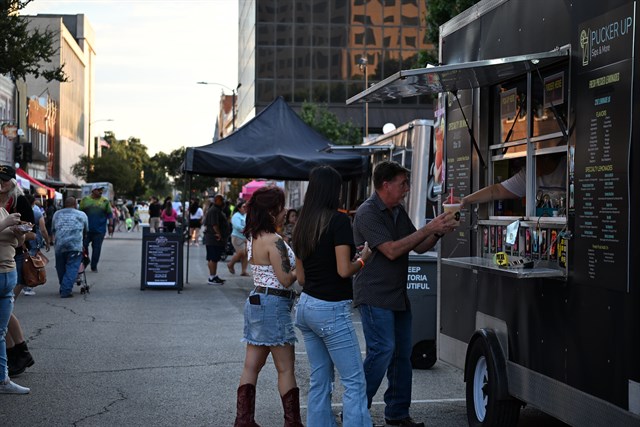
Texas food truck licensing regulations to change, bringing local impact
Published 7:00 pm Tuesday, April 7, 2026
Across Texas, different counties and cities have different regulations for food trucks, including new registration fees and inspections in each city a truck travels to. Currently in Victoria County, there are nearly 200 registered food trucks, all of which may have to re-register with the State in coming months.
On July 1, that will all change. Texas House Bill 2844, which was passed during the 89th is authored by Representatives Brooks Landgraf (R-Odessa) and Richard Raymond (D-Loredo) and was sponsored by Senator Lois Kolkhorst, whose district covers Victoria County.
HB 2844 establishes that all Mobile Food Vendors (MFV), or food trucks, will now fall under state licensing regulations through the Texas Department of State Health Services (DSHS). Previously, all MFV licensing was done on either a city or county level.
With the new regulations, all food trucks will be separated into three categories based on the level of foods they prepare, according to the bill.
Type I includes businesses that only sell prepackaged foods and beverages that do not require time and temperature control for food safety.
Type II includes food trucks that sell prepacked time or temperature controlled foods that need limited handling. The bill states that these handling processes may include preparing, cold holding, thawing or reheating and foods that must be consumed for immediate consumption.
Type III includes businesses that prepare and cook food on site, including hot and cold storage, thawing, cooling or reheating.
Victoria County Public Health Director David Gonzales said that he is still unsure of how the new fees and inspections will work at the state level. Gonzales said that now, the county will serve as a direct contractor to the state, conducting inspections. The biggest change will be that all payments, beginning May 1, will all be processed through the DSHS.
Officials are unclear the impact that the state fees will have on small businesses, and how that will impact local revenue.
 Loading …
“We don’t want more revenue at the expense of small businesses,” Gonzales said. “Hopefully there’s no net effect on the food trucks. In some jurisdictions if those state fees are higher than what our local fees were, they’re going to feel a negative effect. It’s tough because, unfortunately, more revenue probably means that there’s going to be some higher fees on those small businesses.”
Currently in Victoria County, there is a $258.00 registration and inspection fee per MFV. DSHS has not announced its fees officially, but has shared early estimates.
In the bill, the fees for each designation and requirement are listed as follows:
“a non-refundable application fee, as follows:
$300 for each Type I MFV;
$600 for each Type II MFV; and
$850 for each Type III MFV;
a pre-licensing health inspection fee, as follows:
$400 for each Type II MFV; and
$500 for each Type III MFV;
an inspection fee for health inspections, as follows:
$400 for each Type II MFV; and
$500 for each Type III MFV; and
an inspection fee for compliance inspections and complaint investigations, as follows:
$300 for each Type I MFV;
$400 for each Type II MFV; and
$500 for each Type III MFV.”
Before the bill, many Type I MFVs were previously not required by some jurisdictions to hold licenses, due to only selling pre-packaged food. Type I is absent from certain inspection fees due to this, but it will be an added cost for many Type I MFV owners.
Gonzales said that the County has not received information about how the first year will work, especially how businesses that have already applied for and received their local permits will be treated. Initially, he was told that those businesses would be allowed to operate at the state level under their county fees for the first year, but was then told otherwise.
This would force businesses to spend more on permits, which based on the language in the bill, would be counterintuitive, as it is to limit excess permitting costs.
“I’m sure there’s gonna be some individuals that are gonna be frustrated,” Gonzales said. “I know I would if I was a small business owner, because it feels like I’m paying the fee twice. I wish we had more say, or really any say on the local level, but with that new Senate bill, that pretty much took all the power out of our hands. We really have no power to set the fees anymore for food truck bills. We have no ability to set the regulation. We’re merely going to become a subcontractor for that service to the state.”
Lindsey Plotkin is a multimedia reporter for the Victoria Advocate. Contact her at lindsey.plotkin@vicad.com.