
Dominic Anthony Walsh / Houston Public Media
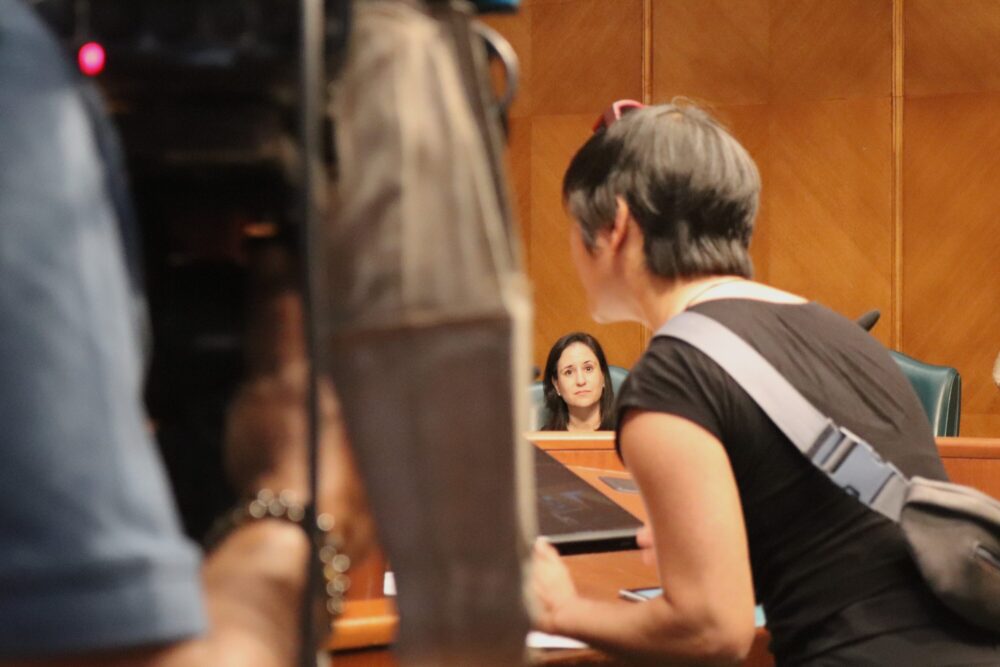
Council Member Alejandra Salinas listens to a public speaker on April 1, 2025.
In a 12-5 vote on Wednesday, the Houston City Council approved an ordinance intended to cut back on coordination between the Houston Police Department (HPD) and U.S. Immigration and Customs Enforcement (ICE).
Spearheaded by council member Alejandra Salinas with support from council members Abbie Kamin and Edward Pollard, the ordinance will prohibit officers from detaining people or prolonging traffic stops due to civil immigration warrants. It will also require regular reports from Mayor John Whitmire’s administration on local immigration enforcement.
“I think this is a positive step forward,” Salinas said. “I hope we continue to take steps forward to improve our position and reducing our cooperation with ICE to the bare minimum that’s required under state law.”
Sign up for the Hello, Houston! daily newsletter to get local reports like this delivered directly to your inbox.
The Houston Police Officers’ Union opposed the measure, as did ICE. Union president Douglas Griffith declared, “Why don’t you ask us?” as he exited the city council chambers after the vote. An ICE spokesperson said the new change will “not only undermine the rule of law in this country but also endanger public safety.”
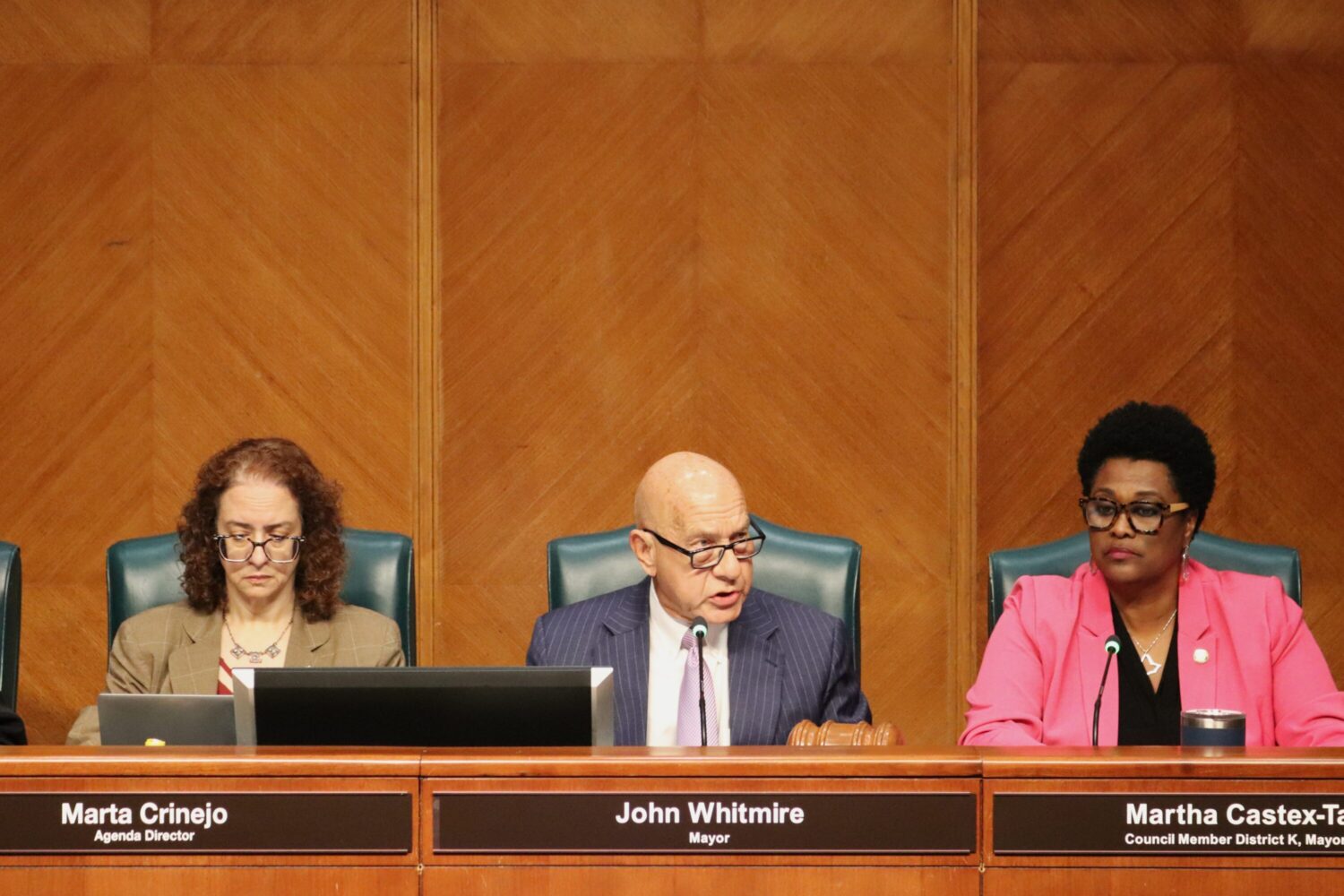
Whitmire — who voted in favor of the change — framed the new rule as simply “codifying (HPD) practices.” Despite the police chief announcing the officers would wait 30 minutes for ICE to respond to civil immigration warrants in March — and the police union saying officers should wait for ICE to respond — the city attorney and Whitmire maintained officers are already expected to not hold people solely due to civil immigration warrants.
“I think it is consistent with HPD practices,” Whitmire said. “So I think the revised version is a ratification of the good policies that HPD is conducting. It’s the most emotional issue. People can disagree. I’m sorry that some of our witnesses and speakers have tried to politicize it, but that’s one of our successes coming out of my office is we’re not going to politicize something that’s sensitive.”
Dominic Anthony Walsh / Houston Public Media
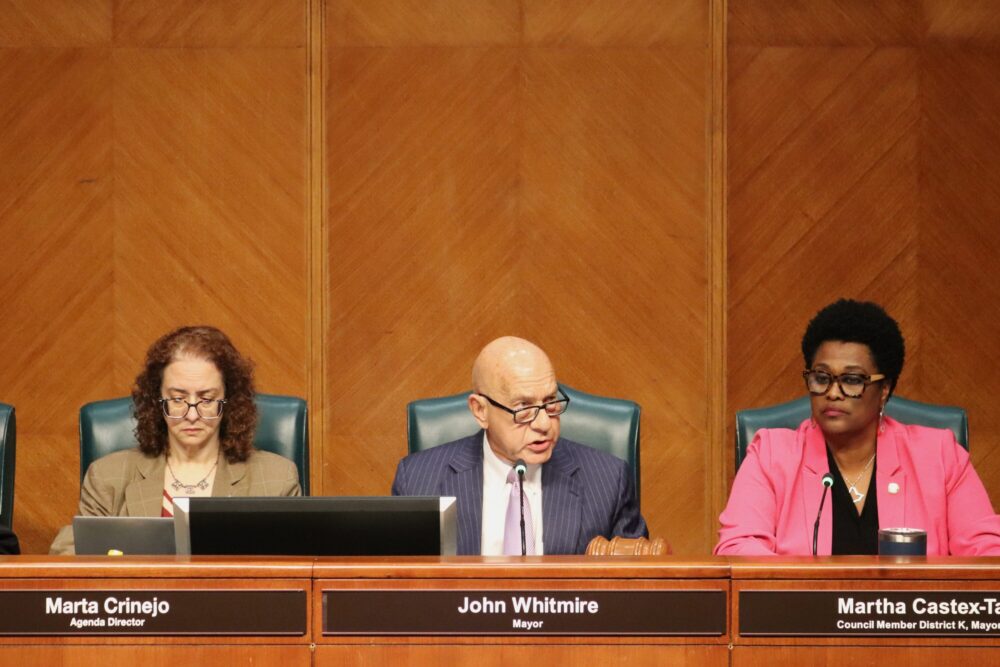
Houston Mayor John Whitmire speaks in favor of a proposed ordinance on April 8, 2026.
Over the past year, community activists have repeatedly called for change after a series of Houston Chronicle reports revealed a ramp-up in coordination between HPD and ICE. Last week, more than 100 people signed up to speak about the ordinance during a public comment session.
Responding to the coverage in March, Houston Police Chief Noe Diaz confirmed officers turned over 85 people to ICE in 2025. At the same time, Diaz said the department would wait 30 minutes for ICE to respond when officers notify the agency about civil immigration warrants.
Before voting in favor of the ordinance, council member Julian Ramirez ticked off some of the incidents revealed by the Chronicle — including officers turning over people who called HPD for help.
Ramirez said ICE’s decision to put forward more than 700,000 administrative warrants last year created a “dragnet,” forcing police departments to shift focus from local issues to federal immigration enforcement.
“The question for this council is do we want to have the most effective police force possible to enforce serious state crimes and city ordinances — one the immigrant community trusts — or do we want a deportation force that enforces federal rule violations,” Ramirez said, “because you can’t have both.”
An earlier version of the ordinance would have given officers discretion about whether or not to contact ICE, bringing the city in line with Dallas. In Austin, officers must contact supervisors, who have authority over whether to contact ICE. Like San Antonio, officers in Houston must continue to contact ICE about warrants.
After the city’s legal department deemed that change unlawful, Salinas and her colleagues removed the provision. In a memo obtained by Houston Public Media, city attorney Arturo Michel wrote the revised ordinance “is lawful in its current form.”
Dominic Anthony Walsh / Houston Public Media
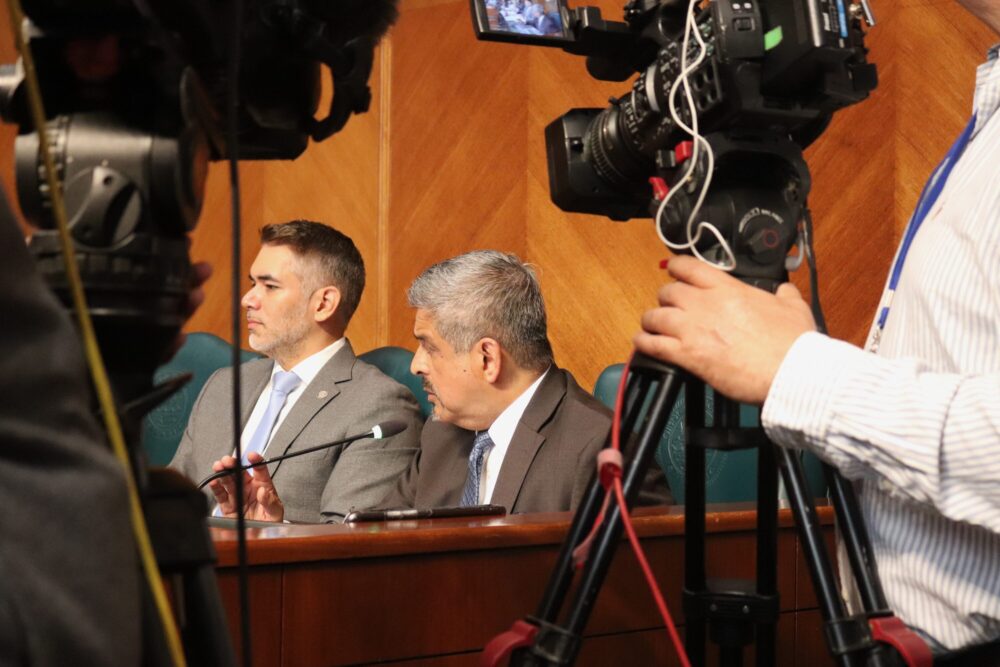
Houston City Attorney Arturo Michel speaks to the city council on Apr. 8.
Going forward, Salinas said on Wednesday she was “committed to do everything in my power to fight” the city attorney’s initial decision.
Council members Amy Peck, Willie Davis, Fred Flickinger, Mary Nan Huffman and Twila Carter voted against the ordinance.
“I think that the mayor’s current policy requiring HPD to wait 30 minutes is sound, reasonable and provides clear direction while balancing public safety and legal consequences,” Peck said, “and taking away this guidance creates confusion and exposes the city of Houston to potential legal challenges. I’m also concerned that this measure may create unintended risks to our public safety. Placing a national spotlight on Houston could lead to unsafe situations for both our community and law enforcement.”
Salinas, Kamin and Pollard placed the ordinance on the agenda using relatively new powers granted under Proposition A. Overwhelmingly approved by voters in 2023, it gave three council members power to place items on the agenda — authority previously held only by the mayor.
The ordinance approved on Wednesday marked the first time Prop A has been used to directly challenge a policy put forward by Whitmire’s administration.